Why Indonesian Projects Are Switching to MBR Wastewater Treatment Systems
MBR (Membrane Bioreactor) wastewater treatment systems are increasingly adopted in Indonesia due to their 60% smaller footprint and superior effluent quality (TSS <1 mg/L, BOD <5 mg/L) compared to conventional systems. In 2025, MBR systems cost IDR 12-25 billion per 1,000 m³/day capacity, with OPEX of IDR 800-1,500/m³, including membrane replacement every 5-8 years. Indonesia’s Ministry of Environment and Forestry (KLHK) mandates effluent standards of BOD ≤30 mg/L and TSS ≤50 mg/L for most industrial discharges, which MBR systems consistently meet or exceed. This guide provides Indonesia-specific engineering specs, cost benchmarks, and compliance requirements to evaluate MBR projects.
Indonesia faces a critical wastewater infrastructure gap, with World Bank data from 2023 indicating that 93% of households lack sewer connections and only 7% of total wastewater is effectively treated. In dense urban industrial hubs like Jakarta, Surabaya, and Bekasi, land prices for industrial plots can exceed IDR 15 million per square meter, making the large footprint of Conventional Activated Sludge (CAS) systems financially unfeasible. For a factory manager in the Pulogadung Industrial Estate, transitioning to MBR is often the only way to double treatment capacity within an existing site boundary.
Regulatory pressure from KLHK’s 2025 effluent standards has tightened oversight on sectors like textiles and food processing. Conventional biological systems often struggle with the high organic loads and fluctuating influent typical of these industries. The adoption of MBR technology is accelerating, exemplified by recent large-scale municipal orders for Indonesian sewage plants designed to handle high-density urban waste. These projects highlight a shift toward decentralized, high-efficiency treatment that can be integrated into existing infrastructure with minimal civil works.
How MBR Systems Work: Technical Mechanics and Process Parameters
Submerged MBR systems utilize a combination of biological suspended growth and integrated membrane filtration, typically maintaining Mixed Liquor Suspended Solids (MLSS) concentrations between 8,000 and 12,000 mg/L. This high biomass concentration allows for significantly shorter Hydraulic Retention Times (HRT) compared to secondary clarifiers. In the Indonesian context, where tropical temperatures range from 25°C to 35°C, microbial activity is high, which necessitates precise control over Sludge Retention Time (SRT) to prevent excessive sludge age and membrane fouling.
The choice of membrane material is critical for long-term operational stability. DF Series PVDF flat sheet membrane modules for submerged MBR applications are preferred for industrial wastewater due to their high mechanical strength and resistance to chemical cleaning. PVDF membranes typically operate at flux rates of 15-25 LMH (liters per square meter per hour) in tropical climates, whereas hollow fiber membranes may offer higher packing density but are more prone to "clogging" or "ragging" when treating high-solids influent.
| Parameter | Design Specification (Tropical Climate) | Performance Benchmark |
|---|---|---|
| MLSS Concentration | 8,000 - 12,000 mg/L | Enables high volumetric loading rates |
| Membrane Pore Size | 0.03 - 0.4 μm (Ultrafiltration) | Ensures complete solids/bacteria removal |
| Design Flux (Net) | 15 - 25 LMH | Conservative for high-fouling industrial waste |
| Hydraulic Retention Time (HRT) | 4 - 8 hours | 60% reduction vs. conventional systems |
| Specific Aeration Demand (SADm) | 0.3 - 0.6 m³/m²·h | Critical for membrane scouring |
Energy consumption in MBR systems is primarily driven by membrane scouring aeration, which prevents the accumulation of solids on the membrane surface. While MBR systems use 30-50% more energy for aeration than CAS, HydropureWater’s integrated MBR system for municipal and industrial wastewater treatment utilizes an optimized aeration box design that reduces energy consumption by approximately 15-20% compared to traditional configurations. This is achieved by improving the air-to-water ratio and bubble distribution across the membrane plates.
MBR vs Conventional Systems: Performance, Cost, and Footprint Comparison
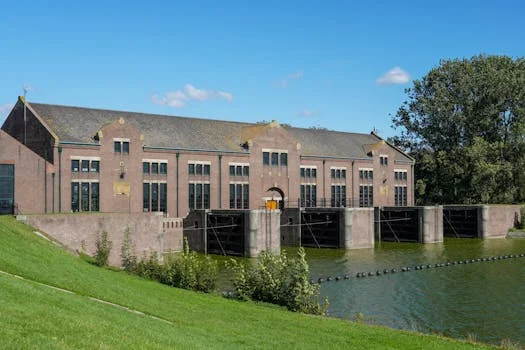
MBR systems eliminate the need for secondary clarifiers and tertiary filtration units, resulting in a footprint reduction of up to 60% compared to conventional activated sludge. This consolidation of process steps allows engineers to design compact "package" plants that are easily scalable. When comparing MBR to Moving Bed Biofilm Reactors (MBBR), MBR provides a physical barrier (the membrane) that guarantees effluent quality regardless of sludge settleability, whereas MBBR still requires a downstream clarification step to meet KLHK standards.
The performance differential is most evident in the removal of Total Suspended Solids (TSS) and pathogens. While conventional systems typically achieve TSS levels between 10-30 mg/L, MBR systems consistently produce effluent with TSS <1 mg/L. This high-quality permeate is suitable for immediate reuse in non-potable applications such as cooling tower makeup or landscape irrigation, which is a significant advantage for facilities in water-stressed regions like West Java. For a detailed technical breakdown, see this comparison of submerged MBR systems for industrial wastewater treatment.
| Feature | MBR System | MBBR System | Conventional (CAS) |
|---|---|---|---|
| Effluent TSS | <1 mg/L | 10 - 20 mg/L | 15 - 30 mg/L |
| Footprint Requirement | Minimal (100%) | Moderate (150%) | Large (250%+) |
| Sludge Production | Low (30-50% less) | Moderate | High |
| Energy Use (kWh/m³) | 0.6 - 1.2 | 0.4 - 0.7 | 0.3 - 0.6 |
| Operational Complexity | High (Automated) | Medium | Medium |
Sludge management costs in Indonesia are rising due to stricter landfill regulations and transportation fees. MBR systems operate at higher SRTs, which results in more complete endogenous respiration and a 30-50% reduction in waste activated sludge (WAS) volume. This reduction directly lowers the OPEX associated with sludge dewatering and disposal. To further automate these processes, many operators integrate HydropureWater’s automatic chemical dosing systems for MBR membrane cleaning to maintain flux and manage sludge characteristics without manual intervention.
Indonesia-Specific Compliance: KLHK Standards and Permitting Requirements
The primary regulatory framework for industrial wastewater in Indonesia is Peraturan Menteri Lingkungan Hidup No. 5 Tahun 2014, which sets specific limit values for BOD, COD, TSS, and pH across various industrial sectors. For general industrial estates, the standard limits are BOD ≤30 mg/L, COD ≤100 mg/L, and TSS ≤50 mg/L. MBR technology is uniquely positioned to meet these standards even when treating high-strength influent from textile or food processing plants, where BOD levels can exceed 1,000 mg/L before treatment.
Permitting for new wastewater projects in Indonesia requires either an AMDAL (Environmental Impact Assessment) for systems exceeding 1,000 m³/day or a UKL-UPL (Environmental Management and Monitoring Effort) for smaller installations. The process typically takes 6 to 12 months and involves public consultation and technical reviews by local environmental agencies (DLH). Utilizing MBR technology can simplify the AMDAL process by demonstrating a commitment to "Best Available Technology" (BAT) and providing a clear path for water recycling, which is highly favored by Indonesian regulators.
Specific regional regulations, such as Jakarta’s Governor Regulation No. 122/2015, impose even stricter mandates on commercial buildings and industrial facilities to treat wastewater to a level suitable for reuse. Failure to comply can result in administrative fines ranging from IDR 100 million to IDR 5 billion, or even the revocation of business licenses. For projects in Sumatra, engineers should reference the package wastewater treatment plants for Sumatra: technical specs and compliance requirements to ensure alignment with regional variations in enforcement.
Cost Breakdown: CAPEX, OPEX, and Membrane Replacement for Indonesian Projects
The Capital Expenditure (CAPEX) for a 1,000 m³/day MBR plant in Indonesia in 2025 ranges from IDR 12 billion to IDR 25 billion, depending on the level of automation and the quality of the membrane modules. Civil works typically account for 20% of the total cost, which is significantly lower than conventional plants due to the absence of large settling tanks. However, the initial investment in membrane modules and sophisticated control systems (PLC/SCADA) represents approximately 60% of the equipment cost.
Operating Expenditure (OPEX) is primarily influenced by electricity rates, which for industrial users (I-3 and I-4 categories) in Indonesia range from IDR 1,400 to IDR 1,600 per kWh. Energy for aeration and permeate pumping typically constitutes 40% of the OPEX. Membrane replacement is the second largest operational cost, occurring every 5 to 8 years. For a 1,000 m³/day plant, a full membrane replacement cycle can cost between IDR 2 billion and IDR 4 billion.
| Cost Component | Estimated Cost (IDR) | % of Total OPEX |
|---|---|---|
| Electricity (0.8 kWh/m³) | IDR 1,120 - 1,280/m³ | 40% |
| Membrane Replacement (5-8 yr) | IDR 300 - 600/m³ (Amortized) | 25% |
| Labor (2 Operators + 1 Tech) | IDR 150 - 250/m³ | 15% |
| Chemicals (Cleaning/Dosing) | IDR 80 - 150/m³ | 10% |
| Maintenance & Spares | IDR 80 - 150/m³ | 10% |
Financing options in Indonesia are expanding, with state-owned banks like Mandiri and BNI offering "Green Loans" for environmental infrastructure. Additionally, Public-Private Partnership (PPP) models are becoming common for municipal projects, allowing local governments to spread the CAPEX over a 15-20 year period. For comparative data on similar regional markets, see the guide on MBR wastewater treatment systems in Nepal: technical specs and cost benchmarks.
ROI Calculation: When Does MBR Make Financial Sense for Indonesian Projects?
Return on Investment (ROI) for MBR systems is typically achieved within 5 to 7 years when land savings and water reuse revenue are factored into the financial model. In urban centers like Jakarta or Surabaya, the ability to save 1,000 to 2,000 square meters of land can result in immediate capital savings of IDR 10-20 billion, which often offsets the higher equipment cost of MBR relative to conventional systems.
Water reuse provides a direct revenue stream or cost avoidance. Industrial water rates from regional utilities (PDAM) can range from IDR 12,000 to IDR 20,000 per cubic meter. By treating and reusing 70% of wastewater for non-process applications, a factory can reduce its water procurement costs by millions of rupiah monthly. the mitigation of regulatory risk—avoiding the IDR 100M+ fines mentioned earlier—adds a layer of financial security that conventional systems cannot guarantee under fluctuating influent loads.
| Factor | Conventional System | MBR System | Financial Impact (10-Year) |
|---|---|---|---|
| Land Required (m²) | 2,500 | 1,000 | IDR 15B Saving (at 10M/m²) |
| Water Reuse Revenue | Low (Needs Tertiary) | High (Direct Reuse) | IDR 8B - 12B Revenue |
| Sludge Disposal Cost | High | Low (30% less) | IDR 2B - 3B Saving |
| Compliance Fines Risk | Moderate/High | Very Low | Avoidance of IDR 1B+ fines |
| Estimated ROI | 8 - 10 Years | 5 - 7 Years | MBR yields higher NPV |
A typical ROI framework for a textile factory in Bandung involves calculating the Net Present Value (NPV) of the MBR system against a CAS system. While the CAS system has a lower initial CAPEX, the combined impact of land opportunity costs, high sludge disposal fees, and the inability to reuse water without additional investment makes MBR the more economically sound choice over a 10-year lifecycle.
Vendor Selection Checklist: How to Choose an MBR Supplier in Indonesia
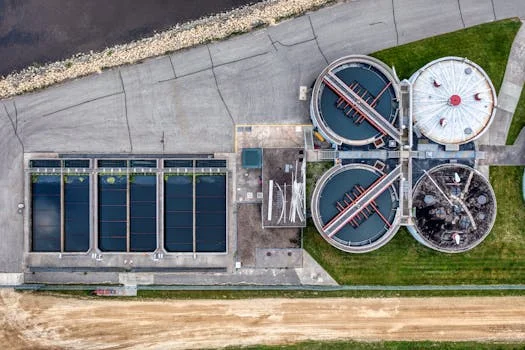
Selecting an MBR supplier in the Indonesian market requires a rigorous evaluation of technical capability and local support infrastructure. Many international brands sell equipment through local distributors who may lack the engineering depth to provide long-term maintenance. It is essential to choose a vendor with a proven track record of successful installations within Southeast Asia and a dedicated team for on-site commissioning and training.
- Technical Specifications: Verify that the membrane flux rates are rated for tropical climates (15-25 LMH) and that the PVDF material is genuine. Request data on the Specific Aeration Demand (SADm) to ensure energy efficiency.
- Automation and Control: Ensure the system includes a PLC-based control unit with remote monitoring capabilities. This allows for 24/7 technical support and proactive troubleshooting.
- Local Support: Confirm the availability of local spare parts (pumps, blowers, sensors) and the response time for on-site technicians. HydropureWater provides 24/7 remote support and on-site training for Indonesian operators.
- Compliance Guarantee: The supplier should provide a performance guarantee that the effluent will meet KLHK standards (BOD <30, TSS <50) under the specified design influent conditions.
- Membrane Warranty: Look for a minimum 2-year full warranty on membrane modules, with a pro-rated warranty extending to 5 years.
Frequently Asked Questions
What is the typical lifespan of MBR membranes in Indonesia?
With proper maintenance and regular Chemical Enhanced Backwash (CEB), high-quality PVDF flat sheet membranes typically last 5 to 8 years. Lifespan is heavily influenced by the effectiveness of the pretreatment (screening) and the consistency of the cleaning regime.
Does MBR require a highly skilled operator?
While MBR systems are more complex than septic tanks, modern systems are highly automated. An operator with basic mechanical and electrical knowledge can manage the system via the PLC interface. HydropureWater provides comprehensive training to ensure local staff can perform routine maintenance and chemical cleaning.
Can MBR effluent be used for drinking water in Indonesia?
While MBR effluent is extremely clean (TSS <1 mg/L), it is generally classified for non-potable reuse (irrigation, cooling, toilet flushing). To reach drinking water standards (Permenkes 492/2010), additional steps like Reverse Osmosis (RO) and advanced disinfection are required.
How does MBR handle "shock loads" in industrial settings?
MBR systems are highly resilient to fluctuations in organic loading because of their high MLSS concentration. The membrane provides a physical barrier that prevents solids carryover even during biological upsets, which is a common failure point for conventional clarifiers.