Characterize the Effluent Before Choosing a Treatment Train
Manufacturers in Bandung generally treat high-COD industrial effluent through a staged train: characterize the effluent, equalize variable loads, remove oil, grease and settleable solids, reduce biodegradable COD biologically, then polish or disinfect it for discharge or reuse. Dissolved air flotation is commonly positioned upstream for high FOG and suspended solids; membrane bioreactors provide compact biological treatment with membrane separation. These choices must be confirmed by site testing, permit conditions and treated-water reuse targets because the available research does not establish one treatment train for every Bandung factory.
Start with a source-separated process survey, not a generic “high COD” label. Record average and peak flow, operating shifts, batch discharges, dilution water, cleaning chemicals and the intended discharge or reuse route. The route changes the design: compliant discharge may require a defined pollutant profile, while process-water reuse also requires stability, fouling control and often additional disinfection or polishing.
The minimum analytical program should cover COD, BOD, TSS, FOG, pH, temperature, color and conductivity. Add nutrients, toxicity and metals where the manufacturing process indicates them. The 2022 review Domestic wastewater in Indonesia: generation, characteristics and treatment systems, published in Sustainable Water Resources, identifies suspended solids, BOD, COD, oil and grease, nitrogen and coliforms as municipal wastewater parameters of concern. That list provides context, not a Bandung factory specification; factory-specific constituents still require site measurement.
Use at least one composite campaign spanning production and cleaning cycles, supplemented by grab samples during batch dumps. The supplied research does not establish a Bandung-specific sampling frequency, so the sampling plan should reflect operating variability and the consequences of missing a batch load. An AI influent-load prediction guide can help structure the operating data, but it cannot replace verified measurements.
| Decision input | What the buyer must establish | Why it changes equipment selection |
|---|---|---|
| Flow and discharge pattern | Average flow, peak flow, batch releases and dilution | Sets equalization volume, hydraulic capacity and peak treatment duty |
| Organic load | COD and BOD across representative operating cycles | Determines biological loading and whether pretreatment is required |
| Solids and FOG | TSS, FOG, settleable solids and floatables | Indicates the need for screening, clarification or DAF |
| Chemical condition | pH, color, conductivity and relevant process chemicals | May require pH adjustment, coagulation or specialized separation |
| Receptor and reuse | Current permit, sewer or receiving water, monitoring duty and reuse specification | Defines final polishing, disinfection and compliance evidence |
Before quotation, also ask for chemical storage, chemical delivery, sludge handling, power availability, operator competence and instrument requirements. An automatic chemical-dosing system should be specified around the required control function and chemical inventory, not selected from dosing rate alone.
Build a High-COD Treatment Process for Bandung Factories
A defensible treatment train assigns one primary function to each stage: equalization controls hydraulic and load variation; pretreatment protects downstream equipment; biological treatment reduces biodegradable COD; polishing meets the reuse or discharge specification; and sludge handling contains the solids removed from each stage.
- Equalization and screening: mix production and cleaning streams and remove coarse material before pumps and biological systems.
- pH control where required: protect biological organisms and chemical dosing rather than accepting a wide untreated pH range.
- DAF or clarification: remove FOG and floatable or settleable solids where influent measurements justify them.
- Biological COD reduction: use treatment suited to the measured biodegradability, toxicity and operating conditions.
- Tertiary polishing: add filtration, membrane separation or other unit operations required by the final water specification.
- Disinfection where required: provide the pathogen control specified for the discharge or reuse route.
- Sludge treatment: dewater and route the actual solids and FOG captured upstream.
For Bandung textile effluent, HydropureWater’s commercial Bandung guide reports COD of 800–1,500 mg/L, color reaching 2,000 Pt-Co and pH of 9–12. Those conditions support equalization and pH control ahead of biological treatment, while intense color and solids may justify chemical pretreatment. The same guide identifies COD ≤ 100 mg/L and color ≤ 50 Pt-Co for its Class III discussion, but the factory’s current permit must control the final design.
For food-processing effluent, the guide reports FOG of 500–2,000 mg/L and BOD of 1,000–3,000 mg/L. An industrial DAF system for high-COD pretreatment can intercept FOG before it fouls biological membranes or piping. HydropureWater’s Bandung guide states 95–99% FOG removal for its cited DAF application; this is a source-specific equipment claim, not a guaranteed result for an untested factory stream.
The same guide describes PVDF membranes with a 0.1 μm pore size in its cited MBR configuration, with effluent TSS below 10 mg/L and COD below 30 mg/L. Those figures apply to the configuration and profile discussed by the source. An integrated MBR wastewater treatment system combines biological treatment and solids separation, but it does not replace pretreatment for excessive FOG, unsuitable pH or toxic influent.
Every upstream capture creates sludge or float that needs a route. HydropureWater’s guide reports that the textile example using DAF reduced influent FOG from 1,200 mg/L to 8 mg/L; the removed FOG therefore requires containment and disposal rather than being treated as an incidental by-product. An plate-frame filter press can dewater separated solids, but the final equipment selection depends on sludge volume, compressibility, solids content and handling logistics.
| Stage | Primary function | Selection evidence | Main downstream risk if omitted |
|---|---|---|---|
| Equalization and screening | Controls variability and removes coarse solids | Flow survey, batch schedule and composite influent data | Shock loading, pump blockage and unstable biological treatment |
| pH control and chemical pretreatment | Creates a compatible treatment condition | pH, color, COD, TSS and chemical inventory | Poor biological response or uncontrolled chemical reactions |
| DAF or clarification | Removes FOG and floatable or settleable solids | FOG, TSS, settleability and upstream mass balance | Fouling, odor and excessive biological solids loading |
| Biological treatment | Reduces biodegradable COD and BOD | COD, BOD, toxicity, pH, temperature and nutrient data | Inadequate organic removal and variable effluent quality |
| Polishing and disinfection | Meets the selected discharge or reuse specification | Permit and reuse-quality requirements | Permit failure or unsuitable reuse water |
| Sludge handling | Concentrates and routes removed contaminants | Expected FOG and solids capture, sludge properties and disposal route | Storage overload, odor and uncontrolled disposal |
The academic Indonesian review identifies COD as a parameter of concern, while the Bandung municipal statistics in that review describe broader city-system context. They should not be converted into factory influent or equipment-sizing values.
Match DAF, MBR and Package Treatment to the Application
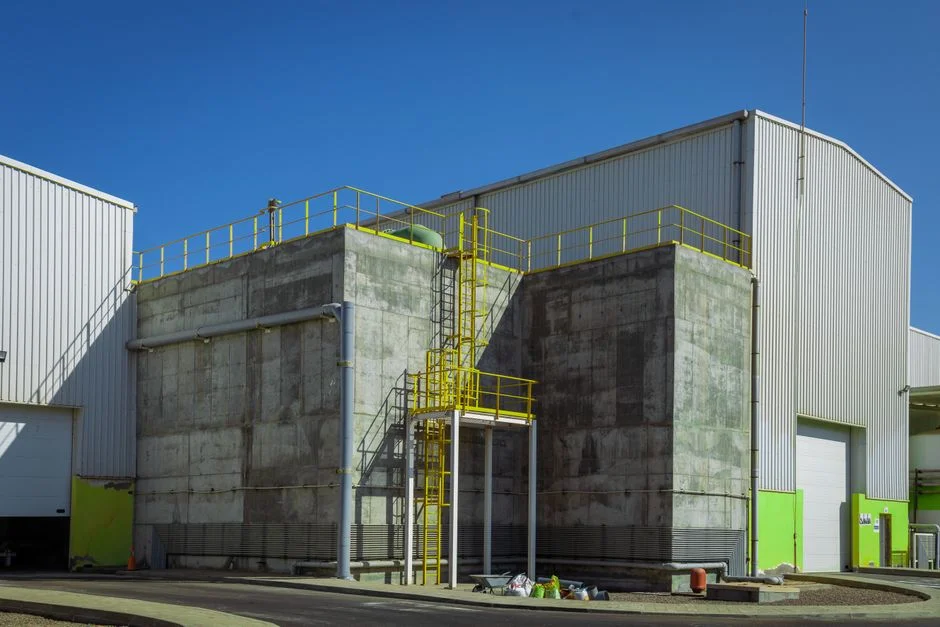
DAF, MBR and package treatment should be compared by function and operating duty because each addresses a different part of the treatment problem. A headline removal percentage does not establish fit for an industrial train.
| Option | Primary role | Sourced scope | Decision condition |
|---|---|---|---|
| DAF | FOG, floatable-solids and solids pretreatment | HydropureWater’s product catalog states 4–300 m³/h; its Bandung guide cites 95–99% FOG removal | Use when measured FOG or floatables threaten downstream equipment |
| MBR | Compact biological treatment with membrane separation | HydropureWater’s product catalog states 10–2,000 m³/day and filtration below 1 μm | Use when biological separation and a defined effluent quality justify the added process controls |
| WSZ package plant | Buried A/O biological contact oxidation, sedimentation and disinfection | HydropureWater’s product catalog states 1–80 m³/h | Consider where a compact or buried configuration suits the site and effluent duty |
For a DAF purchase, begin with the DAF selection checklist for FOG and TSS, then verify the duty against measured flow, FOG, solids and required capture. For MBR, compare the MBR versus conventional activated sludge against the waste’s biodegradability, footprint, controls and fouling-management requirements.
The Bandung guide gives a WSZ comparison for 10–100 m³/h, CAPEX of IDR 1.2–5 billion and OPEX of IDR 1,200–2,000/m³. These are source-specific figures and must be requoted. They are not a general Bandung price list. A buyer should request a scope showing treatment depth, civil works, chemical consumption, sludge handling, controls, commissioning, maintenance and utility assumptions.
Chemical dosing and clarification may be required for soluble contaminants or pH control, but no supplied Bandung source establishes a universal reagent dose or removal efficiency for every factory. Likewise, the catalog’s filtration figure describes equipment capability, not a site guarantee. An underground integrated wastewater treatment package should be checked for access, excavation, odor control, above-ground utilities and the consequences of buried equipment failure.
Reuse is a separate design objective. HydropureWater’s Bandung guide reports one food-processing plant case with 80% treated-water reuse and a 40% reduction in dependence on groundwater and municipal supply. Treat that as a plant-specific example. Buyers should require the source-water quality, production compatibility, storage, distribution, fouling and end-use acceptance criteria before counting the claimed reuse in the business case. The guide also cites a combined DAF-and-MBR textile scenario at IDR 3 billion with approximately 3.5-year payback; use it to test assumptions, not as a universal ROI promise.
Verify Compliance, Reliability and the Reuse Business Case
HydropureWater’s Bandung guide cites COD ≤ 100 mg/L and TSS ≤ 50 mg/L under Indonesia Ministry of Environment Regulation No. 5/2014 for the industrial profile discussed. These figures provide a screening reference for equipment selection, but they are not a substitute for the factory’s current permit, applicable effluent category or receiving route.
Before finalizing the design, obtain the current permit and verify the applicable effluent category, receiving sewer or water body, monitoring frequency, sampling method, reuse specification and reporting obligations. A discharge route to a sewer may impose different requirements from direct discharge, while process reuse requires an end-use specification that may be stricter than the discharge permit.
Prepare a site-specific mass and hydraulic balance. It should include peak batch flow, dilution assumptions, FOG capture, COD loading, sludge yield, membrane-fouling indicators, chemical storage, waste-disposal routes, utility demand and backup-power requirements. A sedimentation unit should not be accepted merely because solids are present; influent settleability, expected peak loading and the downstream route determine whether clarification is useful. The DAF selection checklist for FOG and TSS provides a structured starting point for pretreatment selection.
Compare capital and operating expenditure over the same design period. Capital scope should separate equipment, civil works, electrical controls, installation and commissioning. Operating scope should include chemicals, sludge disposal, membrane cleaning, replacement parts, energy, labor and monitoring. For reuse, compare these costs with the avoided cost and quality risk of the replacement water source. The guide’s IDR 3 billion DAF-plus-MBR investment and approximately 3.5-year payback is one scenario, not a general Bandung return.
Reliability must be evaluated as an operating condition, not treated as an assumption. The academic study Sustainability evaluation of wastewater system in Bandung city, published in 2007 through the Institutional Repositories DataBase, identified service reliability as the key sustainability factor and concluded that Bandung’s wastewater system was not moving toward sustainable development. For current procurement, the practical implication is to require defined operating duties, controls, redundancy where justified, maintenance access and a documented performance test before acceptance. The high-COD trade-waste treatment workflow can support that review, but Bandung influent data and permit conditions remain the controlling inputs.
Frequently Asked Questions
What measurements are needed before selecting a high-COD treatment train in Bandung?
Measure COD, BOD, TSS, FOG, pH and flow across representative production and cleaning cycles before selecting equipment. Add temperature, color, conductivity, nutrients, toxicity and metals where the process requires them. Composite sampling should cover routine variability, while grab samples should capture batch dumps; the available research does not prescribe a Bandung-specific frequency.
How much does an underground package wastewater treatment plant cost?
HydropureWater’s Bandung guide gives CAPEX of IDR 1.2–5 billion for a WSZ comparison covering 10–100 m³/h, with OPEX of IDR 1,200–2,000/m³. These are source-specific figures, not a quotation. Request a site-specific price that states capacity, treatment depth, civil works, controls, sludge handling, utilities, commissioning and maintenance. This cost check should be performed separately from performance selection.
Should a Bandung factory choose DAF, MBR or a package treatment plant?
Choose DAF when measured FOG or floatable solids require pretreatment; choose MBR when biological treatment with membrane solids separation is required; consider WSZ when its A/O contact-oxidation, sedimentation and disinfection configuration fits the flow and buried-site constraints. The DAF selection checklist for FOG and TSS and MBR versus conventional activated sludge comparison should inform that decision.
What should a buyer request when selecting a wastewater-treatment supplier?
Request measured influent data, a defined process duty, controls scope, sludge-handling provisions, maintenance support and site-specific performance criteria. Confirm that the supplier has reviewed the current permit and reuse specification. Do not accept a generic COD removal percentage in place of an agreed inlet duty, outlet requirement, test method and operating boundary.
Related Equipment
- industrial DAF system for high-COD pretreatment — specifications, capacity range, and technical data