What Rural Bangladesh Needs from a Sewage Treatment System
Rural sewage treatment in Bangladesh should be planned as a decentralized system because groundwater supplies more than 98% of the population, while unsealed sanitation facilities can contaminate shallow wells. The design must address blackwater and greywater, seasonal flow variation, floods, odor control, power reliability, and long-term O&M. Package A/O plants suit many village-scale applications; MBR is an alternative where tighter solids separation or reuse is required. Selection should begin with measured household, flow, BOD/COD, solids, and groundwater data—not a generic unit size.
These Bangladesh figures are historical context, not current 2026 measurements. The Lund University 2016 master thesis reports that groundwater supplies more than 98% of Bangladesh’s population, while approximately 87% of rural public wells and 94% of rural private wells are shallow tube wells. It also cites SIMEC Bulletin’s finding that widespread use of shallow tubewells and unsealed sanitary latrines, particularly in rural areas, leads to fecal contamination of groundwater. A new procurement should therefore verify current wells, sanitation practices, and contamination pathways in the proposed service area.
The treatment objective follows from that risk: reduce fecal and organic pollution before effluent reaches nearby groundwater, surface water, or a defined reuse application. Blackwater contains feces and urine and carries the greater pathogen risk; greywater comes from bathing, washing, and food preparation and generally contains fewer pathogens, although it is not automatically safe. The Lund University case reports that about 75% of total wastewater was greywater, citing Khatun and Amin (2011). This source-dated finding supports separating blackwater and greywater during design, not assuming a current village-wide composition.
Equipment selection must reflect local toilet practices, water use, flood exposure, available skills, power conditions, and the receiving environment. An underground integrated sewage treatment plant may suit a site where land availability is limited, but burial depth, access, groundwater, and maintenance arrangements still require project-specific design.
Build a Site-Specific Design Basis Before Choosing Equipment
A defensible equipment selection begins with measured site data, because nominal capacity alone does not establish hydraulic, treatment, or compliance performance.
- Map households, sanitation types, collection points, and the intended service boundary.
- Document water supply, household practices, and seasonal water use.
- Measure dry-weather and wet-weather flows rather than estimating only from population.
- Sample BOD, COD, suspended solids, pH, and fecal indicators across relevant operating conditions.
- Identify the receiving environment, groundwater constraints, discharge point, and any reuse pathway.
- Size the treatment train only after the design flow, pollutant load, and receiving requirements are established.
According to the supplied sewage reference, BOD and COD are indirect methods for quantifying organic matter, while solids, nitrogen, phosphorus, and fecal-contamination indicators also inform treatment and discharge options. Organic-content load is calculated as sewage flowrate multiplied by pollutant concentration. That distinction matters: a package selected for peak hydraulic flow may still lack biological or solids-removal capacity for the measured load.
| Design input | What the supplier should state | Procurement check |
|---|---|---|
| Average and peak flow | Design basis and hydraulic calculations | Does it reflect measured dry- and wet-weather conditions? |
| Inlet wastewater | Permitted BOD, COD, solids, pH, and flow range | Are sampling methods, locations, and averaging periods defined? |
| Performance | Process guarantees and treatment objectives | Can each guarantee be tested under the stated inlet conditions? |
| Operations | Power demand, sludge production, chemicals, and control requirements | Are operating inputs available locally and within the project budget? |
| External conditions | Groundwater, flooding, and power assumptions | Has each risk been surveyed or assigned as a priced exclusion? |
Ask the bidder to state the full design basis, treatment train, process guarantees, inlet limits, power demand, expected sludge production, and performance-test method. Also request the calculation behind any allowance for rainfall, infiltration, groundwater, flooding, or unreliable electricity. The supplied research provides no Bangladesh-specific numerical allowances for those conditions, so they must not be filled with generic assumptions. Equipment screening at a rotary mechanical bar screen may be relevant to a proposed project, but upstream screening does not replace wastewater sampling or process selection.
Compare A/O Package Plants, MBR Systems, and Community-Scale Conventional Treatment
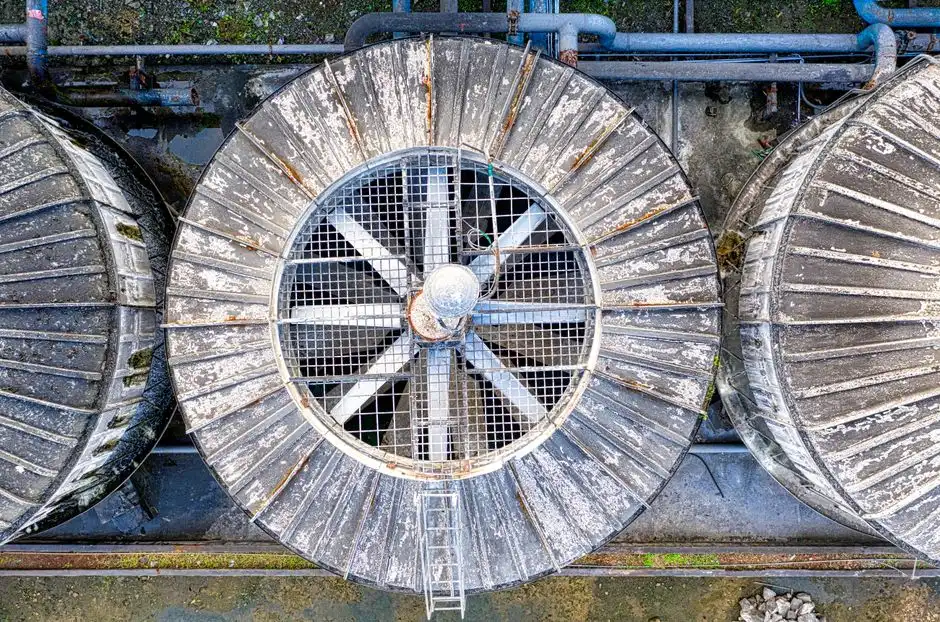
A/O package plants prioritize compact installation and operational simplicity; MBR offers finer solids separation at higher mechanical complexity; conventional community treatment offers process transparency where land, construction capability, and sustained institutional operation are available.
| Decision factor | Decentralized A/O package | MBR system | Conventional community plant |
|---|---|---|---|
| Treatment approach | Anoxic/aerobic biological contact oxidation, sedimentation, and disinfection in a package | Activated sludge with submerged membrane filtration | Site-built biological, settling, and disinfection stages |
| Installation | Suited to compact or buried deployment where excavation and access are addressed | Compact installation; membrane, controls, and maintenance require specialist support | Requires land, civil works, construction capability, and process control |
| Operator role | Lower routine staffing burden, but inspection and maintenance remain necessary | Requires membrane cleaning, monitoring, and specialist competence | Requires plant operation, process adjustment, laboratory access, and maintenance management |
| Effluent application | Potentially suitable where package treatment meets the receiving or reuse requirement | Potentially suitable for finer solids separation and defined non-potable reuse pathways | Can be tailored where construction resources and institutional capacity exist |
| Main procurement risk | Oversizing, site installation, handover, and unclear O&M ownership | Cost, membrane replacement, controls, fouling, and local technical support | Land, schedule, construction quality, and long-term operating ownership |
HydropureWater’s WSZ Series combines anoxic/aerobic biological contact oxidation, sedimentation, and disinfection in a single buried package unit. Its verified product catalog states that it handles 1–80 m³/h, is fully automated, requires no operator, and can also be trailer-mounted. Those features may simplify deployment, but “no operator required” does not mean no rural O&M: local personnel still need access, inspection routines, housekeeping, consumable availability, and a response route for failures.
The HydropureWater MBR combines activated sludge treatment with submerged PVDF membrane filtration. Its product information specifies filtration below 1 μm, a marketed 60% smaller footprint than conventional systems, and a capacity range of 10–2,000 m³/day. These are product claims, not site guarantees. MBR is a logical candidate where the project requires finer solids separation, a compact installation, or a defined reuse pathway. It does not remove the need for disinfection, a valid effluent permit, local O&M, or confirmation that the reuse pathway is acceptable under applicable health requirements.
Choose a conventional community sewage treatment plant when land, local construction capability, process-control capacity, and long-term institutional maintenance are available. Retain a package option where installation speed, compactness, and operational simplicity dominate. The final choice should follow verified flow and load, land, reuse, receiving-water, construction, and maintenance constraints rather than a universal technology ranking.
Specify the Package Plant for Local Installation and Lifecycle Performance
A package-plant specification should transfer design responsibility to the supplier without transferring unresolved site risks into an untested equipment guarantee.
Require a written treatment train, hydraulic design basis, process guarantees, commissioning protocol, controls scope, electrical supply requirements, operating inputs, and exclusions. If the unit will be buried, require access arrangements, lifting and excavation requirements, groundwater and soil assumptions, external works, odor-control provisions, and flood protection. The bidder should identify every item outside the equipment package—collection piping, pumps, screens, tanks, laboratory services, power supply, or discharge works—because omissions often become change orders.
Sludge management must be visible in the offer. Require the supplier to identify expected sludge generation and explain stabilization, storage, removal, and any proposed reuse or disposal route. The supplied evidence does not establish Bangladesh-specific disposal standards, so the project must obtain the applicable requirements and assign responsibility for lawful handling.
Where the treatment objective requires pathogen control beyond the package treatment, evaluate the integrated disinfection approach or add a UV sterilizer for water treatment as a reviewed option. Do not assume that package disinfection alone satisfies the receiving requirement. If sludge dewatering is required, assess a plate and frame filter press as a downstream option and verify compatibility with the selected process and sludge properties.
Make performance acceptance conditional on stated inlet wastewater characteristics and flow. BOD, COD, suspended solids, and hydraulic loading must be defined before a guarantee is meaningful. The acceptance protocol should specify sampling points, test methods, operating period, laboratory arrangements, pass/fail criteria, corrective-action rights, and remedies for non-performance.
Plan Commissioning, Maintenance, and Community Ownership
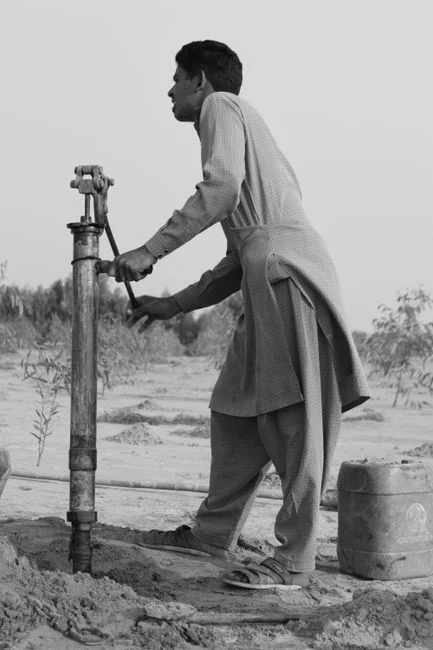
Commissioning should demonstrate that the installed system handles the project’s wastewater and that the village institution can operate it after handover.
| Stage | Required action | Acceptance evidence |
|---|---|---|
| Baseline | Confirm inlet wastewater, inspect works and equipment, verify power and utilities | Approved baseline report, inspection records, and punch list |
| Inlet testing | Check flow, screening, controls, pumping, and leak or odor conditions | Functional-test records |
| Biological start-up | Bring the treatment process into its specified operating condition | Supplier start-up report |
| Effluent testing | Sample against the agreed objectives and receiving requirements | Independent test results and accepted performance record |
| Handover | Train operators and transfer manuals, drawings, controls access, spares, and warranty documents | Signed handover and training record |
| Operation | Apply a scheduled inspection, sampling, sludge-removal, and repair programme | Monitoring log, escalation records, and maintenance history |
The central O&M principle comes directly from the Lund University 2016 thesis: decentralized treatment will not achieve its objective without appropriate maintenance. Assign responsibility for household connections, routine inspections, power or reagent availability, laboratory access, sludge removal, repairs, spare parts, and recordkeeping. These are institutional duties, not optional extras added after installation.
Define operating indicators and escalation triggers with the supplier, but tie them to the project-specific design basis and applicable Bangladesh requirements. The handover package should include training, the operating manual, as-built drawings, control-system access, a spare-parts list, warranty scope, and local or remote technical support arrangements. Comparable implementation context is available in the Rural Sewage Treatment in Cambodia: 2026 Equipment Guide and Residential Wastewater Treatment in Costa Rica: 2026 Guide, but their site conditions should not be transferred automatically to Bangladesh.
Finally, connect reuse to the actual treatment objective. The supplied sewage reference identifies toilet flushing, landscape or crop irrigation, and other non-potable uses as possible greywater applications, subject to local health requirements. A reuse claim without a defined quality standard, receiving environment, and user responsibility is incomplete.
Use a Supplier-Screening Checklist to Reduce Procurement Risk
A credible quotation should demonstrate that the supplier has engineered for the verified site basis rather than packaged a nominal-capacity unit and excluded the difficult conditions.
| Supplier response required | Evidence to request | Reason to verify |
|---|---|---|
| Process proposal and design basis | Calculated flow and load, treatment train, inlet envelope, and performance objectives | Shows that the proposal matches the site |
| Itemized scope boundary | Civil works, installation, commissioning, training, controls, laboratory support, sludge removal, consumables, spares, warranty, and support | Exposes exclusions and competing bid assumptions |
| Bangladesh-relevant evidence | Flood exposure, variable flows, local water quality, power constraints, operator skill levels, corrosion considerations, and replacement-part logistics | Tests whether local conditions were considered |
| Acceptance and remedy | Test protocol, measurable criteria, non-performance remedy, and exclusions | Connects payment or handover to verified performance |
| Lifecycle support | Training plan, manual, as-built drawings, controls access, spares, warranty, and support route | Supports long-term rural O&M |
Use a structured comparison for package-plant pricing, scope, and supplier checks, but do not import costs from another country without adjustment. The Package Wastewater Treatment Plant Cost Luzon Philippines 2026 guide can support checklist development, not serve as a Bangladesh quotation benchmark.
Treat sludge-to-energy or plasma gasification as a separate advanced concept, not a standard rural procurement assumption. The International Plasma Technology Center reports a modeled thermal efficiency approaching 85% for its most efficient configuration, but that source does not establish suitability, scale, cost, or economics for a rural Bangladeshi project.
Frequently Asked Questions
How should a village sewage treatment plant be sized?
Size it from verified household connections, measured dry- and wet-weather flows, and wastewater characteristics. Ask each bidder to show average and peak flow assumptions, the hydraulic basis, and treatment capacity at the agreed BOD, COD, and solids loads. A nominal unit size is not a substitute for site data.
How much should decentralized wastewater treatment cost in Bangladesh?
The supplied research contains no Bangladesh-specific capital or operating cost benchmark, so a defensible price cannot be stated. Request itemized quotations covering the equipment, civil and installation works, commissioning, training, controls, laboratory support, sludge removal, consumables, spares, warranty, power requirements, and maintenance support. Compare bids on the same scope and acceptance conditions.
When should a buyer choose MBR instead of a package A/O plant?
Consider MBR when verified requirements justify finer solids separation, a compact installation, or a defined reuse pathway. Require the supplier to explain membrane maintenance, fouling control, replacement provisions, specialist support, and the complete disinfection and reuse requirements. The lower footprint and filtration claims in product literature are not project guarantees.
How can a procurement team assess supplier capability?
Use the screening checklist above: request a process proposal tied to the design basis, an itemized scope, local-condition evidence, a test protocol, measurable acceptance criteria, remedies for non-performance, and a lifecycle support plan. Check whether the supplier names exclusions rather than presenting a universal package as if it fits every village.
Who should own rural O&M after handover?
Assign responsibility before award for household connections, inspections, laboratory access, sludge removal, repairs, spare parts, and recordkeeping. Require training, operating and as-built documentation, controls access, warranty terms, and technical support. The central lesson from the Lund University 2016 thesis is that decentralized treatment fails its objective without appropriate maintenance.
Related Equipment
- MBR membrane bioreactor system — specifications, capacity range, and technical data