What treatment is required for residential wastewater in Costa Rica?
Residential wastewater treatment in Costa Rica should match the sewage flow and load, receiving environment, and applicable discharge or reuse requirements. Decree 33601-MINAE-S covers household wastewater from toilets, showers, bathroom and kitchen sinks, and laundry, and a 2021 national analysis of 23,435 samples identified BOD and COD among the highest environmental risks. Package biological plants can serve decentralized residential deployments, while MBR offers finer solids separation for demanding reuse objectives. Treatment, permitted disposal, monitoring, and maintenance must therefore be assessed together before selecting equipment.
Decree 33601-MINAE-S establishes maximum discharge and reuse limits for wastewater generators, including differentiated concentration limits for COD, BOD, and TSS according to wastewater characteristics. It also requires operating reports to include physicochemical and microbiological effluent properties, with Ministry of Health cross-checks possible. The applicable limits must be confirmed for the project because the regulation and receiving-water conditions determine the required outcome; no single product specification can be presumed compliant.
The 2021 study, Wastewater Discharge and Reuse Regulation in Costa Rica: An Opportunity for Improvement, built its database from 23,435 wastewater samples covering 2016–2020. Of these, 7,706 came from generators discharging into sanitary sewer systems, 12,840 from receiving bodies, and 2,889 from other legally authorized reuse routes. That distribution demonstrates why the final destination must be established before selecting a plant. A broader domestic sewage treatment equipment guide can help frame the equipment-selection questions, but Costa Rican compliance must be assessed locally.
Build the treatment train around the wastewater and receiving environment
A defensible treatment train follows the sequence: characterize flow and loads; establish the authorized discharge or reuse route; select biological treatment; remove solids; disinfect; then define monitoring and maintenance. Equipment should not be selected first and used to infer the permit conditions. The project designer needs measured or defensibly estimated peak flow, average daily flow, BOD, COD, TSS, pH, and any relevant non-residential inputs because the supplied research provides no site-specific design values for a particular development.
Primary treatment uses physical processes such as screening and sedimentation. The 2021 national study reported that these processes remove approximately 30% of BOD, 50–70% of TSS, and 65% of oil and grease. Biological secondary treatment can then remove up to 90% of the organic matter and suspended solids remaining after primary treatment. Those figures describe treatment stages rather than guaranteed performance for a residential package.
Pretreatment becomes necessary if industrial, commercial, hospital, or other non-residential wastewater enters the residential stream, because such contributions can alter process loading and disinfection requirements. If solids-bearing flow is expected, an appropriately selected rotary mechanical bar screen may form part of pretreatment, but the supplier still needs to demonstrate it fits the project flow, retained material, and maintenance arrangement.
Biological treatment should not be treated as complete microbial risk control. The 2025 Antibiotics study detected multidrug-resistant E. coli and Enterococcus at all sampled sites, including hospital wastewater, residential wastewater, effluent, and a tropical estuary. The receiving route therefore needs a defined disinfection basis rather than an assumption that organic and solids removal will satisfy it.
| Design step | Input or output required | Procurement implication |
|---|---|---|
| Wastewater characterization | Peak and average flow, BOD, COD, TSS, pH, and non-domestic contributions | Require a signed sizing basis rather than population alone |
| Disposal or reuse route | Authorized route, receiving body, applicable limits, and authority | Treat regulatory confirmation as a prerequisite to award |
| Treatment train | Physical pretreatment, biological treatment, solids removal, and disinfection | Assign performance responsibility for each stage |
| Verification | Sampling plan, operating responses, commissioning tests, and maintenance records | Define acceptance criteria before purchase |
Compare package biological plants and MBR systems
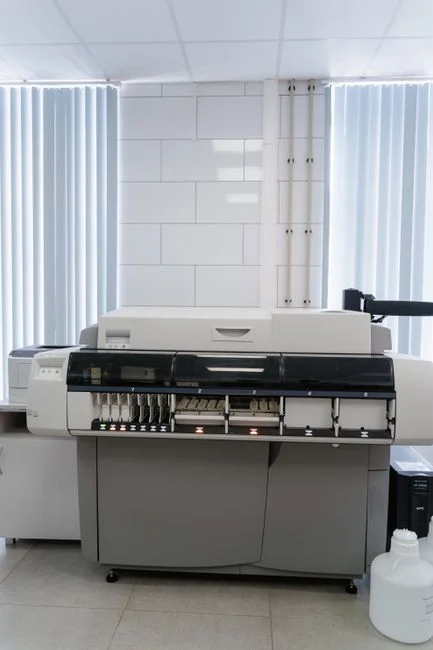
An integrated package plant and an MBR system serve different design conditions, so the correct comparison is process capability against the project’s required effluent and operating context. Neither can be declared compliant or more economical from catalogue information alone: the supplied research contains no comparable Costa Rican cost, energy, lifespan, or site-specific compliance data.
The WSZ underground integrated package combines A/O biological contact oxidation, sedimentation, and disinfection in one buried package. Its published capacity range is 1–80 m³/h, and the manufacturer describes it as fully automated and requiring no operator. That arrangement is relevant to residential communities, hotels, hospitals, factories, and rural deployments where a compact installation and limited routine attendance are priorities. An underground integrated sewage treatment plant should nevertheless be checked for access to the biological and solids-handling components, electrical requirements, and the implications of below-grade installation.
The MBR system combines activated sludge with submerged PVDF membrane filtration below 1 μm. Its published range is 10–2,000 m³/day, and the manufacturer identifies municipal sewage, industrial process water, and water-reuse applications. An MBR membrane bioreactor system is the stronger candidate when the project requires finer solids separation or has a water-reuse objective, but the buyer must request evidence tied to the actual effluent load and reuse conditions.
The manufacturer publishes a claim that the MBR footprint is 60% smaller than conventional systems. This is a manufacturer claim and should not be extrapolated to every Costa Rican site, especially where excavation depth, groundwater, access, or sludge removal constrains the actual layout.
| Decision factor | Integrated biological package plant | MBR system |
|---|---|---|
| Published capacity | 1–80 m³/h | 10–2,000 m³/day |
| Core process | A/O biological contact oxidation, sedimentation, and disinfection | Activated sludge with submerged PVDF membrane filtration below 1 μm |
| Installation form | Buried integrated package | Evaluate the proposed civil arrangement for the site |
| Strongest initial use case | Compact decentralized deployment where the proposed treatment train meets the permit | Finer solids separation or water-reuse objectives |
| Claims requiring verification | Fully automated operation and no operator requirement | Manufacturer’s claim of a 60% smaller footprint than conventional systems |
Select disinfection for the required reuse or discharge condition
Disinfection must be selected against the project’s effluent characteristics and authorized discharge or reuse pathway, not added as a generic component. The 2025 Antibiotics study concluded that undisinfected effluent is a source of antibiotic-resistant bacteria and multidrug-resistant opportunistic pathogens, supporting rigorous treatment that includes disinfection.
That study found 18% of E. coli isolates and 4% of Enterococcus isolates to be ampicillin resistant. It reported ampicillin-resistant E. coli concentrations of 3.9 log10 CFU/100 mL in the estuary and 6.4 log10 CFU/100 mL in untreated residential wastewater. These results demonstrate the environmental health issue; they do not establish a universal chlorine dose, UV dose, or numerical effluent limit for a Costa Rican residential project.
Two equipment options require different validation. A chlorine dioxide wastewater disinfection generator provides on-site, high-purity ClO₂ for wastewater applications, while the UV sterilizer for water treatment is offered in pipeline and open-channel configurations and operates without chemical by-products or taste change. Neither option is automatically superior: chlorine-based validation must consider residual and by-product implications, while UV validation depends strongly on transmittance and dose.
| Validation input | Why it matters | Supplier deliverable |
|---|---|---|
| Flow and contact time | Determines hydraulic exposure and dose or residual conditions | Design basis and calculated operating range |
| Turbidity and effluent solids | Can impair UV transmission or reduce treatment reliability | Performance basis using expected treated-water quality |
| Temperature | Can affect disinfection performance | Specified operating-temperature basis |
| Reuse or discharge condition | Defines the required outcome and applicable authority criteria | Documented compliance with the confirmed requirement |
Size the system with site-specific inputs
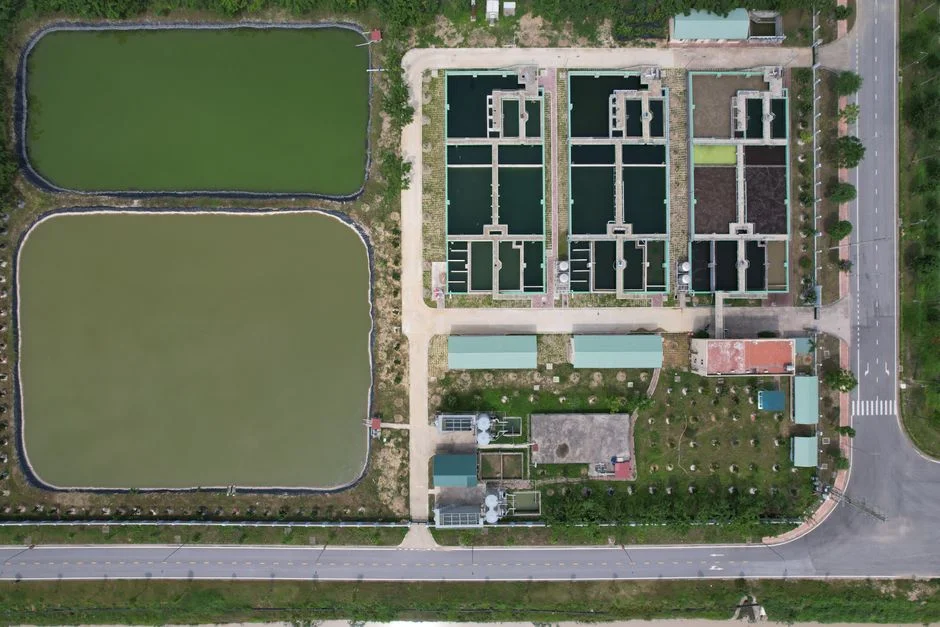
System sizing should begin with the wastewater design basis and installation constraints, not the supplier’s nominal capacity. The request for information should include contributing population or connected units, average and peak flow, diurnal profile, BOD, COD, TSS, pH, temperature, incoming solids, and any non-domestic contamination. If these data are absent, the supplier should state its assumptions and the method used to estimate them; unexplained population-only sizing should be treated as an incomplete offer.
Site information is equally important: groundwater infiltration, rainfall-derived inflow, elevation, available footprint, maintenance access, power reliability, and whether the unit will be installed below grade or mounted for mobile deployment. Infiltration and storm flow can change hydraulic and organic loading, while a buried package can complicate inspection, solids removal, and component replacement.
For the WSZ range, ask the supplier to justify model selection from the published 1–80 m³/h band using the design peak flow and the operating margin required by the project. For MBR, request membrane sizing based on the supplied flow and load basis, plus fouling controls, aeration, sludge handling, and the published 10–2,000 m³/day capacity range. The hotel wastewater sizing inputs guide illustrates why property use, flows, and operating conditions must be separated from equipment selection.
| Supplier request | Required response | Reason for the check |
|---|---|---|
| Design basis | Flow, load, and contributing population with stated assumptions | Prevents capacity selection from a headline rating |
| Model calculation | Selection, operating margin, and treatment-stage capacity | Shows how the proposed unit fits the project |
| Site constraints | Footprint, elevation, groundwater, access, power, and installation method | Tests constructability and maintainability |
| Cost scope | Equipment, freight, civil works, installation, power, commissioning, and O&M | Prevents unlike offers from being compared as equivalent |
Verify compliance, operations, and supplier deliverables before purchase
The supplier must identify the applicable Costa Rican permit, authorized discharge or reuse route, receiving body, and responsible authority for the specific project. A generic statement that an equipment line is “compliant” does not establish that the proposed configuration, installation, or discharge route has been accepted.
The 2021 Water study found that BOD and COD had the lowest estimated compliance probabilities and the highest integrated environmental risk. That finding supports requiring a complete monitoring and performance protocol rather than relying on a single certificate or nominal removal claim. The protocol should define sampling points, parameters required by the authority, responsible personnel, frequency, analytical methods, record retention, and operating responses for exceedances.
Procurement documents should also require utility demands, automatic controls, alarms, spare-parts availability, operator training, preventive maintenance tasks, sludge-removal procedures, and any delivered disinfection performance test. Ask how start-up, demonstration, and post-installation performance will be documented, and define the acceptance consequences if agreed tests are not met. These are project-specific deliverables; the published capacity and process descriptions do not answer them.
The supplier should also state whether the package is below grade or trailer-mounted. Logistics, lifting access, wet-well depth, electrical supply, and maintenance routes affect lifecycle planning even when the biological process is suitable. For a broader check on project documentation, an effluent treatment plant planning guide can help structure the pre-award review, while Costa Rican regulatory confirmation must remain project-specific.
| Pre-award check | Evidence requested | Acceptance test |
|---|---|---|
| Regulatory route | Permit basis, receiving body, discharge or reuse authorization, and responsible authority | Named requirement and accepted evidence |
| Performance | Design calculations, guarantee values, sampling plan, and exceedance procedure | Commissioning and acceptance criteria defined |
| Operations | Utility loads, controls, alarms, training, maintenance, and sludge plan | Responsibility and schedule assigned |
| Lifecycle support | Spare parts, local service access, installation method, and performance documentation | Deliverables included in the commercial offer |
Frequently Asked Questions
What capacity should a residential wastewater treatment plant in Costa Rica have?
Capacity should be selected from measured or defensibly estimated peak flow and wastewater loads, not population alone. Request the average and peak flow, diurnal profile, BOD, COD, TSS, pH, temperature, infiltration, and non-domestic inputs. The supplier should then map the calculation to its stated capacity range: 1–80 m³/h for the WSZ package plant or 10–2,000 m³/day for the MBR system.
How much does a Costa Rican residential wastewater treatment system cost?
The supplied research contains no Costa Rican residential package-plant price. A defensible comparison requires separate quotations for equipment, freight, civil works, installation, electrical supply, commissioning, and O&M. Each quotation should also identify exclusions, performance guarantees, sludge handling, and disinfection testing so that offers cover comparable scopes.
How should I choose between an integrated biological plant and an MBR?
Choose the integrated biological package when its proposed treatment train, compact installation, and operating model satisfy the confirmed discharge or reuse requirement. Consider MBR when finer solids separation or a water-reuse objective justifies the additional technical scope. The buyer should compare site constraints and supplier guarantees, because the supplied research provides no comparable cost, energy, lifespan, or compliance dataset.
Does certified equipment guarantee that a project will comply with Costa Rican wastewater discharge regulation?
No. Equipment performance is not the same as regulatory acceptance of the complete project. Ask the supplier to identify the applicable permit, authorized discharge or reuse route, receiving body, responsible authority, sampling plan, and operating-response procedure, then confirm the current requirements with the relevant Costa Rican authority before award or commissioning.