Determine Which Limits Apply to the Plant
Fabricated metals plants near Ogden establish pretreatment requirements by first identifying their applicable federal categorical standards, then comparing every regulated parameter with the local publicly owned treatment works (POTW) limits and the more stringent value. A plant may need equalization, oil and grease removal, hexavalent chromium reduction, cyanide oxidation, metal precipitation and solids clarification before discharge to an industrial sewer. The governing documents are the current industrial user permit, POTW pretreatment limits and any applicable metal-finishing requirements; equipment should not be sized from the federal table alone.
40 CFR Part 433 covers forming, finishing, forging, foundry, metal spraying and machining wash operations co-located with plating or anodizing lines. A stamping shop shipping only dry parts to a separate finisher is generally outside that category, while a facility operating zinc, nickel or chromic acid tanks is inside it, according to HydropureWater’s 2026 article, How Fabricated Metals Plants Meet US Sewer Pretreatment Limits in 2026.
PSES are the Pretreatment Standards for Existing Sources; PSNS are the Pretreatment Standards for New Sources. The same 2026 source identifies PSNS limits as tighter and notes that many POTWs apply PSNS-equivalent limits to all industrial users as a conservative baseline. Local POTW limits under 40 CFR 403.5 are at least as stringent as categorical standards and can add oil and grease, total suspended solids and pH requirements. The engineering basis must therefore be the stricter applicable value for each parameter.
| Decision point | What the buyer should establish | Permit or design consequence |
|---|---|---|
| Federal category applicability | Whether plating or anodizing is performed on site and whether covered metal-finishing operations are co-located | Apply 40 CFR Part 433 only if the plant’s operation inventory meets the category definition |
| Source status | Whether the source is existing or new | Evaluate PSES and PSNS; the 2026 source describes PSNS as tighter |
| Local limits | The current POTW limit table, including metals, oil and grease, TSS and pH | Use the more stringent applicable limit for each parameter |
| PFAS planning | Current permit language and regulatory developments | The 2026 source identifies a live chrome-finishing rulemaking but reports no current numerical PFAS limit for chrome finishers |
For process context, see the 2026 comparison of DAF and lamella clarifiers for fabricated metals wastewater and filter press sizing for metal finishing sludge. Neither replaces the current permit or POTW table.
Build a Full-Week Wastewater Characterization
A full week of composite-flow sampling establishes the wastewater variability that determines equalization volume, treatment capacity and chemical demand. HydropureWater’s 2026 field ranges report oils of 50–500 mg/L, total dissolved metals of 5–200 mg/L, TSS of 100–1,000 mg/L and pH from 2 to 12 across batch dumps. These values frame the problem; they do not replace plant-specific analysis.
Batch dumping makes equalization essential even when an individual process cell appears stable. The 2026 source states that a four-hour composite can miss a Friday afternoon dump and undersize the equalization basin. A defensible sampling program must therefore cover the complete operating cycle, including production days, cleaning days, tank dumps and unusually large discharges.
| Wastewater characteristic | Likely source | Design implication |
|---|---|---|
| Oily compounds | Stamping, machining and drawing operations | Provide physical oil removal before chemical dosing and solids separation |
| Dissolved metals | Plating rinsewater and acid pickling | Evaluate precipitation and solids removal downstream |
| Hexavalent chromium | Chromic acid anodizing, hard chrome and conversion coating | Provide reduction before hydroxide precipitation |
| TSS | Grinding swarf, casting sand and hydroxide floc carryover | Include equalization and solids-removal capacity in the flow and mass balance |
| Cyanide | Alkaline zinc, copper, cadmium or silver plating | Destroy cyanide before metals precipitation because it can resolubilize downstream precipitates |
Analytical results are only one part of the request for information. Collect production schedules, tank-dump volumes and frequencies, wash-water recipes, floor-drain routing and cleaning practices. Those records explain when, where and how much wastewater enters each collection branch. They also expose slug loads that a laboratory composite may miss or incorrectly average.
The buyer should also obtain raw and treated grab samples, including samples timed around major batch dumps. Record flow, pH, oil and grease, TSS, total dissolved metals, chromium speciation and cyanide where relevant. If those inputs are absent, any equipment capacity remains provisional until the characterization program is complete.
Follow the Pretreatment Process Flow
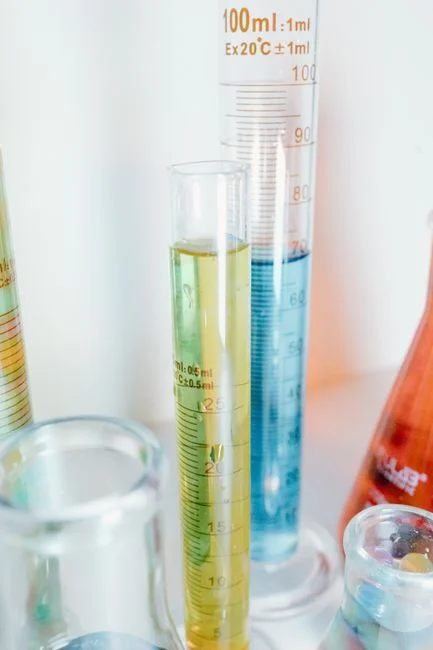
The pretreatment train should follow contaminant logic: remove tramp material, smooth batch flow, recover oil, oxidize or reduce reactive contaminants, precipitate dissolved metals, remove the resulting floc and then verify compliance. Each stage has a distinct outlet condition and a recognizable failure mode, as shown below.
| Process step | Purpose and outlet condition | Recognizable failure mode | Equipment decision |
|---|---|---|---|
| Mechanical screening | Remove rags, wipes and tramp metal before equalization | Screen blinding or carryover into downstream equipment | Rotary mechanical bar screen for wastewater pretreatment |
| Equalization | Smooth flow and pH; the 2026 source gives an outlet target of pH 6–9 and flow coefficient of variation below 0.5 | Batch dump overwhelms downstream chemical feed or solids capacity | Size from the complete weekly flow and batch-volume record |
| Oil and grease removal | Remove free and emulsified oil before chemical treatment | Oil coats floc, interferes with clarification and increases sludge volume | DAF or another oil-removal stage sized for the identified oily load |
| Hexavalent chromium reduction | Reduce Cr(VI) with sodium metabisulfite or ferrous sulfate at pH 2–3 and roughly 250–300 mV ORP | Cr(VI) passes through or precipitates under unsuitable conditions | Provide reagent feed, ORP monitoring and controlled reaction time |
| Cyanide oxidation | Destroy confirmed cyanide with sodium hypochlorite before metals precipitation | Cyanide complexes dissolved metals or resolubilizes downstream precipitates | Include only where influent testing confirms cyanide |
| Metal precipitation | Adjust pH to form metal hydroxides; the 2026 source identifies pH 8.5–9.5 for trivalent chromium precipitation | Precipitates remain soluble or form excessive, unstable floc | Automated pH adjustment plus polymer addition |
| Solids separation | Remove suspended material, oil, FOG, colloidal matter and metal-hydroxide floc | Floc carryover or unstable float creates a permit exceedance | Industrial DAF wastewater treatment system or lamella clarification |
Automatic pH adjustment uses sodium hydroxide or sulfuric acid, while a PLC-controlled automatic chemical dosing skid can combine flow-paced feedforward with pH or ORP feedback. The design must identify the required reagent, feed range, control loop, duty cycle and response to loss of flow or reagent supply.
Alarms and shutdown interlocks should divert treatment upsets to equalization for pH excursions, ORP outside its intended range and high TSS. Interlocks do not replace the equalization capacity. They require enough holding volume to receive the upset stream without an uncontrolled discharge.
Compare DAF With Lamella Clarification
DAF is generally the stronger choice when oil, FOG, colloidal material and precipitated floc must be removed in a compact footprint, while lamella clarification is more compatible with inclined-plate separation, sludge recirculation and flocculation. The choice must follow the wastewater chemistry and solids-handling objective rather than average flow alone.
For DAF, HydropureWater’s 2026 field guidance gives hydraulic surface loading of 4–20 m/h depending on model and floc density, an air-to-solids ratio range of 0.005–0.060 with 0.02 as a typical design point, and recycle of 10–30% of forward flow. Increasing the A/S ratio can produce a drier float but raises blower demand and may shatter fragile floc. Increasing recycle can improve TSS removal while diluting treatment chemistry and increasing equalization demand.
| Selection issue | DAF | Lamella clarification |
|---|---|---|
| Primary objective | Removal of oil, FOG, colloidal material and floated floc | Inclined-plate solids separation with flocculation and sludge recirculation |
| Hydraulic basis | 4–20 m/h surface loading depending on model and floc density | Supplier product information states 20–40 m/h surface loading |
| Chemical use | Requires recycle, air and conditioning assumptions to be evaluated | Supplier product information states up to 30% lower chemical consumption |
| Principal trade-off | More blower demand and potential floc breakage at higher A/S; higher recycle affects chemistry and equalization | Sludge recirculation, footprint and chemical assumptions must fit the installation |
| Selection data required | Wastewater characteristics, reaction assumptions, recycle constraints, peak flow, batch dumps and a complete solids balance | |
HydropureWater’s catalog information lists a DAF capacity range of 4–300 m³/h across 13 models. That is available equipment information, not a recommended capacity for an Ogden fabricator. The high-efficiency lamella sedimentation tank should likewise be evaluated against the verified process conditions.
Plan Controls, Sludge Handling and Compliance Verification
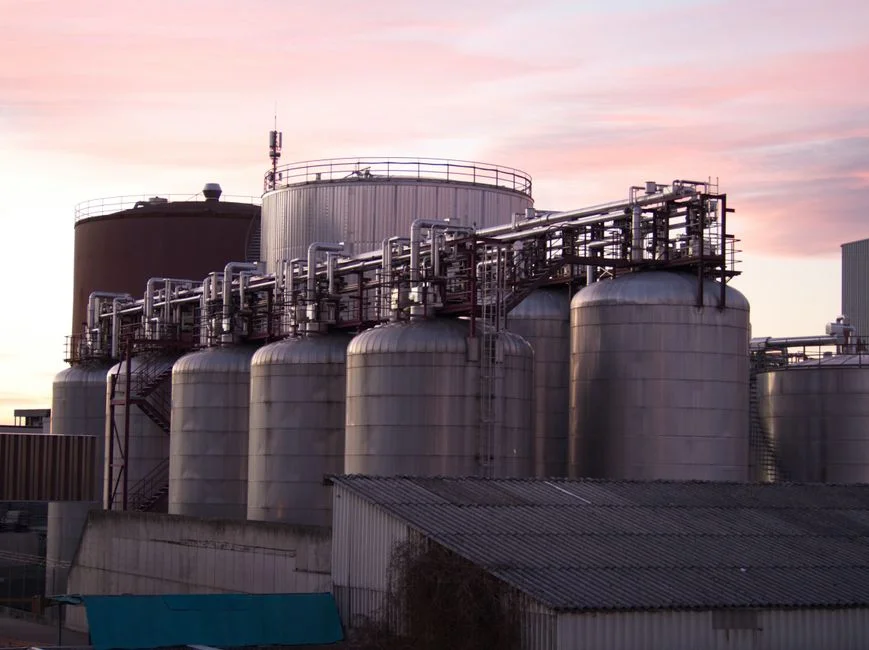
Reliable treatment depends on metered chemical feed and a defensible solids route. A PLC-controlled automatic chemical dosing skid should use flow-paced feedforward, pH or ORP feedback, pump calibration columns and stroke-count totalizers. The 2026 source states that dosing without those controls is effectively blind.
HydropureWater’s 2026 data reports floated metal-hydroxide sludge at 2–5% dry solids from DAF and 25–35% after plate-and-frame filter-press dewatering. A plate and frame sludge filter press is therefore one defined route for metal-finishing sludge. The cited catalog range is 1–500 m² of filtration area, with manual, hydraulic or fully automatic PLC-controlled configurations.
The final equipment proposal should identify the sludge-generating unit, expected dry-solids basis, dewatering target, filtrate destination, cake handling method and chemical residuals sent back to pretreatment. It should also show how pH, ORP and high-TSS interlocks divert upset flow to equalization.
Compliance verification must use the current permit’s daily-maximum and monthly-average requirements. The supplied research does not provide numerical effluent limits, so a defensible proposal must attach the current permit and POTW tables rather than insert assumed values. Routine pretreatment and advanced polishing should also be separated. In the 2026 source, MBR is presented for BOD/COD tightening and reuse, RO for sub-ppm dissolved-solids or specific reuse targets, and anion exchange or granular activated carbon as a future PFAS-capable polishing option.
For a technology comparison, review MBR treatment for BOD/COD tightening and reuse and industrial reverse osmosis for dissolved-solids polishing. Polishing is justified when the POTW limits, reuse specification or future regulatory requirement exceeds what the primary train can reliably achieve.
Specify Fabricated Equipment for Installation Readiness
Fabrication readiness is separate from treatment performance: a tank or skid can meet the process design and still be unsuitable if its welds, coatings, drawings or inspection records are incomplete. Richards Sheet Metal’s wastewater-treatment fabrication page states that the fabricator reviews customer drawings and specifications for manufacturability, consistency and cost efficiency rather than accepting a drawing without review.
Ask the fabricator to identify in-house capabilities for laser cutting, tube laser cutting, certified welding, press brakes, rolling, drilling and tapping, CAD/CAM programming, assembly and finishing. The same source names visual inspection, liquid penetrant testing and magnetic particle testing as supporting its certified welding program. Procurement should receive the applicable inspection procedures and acceptance records.
For corrosion protection, require coating and finish specifications suitable for moisture, chemicals, corrosion and continuous wastewater-service exposure. The cited fabricator reports a 90,000-square-foot manufacturing area and a wet coating booth measuring 14 feet wide, 44 feet long and 12 feet high. These are supplier capabilities to verify, not universal project requirements.
Before shipment, require approved shop drawings, welding procedures and records, coating records, inspection-release documents, electrical schematics, equipment submittals and field commissioning support. This scope should sit alongside filter press sizing for metal finishing sludge and the broader 2026 filter press fabrication guide, but neither changes the process or permit basis.
Frequently Asked Questions
Does every fabricated metals plant near Ogden have to comply with 40 CFR Part 433?
No. The 2026 source distinguishes covered metal-finishing operations co-located with plating or anodizing from a general stamping operation that ships dry parts to a separate finisher. A plant operating zinc, nickel or chromic acid tanks is inside the category. Submit the actual process inventory to the POTW and document any exclusion rather than assuming either outcome.
Can DAF or lamella clarification be sized from average flow?
Not reliably. A supplier needs full-week composite-flow data, batch-production information, flow variability, wastewater chemistry and a solids balance. Ask the supplier to show how peak batch dumps, equalization performance, recycle requirements and sludge generation affect the selected surface-loading rate.
What should a buyer compare when evaluating pretreatment cost?
Compare the complete compliance solution: required unit processes, chemical consumption, sludge handling, controls, utilities, monitoring and future polishing provisions. Request an itemized proposal tied to the current permit and POTW limits. A simpler train may satisfy standard sewer-discharge requirements, while tighter local caps or reuse targets may require added treatment stages.
How should a supplier be selected for an installation-ready system?
Ask for a documented engineering proposal supported by the permit, POTW local limits, wastewater analysis, process inventory, operating schedule, utilities, control requirements and installation drawings. Also verify fabrication procedures, coating records, inspection release, electrical documentation and commissioning support. See the 2026 fabricated-metals pretreatment guide for the regulatory screening sequence and DAF-versus-clarifier analysis for equipment selection.
When is PFAS polishing justified?
Base the decision on the current permit and applicable requirements, not an assumed concentration limit. The 2026 source reports a live chrome-finishing rulemaking but no current numerical PFAS limit for chrome finishers. If reuse or a future requirement justifies treatment, reserve connections, footprint and control interfaces now; use the 2026 comparison of PFAS polishing technologies for industrial wastewater to evaluate suitable reserve options.
Related Equipment
- industrial DAF wastewater treatment system — specifications, capacity range, and technical data