Start with the legal and operating boundary
SK On’s Texas battery-plant wastewater should be segregated by source, characterized under representative production and cleaning conditions, and routed through treatment and disposal steps approved for the actual site. Cathode wash water, anode wash water, electrolyte salt flush, equipment-cleaning water, floor washing, sanitary sewage, stormwater, and cooling or boiler blowdown should not be treated as one generic discharge. Before commissioning, SK On should verify TCEQ industrial wastewater authorization, local sewer or drainage rights, sampling points, monitoring obligations, treatment capacity, residual destinations, and who is legally responsible. A state permit alone may not resolve local drainage coordination; a 2026 South Texas case demonstrated why this matters.
Start with a responsibility matrix that names the accountable party for each obligation: permit ownership, sewer or drainage agreements, sampling, reporting, treatment operation, laboratory services, residuals, emergency response, and waste-hauler contracts. The matrix should identify the current permit holder, the proposed operating entity, required notifications, and the person authorized to stop a discharge. The Texas battery-factory wastewater acquisition framework provides a useful structure, but it does not establish SK On’s permit number, site limits, or transfer conditions.
For each proposed route, obtain the controlling authorization and determine whether it can be transferred, needs an owner amendment, or requires a new application. This includes TCEQ requirements, local industrial-user or sewer rules, easements, drainage-district records, and written confirmation of the receiving route. A sewer discharge requires confirmation of pretreatment requirements; an off-site disposal route requires confirmation of waste classification, hauler authorization, and receiving-facility acceptance.
The April 21, 2026 Inside Climate News report is a direct warning. It reported that TCEQ does not communicate directly with local drainage districts as part of the permitting process, meaning a state authorization can exist without resolving a district’s easement or infrastructure concerns. Commissioning should not begin with an unresolved discharge route, expired authorization, undocumented easement, or unverified residual destination.
Build a source-by-source wastewater register
A source-by-source register must connect each wastewater stream to its own collection, sampling, treatment, reuse, discharge, or off-site disposal decision. A plant-wide sample cannot reveal whether a contaminant came from cathode coating, electrolyte handling, cleaning chemicals, or floor washing, and it can hide recovery opportunities before valuable streams are mixed.
| Stream group | Data and decision required | Control before route approval |
|---|---|---|
| Cathode coating wash water | Average and peak flow; cleaning frequency; pH; suspended solids; NMP; binder and coating constituents; metals and site-specific analytes | Keep separate; recover NMP where verified; characterize residues |
| Anode coating wash water | Flow variability; binder and solids load; pH; oil and grease where applicable; site-specific chemistry | Separate collection and source-specific solids management |
| Electrolyte salt flush | Flow; conductivity; total dissolved solids; fluoride; phosphate; metals and chemical-inventory constituents | Control salts and fluoride; prohibit uncontrolled dilution |
| Equipment cleaning | Cleaning agents; concentrations; episodic peak flow; pH; suspended solids; oil and grease | Segregate incompatible chemistry and size equalization around verified peaks |
| Floor and vehicle washing | Area served; wash frequency; detergents; solids and oil load; drainage route | Control solids and stormwater entry |
| Sanitary and domestic wastewater | Separate flow; fixtures; local sewer requirements; nonindustrial discharge point | Exclude from industrial pretreatment calculations |
| Stormwater, cooling and boiler blowdown | Area served; chemicals used; temperature; conductivity; dissolved solids; contaminants | Confirm discharge pathway and contamination controls |
| Commissioning wastewater | Duration; source; additive inventory; anticipated quantity; cleaning sequence | Define temporary collection, treatment, and disposal |
For each stream, record average and peak flow, operating schedule, production variability, pH, temperature, suspended solids, oil and grease, metals, conductivity, total dissolved solids, and constituents identified in the chemical inventory. Request 12 months of operating and monitoring data when available. If records are incomplete, install temporary monitoring; do not extrapolate a design duty from one sample.
The four principal battery-process streams—cathode coating wash water, anode coating wash water, electrolyte salt flush, and general plant effluent—should remain separate because their contaminants, recovery options, and treatment duties differ. The 2026 reference identifies NMP at roughly 1–5 wt% in the relevant cathode wash-water stream and states that mixing it with general effluent destroys recovery value while increasing downstream contaminant loads. The battery-manufacturing sludge dewatering guide provides related context, but not SK On’s stream chemistry.
Use the 2026 Texas case to stress-test the plan
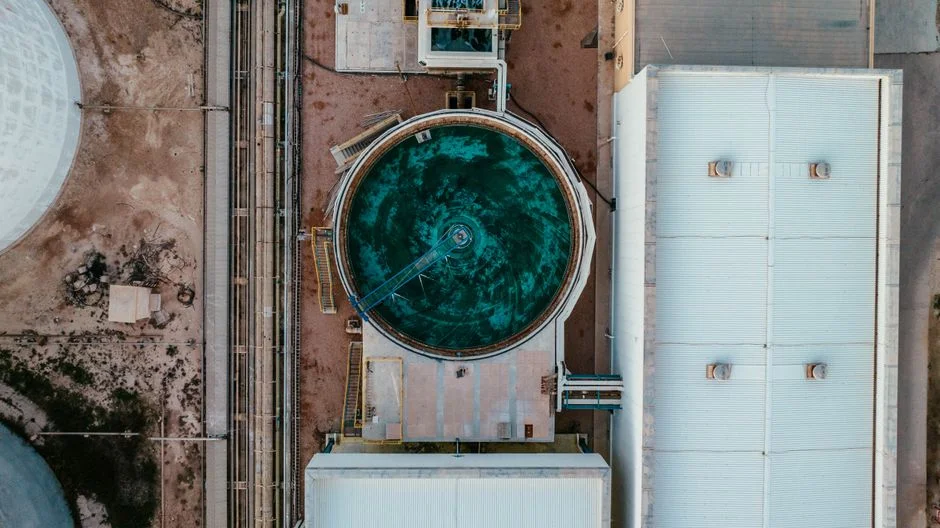
The April 21, 2026 Inside Climate News case shows why a Texas discharge plan must address both chemistry and the physical receiving route. The report said the investigated South Texas refinery was permitted to discharge an average of 231,000 gallons of lithium refinery wastewater per day into a drainage ditch. It also reported that the permit did not monitor lithium, despite lithium being present in the facility’s process context.
Eurofins tested ditch water in April 2026 and found hexavalent chromium, arsenic, elevated lithium, strontium, and vanadium. The engineer’s report characterized the water as 10 to 20 times saltier than normal surface water and recorded 1.68 mg/L ammonia measured as nitrogen. These findings are not a substitute for SK On’s permit limits or plant data. They are evidence that dissolved salts and metals should be treated as distinct design challenges rather than assumed away through dilution.
The sampling location also matters. The Eurofins sample came from the drainage ditch, not the permitted outfall pipe, so it cannot establish a single-day condition at the plant outlet or prove the industrial source of every detected constituent. It nevertheless demonstrates three procurement controls: sample individual process streams, document the sampling point, and preserve chain-of-custody procedures. A permit compliance sample and a source-characterization sample answer different questions.
SK On should verify pipe routes, easements, crossings, property rights, and drainage-district obligations independently of the TCEQ authorization. It should also test the selected monitoring program against a scenario in which an unmonitored constituent becomes relevant. For example, if the receiving authority later asks about lithium, the source register should already identify where lithium could enter, which streams contain it, and which sampling records would support an answer.
The practical consequence is a dual approval gate: the wastewater must meet the applicable authorization, and the receiving route must be legally and physically available. Failure of either gate prevents normal commissioning discharge.
Match each treatment step to the verified contaminant duty
Treatment selection should follow the verified contaminant duty, not a generic battery-wastewater train. Screening protects downstream equipment; equalization controls verified peaks; flotation addresses appropriate floating and solids loads; biological treatment requires a suitable residual load; membranes require validated feed quality; and dewatering must follow residual classification. Dilution is not a substitute for source control or treatment.
| Condition supported by site evidence | Potential unit operation | Design basis and limitation |
|---|---|---|
| Coating-defect scraps, separator film, or fibrous debris may enter the flow | Rotary mechanical bar screen | Protect pumps, solvent-handling equipment, membranes, and sludge handling |
| Representative samples show suspended solids, oil and grease, floatable material, or colloidal contamination | Industrial DAF system | Catalog capacity spans 4–300 m³/h across 13 standard models; this is available sizing, not SK On’s design duty |
| Biological treatment and solids separation are justified | Integrated MBR system | Catalog capacity spans 10–2,000 m³/day; MBR does not remove dissolved salts or many dissolved metals |
| Treated-water reuse or polishing requires membrane separation | Industrial reverse osmosis system | Validate pretreatment, scaling, recovery, and concentrate management |
| pH, coagulation, or precipitation chemistry varies with production conditions | PLC-controlled chemical dosing system | Set doses through jar and pilot testing using verified flow and chemistry |
Use equalization around the verified hydraulic and contaminant peak, not around a catalog average. A rotary mechanical bar screen can protect pumps, membranes, and solvent-handling equipment when coating scraps or separator film are credible risks. Apply an industrial DAF system where representative samples confirm suspended solids, oil and grease, floatable material, or colloidal contamination. The reference catalog’s 4–300 m³/h range across 13 standard models indicates available product sizes, not SK On sizing.
Use an integrated MBR system only where biological treatment and solids separation are justified. The reference catalog’s 10–2,000 m³/day range likewise identifies available capacities rather than proving site suitability. The reference identifies permeate targets below 1 mg/L suspended solids and an SDI below 3 before RO; these are reference design targets, not confirmed SK On acceptance criteria.
Protect high-pressure RO with validated pretreatment. The reference design uses 5 μm cartridge filtration and antiscalant dosing at 70–80% RO recovery, producing a 20–30% concentrate that requires an approved management route. An industrial reverse osmosis system should be sized from verified feed salinity, scale risk, recovery, and residual-management capacity.
Configure a PLC-controlled chemical dosing system after jar and pilot testing. Recover NMP only if the facility, operating controls, and product-quality requirements support it; the reference stream contains roughly 1–5 wt% NMP, but that value does not establish SK On’s concentration.
Close the loop on reuse, discharge, and residuals
Reuse is a destination that requires acceptance; it is not an automatic benefit of producing treated water. Confirm the treated-water quality, public-health requirement, process acceptance, and regulatory pathway for each intended use. The receiving user should provide written acceptance criteria, while the responsible authority confirms that the proposed route is lawful.
RO and zero-liquid-discharge systems must be sized around verified feed salinity, recovery ratio, scale risk, and concentrate-management capacity. The referenced design sends 20–30% RO concentrate to ZLD, but that sequence is not approved for SK On until the brine route is verified. The April 2026 Inside Climate News report recommended an on-site multistage plant with heavy-metal removal and industrial RO for the investigated facility, followed by hazardous-waste handling or ZLD for concentrated brine. That recommendation belongs to the reported case, not to SK On’s permit.
Characterize sludge, spent media, concentrate salts, and other solids before selecting dewatering. A plate-and-frame sludge filter press can reduce water content after residual classification and destination approval, but it cannot establish whether the material is hazardous, what code applies, or where it may be delivered.
Before startup, confirm generator status, the waste determination, manifest requirements, licensed hauler authorization, receiving-facility acceptance, and the transport route. Also confirm the backup route for equipment outages, chemical shortages, rejected loads, or a waste destination that cannot accept the expected material. The engineering decision is complete only when treated water, reuse, off-site disposal, and every concentrated residual have lawful destinations.
Turn commissioning into a series of go/no-go gates
Commissioning should be managed as four go/no-go gates, with evidence required before each transition. The LG Energy Solution Texas wastewater transition guide supports the use of explicit hold points rather than accepting inherited treatment assets on assumption.
| Gate | Required evidence | No-go condition |
|---|---|---|
| 1. Documents | Current permits; local sewer or drainage rights; pretreatment requirements; easements; monitoring obligations; residual destinations; named responsibilities | Any discharge route, authorization, or residual destination remains unresolved |
| 2. Baseline | Representative samples from every major stream during production, upset, shutdown, and cleaning; verified flow meters; laboratory methods; chain of custody | Design data depend on an unrepresentative sample or unverified meter |
| 3. Equipment readiness | Condition assessment of inherited assets; hydraulic and contaminant calculations; utilities; controls; redundancy; chemicals; spares; trained operators | Equipment cannot meet the verified duty or lacks a controlled operating response |
| 4. Performance | Demonstrated removal or separation; treated-water quality; reuse acceptance; residual quantity and route; alarm and escalation tests | Performance, reuse acceptance, or residual handling has not been demonstrated |
Before normal production, define alarms, bypasses, and escalation rules for pH, flow, dissolved solids, suspended solids, oil and grease, metals, and site-specific analytes. A bypass should have a documented operating condition, a responsible approver, a notification process, and a compliant contingency route.
Do not authorize expanded discharge or reuse until the receiving authority or other responsible party confirms the route and the operating team demonstrates compliance. A successful equipment test is not sufficient if the residual destination, reporting path, or trained shift coverage remains incomplete.
Frequently Asked Questions
How much should SK On budget for Texas battery-plant wastewater treatment?
No defensible price can be stated without verified average and peak flows, chemistry, permit conditions, existing-asset condition, reuse targets, and residual-disposal scope. Request a priced bill of quantities with separate line items for segregation piping, chemical recovery, pretreatment, membranes, brine management, sludge dewatering, utilities, controls, commissioning, and permit support. Ask bidders to identify provisional items and the site data needed to fix them.
Which treatment equipment should be quoted first for SK On?
Quote only after source segregation and representative sampling. Screening, DAF, MBR, RO, chemical dosing, recovery, and dewatering perform different duties; asking for a single generic “ETP” can hide missing pretreatment or an unresolved concentrate route. Require each bidder to map every proposed unit to a source, contaminant duty, flow condition, and residual route.
How should wastewater equipment be sized for commissioning?
Use the governing peak flow, cleaning-cycle load, production variability, and contaminant concentration—not average flow or catalog capacity alone. Verify equalization volume, pretreatment performance, membrane-feed quality, reuse demand, and residual-management capacity under production, upset, shutdown, and cleaning scenarios.
What should SK On require from a wastewater supplier?
Require stream-to-unit mapping, site-specific duty calculations, pilot or validation evidence where chemistry is uncertain, controls and utilities, operator training, commissioning support, residual handling, and lifecycle costs. Compare suppliers using the same scope and operating assumptions, including energy, chemicals, maintenance, redundancy, sludge handling, and future production changes.