What Changes When LG Energy Solution Acquires the Texas Plant?
When LG Energy Solution acquires a Texas battery plant, wastewater should be handled as an asset-transition issue rather than as a generic industrial drain problem. First, segregate and characterize every source, including process rinse water, equipment cleaning, floor washing, sanitary sewage, stormwater and any lithium-bearing wastewater. Next, match each stream to its lawful destination: permitted reuse, pretreatment and discharge to a POTW, or an approved off-site disposal route. No supplied source establishes a discharge standard or confirms the plant’s precise wastewater profile, so both must be verified with the city, TPDES authority and the acquirer.
Ownership transfer changes who controls the wastewater system, but it does not automatically change the legal status of the discharges. The acquirer should verify permit coverage, transfer requirements, sampling obligations, approved disposal routes, residual-waste classifications and the status of contracted waste haulers before accepting operational responsibility. Existing treatment equipment also should not be assumed to match the future production plan.
The diligence file should include wastewater-generating processes, flow meters, sampling points, cleaning chemicals, chemical-storage areas, emergency drains, pretreatment systems and waste-hauler contracts. Production drawings and the chemical inventory are especially important because a change in electrolyte, coating chemistry or cleaning practice can alter contaminant loading even when wastewater flow remains stable.
Separate transitional wastewater from the proposed future production scheme. For each existing asset, determine whether it should be retained, upgraded, replaced or decommissioned. This review should be informed by the Texas battery-factory wastewater engineering framework, but applied to the acquired site’s verified permits, water balance and operating data. The supplied research does not identify the acquired Texas battery plant, its current permits, wastewater flows or contamination profile; those items must be confirmed rather than inferred.
Build a Complete Wastewater Stream Inventory
Wastewater stream segregation prevents variable process rinses and washwater from obscuring the quality of cleaner streams. The inventory should begin with every source, then establish representative samples, identify the operating variables that change quality and define controls for those variables. A single plant-wide sampling point is not an adequate substitute for that source-level understanding.
Create a source-by-source register covering cathode, anode and separator production; electrolyte handling; electrode coating and drying; equipment cleaning; floor and vehicle washing; sanitary sewage; stormwater; cooling and blowdown; domestic wastewater; and construction or commissioning wastewater. For each source, document average and peak flow, operating schedule, production variability, pH, temperature, suspended solids, oil and grease, metals, conductivity, total dissolved solids and any constituents identified in the plant’s chemical inventory.
| Stream or activity | Diligence information to obtain | Decision supported |
|---|---|---|
| Process rinse water and equipment cleaning | Source-by-source flow; cleaning frequency; chemicals; pH; suspended solids; oil and grease; metals; site-specific analytes | Segregation, pretreatment duty and reuse suitability |
| Floor and vehicle washing | Cleaning agents; wash-water segregation; suspended solids; oil and grease; episodic peak flow | DAF or solids-removal duty and stormwater controls |
| Electrolyte handling, coating and drying | Chemical inventory; process losses; representative samples; upstream operating variables | Concentrated treatment or off-site disposal |
| Sanitary and domestic wastewater | Separate flow and discharge point; local sewer requirements | Keep sanitary streams outside industrial pretreatment calculations |
| Stormwater, cooling and blowdown | Area served; discharge pathway; chemicals used; blowdown chemistry; contamination controls | Determine whether reuse, treatment or regulated discharge is available |
| Construction and commissioning wastewater | Duration; source; additive inventory; anticipated quantity | Temporary treatment and disposal during transition |
Permian produced water is a useful warning from Intelligent Living’s 2026 reporting, not a description of the expected battery-plant stream. It may contain dissolved and suspended salts, heavy metals, hydrocarbons and naturally occurring radioactive material, and total dissolved solids can exceed 150,000 mg/L (Intelligent Living, 2026). That complexity shows why composition must drive segregation and treatment. Additional context on battery-manufacturing wastewater during factory commissioning can support the transition inventory, but it cannot substitute for site-specific sampling.
Select the Legal Disposal or Reuse Pathway
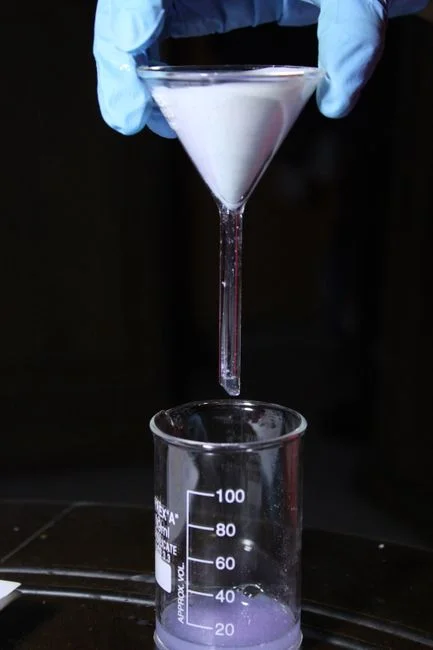
A lawful disposal pathway must be established for each stream before the acquisition closes. Flow and appearance alone do not establish permission to discharge or reuse wastewater, and dilution is not an acceptable substitute for source control or treatment.
Identify the site’s receiving authority and determine whether each stream may enter the sanitary or industrial sewer, requires an industrial pretreatment permit, must be transported by a licensed contractor, or must be discharged under an individual permit. Obtain the controlling industrial-user discharge limits, sewer-use requirements, permit-transfer procedure, sampling and reporting rules, and written confirmation of the waste destination.
| Pathway | Decision test | Evidence needed before commitment |
|---|---|---|
| Sanitary sewer | Is the stream compatible with local sewer requirements? | Receiving-authority approval, applicable limits and monitoring requirements |
| Industrial sewer with pretreatment | Can the stream meet the applicable discharge characteristics? | Industrial pretreatment permit, sewer rules, local limits and permit-transfer status |
| Direct regulated discharge | Does an individual authorization apply to the acquired site? | Current permit, TPDES conditions, monitoring and transfer correspondence |
| Beneficial reuse | Does the stream meet the receiving process and public-health requirements? | Process-quality data, user acceptance and regulatory confirmation |
| Off-site treatment or disposal | Is the waste classification and receiving facility appropriate? | Waste determination, generator status, hauler authorization and facility acceptance |
For reuse, test the proposed end use against process-quality, public-health and regulatory requirements. A Texas industrial pretreatment permit review can help structure the discharge-limit check, but it does not establish the acquirer’s obligations. The supplied research provides no site-specific Texas discharge limits, permit numbers or sewer rules. Those values must come from the receiving authority and the plant’s current permits.
If a noncompliant stream is identified, control the source and evaluate an approved treatment process. Do not authorize dilution merely to meet a discharge criterion; that can create a treatment, reporting and liability problem rather than solve one.
Design a Segregated Treatment Train
The treatment train should remove contaminants that are actually present while protecting biological, membrane and reuse equipment from variable production loads. Equalization and solids removal belong ahead of sensitive downstream processes, and each stage needs a defined hydraulic and contaminant duty.
Use equalization plus screening or solids removal before biological, membrane or polishing steps so that production swings and cleaning cycles do not overload the system. For oily streams, an industrial DAF system for oil and suspended-solids removal can remove suspended solids, oil and grease, free oil and colloidal material before downstream biological treatment. For washwater with residual solids, a multi-media filter or ultrafiltration can reduce turbidity and suspended material and protect downstream membranes or reuse equipment.
| Verified condition | Process response | Engineering limitation |
|---|---|---|
| Variable flow or batch discharges | Equalization before treatment | Equalization must cover the verified hydraulic and contaminant peak |
| Oil, grease and floatable solids | DAF pretreatment | It does not resolve dissolved salts or every dissolved contaminant |
| Residual washwater solids | Multi-media filtration or ultrafiltration | Filtrate requires downstream treatment or reuse qualification |
| pH or coagulation chemistry varies | PLC-controlled chemical dosing after jar and pilot testing | Chemical selection must follow the verified contaminant profile |
| Biological treatment is suitable and separation or footprint reduction is required | MBR membrane bioreactor for industrial wastewater reuse | MBR alone does not remove dissolved salts or many regulated metals |
| Treatment produces dewaterable residuals | Plate-and-frame filter pressing after residual classification and destination approval | Dewatering does not determine whether the residual is classified or accepted |
Use PLC-controlled dosing for coagulants, flocculants and pH adjustment only where jar and pilot testing confirms the required chemistry. Evaluate an industrial sludge dewatering system as part of the residuals plan, not as an independent disposal decision. Confirm the destination and waste classification before dewatering, because changing water content does not necessarily change the applicable waste-management path.
Intelligent Living reports that Element3’s Midland operation uses a sorbent-based process to recover lithium chloride from produced water and convert it into battery-grade lithium carbonate. That process is relevant only if the acquired site has a verified lithium-bearing feedstream; it is not a default treatment scheme for battery manufacturing wastewater.
Use the Acquisition Diligence Checklist to Make Equipment Decisions
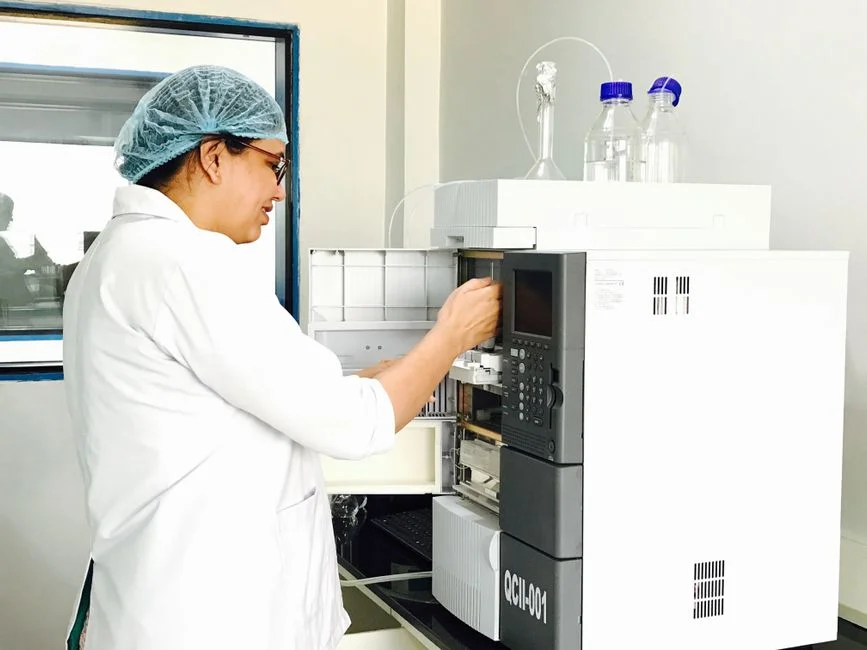
Equipment selection should follow verified peak-flow and contaminant-loading analysis, not average plant flow or a catalog capacity match alone. Obtain current wastewater data, production forecasts, water-balance drawings, chemical-use records, analytical results, equipment-condition assessments and permit correspondence before finalizing an order.
Size hydraulic and contaminant duty around production variability and cleaning cycles. For DAF, compare the required flow and contaminant duty with the available model range of 4–300 m³/h across 13 standard models. For MBR, compare the required duty with the catalog range of 10–2,000 m³/day. These ranges indicate available equipment capacity; they do not establish that a particular unit meets the acquired site’s treatment objective.
| Procurement check | Information required | Acceptance basis |
|---|---|---|
| Hydraulic capacity | Verified peak flow, operating schedule and equalization volume | Selected equipment covers the governing case with appropriate redundancy |
| Contaminant capacity | Representative production, upset and shutdown samples | Verified removal or separation performance is demonstrated for the selected stream |
| Downstream protection | Treated-water quality and sensitivity of biological, membrane or reuse equipment | Upstream pretreatment prevents overload or fouling |
| Residuals handling | Sludge and spent-media quantity, classification and destination | A complete handling route is documented before startup |
| Lifecycle cost | Equipment, chemicals, sludge handling, energy, labor, redundancy, maintenance and expansion effects | Supplier comparison uses the same scope and verified operating assumptions |
Request a lifecycle comparison covering capital equipment, chemicals, sludge handling, energy, operator labor, redundancy, maintenance and the effect of future production changes. Use the industrial ETP and DAF selection guide for San Antonio to structure that comparison. A higher-throughput unit is not necessarily suitable if the limiting factor is contaminant load, pretreatment performance, residuals handling or permit compliance.
Plan Transition, Verification and Long-Term Control
Wastewater readiness should be managed through explicit acquisition hold points rather than left to post-closing troubleshooting. Establish pre-acquisition, closing, post-transfer and post-expansion gates for permit confirmation, sampling, equipment inspection, operator training and validation of discharge or reuse performance.
- Pre-acquisition: review permits, water balance, analytical history, treatment condition and waste destinations.
- Closing: confirm permit status, utility obligations, sampling points, operating procedures and retained equipment readiness.
- Post-transfer: verify baseline flow, contaminant loading, treatment performance, laboratory procedures and operator competence.
- Post-expansion: reassess hydraulic and contaminant duty before adding production or changing chemicals.
Establish operating parameters for pH, flow, dissolved solids, suspended solids, oil and grease, metals and any site-specific analytes. Define alarm, bypass and escalation rules before startup. The sampling plan should cover representative production, upset and shutdown conditions rather than rely on one compliance sample.
Review sludge, spent media and other residuals through the applicable waste classification and receiving-facility process. Include energy and automation in the transition review: the DOE/OSTI Phoenix study cited a wastewater system serving five cities with 157 MGD capacity and an approximately $2 million annual energy bill, illustrating why operating efficiency belongs in acquisition planning (U.S. Department of Energy Office of Scientific and Technical Information, historical study). The industrial wastewater and cooling-blowdown transition review can support the operational planning sequence.
Frequently Asked Questions
What information is needed before LG Energy Solution buys treatment equipment for the Texas plant?
Request verified peak and average flows, a production forecast, a water balance, cleaning-cycle records, chemical inventories, representative analytical results, current permits, equipment-condition assessments and waste destinations. Require the supplier to map each proposed unit to the governing stream and duty; a catalog capacity range is not enough to establish suitability.
How should a supplier be selected for battery manufacturing wastewater treatment in Texas?
Select on demonstrated performance for the verified contaminant profile, treatment-train compatibility, controls, operator requirements, redundancy and lifecycle support. Require site-specific duty calculations, pilot or validation evidence where chemistry is uncertain, and a scope covering equipment, chemicals, energy, maintenance, sludge handling and future production changes. Use the wastewater treatment cost per gallon and ROI framework to normalize comparable quotations.
Can the acquired plant reuse treated wastewater instead of discharging it?
Only after demonstrating that the proposed reuse application can accept the treated water, public-health and regulatory requirements are met, and the receiving authority or other responsible authority confirms the pathway. Review any residuals-sizing requirements before treating reuse as the preferred route. Flow and appearance alone do not establish reuse feasibility.
When should wastewater treatment be addressed relative to the acquisition?
Address it before closing by verifying permit status, waste destinations, baseline quality, treatment capacity and residual handling. Closing should not proceed with an unresolved discharge route or an untested assumption that existing equipment will remain compliant. Post-transfer validation should confirm operating performance before normal production or expanded discharge is accepted.