Singapore’s Rural Wastewater Context
Rural sewage treatment in Singapore requires a site-specific decentralized system that combines environmental protection, reuse potential and strict land control rather than assuming access to a centralized sewer tunnel. Singapore’s recycled wastewater currently meets 40% of national water demand and is expected to meet 55% by 2060, according to VOA News citing Singapore’s water agency. At Changi Water Reclamation Plant, wastewater reaches a capacity of 900 million litres per day through a 48-kilometre tunnel, while some underground process areas extend to 25 stories deep, as reported by VOA News. A remote development cannot depend on that infrastructure, so treatment must be installed at the site boundary.
That constraint changes the selection problem. A rural resort, small settlement or isolated facility needs a treatment boundary matched to its discharge and reuse objectives, available footprint, incoming wastewater characteristics and local maintenance arrangements. The fact that Singapore’s centralized system supports advanced filtration, ultraviolet disinfection and reservoir replenishment does not mean that a smaller package plant must reproduce the entire centralized process train.
Instead, determine whether the project requires sanitation, environmental discharge, irrigation or process-water reuse. The underground WSZ package sewage treatment plant illustrates the compact approach: biological contact oxidation, sedimentation and disinfection are integrated into a buried unit, with landscaping restored above the installation. A regional comparison of rural sewage treatment options can provide useful context, but climate, receiving conditions, reuse requirements and approvals must still be verified for Singapore.
Define the Treatment Objective Before Selecting Equipment
Equipment selection should begin with the required water quality, not the package dimensions or a headline treatment rate. A sanitary-treatment objective, an environmental-discharge objective and a reuse objective create different process boundaries and different evidence requirements.
VOA News identifies industrial use, building cooling and reservoir replenishment as Singapore reclaimed-water applications. Industrial process water may require a stable quality and controlled contaminants; building cooling may impose different limits on biological content, solids and fouling; reservoir replenishment requires a defined treatment and disinfection regime. Potable-water augmentation is a different boundary altogether and should not be inferred from an irrigation or process-water specification.
For advanced reuse, identify whether clarification and disinfection are sufficient or whether a physical separation barrier and additional membrane treatment are required. The supplied HydropureWater ultrafiltration system is specified at 2,000–40,000 L/h with 0.03-micron PVDF membranes. Its manufacturer specification states that it removes bacteria, colloids and suspended solids without chemicals, accepts turbidity up to 300 ppm, and includes automatic backwash and air scour. Where the required quality is tighter, the reverse-osmosis water purification system is a further route to evaluate, but the required pretreatment and end-use specification must govern the selection.
| Project objective | Decision required before equipment selection | Evidence to request |
|---|---|---|
| Sanitation | Define the required treatment performance and receiving environment. | Applicable consent, sewer connection conditions and site-specific effluent limits. |
| Environmental discharge | Confirm how each discharge path affects the selected process. | Effluent limits, receiving-water conditions and test protocol. |
| Irrigation or process-water reuse | Identify the end use, exposure pathway and required separation or disinfection. | Reuse specification, monitoring requirements and user quality criteria. |
| Potable-water augmentation | Do not infer approval from a package treatment claim. | Regulatory route, advanced-treatment requirements and acceptance testing. |
Request current wastewater characteristics before freezing the process: average and peak flow, peak-to-average ratio, biochemical oxygen demand, chemical oxygen demand, suspended solids, fats and oils, pH, temperature, groundwater infiltration and industrial trade waste. A nominal capacity statement does not establish Singapore discharge or reuse compliance; the applicable consent, sewer connection condition and reuse standard must be confirmed for the specific site.
Compare Decentralized Treatment Routes
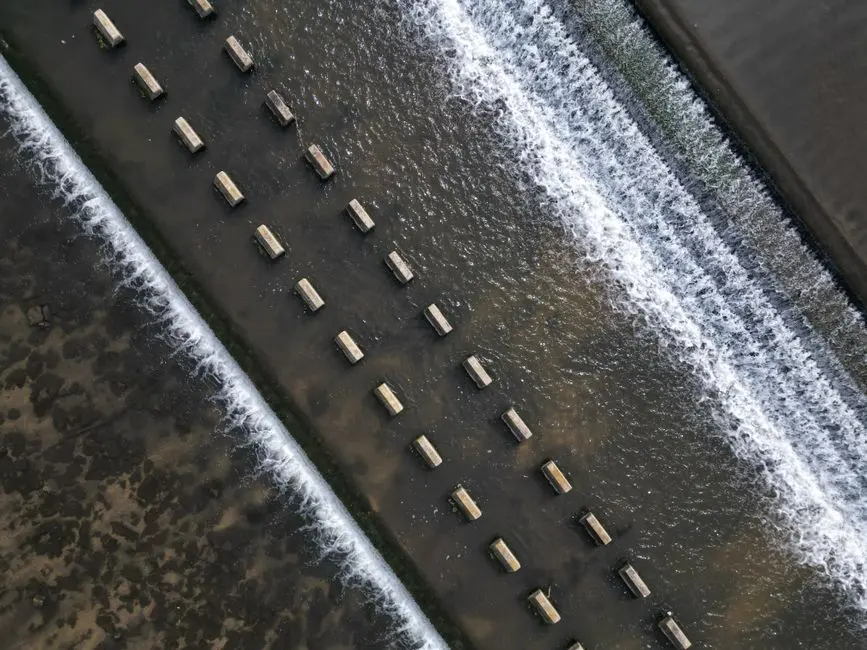
The practical route comparison depends on footprint, reuse quality, incoming wastewater, peak loading and sludge handling, not flow rate alone. Lagoons, buried package plants and membrane bioreactors present different project constraints, and only one route should be selected after the treatment objective and design data are defined.
The US EPA reports that many small, rural and Tribal communities rely on lagoon systems, with its lagoon report based on more than 4,500 lagoon systems. That establishes lagoon treatment as a recognized route for small communities, but the supplied research does not establish its land, odor or discharge suitability for a particular Singapore site. A lagoon should not be carried into a land-constrained selection without site-specific assessment.
The WSZ route combines anoxic/aerobic biological contact oxidation, sedimentation and disinfection in one buried package. The HydropureWater verified product catalog specifies 1–80 m³/h capacity, fully automated operation and no operator required. The MBR membrane bioreactor system combines activated sludge with submerged PVDF membrane filtration, producing effluent described as below 1-micron filtration and near-reuse quality, with a specified range of 10–2,000 m³/day. The same catalog states that its footprint is 60% smaller than conventional systems; that remains a manufacturer specification, not an independent comparison for every project.
| Route | Relevant strengths | Main design questions |
|---|---|---|
| Lagoon | Recognized by the US EPA as a route used by many small communities. | Land availability, odor, seasonal loading and site-specific discharge suitability. |
| Underground WSZ package plant | Integrates A/O biological contact oxidation, sedimentation and disinfection in a buried, automated unit; catalog capacity is 1–80 m³/h. | Installation constraints, infiltration, peak hydraulics, sludge removal and the required effluent boundary. |
| MBR route | Combines activated sludge and submerged membrane filtration; catalog capacity is 10–2,000 m³/day. | Membrane cleaning and replacement, pretreatment, controls and operating support. |
| WSZ or MBR with UF polishing | Adds a physical separation barrier; the UF specification states removal of bacteria, colloids and suspended solids without chemicals. | Whether polishing is required by the reuse specification and whether the biological stage meets the UF feed condition. |
For larger flows or tighter reuse specifications, compare the MBR route against WSZ treatment followed by polishing rather than choosing by flow alone. Sludge remains part of the decision. International research supplied for this guide identifies sludge as a significant treatment stream, while the US EPA emphasizes that small-system planning must address operation and maintenance as well as treatment processes. Any selected route therefore needs a defined sludge storage, removal and disposal pathway.
Size the System from Real Operating Conditions
A decentralized sewage treatment plant should be sized from verified operating conditions, including peak conditions, rather than from nominal daily flow alone. The sizing basis must connect water quantities, pollutant loads, treatment objectives and equipment limits.
- Document average daily flow, peak hourly flow and peak daily flow, with current and projected population or occupancy and the source of every figure.
- Characterize BOD, COD, suspended solids, pH, fats and oils, temperature and any industrial inputs using representative samples.
- Map the causes of peaks, including tourism occupancy, worker shifts, rainfall-derived infiltration and industrial discharge.
- Match the verified hydraulic and organic duty to the proposed route, then check equalization, pretreatment and biological-loading consequences.
- Require the supplier to define operating assumptions, controls, failure responses and demonstrated performance at the agreed duty points.
| Selection input | Why it affects the design | Information needed from the supplier |
|---|---|---|
| Average, peak-hour and peak-day flow | Determines hydraulic loading, equalization and treatment continuity. | Design-flow calculations, hydraulic profile and operating mode. |
| BOD, COD and suspended solids | Defines biological and solids-loading conditions. | Process calculations and guaranteed performance at the agreed influent. |
| Peak-to-average ratio and seasonal occupancy | Tests whether continuous biological operation remains viable. | Equalization strategy and performance during peak and low-flow periods. |
| Groundwater infiltration and industrial inputs | Can dilute sewage or introduce substances that affect treatment and reuse quality. | Design allowances, pretreatment requirements and control responses. |
| Sludge production | Determines storage, dewatering and disposal requirements. | Expected sludge characteristics, withdrawal frequency and disposal interfaces. |
For WSZ selection, compare the verified design flow with the stated 1–80 m³/h model range and confirm whether the duty is continuous, intermittent or seasonal. For MBR selection, compare the verified design flow with the stated 10–2,000 m³/day range and establish how membrane cleaning and replacement affect the operating plan. Request the design basis, hydraulic profile, process calculations, control narrative, duty assumptions and worst-case performance; nominal capacity alone is not a design statement.
Confirm whether incoming sewage receives mechanical screening or pretreatment. The GX rotary mechanical bar screen is specified to remove suspended solids, rags, plastics and fibrous debris, protecting downstream pumps, valves and biological processes. Its inclusion should follow the influent assessment rather than become an automatic addition.
Plan Installation, Automation and Lifecycle Support
Installation and operating arrangements can outweigh the quoted process package when surface access is limited. The WSZ can be installed below grade with landscaping above or mounted on a trailer for mobile deployment, according to the HydropureWater verified product catalog, but each installation still requires a site-specific civil and operating assessment.
Before fixing the footprint, verify excavation conditions, groundwater, flotation, access hatch requirements, ventilation, odor control, bypass arrangements and lifting access. A buried system reduces surface congestion but does not remove the need for safe access, maintenance space or emergency response. If groundwater or seasonal water-level changes are possible, the geotechnical and buoyancy basis should be explicit in the design package.
For automated equipment, define the PLC alarm hierarchy, remote-monitoring scope, power-failure response, critical spares and maintenance access. The MBR system’s integrated submerged PVDF membrane format creates a specific maintenance requirement, so obtain proposed cleaning intervals, replacement policy, membrane condition-monitoring methods and access arrangements. For either route, clarify who responds to alarms, who attends site and what parts must remain available locally.
Sludge must be included in the lifecycle scope. The WSZ process includes sedimentation, while the plate and frame filter press is specified for municipal and industrial sludge dewatering. These are separate treatment obligations from the liquid process. Define storage capacity, withdrawal frequency, dewatering method, transport, approved disposal route and responsible operator.
The US EPA supports planning, design, construction and maintenance for small and rural systems. That reinforces a basic procurement principle: the treatment process and operator capability should be purchased as one service. Require a local service plan covering commissioning, preventive maintenance, response time, spare-parts availability and operator training. The supplied research contains no Singapore-specific price or service benchmark, so the buyer should obtain a site-specific proposal rather than rely on a generic overseas support assumption.
Build a Supplier Brief and Verification Checklist
A comparable supplier brief prevents package quotations from being compared on inconsistent performance, scope and lifecycle assumptions. Ask each bidder to answer the same technical questions against the same design basis and site data.
Request a process flow diagram, design basis, guaranteed duty points, effluent parameters and test protocol. A nominal-capacity statement does not demonstrate regulatory or reuse compliance. Confirm whether the quotation includes inlet works, screening, equalization, biological treatment, clarification, disinfection, controls, sludge handling, odor control, civil works, commissioning and training. Identify exclusions explicitly, including site power, temporary works, lifting, access roads, disposal charges and membrane or media replacement.
| Supplier response | Required content | Verification action |
|---|---|---|
| Process and performance | Flow diagram, design basis, calculations, guaranteed duty points, effluent parameters and test protocol. | Check assumptions and test method against the buyer's influent data and stated reuse or discharge objective. |
| Equipment and civil scope | Supplied equipment, inlet works, controls, odor control, sludge system, civil interfaces, commissioning and training. | Mark every inclusion and exclusion against the same procurement schedule. |
| References | Comparable operating projects using the same route and a relevant flow scale. | Verify technology, wastewater characteristics, reuse application and operating experience. |
| Risk allocation | Responsibility for influent deviations, power interruption, biological upset, replacement parts, construction delays and waste disposal. | Place responsibilities and acceptance consequences in the contract rather than treating them as assumptions. |
| Handover and support | Testing, manuals, PLC backups, training, recommended spares, warranty scope and local maintenance plan. | Review the support coverage and define response obligations before award. |
| Lifecycle estimate | Energy, chemicals where used, inspection, sludge handling, membrane or media replacement and preventive maintenance. | Price the same service periods and assumptions across bidders. |
Ask for an itemized lifecycle estimate rather than a generic Singapore price range, because the supplied research does not support one. Include energy, chemicals if any, inspections, sludge handling, membrane or media replacement and preventive maintenance. Ask reference suppliers to provide operating projects with comparable wastewater, reuse objectives and land constraints, then verify whether the references use the same technology and flow scale.
The US EPA small-system technical-assistance resources can help structure feasibility, planning or funding research, but they do not determine Singapore approvals. The final brief should therefore retain local permitting, consent, sewer connection and reuse checks as explicit deliverables, and assign the bidder or owner responsibility for obtaining them.
Frequently Asked Questions
What is the best sewage treatment system for a rural site in Singapore?
The best system is the route that meets the site’s discharge or reuse objective within its land, peak-loading, sludge and maintenance constraints. For a compact buried installation, the WSZ integrates A/O biological contact oxidation, sedimentation and disinfection; an MBR route should be compared when the required separation is tighter or the MBR membrane bioreactor system offers a better fit for the verified flow and reuse requirements.
How do I size a decentralized sewage treatment plant?
Size from verified average and peak flows, current and future occupancy, and representative wastewater characterization. Compare the resulting duty with the manufacturer’s design limits, then document infiltration, seasonal loading, equalization, pretreatment and sludge production. Do not select from population or nominal capacity alone.
Should I choose a package plant or an MBR system?
Choose WSZ when an integrated buried biological, sedimentation and disinfection arrangement meets the required duty. Compare MBR where compactness and membrane separation justify the additional maintenance and replacement implications. If reuse requires a physical separation barrier, evaluate the ultrafiltration system after biological treatment or compare it with the MBR route.
What should a supplier include in a rural wastewater proposal?
The proposal should include the design basis, process flow diagram, calculations, guaranteed duty points, effluent limits, test protocol, controls, civil interfaces, sludge handling, odor control, commissioning, training, manuals, spares and warranty. It should also provide a local service plan and an itemized lifecycle estimate for energy, chemicals, inspections, sludge disposal, replacement and preventive maintenance.