
Which treatment should a Newport transportation factory choose?
Transportation-equipment factories in Newport should generally choose dissolved air flotation (DAF) when wastewater contains oil, grease, paint solids or other buoyant contaminants, provided coagulation and flocculation produce particles that attach to microbubbles. Lamella or gravity clarification is usually more suitable for heavier, readily settleable solids with low FOG. Neither unit independently treats soluble COD, dissolved metals, nutrients or toxicity. Selection therefore requires representative characterization, a defined downstream objective, pilot validation and the factory’s current permit or sewer criteria.
Start by identifying the required result: oil recovery, solids separation, protection of biological or membrane treatment, or water reuse. The destination of the separated water sets the acceptance criteria. A reactor that produces clear-looking water may still be unsuitable if emulsified oil, variable wash chemistry, suspended paint or soluble contaminants remain.
The practical treatment train is:
- Segregate wastewater sources and equalize flow and loading.
- Remove rags, plastics and larger debris with screening.
- Apply chemical conditioning where the wastewater data requires it.
- Separate floatables or settleable solids with DAF or clarification.
- Collect, thicken, dewater and dispose of sludge or recovered oil.
- Provide downstream treatment or discharge as permitted.
DAF and lamella clarification should therefore be compared as mechanisms within a complete factory wastewater pretreatment train, not purchased as stand-alone compliance systems. Newport’s official Water Treatment and Quality page provides the local utility context, but the supplied research does not provide a current numeric Newport factory discharge or sewer limit. Obtain the governing permit and applicable pretreatment or sewer criteria in writing.
Match the equipment to the factory wastewater stream
Oily wash water, concentrated paint rinse water and high-volume floor wash should be sampled separately because one diluted stream can conceal the behavior that determines equipment selection.
| Wastewater stream | What to measure or verify | Equipment direction |
|---|---|---|
| Oily vehicle or parts wash water | Free versus emulsified oil, FOG, detergents, pH, chemical demand, wash-cycle variability and settleable solids | Evaluate DAF after screening and equalization when oil or floatables dominate |
| Paint rinse or wash-off water | Paint chemistry, particle behavior, particle-size distribution, pH, filtration needs and residue route | Test DAF if conditioned paint particles float reliably; retain clarification if solids settle readily |
| Floor-sweeping water | FOG, grit, rags, plastics, abrasive particles, settleable solids and settling behavior | Clarification is suitable when the solids are heavier, readily settleable and low in FOG |
| Coolant or cutting-fluid discharge | Soluble COD, conductivity, applicable metals, toxicity, oil behavior and reuse requirements | Consider source control before selecting a solids separator; neither DAF nor clarification solves all soluble contaminants |
For oily wash water, determine whether the oil is free or emulsified and whether detergents interfere with coalescence and particle flotation. A high-volume floor wash can dilute a concentrated discharge and make the combined sample look more manageable than the source streams actually are.
Paint solids require a separate evaluation. Testing should establish whether the paint chemistry supports floc formation, reliable flotation or rapid settling, and what further filtration or residue handling is necessary. Clarification remains possible when the solids demonstrate reliable settling.
Floor-sweeping water with heavy particulate matter, grit and low FOG may suit clarification, but remove rags, plastics and abrasive grit before making that selection. A rotary mechanical bar screen should be considered early in the train because fibrous debris, plastics and larger solids can interfere with pumps, chemical mixing, flotation and sludge withdrawal.
Keep coolant and cutting-fluid streams separate during sampling. Their soluble COD, dissolved metals and toxicity may require a different treatment strategy, including source recovery or control. The equipment decision follows from the measured wastewater characterization—not from the generic labels “wash water” or “factory wastewater.”
DAF and lamella clarification work on different separation principles
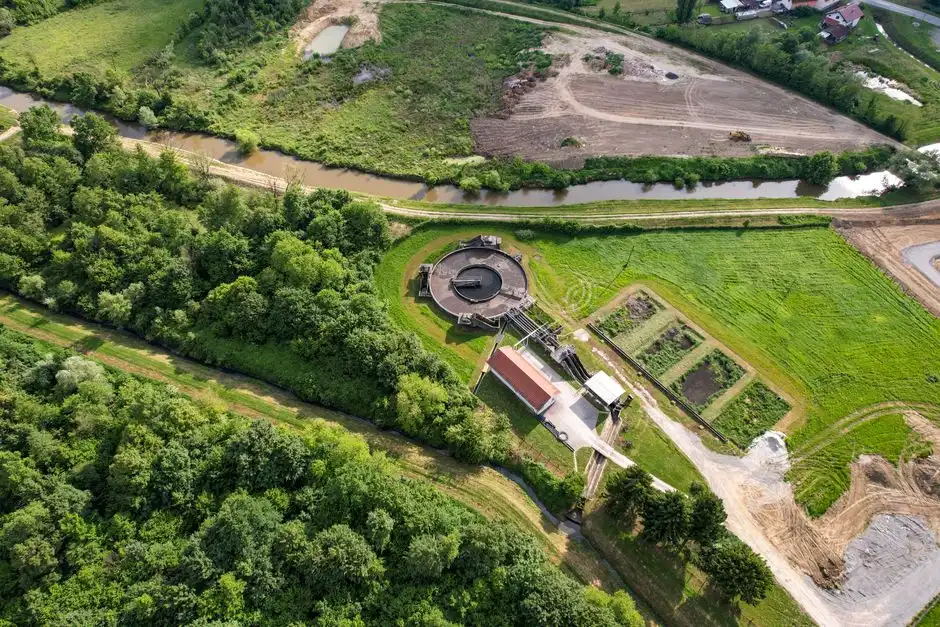
DAF separates conditioned solids by attaching microbubbles to floc and lifting it to the surface, while lamella clarification separates material by gravity within an inclined-plate arrangement.
Clearwater Industries, April 27, 2026, states that proper coagulation and flocculation are essential for optimal DAF performance. Its equipment description identifies serpentine flocculator mix tubes or chemical mix tanks as conditioning methods. After conditioning, microbubbles attach to the floc, a paddle skimmer removes the floated material, and heavier solids settle into a bottom collection zone for withdrawal with an auger.
DAF therefore depends on more than tank volume. Chemical type and dose, mixing energy, floc age, bubble contact, air saturation and recycle flow all affect capture. An industrial DAF system for factory wastewater should be specified with conditioning, saturation, recycle, microbubble generation, skimming and bottom-solids withdrawal—not as a bare reactor.
A lamella clarifier uses inclined plates to improve separation of settleable material in a compact structure. Clarifier designs may also include flocculation and sludge recirculation. Its performance depends more directly on the wastewater’s settling behavior, plate condition, hydraulic distribution and reliable removal of accumulated solids. A high-efficiency lamella clarifier should therefore be evaluated against actual settleability and the downstream feed condition.
Terminology can obscure the comparison. DAF units may themselves be described as flotation clarifiers, and some DAF configurations use lamella pack. Compare the separation mechanism and complete scope instead of relying on the product label.
Use measured wastewater data to make the selection
A defensible selection requires time-weighted wastewater characterization across production, wash-down, cleaning and shutdown periods.
For each sample, record the source, time, flow condition, production activity and field observations. Request flow, TSS, FOG, oil and grease, settleable solids, particle-size distribution, pH, temperature, COD, conductivity, applicable metals and observed variability. Composite results can conceal short wash-cycle peaks, so the sampling plan should reflect how the factory actually discharges.
| Decision input | DAF indication | Clarification indication |
|---|---|---|
| Oil and FOG | Strong candidate, subject to conditioning and flotation testing | Less favorable when oil interferes with settling |
| Paint and buoyant solids | Strong candidate if conditioned particles float reliably | Possible only if the paint solids settle readily |
| Heavy particulate matter | Possible, but bottom-solids withdrawal must be included | Strong candidate when settling behavior is favorable |
| Mixed or uncertain behavior | Resolve through jar testing and an on-site pilot before selecting equipment | |
| Soluble COD, metals, nutrients or toxicity | Not resolved by either separation mechanism; evaluate additional validated treatment | |
HydropureWater lists 13 DAF models spanning 4–300 m³/h. Its lamella clarifier publishes surface-loading rates of 20–40 m/h. These are catalog references, not project guarantees: check each proposed unit against measured peak flow, contaminant loading, hydraulic behavior, chemical demand and required effluent quality.
DAF Corp reports equipment coverage from 48–11,000 GPM and offers laboratory and on-site pilot studies. Its published capacity and performance figures are supplier-reported and are not universal sizing rules. Use them to frame a wastewater-specific design and quotation request.
Before final sizing or acceptance testing, obtain the factory’s current permit and applicable Newport pretreatment or sewer criteria. The supplied research contains no current numeric Newport limit, so neither a generic value nor a supplier catalog range should be substituted for the governing requirement. An automatic chemical dosing system can be specified for controlled coagulant and flocculant addition, but its scope must follow measured demand and the selected conditioning method.
Test the chemical program and full treatment scope
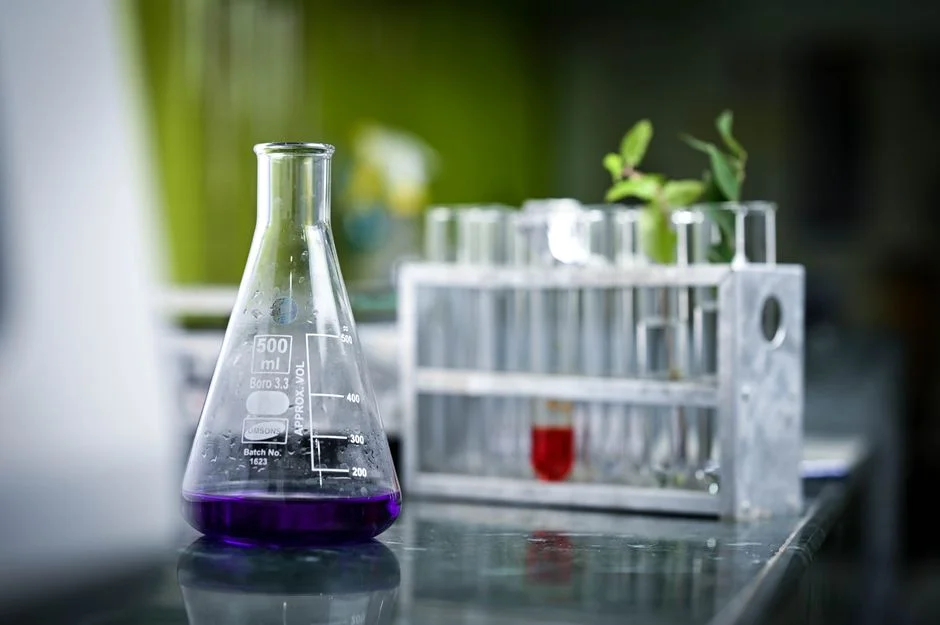
Laboratory jar testing should precede an on-site pilot using actual factory wastewater.
Start with jar tests to establish chemical demand, pH adjustment, mixing requirements and the separation behavior of representative samples. Then operate an on-site pilot across the expected operating range. The pilot should challenge chemical dose, solids removal, sludge generation, recovered-material behavior and the intended effluent or downstream target.
A DAF proposal should identify the reactor, recycle saturator, microbubble-generation equipment, chemical conditioning, mixing or flocculation, skimmer, bottom-solids withdrawal, controls, utilities, foundations, installation, commissioning and performance acceptance. Specify the air and recycle system because they are integral to flotation performance.
A lamella proposal should identify flocculation, sludge recirculation, inclined-plate separation, sludge withdrawal, controls, utilities, foundations, installation and acceptance testing. Where conditioning is needed, a gravity settling tank does not eliminate the chemical and mixing design.
DAF produces two solids paths. Paddle skimmers recover floated oil-contaminated material, while an auger removes heavier bottom solids. Each path needs a defined collection, thickening, dewatering and disposal basis. If the recovered material has no accepted outlet, the project is incomplete. A plate-frame filter press may be required to reduce sludge volume before disposal.
Clarifier designs may use flocculation, sludge recirculation and inclined plates. Compare sludge consistency, expected yield, recovered-oil quality and disposal cost—not only tank footprint or reactor price.
Do not convert supplier flow ranges or published removal figures into guarantees without wastewater-specific testing and written acceptance criteria. Define sampling methods, test parameters, operating conditions, pass/fail results and responsibilities for retesting.
Compare complete bids instead of reactor prices
The relevant purchase comparison is the delivered treatment scope, because chemical conditioning, air and recycle equipment, sludge handling and installation can materially change the project outcome.
Require every bidder to price the treatment unit, chemical conditioning, air generation and recycle equipment, controls, foundations, utilities, installation, commissioning, downstream connections and acceptance testing. State exclusions explicitly. A reactor price that omits conditioning or sludge disposal is not a comparable bid.
Request separate estimates for coagulants and flocculants, operator labor, maintenance, recovered-oil handling, sludge dewatering and final disposal. Assign each bidder’s assumptions for chemical use, air demand, recycle flow, sludge quantity, utilities and controls. These assumptions should connect to the wastewater characterization and pilot results.
The supplied research contains no Newport price, budget or return-on-investment figure. An approximately $1 million annual municipal-fee savings example from a 2015 Australian rendering project is not a valid Newport estimate and should not enter the factory’s budget model.
Evaluate reuse only if the pilot demonstrates that the separated stream meets the intended downstream or reuse requirement. A reuse claim based on visual clarity or generic DAF examples is insufficient.
Ask bidders to submit their design basis, flow and loading assumptions, selected separation mechanism, chemical program, expected sludge quantity, utilities, installation boundary, controls and measurable acceptance criteria. Give preference to suppliers that support laboratory testing or an on-site pilot using actual factory wastewater. The comparison then becomes a test of delivered risk rather than a ranking of catalog prices.
Frequently Asked Questions
Is DAF or lamella clarification cheaper for a Newport factory?
There is no defensible generic price comparison. Compare complete delivered scope and separate estimates for chemicals, air and recycle systems, operator labor, maintenance, recovered-oil handling, sludge dewatering and disposal. Require bidders to identify their design assumptions and base those costs on the measured wastewater and pilot results. The research provides no current Newport quotation.
How should a factory select a DAF or clarifier supplier?
Require a wastewater-specific design basis, complete equipment scope, commissioning plan and measurable acceptance tests. Give preference to a supplier that supports laboratory and on-site pilot work with actual factory wastewater. Check that the proposed pilot challenges chemical dose, operating range, sludge generation and the downstream target rather than merely demonstrating equipment startup.
Is a 4–300 m³/h DAF capacity range sufficient for sizing?
No. That range covers HydropureWater’s 13 listed DAF models, but it does not establish the required size. Check measured peak flow, contaminant loading, air requirements, surface area, recycle flow, chemical demand and required effluent quality. If measured wastewater varies substantially, use pilot data to set the duty point and operating range.