What Domestic Sewage Treatment Must Solve in Sihanoukville
Domestic sewage treatment in Sihanoukville usually means treating wastewater from homes, hotels, hospitals and other non-industrial sources. The right system depends on daily flow, peak demand, wastewater strength, available space, sludge handling, reuse goals and the permitted discharge route. GIZ’s 2025 sector brief reports that the existing city system serves about 30,000 people across roughly 221.5 ha and handles 1,200 m³/day of brewery wastewater, while infrastructure was being developed toward 30,000 m³/day treatment capacity. A modular unit still requires site-specific testing, current permit review and local engineering approval.
Domestic sewage means wastewater generated primarily by human occupancy: residential buildings, hotels, hospitals, apartments, schools and similar non-industrial uses. Trade wastewater from breweries, food processing, textiles or metalworking requires separate characterization and pretreatment; it should not be treated as domestic sewage merely because it enters the same building drainage system.
The 30,000 m³/day figure reported by GIZ in September 2025 is a city infrastructure objective, not a design flow for an individual hotel, residence or community. It also does not establish that a particular property has sewer access or determine which treatment technology should be installed. The buyer must verify the connection point, ownership, capacity and commercial or service arrangements in writing before treating municipal connection as the preferred discharge route.
Cambodia’s tropical monsoon climate adds another design issue. GIZ’s 2025 sector brief gives average annual rainfall of about 1,400 mm, with a dry season from November to April and a wet season from May to October. Rainfall can increase infiltration into damaged sewers, affect groundwater around buried units and change receiving-water conditions. For smaller or dispersed developments, the decentralized sewage treatment options in Cambodia can therefore be practical, but only after assessing the sewer connection, land, receiving water, reuse objective and sludge route.
Classify the Wastewater Before Selecting Equipment
Equipment selection should begin with the wastewater source, not with a catalogue capacity. Domestic sewage from a residence, hotel, hospital, apartment complex, construction camp or mixed-use property must be separated from industrial trade waste and quantified before a treatment train is chosen.
- Identify every wastewater-producing function and separate streams where practical, including domestic drainage, hotel laundry, kitchen wastewater, swimming pools and cooling-water discharge.
- Record occupants or functional units, operating hours and seasonal occupancy to establish the initial flow estimate.
- Measure average flow, peak flow, wastewater strength, pH, suspended solids, oil and grease, temperature, nutrient levels and any chemicals used on site.
- Identify the intended discharge route—sewer, surface water, recharge area or reuse point—and obtain the applicable permit and receiving-water criteria.
For a hotel, bundled laundry, kitchen, pool and cooling flows should not automatically be added to domestic sewage without characterization. The supplied research provides no generic sizing values for these streams. A measured flow record is preferable; where no flow meter exists, the project still needs a documented estimation method based on occupancy and operation.
| Classification step | Information required | Decision affected |
|---|---|---|
| Property use | Residence, hotel, hospital, apartment complex, construction camp or mixed use | Flow estimate, treatment objectives and pretreatment needs |
| Wastewater character | Average and peak flow, strength, pH, suspended solids, oil and grease, temperature, nutrients and site chemicals | Process selection, equalization, biological loading and solids handling |
| Separate streams | Laundry, kitchen, pool, cooling and industrial trade waste | Whether a stream is excluded, separately treated or pretreated |
| Discharge destination | Sewer, surface water, recharge area or reuse point | Permit route, treatment target and final effluent use |
The verified DAF equipment range of 4–300 m³/h supports industrial wastewater and municipal pretreatment duties, but DAF is not a substitute for biological domestic sewage treatment. If industrial effluent reaches the proposed system, its compatibility with the domestic process must be demonstrated and, where necessary, upstream pretreatment must be added.
Compare Package A/O, MBR and Decentralized Treatment
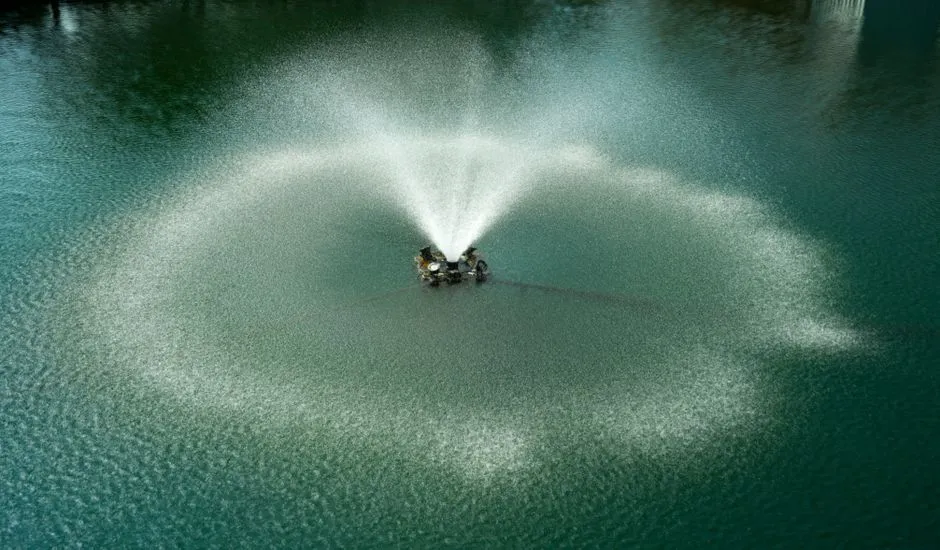
The WSZ and MBR packages use different treatment architectures, so the correct choice depends on the required effluent quality, footprint, reuse objective and lifecycle commitment rather than installed price alone.
| Decision factor | Underground WSZ package | MBR system |
|---|---|---|
| Process | Anoxic/aerobic biological contact oxidation, sedimentation and disinfection in one buried unit | Activated sludge with submerged PVDF membrane filtration |
| Verified capacity range | 1–80 m³/h | 10–2,000 m³/day |
| Installation | Below grade with landscaping above, or trailer-mounted for mobile deployment | Compact packaged arrangement; verify civil and maintenance-access requirements |
| Operation | Fully automated and described as requiring no operator | Requires disciplined aeration, membrane cleaning and replacement planning |
| Separation quality | Sedimentation within the integrated package | Filtration below 1 μm according to the verified catalog |
| Principal trade-off | Limited verified capacity range and dependence on civil/infiltration assumptions | Greater mechanical complexity and membrane replacement exposure |
The underground WSZ domestic sewage treatment plant is suited to residential communities, hotels, hospitals and smaller decentralized sites where land availability, burial and automated operation are priorities. It should not be selected from average flow alone; groundwater infiltration, stormwater entry and peak periods need to be included in the hydraulic basis.
The compact MBR sewage treatment system is more relevant where compactness, solids separation or reuse-quality requirements justify the additional maintenance. Its verified catalog states a footprint 60% smaller than conventional systems, but that comparison should be checked against the proposed civil layout, access zones and replacement requirements. The MBR and SBR technology comparison can help frame the broader process decision.
Use decentralized treatment where there is no suitable sewer connection, limited land or a need for phased deployment. Do not use DAF as the complete domestic process: its relevant role is solids, oil-and-grease and colloidal removal before biological treatment. The 2015 UNESCAP presentation recommended combining centralized and decentralized systems according to local conditions and including monitoring and evaluation; that remains historical guidance, not proof that a particular arrangement is approved today.
Build a Sizing and Process-Flow Basis
A defensible package design starts with a complete hydraulic and process flow, then tests each proposed component against measured data and peak conditions.
- Inlet and headworks: provide access for inspection and removal of solids that could damage downstream equipment.
- Equalization: include sufficient buffering where flow or strength varies materially and where the selected process needs stable loading.
- Biological treatment: size from credible average flow, peak factor, hydraulic retention and required process loading.
- Solids separation: match clarification or membrane separation to the selected treatment package.
- Disinfection: define the treatment objective, chemical demand and safe handling arrangements.
- Effluent storage or reuse: identify the final destination, flow path and any seasonal storage requirement.
- Sludge handling: define collection, stabilization, dewatering, storage and authorized removal.
The supplied research contains no universal BOD, COD or TSS loading values for domestic sewage in Sihanoukville, so the designer must obtain those inputs through project-specific characterization and calculation. Do not accept a unit sized only from peak or nominal flow. For WSZ, check the selected unit against the verified 1–80 m³/h range and include groundwater infiltration, stormwater entry, seasonal occupancy and short peaks. For MBR, check the selection against 10–2,000 m³/day and provide physical access for membrane cleaning, replacement, aeration, backwash routing and standby arrangements.
| Design input or deliverable | Buyer requirement |
|---|---|
| Flow basis | Measured or credibly estimated average flow, peak factor, operating pattern and seasonal occupancy |
| Wastewater characteristics | Project-specific strength and constituent data; no generic loading values in the research |
| Hydraulic containment | Assessment of groundwater, stormwater entry and peak wet-weather flow |
| Process calculations | Hydraulic retention, process loading, equalization and equipment duty points |
| MBR-specific provisions | Cleaning, replacement access, aeration, backwash routing and standby strategy |
| Bid documentation | Hydraulic diagram, calculations, control philosophy, equipment list, guarantees and commissioning plan |
Preliminary flow measurement and equalization should be examined where wet-season infiltration or discharge variability may affect the process. GIZ’s 2025 sector brief supplies the 1,400 mm rainfall context, but that regional figure does not replace site drainage observations. Mechanical screening requirements should be defined from the wastewater and downstream equipment; the rotary mechanical bar screen can be evaluated as a headworks option where the project needs reliable screening.
Verify Permits and the Applicable Discharge Standard
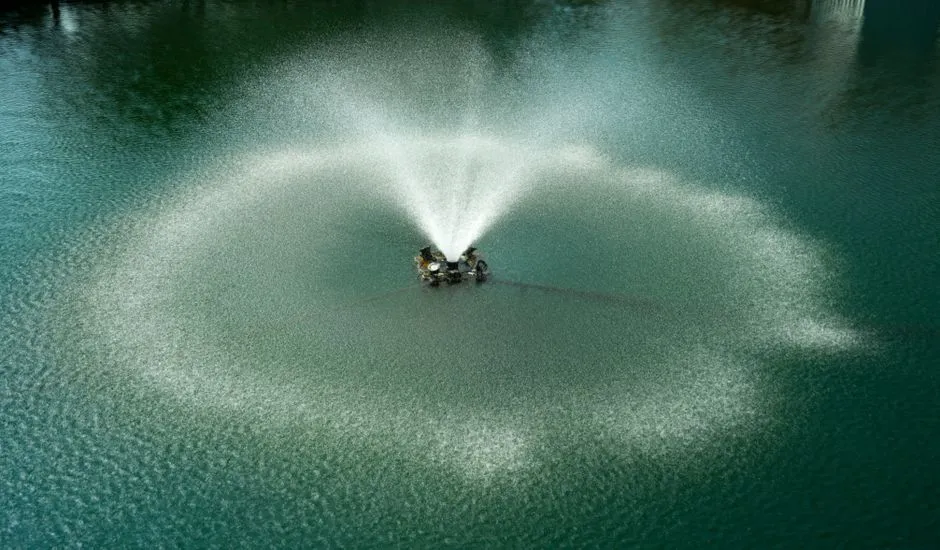
Discharge compliance depends on the current legal instrument, the receiving water and the project’s permit—not merely on the treatment system’s catalogue performance. The 2015 UNESCAP presentation identifies Cambodia’s Sub-Decree No. 27 on Water Pollution Control as covering water-pollution determination, effluent permits, pollution control, waste disposal and inspection procedures.
For coastal-water context, that 2015 presentation lists pH 7–8.3, COD 2–8 mg/L, dissolved oxygen 2–7.5 mg/L, coliform below 1,000 MPN/100 mL, oil content 0–6 mg/L, total nitrogen 0.2–1 mg/L and total phosphorus 0.02–0.09 mg/L. These are source values from the presentation, not confirmation of a project’s current permit limits.
The commercial guide’s COD and TSS figures must not be reused as universal domestic-sewage limits. Its industrial-discharge figures, including the reported date and scope, require confirmation against current regulation, the receiving water and the obligations assigned to the permit holder. The Cambodian hotel resort wastewater treatment guide can support early screening, but its commercial estimates do not replace authority confirmation.
The procurement team should establish whether the project requires environmental assessment, engineering approval, construction approval and operating authorization. The 2015 UNESCAP material notes that Sub-Decree No. 72 governs environmental impact assessment for specified projects and activities. Because this evidence predates the current project, ask the relevant Cambodian authorities to confirm the present legal pathway and applicable standards.
| Compliance item | Information to obtain before order |
|---|---|
| Permit status | Current permit or confirmation that one is not required |
| Discharge point | Authorized location, receiving water and any connection or access agreement |
| Effluent criteria | Current legally applicable limits and project-specific permit conditions |
| Approvals | Environmental assessment, engineering and construction approvals, and operating authorization |
| Monitoring | Sampling points, parameters, frequency, laboratory, notification and reporting process |
| Non-compliance | Corrective-action process and consequences stated in the permit and contract |
Compare Budget, Lifecycle Cost and Supplier Risk
Compare quotations on installed scope, demonstrated performance and lifecycle obligations. Purchase price alone hides civil work, utilities, testing, sludge handling and future replacement costs.
The commercial guide gives initial capital benchmarks of USD 50–300/m³ for municipal projects and USD 100–500/m³ for industrial applications. These are commercial estimates for broad project classes, not domestic-package quotations for Sihanoukville. Ask each bidder to state the capacity basis and identify which items are included in equipment, civil works, installation, controls, commissioning, taxes, freight and site conditions.
The same guide reports indicative operating ranges of USD 0.10–0.50/m³ for energy and USD 0.05–0.20/m³ for chemicals. It also reports annual maintenance of USD 5,000–20,000 and MBR membrane replacement of USD 10,000–30,000 every 5–7 years. These are market-guide estimates requiring written warranty terms and validation against the proposed equipment and operating pattern.
| Cost or risk category | Information to request from each supplier |
|---|---|
| Equipment and installation | Itemized equipment, concrete, installation, inlet and outlet works, power and controls |
| Commissioning and compliance | Effluent testing, performance test, training, documentation and permit support |
| Operations | Energy and chemical calculations, preventive maintenance, sludge removal and consumables |
| MBR lifecycle | Membrane warranty, cleaning frequency, replacement price basis and spare-part availability |
| Supplier capability | Verified domestic-sewage references, local commissioning capability, controls records and response time |
| Commercial exclusions | Taxes, freight, power upgrade, civil works, laboratory testing, accessories and future civil work |
MBR has greater mechanical complexity than a conventional package. Its compact footprint and filtration below 1 μm must be weighed against aeration, cleaning, membrane replacement and specialist support requirements. Require proposed spares, technical support arrangements and contractual performance guarantees.
For projects generating substantial sludge, assess the dewatering route rather than treating it as an accessory. A plate-and-frame filter press may require a dedicated operating protocol, plate condition checks, filtrate management and operator training; suitability depends on the actual sludge characteristics and disposal route.
Plan Commissioning, O&M and Performance Acceptance
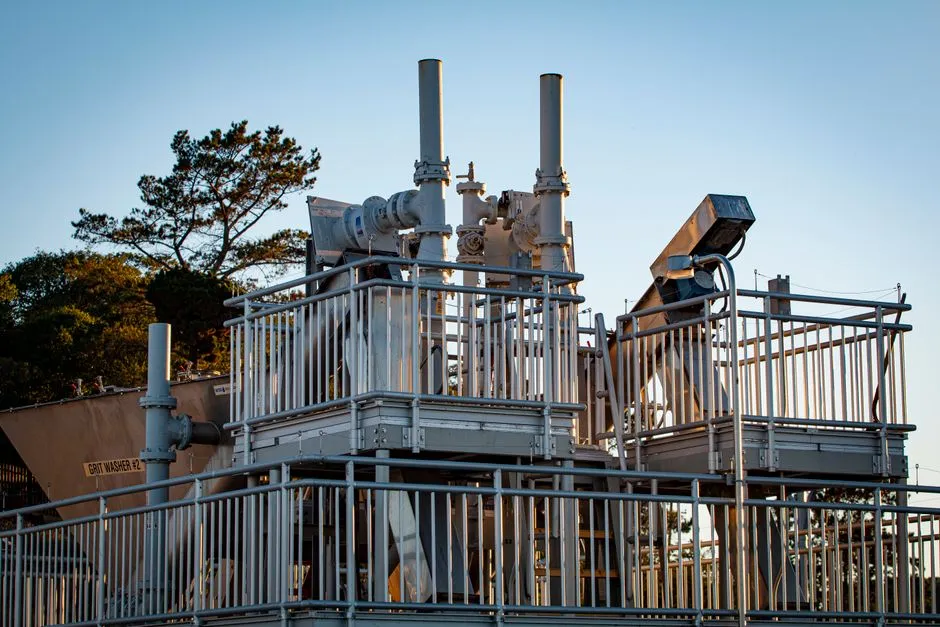
Acceptance should test the complete treatment train under agreed flows and wastewater conditions, not only confirm that equipment starts. The supplied research provides no universal BOD, COD or TSS loading values for domestic sewage in Sihanoukville, so influent characterization remains a project requirement before final design. Repeat sampling after stabilization to verify that the selected biological process is receiving representative loads.
Define performance tests for hydraulic capacity, process stability, effluent quality, disinfection, sludge production, noise, odor, power consumption and automatic controls. Each criterion should refer to the current permit, agreed treatment objective or contractual guarantee. Where the permit sets a compliance limit, testing must demonstrate that limit; where it does not, the contract should define the required performance basis explicitly.
| Responsibility | Minimum handover evidence |
|---|---|
| Routine inspection | Checklist, frequencies, operating log and fault-response process |
| Biological and solids maintenance | Media, aeration, sedimentation, sludge-removal and membrane-cleaning procedures as applicable |
| Chemicals and disinfection | Dosing records, safety data, storage requirements and dose-control logic |
| Laboratory monitoring | Sampling points, parameters, test method, laboratory and reporting responsibility |
| Utilities and incidents | Power, backup and outage response, together with reporting and escalation contacts |
| Documentation | As-built drawings, controller settings, training records, preventive-maintenance schedule and spare-parts list |
Operator training should cover normal startup, routine control, sampling, alarms, chemical handling, sludge handling and emergency response. Wet-season and peak-occupancy checks belong in the handover plan because GIZ’s 2025 sector brief documents the May-to-October wet season and rapid urban development placing pressure on Sihanoukville’s infrastructure.
Finally, keep the city’s reported 30,000 m³/day development objective in its proper place: it is context, not evidence of a property connection. Verify connection availability, capacity, tariffs and responsibility in writing before finalizing the discharge strategy. For sites where disinfection is required, a chlorine dioxide generator should be assessed against the selected treatment process, safety requirements and permitted dosing regime rather than added by default.
Frequently Asked Questions
What does a domestic sewage treatment system in Sihanoukville cost?
A commercial guide gives broad benchmarks of USD 50–300/m³ for municipal projects and USD 100–500/m³ for industrial applications, but these are not quotations for a Sihanoukville property. Request a project-specific installed price stating treatment capacity, civil works, controls, commissioning, effluent testing, sludge removal, training, warranty, taxes, freight and site-condition exclusions. Compare lifecycle assumptions separately, including the guide’s unverified estimates of USD 0.10–0.50/m³ for energy, USD 0.05–0.20/m³ for chemicals and MBR membrane replacement of USD 10,000–30,000 every 5–7 years.
How should a package treatment plant be sized for a hotel or residential development?
Require measured flow, peak demand, wastewater characteristics, treatment objectives, available space, sludge-handling arrangements and the permitted discharge route. Use occupancy and operating data for the first estimate, then confirm it through sampling and hydraulic calculation. Do not order a unit from a generic flow-per-person rule when site data are available.
When is an MBR system preferable to a packaged A/O system?
Consider MBR when compactness, solids separation or reuse-quality requirements justify membrane operation. The verified catalog states filtration below 1 μm, but that benefit must be weighed against aeration, cleaning, replacement access, specialist maintenance and lifecycle cost. An integrated A/O package can be more appropriate where simpler operation and lower mechanical complexity dominate.
How should a buyer assess supplier capability and compliance risk?
Request verified domestic-sewage references, the process basis, performance guarantees, commissioning evidence, warranty terms, local service capability, controls documentation and lifecycle support. Separately, confirm the current Cambodia environmental permit, receiving-water criteria, discharge point, monitoring obligations and approval pathway with the relevant authorities; a product datasheet does not establish legal compliance.