What can—and cannot—be confirmed about BMW India
No verified DAF capacity can be stated for BMW’s new auto plant in India from the supplied research because its wastewater flow, TSS/FOG loads, drainage segregation, batch schedule, permit target and awarded tender are not provided. The defensible approach is to isolate the contaminated stream, select the 85th-percentile daily flow as the design basis, and verify batch peaks. Size clarification area using 3–5 gpm/ft², typically 4 gpm/ft², while also checking TSS mass loading, 10–30 minutes retention, 20–50% recycle and cross-flow velocity of at least 2 ft/s. Vehicle-production capacity alone is not a valid wastewater-flow basis.
The supplied research identifies no India-specific BMW wastewater flow, TSS/FOG concentration, drainage plan, pretreatment limit, production batch schedule or awarded DAF tender. It also provides no plant-wide hydraulic profile from which an equipment capacity can be calculated. This is an evidence gap, not a basis for inserting a generic number into a budget or tender.
Vehicle output, employee headcount and building floor area may support early forecasting, but they do not establish the contaminated flow, discharge timing or contaminant mass entering a DAF. HydropureWater’s 2026 BMW Texas assessment draws the same distinction: a number entered before these inputs are documented is a planning assumption, not an engineering capacity. The related BMW Germany automotive-wastewater DAF assessment applies that logic to another plant for which the necessary site-specific data were also absent.
For procurement, DAF capacity should mean the flow the equipment can clarify while meeting the applicable TSS target under the selected chemistry and operating conditions. A tank may pass its nominal water-throughput test while failing to capture the solids load. The buyer therefore needs a common design basis before comparing capacity, equipment architecture or price.
Build the wastewater balance around the stream that needs DAF
The DAF mass balance must begin with the contaminated stream that actually requires dissolved air flotation, not the sum of every drain leaving the site. HydropureWater’s 2026 capacity assessment uses this same stream-segregation approach for automotive manufacturing wastewater, while the automotive-plant wastewater pretreatment requirements provides the broader pretreatment context.
Separate one-through cooling water and storm water where drainage routing permits. Exclude them from the DAF basis when they are segregated; include storm water only where its contaminants and flow require DAF treatment. Chemistry and cooling-blowdown streams should be treated as primary candidates only after verified characterization and confirmation of their disposal route. For every excluded stream, the RFQ should identify the drainage route or treatment disposition rather than leaving the exclusion implicit.
Map production washdown and process batches against the drainage system. An hourly total can conceal a short discharge event that controls tank area or equal-flow distribution. The common data request should therefore include production schedules, known batch events, flow-meter locations, sampling points, temperature, pH, TSS, FOG and surfactants. Representative sampling is needed because annual vehicle production cannot supply a contaminant mass balance.
| Stream or source | DFA assessment input | Procurement treatment |
|---|---|---|
| Production washdown and process batches | Flow by event, TSS, FOG, surfactants, temperature and pH | Include when the stream requires DAF; identify batch timing and peaks |
| Chemistry and cooling blowdown | Verified flow, contaminant profile and disposal route | Include only as a characterized DAF candidate |
| One-through cooling water | Drainage routing and segregation | Exclude when physically separated from the contaminated stream |
| Storm water | Contaminants, flow and segregation or bypass provisions | Include only where DAF treatment is required |
Select the flow basis that controls equipment duty
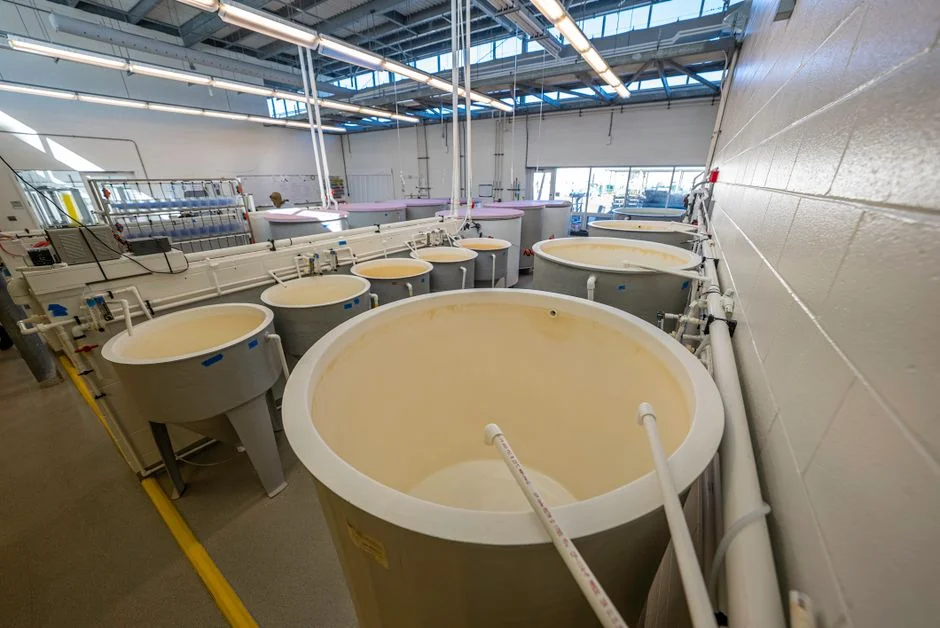
The selected design flow must be the 85th-percentile daily flow, stated explicitly in the RFQ. HydropureWater’s 2026 DAF capacity and sizing guide specifies that basis and permits brief excursions above the hydraulic loading limit. This is a design convention within the supplied guidance, not an India-specific BMW flow.
Allowing brief excursions does not remove the need to document them. Bidders should receive the production schedule, batch-event profile, drainage routing, flow derivation and pretreatment requirements needed to assess whether the selected tank geometry and controls can absorb short peaks. Hydraulic capacity, batch handling and float stability must be checked against the same documented duty.
Do not permit one bidder to size from average flow while another sizes from an instantaneous peak. Every proposal should identify the percentile, calculation period, included streams, treatment target, selected hydraulic loading rate, air-to-solids ratio, retention time and recycle ratio. The DAF system engineering specifications provide the coupled checks that should sit behind the stated flow basis.
Design flow is a contractual number: 85th-percentile daily flow, with documented batch excursions and a defined contaminated-stream boundary.
Calculate clarification area without confusing it with treatment performance
Required clarification area equals the selected design flow divided by the selected hydraulic loading rate. In consistent US units, area in ft² equals flow in gpm divided by hydraulic loading in gpm/ft². This calculation establishes the clarification footprint; it does not by itself establish whether the DAF can remove the required TSS load.
HydropureWater’s 2026 guide identifies 3–5 gpm/ft² for most industrial wastewater and 4 gpm/ft² as the typical design point, subject to chemistry and expected loading shocks. For wastewater above 2,000 mg/L TSS, the guide recommends a 20–30% safety margin and approximately 2.5–3.5 gpm/ft². Cross-flow velocity must remain at or above 2 ft/s because low velocity can destabilize the float even when bubble generation is adequate.
The guide’s 200 gpm, 800 mg/L TSS and 4 gpm/ft² example is useful only as a non-BMW arithmetic demonstration. It converts 200 gpm to approximately 45 m³/h and gives 50 ft² of clarification area at 4 gpm/ft². It is not a BMW India flow, production-derived estimate or equipment recommendation.
| Calculation item | Method or criterion | Evidence basis |
|---|---|---|
| Clarification area | Design flow in gpm divided by hydraulic loading in gpm/ft² | HydropureWater’s 2026 capacity and sizing guide |
| Most industrial wastewater | 3–5 gpm/ft²; 4 gpm/ft² typical | HydropureWater’s 2026 guide |
| TSS above 2,000 mg/L | 20–30% safety margin; approximately 2.5–3.5 gpm/ft² | HydropureWater’s 2026 guide |
| Float stability | Cross-flow velocity at or above 2 ft/s | Ecologix E-DAF design notes cited in HydropureWater’s 2026 guide |
| Non-BMW example | Approximately 45 m³/h and 50 ft² | HydropureWater’s 2026 guide; 200 gpm, 800 mg/L TSS and 4 gpm/ft² example |
Verify four coupled DAF operating checks
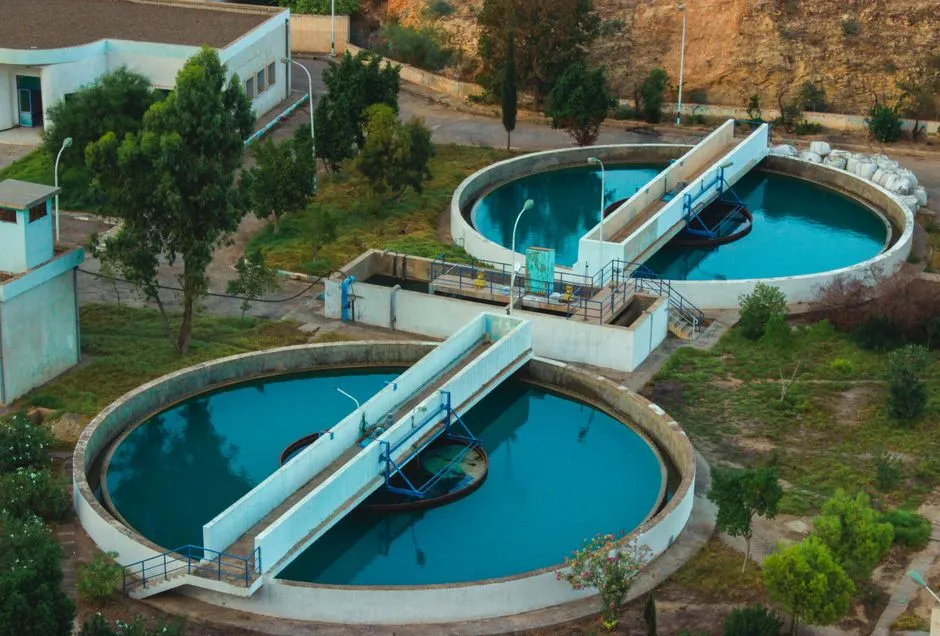
A hydraulically adequate DAF can still fail as a clarifier if its air supply, contact time or recycle duty does not match the TSS load. HydropureWater’s 2026 DAF system engineering specifications therefore treat hydraulic loading, air-to-solids ratio, retention time and recycle ratio as one coupled system. The PLC-controlled chemical dosing system forms part of the conditioning scope because chemical response affects floc growth, bubble attachment and float quality.
- TSS mass loading: Convert the design flow and measured TSS concentration into hourly solids mass. Compare that mass with available dissolved air using the 0.005–0.060 lb air per lb TSS band in HydropureWater’s 2026 guide. Well-conditioned floc can move toward the lower end; dispersed colloids and poorly conditioned wastewater can require more air.
- Retention: HydropureWater’s 2026 guide gives 10–30 minutes as the industrial design band, including upstream reaction or flocculation effects. That equipment must provide enough time for floc growth before the stream reaches the contact zone; nominal tank residence cannot compensate for inadequate conditioning.
- Recycle: Specify a 20–50% DAF recycle ratio, normally at 60–80 psig saturator pressure. The saturator, recycle pump and controls should be priced and evaluated as one duty. HydropureWater’s 2026 guide notes that recycle below 20% can starve the contact zone of microbubbles.
- Float stability: Maintain the selected geometry’s cross-flow velocity at or above 2 ft/s and verify it against batch variability and loading shocks. Adequate bubbles alone do not preserve a stable float at low cross-flow velocity.
| Check | Design criterion from HydropureWater’s 2026 guide | Buyer verification |
|---|---|---|
| TSS mass loading | 0.005–0.060 lb air per lb TSS | Hourly TSS mass versus available dissolved air and selected conditioning |
| Retention | 10–30 minutes industrial design band | Effective reaction, flocculation and contact-zone residence |
| Recycle | 20–50%, normally at 60–80 psig | Recycle flow, pressure, bubble delivery and control logic |
| Float stability | Cross-flow velocity at or above 2 ft/s | Geometry and hydraulic behavior during batch events |
| Expected TSS removal | 92–97% for properly conditioned wastewater when all four variables are satisfied | Conditional expectation only; not a guaranteed BMW result |
Choose a standard DAF, parallel trains or a custom system
A standard catalogue DAF is suitable only when the calculated duty falls within 4–300 m³/h and the wastewater remains within the stated TSS, FOG and air-to-solids envelope. HydropureWater’s 2026 guide defines that catalogue range across 13 models. Its stated assumptions are TSS no greater than 1,000 mg/L, FOG no greater than 500 mg/L and standard air-to-solids conditions.
Flow match alone is insufficient. A model rating may not accommodate batch peaks, measured contaminants or the required float-stability condition. Review the standard industrial DAF system against the calculated area and all four operating checks before selecting it.
For a characterized duty above 300 m³/h, evaluate parallel standard trains and custom fabrication. Parallel trains require an engineered inlet manifold that distributes flow equally; unequal inlet flow can overload one train and underload another. Symmetrical drawings do not prove equal duty.
| Proposed architecture | Use when | Main engineering condition |
|---|---|---|
| Standard catalogue DAF | Duty is within 4–300 m³/h and wastewater fits the catalogue envelope | Model satisfies area, loading, retention, air supply, recycle and float-stability checks |
| Parallel standard trains | Duty exceeds 300 m³/h and identical streams can be balanced | Engineered equal-flow distribution and viable ancillary arrangement |
| Custom fabrication | Variable wastewater, constrained footprint, separate ancillaries or project-specific integration makes parallel skids unsuitable | Project-specific hydraulics, controls and site integration |
For multiple trains, define the intended redundancy explicitly. Separate ancillaries or one common scum-removal mechanism can affect operating strategy and site integration; both should be resolved before comparing configurations.
Issue one RFQ basis for comparable supplier proposals
The RFQ must give every bidder the same design flow and percentile, contaminated-stream boundary, TSS/FOG envelope, pretreatment target, batch profile and hydraulic loading rate. Require each offer to state its air-to-solids ratio, retention, DAF recycle ratio, operating controls, intended redundancy and proposed standard, parallel-train or custom configuration. These requirements follow HydropureWater’s 2026 comparison framework for industrial DAF systems.
Define conditioning, saturator, recycle pumping, controls, scum handling and PLC-controlled chemical dosing within the offer. Where the pretreatment sequence requires it, define the interface with a downstream plate-and-frame filter press. These packages should not be left as supplier assumptions because omissions can distort both price and performance comparisons.
| Mandatory RFQ item | Required bidder response | Commercial control |
|---|---|---|
| Flow and wastewater basis | 85th-percentile daily flow, included streams, TSS/FOG testing, batch profile and permit target | Prevents different wastewater duties being priced |
| DAF performance basis | Hydraulic loading, air-to-solids ratio, retention, recycle and expected TSS removal | Shows clarifier performance rather than throughput alone |
| Equipment configuration | Standard, parallel-train or custom design with flow distribution and redundancy | Makes operating risk and architecture explicit |
| Ancillaries and treatment sequence | Conditioning, saturator, recycle pump, controls, scum handling, dosing and downstream interface | Keeps omitted scope visible |
| Commercial comparison | Whole-system fit, compliance risk, installation requirements and operating performance | Prevents acquisition price from masking scope differences |
Reject a quotation that selects capacity from flow alone or omits any coupled sizing check. The supplied research contains no BMW India equipment scope or supplier pricing, so it does not support a defensible budget or price comparison. Request equivalent scope, installation requirements and test-acceptance criteria, then compare offers on whole-system fit and operating risk rather than acquisition price alone.
Frequently Asked Questions
What DAF capacity is required for BMW’s new auto plant in India?
An exact capacity cannot yet be stated. The minimum defensible inputs are the contaminated-stream flow at the selected design percentile, representative TSS and FOG testing, the batch schedule and the applicable pretreatment TSS target. Use the 85th-percentile daily flow as the stated design basis, calculate clarification area and verify air-to-solids ratio, retention, recycle and float stability before selecting equipment.
When is a standard DAF suitable instead of parallel trains or custom fabrication?
A standard catalogue unit is suitable only when the calculated duty is within 4–300 m³/h and the wastewater meets the catalogue assumptions of TSS no greater than 1,000 mg/L, FOG no greater than 500 mg/L and standard air-to-solids conditions. For a characterized duty above 300 m³/h, evaluate parallel trains with engineered equal-flow distribution or custom fabrication. Request the supplier to show how its configuration handles the documented batch profile.
Why should a quotation based only on nominal flow be rejected?
A nominal-flow quotation does not demonstrate that the equipment can remove the solids load. It may omit the hydraulic loading check, chemical conditioning, air demand, retention, DAF recycle ratio, saturator and recycle-pump duty, controls, scum handling or downstream sludge treatment. Require the bidder to calculate and disclose these items against one common influent basis.
How can BMW India compare DAF supplier budgets without pricing data?
No defensible budget can be calculated from the supplied research because India-specific wastewater scope, equipment requirements and supplier prices are absent. Issue the same design-basis package to each bidder and require itemized pricing for the DAF, conditioning, saturator, recycle pumping, controls, scum handling, dosing, installation requirements and any downstream plate-and-frame filter press. Compare the complete offer and its operating risk rather than relying on an unexplained equipment subtotal.