Start with the wastewater, not the equipment catalogue
An effluent treatment plant in Phnom Penh should be selected from verified wastewater characteristics—not a generic treatment package. A practical system commonly combines equalization and screening, pH correction, coagulation and clarification, biological treatment, and tertiary filtration or membranes. DAF is relevant when suspended solids, oil and grease or colloidal matter dominate; MBR is appropriate where biological treatment and membrane separation are required. Raw-water analysis, flow profiling, site constraints, discharge or reuse targets, and applicable Cambodian approvals determine the final design. A textile-effluent study reported average exceedances of about 350-fold for colour and 24-fold for COD, illustrating why industrial effluent must be characterized before equipment is selected.
The design basis should document average daily flow, peak and minimum flow, operating hours, wastewater temperature, production schedules and current or planned changes. Suppliers also need recent laboratory results covering pH, COD, BOD, TSS, TDS, colour, oil and grease, suspended solids and any relevant metals or process-specific contaminants. The analysis must cover normal production, cleaning, shutdown and upset conditions rather than a single grab sample.
The Global NEST Journal study of five textile industries in Kaduna, Nigeria, demonstrates the consequence of one analysis being applied to every stream: colour exceeded the cited limit by about 350-fold on average, while COD, TSS, ammonia, BOD5 and sulfide exceeded limits by 24, 13, 8, 7 and 3 times, respectively. In the same study, TDS was detected in all five samples; nitrate and oil and grease in two; aluminium, manganese, zinc and copper in 80% of samples; and iron in 60%. These findings warn about industrial effluent characterization, not transferable limits for Phnom Penh.
Before selecting a treatment train, separate production wastewater, contaminated stormwater, sanitary sewage, cleaning chemicals and laboratory drains. A segregated system may protect biological or membrane stages from intermittent chemical or high-strength discharges. A combined system may be simpler where flows are stable and the treatment objective permits it. Use Cambodia wastewater treatment equipment options as orientation for equipment categories, but do not treat a sewage package as an industrial design without this evidence.
Map each pollutant to the right treatment stage
The correct treatment sequence removes each contaminant at the stage where the process is most effective and protects downstream equipment from avoidable shock loads.
- Stabilize and protect: Equalization smooths flow and load; screening protects pumps and membranes; oil and grease interception removes separable floatables before they interfere with clarification.
- Condition and clarify: pH correction, coagulation and flocculation address pH-sensitive, coloured, suspended or colloidal contaminants. A DAF system for suspended solids, oil and grease and colloidal wastewater can provide dedicated physical separation.
- Reduce biodegradable organics: Biological wastewater treatment addresses the organic load represented by BOD and COD. Portico identifies aeration tanks, MBBR, SBR and MBR reactors as relevant biological options.
- Polish progressively: Pressure sand filters, activated carbon, UF and RO offer increasing separation capability. University of Twente research assessed nanofiltration for polishing wastewater treatment plant effluent against EU Water Framework Directive standards and for agricultural or indirect potable-use applications; this is a research basis for polishing, not a Phnom Penh reuse guarantee.
- Manage residuals and reuse constraints: Constructed wetlands should be evaluated as a researched polishing option. Wageningen University and Research investigated them for micropollutant removal from wastewater treatment plant effluent in a thesis published on 2022-09-23.
| Primary concern | First process response | Engineering check before purchase |
|---|---|---|
| Variable flow and load | Equalization and screening | Peak flow, operating schedule and equalization duty |
| Oil, grease, floatables, colloids | Interception, pH correction and DAF | Separated-residue handling and downstream protection |
| Biodegradable BOD and COD | Biological treatment | Organic loading, retention and sludge production |
| Fine solids or residual organics | Sand filtration, activated carbon or UF | Treated-water target, flux and cleaning strategy |
| Dissolved salts and persistent pollutants | RO, advanced oxidation or evaporation | Concentrate disposal, energy demand and recovered-water value |
An integrated MBR membrane bioreactor combines biological treatment with membrane solids separation. Conventional biological treatment may be preferable where the land, influent variability, membrane maintenance capability and reuse target do not justify that configuration. RO, advanced oxidation or evaporation for Zero Liquid Discharge should be considered only after reviewing the contaminant profile, concentrate management and energy demand.
Choose between packaged, modular and custom treatment
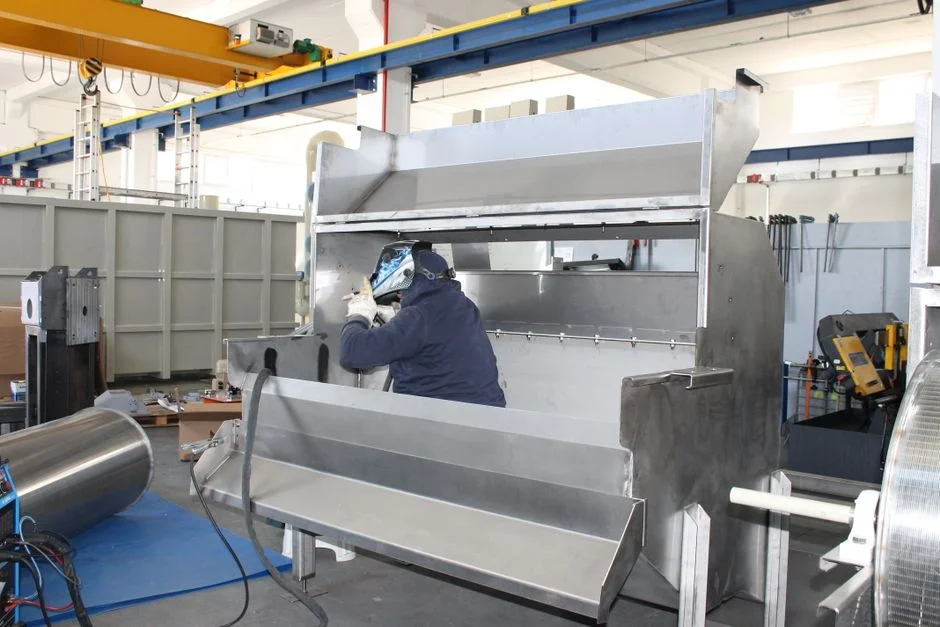
Plant architecture should follow the wastewater profile and delivery constraints, not a preferred equipment format.
| Architecture | Conditions favoring selection | Main buyer checks |
|---|---|---|
| Packaged or containerized | Relatively uniform wastewater, compact footprint and standardized validated equipment | Factory testing, utilities, local installation scope and process suitability |
| Modular skid-mounted | Flows or stages vary by production line, staged installation or likely expansion | Module interfaces, expansion provisions, redundancy and installation sequence |
| Custom ETP | Substantially different streams, constrained civil works, multiple reuse targets or extensive pretreatment | Process guarantees, site-specific design, commissioning evidence and lifecycle support |
Compare MBR and conventional biological treatment around footprint, membrane management, solids separation, operator requirements and treated-water quality. For effluent reuse, ask each bidder to demonstrate performance against the actual reuse specification rather than use the word “reuse” as an acceptance criterion. The UF system for membrane filtration applications may be relevant as a polishing stage, but its selection depends on the preceding treatment and target water quality.
The WSZ integrated sewage treatment package combines anoxic and aerobic biological contact oxidation, sedimentation and disinfection for a stated capacity of 1–80 m³/h. It is relevant to sewage and low-strength domestic-type flows, not a substitute for characterization of industrial effluent. DAF should receive closer consideration when oil, grease, suspended solids or colloids require dedicated separation before biological or membrane treatment.
Size the plant from verified flow and contaminant loads
Nominal capacity cannot be selected from an average flow figure alone; it must be checked against peak hydraulics and pollutant mass loading.
- Record average daily flow, maximum hourly flow, minimum flow, operating schedule, rainfall exposure and planned production changes.
- Calculate pollutant loading from measured flow and concentration. Concentration alone does not establish the required treatment capacity.
- Check hydraulic retention, equalization volume, biological loading, clarification capacity, filtration flux and membrane recovery separately.
- Confirm utilities, chemical delivery, sludge handling, drainage, access, noise constraints and available footprint during the site survey.
| Design input | Required evidence | Why it changes the design |
|---|---|---|
| Hydraulic profile | Daily and hourly flow records plus operating schedule | Sets equalization, peak treatment and piping duties |
| Pollutant mass load | Concentration paired with representative flow | Sets biological and chemical treatment capacity |
| Reuse or discharge quality | Approved limits and end-use specification | Determines polishing and monitoring requirements |
| Site and utilities | Survey, drawings, power and drainage information | Defines civil works, equipment arrangement and auxiliary systems |
HydropureWater’s published equipment ranges are 4–300 m³/h for DAF and 10–2,000 m³/day for the MBR membrane bioreactor. These are product ranges, not automatic recommendations for a Phnom Penh site. The supplier should demonstrate which capacity within the selected range is justified by the submitted flow and load basis.
The Ion Exchange rice-mill example provides a process precedent, not a Cambodian sizing rule. It describes equalization, primary treatment, biological treatment, chlorination and filtration at capacities from 25 to 250 KLD, with shock loads of up to 20%. Apply the precedent only after confirming that the local wastewater, operating pattern and receiving or reuse requirements are comparable. Include sedimentation equipment for solids separation and chemical dosing equipment in the supplier’s duty and utility calculations rather than treating them as unqualified add-ons.
Build a supplier brief that produces comparable proposals
Comparable quotations require the same design basis, performance boundary and documentation package from every bidder.
Include the wastewater analysis, flow profile, stream and drain codes, discharge or reuse targets, site drawings, power data, civil interfaces and operating assumptions. The brief should also state applicable Cambodian approval requirements and identify which party must confirm each permit or regulatory interface. A proposal based on incomplete wastewater data should be returned for clarification rather than compared as if it were fully defined.
Require every bidder to present:
- Treatment objectives and a process flow diagram;
- Equipment sizing calculations and stated design assumptions;
- Equipment materials, controls, utilities and chemical consumption;
- Expected sludge generation and residual-management requirements;
- Factory and site commissioning tests with measurable acceptance criteria;
- Exclusions, battery limits, civil works and installation requirements;
- Operator training, manuals, spare parts, warranty and maintenance support;
- Commissioning schedule and responsibility matrix.
Request pilot testing when wastewater variability, new contaminants or reuse targets leave material design assumptions unresolved. A pilot supports process selection but does not replace documentation of the full design basis. Portico’s effluent treatment page describes site surveys, load studies, tailored design, trained operators, preventive maintenance, treated-water testing and compliance documentation; those elements can be written into the contractual deliverables.
Normalize bids before selecting a supplier. Compare identical treatment duties, exclusions, civil scope, controls, commissioning acceptance tests, schedules, warranties and lifecycle support—not equipment price alone. Equipment such as a plate and frame filter press for sludge dewatering or a mechanical bar screen for pretreatment should appear with a defined duty, material specification and performance basis.
Plan commissioning, operation and residual-waste management
Reliable operation depends on commissioning the whole liquid and solids-management system, not merely demonstrating that the main vessel fills.
Define the startup sequence before award. It should cover clean-water testing, leak checks, instrument and control validation, chemical-dosing calibration, biological-system startup and representative sampling at each required stage. Where biological treatment is included, document how seed media, acclimation and initial discharge performance will be managed. Where membranes are installed, specify cleaning, integrity testing and acceptance criteria.
Handover should include an operating manual, maintenance schedule, spare-parts list, alarm logic, emergency instructions, trained operators, drawings and test records. Establish sampling frequency, responsible operators, laboratory arrangements, corrective-action limits and record retention before commissioning is accepted. The discharge or reuse specification should remain the reference throughout verification.
Plan sludge dewatering and disposal alongside the liquid treatment train. The plate and frame filter press range is 1–500 m², providing a reference for available solid–liquid separation options; the selected duty must follow sludge volume, solids characteristics and required cake condition. Do not leave residual handling as an undefined exclusion.
For disinfection-sensitive applications, evaluate the chlorine dioxide generator range from 50 g/h to 20,000 g/h or an UV-C sterilizer for water treatment. Neither should be assumed necessary; selection should follow the identified hazard, treated-water target, site conditions and residual-control requirement.
Frequently Asked Questions
What information does a supplier need to quote an effluent treatment plant in Phnom Penh?
Request recent wastewater analysis, average and peak flow, operating hours, stream and drain details, discharge or reuse targets, site drawings, power data and available footprint. Ask the supplier to identify missing inputs and the design assumptions used to close those gaps.
How much should an industrial effluent treatment plant cost?
There is no defensible project price from the available research. Request a normalized quotation based on the verified flow and load basis, treatment duty, civil scope, equipment, utilities, commissioning, training, warranty and residual handling. Compare lifecycle support as well as acquisition cost; do not accept a price
Frequently Asked Questions
How much does an industrial effluent treatment plant cost in Phnom Penh?
The cost of an industrial effluent treatment plant (ETP) in Phnom Penh typically ranges from $50,000 to over $500,000, depending on the daily flow capacity and the pollution load (BOD/COD levels). Small-scale systems for light manufacturing often start at $300 to $500 per cubic meter of daily capacity, while complex systems requiring heavy metal removal or advanced membrane technology can exceed $1,000 per cubic meter.
These figures include civil works, mechanical equipment, and electrical controls, but exclude land acquisition and long-term operational expenditure (OPEX). Businesses should budget an additional 5-10% of the CAPEX annually for electricity, chemical dosing, and sludge disposal costs to remain compliant with Cambodian environmental regulations.
What wastewater analysis do I need before requesting an ETP quotation?
To receive an accurate quotation, you must provide a laboratory-certified report detailing the influent characteristics, specifically the Chemical Oxygen Demand (COD), Biochemical Oxygen Demand (BOD5), Total Suspended Solids (TSS), and pH levels. For textile or food processing facilities, additional testing for Total Nitrogen (TN), Total Phosphorus (TP), and Oil & Grease (O&G) is mandatory.
If your facility handles chemical processes, you must also include a heavy metal scan (e.g., Chromium, Lead, Mercury) and conductivity measurements. Providing these specific parameters allows engineers to calculate the precise hydraulic retention time and chemical dosing requirements needed to meet the Ministry of Environment’s effluent discharge standards.
When should a Phnom Penh factory use DAF instead of MBR?
A Dissolved Air Flotation (DAF) unit should be prioritized when the primary objective is the removal of high concentrations of fats, oils, grease (FOG), or suspended solids before biological treatment. DAF is highly effective for food processing and slaughterhouse effluents where organic loads are high but not necessarily dissolved, and where the goal is to reduce the load on downstream aerobic processes.
Conversely, a Membrane Bioreactor (MBR) is preferred when the factory requires high-quality treated water for potential recycling or when space constraints make a large clarifier impossible. MBRs provide superior effluent quality, consistently achieving BOD and TSS levels well below 10 mg/L, but they require higher energy input and more frequent membrane maintenance compared to the physical separation provided by DAF.
How do I compare effluent treatment plant suppliers in Cambodia?
When evaluating suppliers, request a detailed technical proposal that includes the process flow diagram (PFD), mass balance calculations, and a list of specific equipment brands for pumps, blowers, and sensors. Compare suppliers based on their local track record in Phnom Penh, specifically their capability to provide rapid onsite technical support and spare parts availability within Cambodia.
Avoid suppliers that offer generic, "off-the-shelf" designs without conducting a site-specific pilot test or comprehensive influent analysis. Verify that the supplier has a proven history of successfully navigating the Ministry of Environment’s (MoE) permitting process, as local regulatory expertise is as critical as engineering capacity for ensuring project commissioning success.
What compliance documents should I require for an industrial wastewater treatment system?
You must require a comprehensive "Design and Engineering Report" that explicitly references compliance with the Prakas on Water Pollution Control issued by the Cambodian Ministry of Environment. This document should include the anticipated effluent quality parameters compared against the legal discharge limits for public water areas or sewer systems.
Upon project completion, ensure the supplier provides an Operations and Maintenance (O&M) manual, a certified electrical safety certificate, and the necessary documentation for your Environmental Compliance Certificate (ECC) application. Additionally, request a "Certificate of Performance" showing that the system meets the guaranteed discharge standards during the initial commissioning phase, as this is essential for your facility's ongoing environmental reporting requirements.