Which Rules Control a Tyndall AFB Area Sewer Discharge?
Transportation equipment plants near Tyndall AFB generally meet sewer pretreatment requirements through a permit-driven treatment train: characterize industrial wastewater, control hazardous or incompatible streams at the source, equalize and treat the combined flow, then verify compliance at the point of connection to the POTW. EPA explains that POTW local limits are site-specific and may be numeric or narrative requirements, including best management practices, while applicable federal categorical standards may also apply. A typical industrial train can combine screening, equalization, DAF for oil and suspended solids, pH control and chemical precipitation for metals, clarification, optional biological polishing, and pH trim. Final limits must come from the receiving POTW’s current control mechanism and the plant’s permit, not from a generic design guide.
The enforceable sewer limit is not a generic national number. EPA defines pretreatment standards as pollutant discharge limits applying to industrial users, while local limits address the needs of the POTW, its sludge processes, and its receiving waters (EPA, Pretreatment Standards and Requirements—Local Limits). The applicable limits are imposed at the industrial user’s end-of-pipe discharge, meaning the point of connection to the POTW collection system (EPA, Pretreatment Standards and Requirements—Local Limits).
Start with the federal framework: 40 CFR Part 403 governs general pretreatment requirements, and 40 CFR 403.5(c) identifies qualifying POTWs required to develop local limits (EPA, Pretreatment Standards and Requirements—Local Limits). Then obtain the serving POTW’s current industrial user control mechanism and the plant’s discharge permit. Determine separately whether the plant is a categorical industrial user subject to an applicable federal category standard. A permit-first comparison of local and federal pretreatment limits helps separate those legal layers.
| Document or decision | What it establishes | Question for the plant engineer |
|---|---|---|
| Receiving POTW control mechanism | Site-specific numeric limits, narrative requirements, prohibitions, monitoring, and BMPs | Which POTW serves the parcel, and is the current document incorporated into the plant permit? |
| Plant pretreatment permit | Approved discharge point, authorized streams, monitoring, reporting, and compliance conditions | Does the permitted discharge point match the physical sewer connection? |
| Federal categorical standard | Technology-based requirements applicable to a qualifying categorical industrial user | Does the plant’s manufacturing and wastewater classification satisfy the category definition? |
| Wastewater characterization | Measured pollutant concentrations, masses, flow variability, and stream chemistry | Which unit operation is justified by each measured load? |
Do not describe a generic concentration as the “Tyndall-area limit” until it has been matched to the serving POTW, current control mechanism, and individual industrial permit. Stormwater, construction soil management, and sanitary-sewer pretreatment are separate compliance paths; records of one cannot substitute for the others.
Map the Wastewater Streams Before Choosing Equipment
A transportation equipment plant must characterize each wastewater stream before combining it, because a batch parts wash, machining coolant blowdown, and coating rinse can have incompatible chemistry and incompatible disposal pathways. A 2026 commercial guide identifies six common streams: parts-washer overflow, vibratory-finisher discharge, machining-coolant blowdown, phosphate/nitrite conversion-coating rinse water, oily compressed-air condensate, and general floor wash (HydropureWater, 2026, How US Transportation Equipment Plants Meet Pretreatment Limits).
The same source reports a 2025–2026 field-data envelope of COD 1,500–8,000 mg/L, oil and grease 200–5,000 mg/L, TSS 500–3,000 mg/L, zinc/copper/chromium/lead 5–100 mg/L, and pH from 3–11 across shifts (HydropureWater field data, 2025–2026). These are characterization benchmarks, not locally enforceable discharge limits. They help identify likely treatment objectives and sampling priorities, but they do not establish what the receiving POTW permits.
| Stream | Characterization question | Potential decision before treatment |
|---|---|---|
| Parts-washer overflow | Detergent, oil, pH, and batch-release pattern? | Segregate incompatible chemistry or reduce cleaning chemicals at source |
| Vibratory-finisher discharge | Suspended solids, oil, and cleaning chemistry? | Screen solids and determine whether oil is free or dispersed |
| Machining-coolant blowdown | Stable emulsion, colloid content, metals, and additive chemistry? | Evaluate emulsion-breaking treatment rather than gravity separation alone |
| Conversion-coating rinse water | Metals, pH, phosphate or nitrite, and segregation opportunity? | Collect separately if reduction or precipitation chemistry is required |
| Oily compressed-air condensate | Oil concentration, emulsification, flow variability, and contaminants? | Segregate for oil and solids removal if required |
| Floor wash | Oil, solids, detergents, metals, and cleaning agents? | Prohibit incompatible cleaning products and establish a controlled collection route |
Simple gravity separation is a weak fit for some machining streams. The 2026 commercial guide states that semi-synthetic coolants and drawing compounds can use sulfonated emulsifiers and extreme-pressure additives to hold oil droplets below 20 µm in stable suspension (HydropureWater, 2026, How US Transportation Equipment Plants Meet Pretreatment Limits). If the plant confirms that condition, the design must address dispersed oil and colloids rather than assume that an API or CPI separator will recover the oily phase.
Prepare a stream-by-stream sampling plan covering flow, pH, COD, TSS, oil and grease, and applicable metals. Include event sampling for batch dumps and cleanout discharges. Request process chemistry, batch schedules, existing pretreatment controls, hazardous-material inventories, and sewer-connection documents before finalizing equipment. For metals-bearing lines, review whether MBR versus conventional activated sludge for fabricated metals is even relevant; first determine whether segregation, source reduction, or dedicated precipitation is the controlling need.
Build a Treatment Train That Answers the Permit
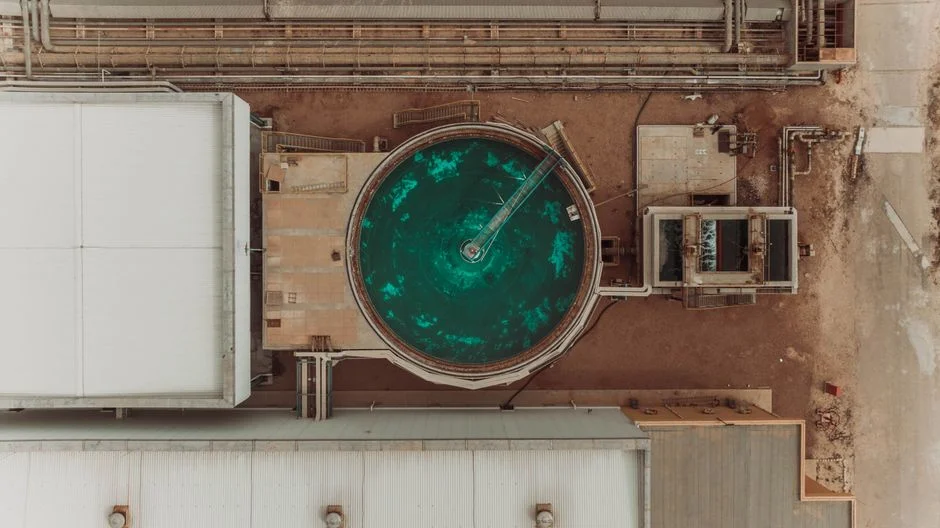
A defensible treatment train follows the waste through source control, segregation, equalization, physical removal, chemical treatment where required, solids separation, optional polishing, and verified discharge. Each stage should have a measured pollutant load, design duty, or permit condition behind it. A generic “pretreatment package” cannot substitute for that logic.
- Source control and segregation: eliminate incompatible materials, recover or reduce chemicals at source, and separate streams that require distinct treatment.
- Screening: remove rags, plastics, stringy coolant debris, and fibrous material before pumps and treatment equipment.
- Equalization: damp batch releases, pH variation, and pollutant concentrations before the treatment train.
- Oil and solids removal: apply DAF where dispersed oil, FOG, colloids, or suspended solids dominate.
- pH control and metals precipitation: add chemical treatment only when characterization and permit criteria justify it.
- Solids separation: separate precipitated or flocculated solids.
- Optional biological polishing: add biological capacity only when the receiving POTW’s requirements justify it.
- Final monitoring and sludge management: verify the discharge and close the waste and solids mass balance.
The commercial source describes a rotary mechanical bar screen with 1–3 mm openings for removing rags, plastic dunnage, and stringy coolant debris before they foul DAF pumps or coat lamella plates (HydropureWater, 2026, How US Transportation Equipment Plants Meet Pretreatment Limits). Select opening size and screen capacity from the actual solids inventory rather than copying that description.
For equalization, the same 2026 source describes 8–24 hours of peak-flow design and 12 hours as a typical engineering target to damp pH, oil and grease, and COD swings (HydropureWater, 2026, How US Transportation Equipment Plants Meet Pretreatment Limits). Final hydraulic design must reflect actual batch dumps and filtrate return. A data-driven DAF capacity calculation for an EV plant illustrates why average flow alone is an incomplete basis for sizing.
| Process step | Design input | Permit or operating question |
|---|---|---|
| Screening | Debris type, dimensions, peak flow | Does removal protect downstream equipment without creating an unapproved solids route? |
| Equalization | Batch dumps, diurnal flow, filtrate return, spill capacity | Will the basin prevent prohibited or shock discharges? |
| DAF | Oil, FOG, colloids, TSS, flow and load variability | Can the unit remove the dispersed fraction present at the measured concentration? |
| Chemical precipitation | Metals, pH, oxidation state, precipitation chemistry | Which metals require treatment, and what endpoint controls dosage? |
| Solids separation | Floc properties, solids loading, sludge volume | Is the resulting sludge managed under an independently confirmed waste code? |
| Biological polishing | Biodegradable COD, ammonia, temperature, variability | Does the POTW condition require biological treatment or another endpoint? |
For DAF, the commercial source reports 85–95% oil and grease removal and 80–90% TSS removal (HydropureWater, 2026, How US Transportation Equipment Plants Meet Pretreatment Limits). Treat these as reported performance envelopes, not guaranteed local results or permit limits. Verify coagulant chemistry and document an effective emulsion break during pilot work or startup testing.
For coating rinses containing metals, the source describes pH adjustment to 8.5–9.5 followed by hydroxide precipitation (HydropureWater, 2026, How US Transportation Equipment Plants Meet Pretreatment Limits). Set the actual target pH and removal criteria from measured chemistry and permit requirements. A DAF versus clarifier for EV wastewater comparison can clarify that DAF and clarification address different solids-removal mechanisms.
Close the train with final pH trim, representative flow-proportional or event-based sampling, documented discharge at the POTW connection, and a closed sludge mass balance. If chemical dosing is required, specify an PLC-controlled chemical dosing system with controlled chemical storage, interlocks, and operating records.
Match DAF, Clarification, and MBR to the Actual Constraint
Equipment selection should follow the pollutant and separation constraint, not a preferred technology. DAF is appropriate where dispersed oil, FOG, colloids, or suspended solids dominate; clarification is appropriate where flocculated or precipitated solids must be separated; and MBR is appropriate only when biological solids retention and filtration are required by the treatment objective.
The commercial DAF catalog covers 4–300 m³/h across 13 standard models for industrial pretreatment applications (HydropureWater commercial catalog, 2026). This is a product range, not a recommended capacity for a Tyndall-area plant. Size from the largest verified flow condition, pollutant loads, operating variability, and treatment chemistry. Review DAF capacity calculations for a transportation-equipment plant before accepting a catalog selection.
| Technology | Primary constraint addressed | Evidence the supplier needs |
|---|---|---|
| DAF | Dispersed oil, FOG, colloids, and buoyant suspended solids | Flow range, oily wastewater analysis, emulsion characteristics, target removal, and chemical demand |
| Lamella clarifier | Separation of flocculated or precipitated solids | Solids loading, floc properties, sludge volume, and required solids concentration |
| MBR | Biological solids retention combined with membrane filtration | Biological treatment objective, flow and load, membrane area, operating envelope, and final quality requirement |
The commercial catalog describes a lamella clarifier with sludge recirculation, flocculation, and inclined-plate separation in one structure, while its MBR is described as operating within 1–2,000 m³/day and producing near-reuse-quality effluent (HydropureWater commercial catalog, 2026). Neither statement means an MBR is required for a transportation equipment plant. The receiving POTW’s permit, the characterized pollutants, and the required discharge endpoint control that decision.
Require each bidder to define sizing assumptions, duty cycle, operating variability, space, utilities, sludge handling, controls, monitoring, and permit-document support. The commercial system supports PLC-controlled injection of coagulants, flocculants, pH adjusters, and specialty chemicals (HydropureWater commercial catalog, 2026). The key acceptance test is not automatic dosing in isolation; it is stable operation at the specified chemical dose and documented compliance at the discharge point.
Verify Compliance Before and During Discharge
Compliance must be demonstrated at the end-of-pipe discharge from the industrial user, or the point of connection to the POTW collection system (EPA, Pretreatment Standards and Requirements—Local Limits). Representative sampling is therefore critical because treatment-unit performance does not establish the condition of the authorized discharge.
The baseline in 40 CFR 403.12(b) requires monitoring at least once per quarter (40 CFR 403.12(b), as summarized in HydropureWater, 2026, How US Transportation Equipment Plants Meet Pretreatment Limits). The POTW control authority may require monthly or otherwise more frequent monitoring. The plant permit must control the actual frequency, parameters, methods, sampling locations, and reporting dates.
- Establish written sampling points, preservation procedures, laboratory methods, and flow-proportional or event-based sampling for variable discharges.
- Calibrate pH, flow, and other online instruments and retain calibration records.
- Record chemical use, operating changes, bypass events, downtime, analytical results, corrective actions, and POTW correspondence in one compliance record.
- Close the waste and sludge mass balance from chemical addition through solids dewatering and filtrate return.
Filtrate recycling must be included in equalization flow calculations (HydropureWater, 2026, How US Transportation Equipment Plants Meet Pretreatment Limits). Otherwise, the hydraulic design omits a return flow that can change both equalization level and subsequent treatment loads. A compliance-oriented review of pretreatment mass balances provides a useful reference for organizing those records.
For solids handling, the commercial source states that a plate-and-frame filter press operating at 6–10 bar targets 25–35% dry solids (HydropureWater field data, 2025–2026). Those values describe an equipment operating envelope, not a waste-code determination. Independently confirm the waste code under 40 CFR Part 261 and applicable state generator rules before manifesting any sludge or skimmings.
What Tyndall AFB’s Rebuild Means for Industrial Compliance
The Office of the Special Counsel record documents that Tyndall AFB is undergoing a rebuild after Hurricane Michael destroyed the base in October 2018, alongside the beddown of a new F-35 mission (Office of the Special Counsel, Tyndall AFB MILCON Rebuild and Installation Restoration). The record also states that the Air Force applied for a Florida Environmental Resources Permit for Zone 1 military construction on 26 February 2021 and that FDEP agreed to incorporate the soil-management memorandum into associated Environmental Resources Permits (Office of the Special Counsel, Tyndall AFB MILCON Rebuild and Installation Restoration).
Those records demonstrate active environmental oversight and contractor compliance activity in the Tyndall area. They do not establish the sewer limits applicable to a private transportation equipment plant. For a private user, the governing path remains identification of the serving POTW, its current control mechanism, any applicable federal categorical standard, and site-specific wastewater characterization. Construction soil, contaminated stormwater, and industrial sanitary-sewer pretreatment must remain separate compliance workstreams. A DAF-versus-clarifier application review can support process selection, but it cannot replace the controlling permit.
Frequently Asked Questions
How much should a transportation equipment plant budget for pretreatment near Tyndall AFB?
Do not price the system from average flow or a generic treatment package. Request a quote based on measured flow and pollutant loads, batch variability, space and utilities, chemical demand, sludge handling, controls, monitoring, and the required discharge endpoint. The research provides no site-specific price for a Tyndall-area plant, so require separate equipment, installation, chemical-system, controls, commissioning, and solids-disposal line items.
How should a supplier be selected for pretreatment equipment?
Evaluate application fit first, then require scale-up support, control narratives, monitoring provisions, chemical and sludge integration, and permit-document support. A supplier should show how its proposed unit responds to the plant’s measured chemistry rather than rely only on catalog flow ranges or reported removal envelopes.
Can one equalization basin handle every wastewater stream?
Not until each stream has been characterized. Segregate or treat incompatible streams when their chemistry, batch behavior, or discharge point differs. The sampling plan should cover flow, pH, COD, TSS, oil and grease, applicable metals, process chemistry, and batch-dump schedules before the hydraulic design is accepted.
When is an MBR justified for a transportation equipment plant?
Use an MBR when the treatment objective requires its biological solids-retention and filtration functions. If the controlling issue is dispersed oil, FOG, colloids, or precipitated metals, a DAF or solids-separation train may be the relevant equipment. The MBR versus conventional activated sludge comparison for fabricated metals should therefore follow characterization and permit review, not precede it.
Related Equipment
- industrial DAF system for oil and suspended solids — specifications, capacity range, and technical data