Separate the Wastewater Streams Before Choosing Equipment
An Orumiyeh data center should segregate cooling-tower blowdown, humidification and process-water drain, equipment washdown, and any generator-scrubber blowdown before selecting treatment equipment. A practical 2026 concept is filtration or DAF for solids, biological treatment where organic or ammonia loading requires it, UF or multi-media pretreatment for membranes, and RO or NF for reuse, with ClO2 where residual chlorine must remain below 1 mg/L. The Isfahan benchmark indicates 85–90% overall recovery, while MVC or full ZLD can reach 95–99%. Final sizing requires Orumiyeh source-water testing, cooling-cycle data, permit confirmation, and measured flows.
Cooling-tower blowdown is not simply diluted cooling-water drainage. Evaporation leaves dissolved solids and treatment chemicals behind, so the residual stream can contain elevated salts, heavy metals, biocides, corrosion inhibitors, and altered pH (Water Utility Report, updated 2026-04-14). It should therefore remain separate from sanitary sewage and be treated as the main industrial process stream. RSP Engineers identifies cooling-tower blowdown as the primary process-wastewater source and notes that domestic sanitary flow has a different discharge pathway and permit condition.
Source mapping should identify cooling-tower blowdown, humidification and process-water drain, equipment-cleaning water, air-handling condensate, water-treatment backwash, and ammonia wet-scrubber blowdown. If standby generators use an ammonia wet scrubber, isolate that stream: the Isfahan benchmark reports 50–500 mg/L NH₃-N and requires nitrification or air stripping before it joins a biological train. The wider treatment context in the Cimahi data-center wastewater treatment guide and the equipment constraints discussed in the Berlin semiconductor wastewater compliance guide support stream-specific design, but their locations are not substitutes for Orumiyeh data.
| Candidate stream | Key characterization | Initial route |
|---|---|---|
| Cooling-tower blowdown | TDS, calcium, sulfate, silica, chlorides, biocides, inhibitors, pH and temperature | Segregated filtration and membrane or controlled-discharge pretreatment |
| Humidification/process drain | Corrosion products, biofilm fragments, silica, residual treatment chemicals | DAF, MBR where required, filtration, then RO or NF as justified |
| Equipment washdown | Suspended solids, detergents, cleaning chemicals and variable flow | Equalization and segregation; verify discharge destination |
| Air-handling condensate | Temperature, pH, dissolved metals and possible treatment chemicals | Characterize before combining with other drains |
| Water-treatment backwash | Concentrated solids, salts or regenerant depending on the unit | Return to the relevant treatment-train header or separate handling |
| Generator-scrubber blowdown | Ammonia-N and scrubber chemicals | Separate nitrification or air stripping before biological treatment |
The source-characterization package should record average and peak flow, temperature, pH, TDS, hardness, sulfate, silica, chloride, suspended solids, BOD₅, COD, ammonia, biocides, corrosion inhibitors, and the complete cooling-water chemical program. Confirm actual analyzers and laboratory methods during the campaign rather than inferring concentrations from equipment names.
Design Around Orumiyeh Source Water and Cooling Performance
The Orumiyeh treatment design should begin with measured source-water chemistry and the operating cooling cycles, because the chemistry determines whether filtration and RO can support reuse without creating an uncontrolled concentrate problem. The HydropureWater 2026 Isfahan benchmark states that a 100 MW data center can demand up to 2 million litres of water per day; this is an initial scale signal, not a substitute for the proposed site’s peak and average demand.
Cooling optimization can reduce the hydraulic load before a treatment plant is designed. Genesis Water Technologies 2026 reports that, at 4 cycles of concentration, a typical data center loses 25–30% of make-up water to blowdown. The HydropureWater 2026 Isfahan benchmark states that moving from 4 to 6–8 cycles can reduce make-up demand by 30–50%. These figures must be replaced by the Orumiyeh cooling model, evaporation data, water balance, and operating schedule.
Higher cycles reduce blowdown volume but concentrate CaCO₃, CaSO₄, silica, corrosion inhibitors, and biocides. Antiscalant control, hardness management, and membrane pretreatment consequently become more important. The transferable Isfahan finding is that hard, silica-bearing, sulfate-rich source water can move cooling-tower blowdown into a CaSO₄-and-silica scaling regime that conventional brackish RO cannot always handle. Orumiyeh source-water analysis must establish whether that condition applies.
The design review should test source-water salinity, saturation indices, cooling cycles, membrane compatibility, seasonal temperature, recovery, concentrate production, and the downstream fate of that concentrate. Increasing cycles cannot be accepted as an operating instruction by itself: the chemical program, heat-transfer performance, corrosion control, and equipment warranties must remain compatible. The Kingston data-center treatment blueprint provides a transferable structure for separating verified site data from generic assumptions, while the data-center cooling blowdown treatment guide discusses the implications of concentrating the cooling loop.
| Design input | Evidence or benchmark | Orumiyeh action |
|---|---|---|
| Initial site scale | Up to 2 million litres per day for a 100 MW data center, HydropureWater 2026 Isfahan benchmark | Replace with measured average and peak demand |
| Current cooling cycles | 4 cycles produces 25–30% make-up loss to blowdown, Genesis Water Technologies 2026 | Confirm from operating records and water-balance model |
| Optimization case | 6–8 cycles can cut make-up demand by 30–50%, HydropureWater 2026 Isfahan benchmark | Check scaling, corrosion, chemical compatibility, and seasonal effects |
| Critical chemistry | Hard, silica-bearing, sulfate-rich water can create a CaSO₄-and-silica scaling regime in the Isfahan benchmark | Measure hardness, sulfate, silica, TDS, temperature, and saturation indices |
Build a Segregated Treatment and Reuse Train
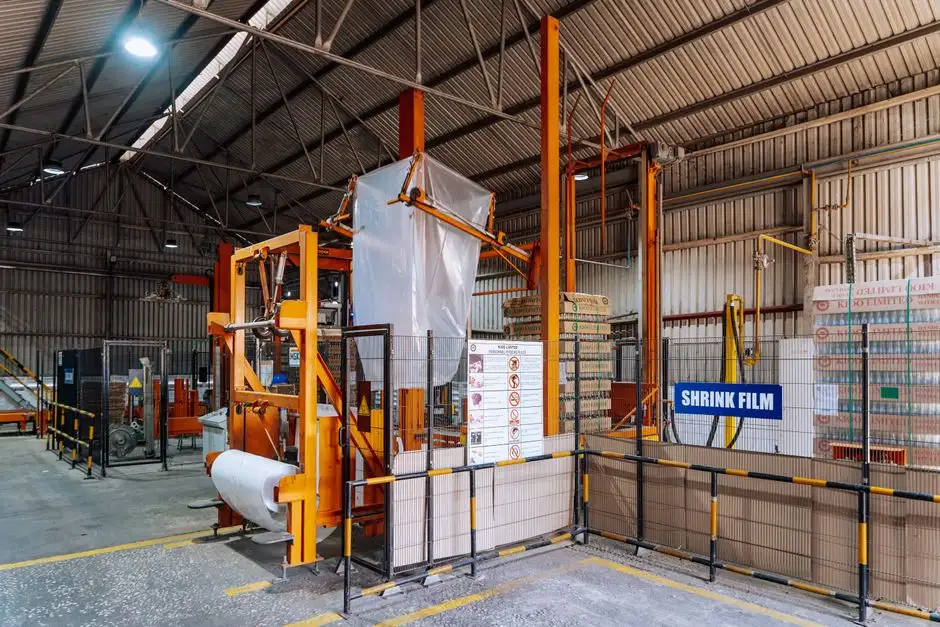
A complete treatment train should connect each identified stream to a defined reuse destination or discharge route; a single common treatment train can over-treat dilute water while failing to control concentrated blowdown. For the relatively clean data-hall stream, the Isfahan benchmark starts with DAF, a containerized MBR, multi-media filtration, and brackish RO polishing.
The Isfahan DAF reference covers 4–300 m³/h across 13 models and can serve as a concept-selection reference for the dissolved air flotation system for data-center wastewater. The MBR reference uses MLSS of 8,000–12,000 mg/L and HRT of 8–14 h, with stated targets of BOD below 10 mg/L, COD below 60 mg/L, and TSS below 5 mg/L. These are benchmark values, not Orumiyeh guarantees; hydraulic and contaminant loading must be calculated from site data.
Multi-media filtration in the Isfahan design holds SDI below 5 before brackish RO polishing at 65–75% recovery. Actual pretreatment depends on feed chemistry, suspended solids, biocides, corrosion inhibitors, and the selected membrane warranty. The integrated MBR membrane bioreactor should be evaluated against the measured organic and ammonia load, footprint, redundancy, aeration demand, and operator capability.
Cooling-tower blowdown requires a stepped treatment ladder rather than an unqualified membrane shortcut. The supplied Isfahan benchmark identifies side-stream filtration at 1–5% of circulation flow through 10–25 µm self-cleaning screens, followed by UF at 0.01–0.1 µm and 90–95% recovery. Brackish RO follows at 50–85% recovery, while NF at 70–85% recovery is an alternative where partial softening is sufficient. The final selection depends on recovery target, concentrate disposal, salinity, scaling, and reuse-water chemistry.
Automatic antiscalant and biocide dosing is identified as mandatory in the Isfahan benchmark for sulfate- and silica-prone chemistry. Confirm local chemical compatibility, storage requirements, dosing control, and operator procedures before accepting that arrangement. If the designated discharge design must hold free chlorine below 1 mg/L, the benchmark specifies on-site ClO₂ generation. UV can provide additional permeate polishing, but it does not replace ClO₂ on a designated discharge line.
Rank reuse destinations according to the HydropureWater 2026 benchmark: cooling-tower make-up first, UPW make-up second, boiler feed third, and washdown fourth. This ordering concerns water-quality fit; the final destination still requires hydraulic, corrosion, health-safety, and equipment-compatibility review. The data-center wastewater and cooling-blowdown process flow provides a useful reference for developing the P&ID and reuse-distribution arrangement.
| Stream | Indicative process sequence | Selection condition |
|---|---|---|
| Data-hall drain | DAF → containerized MBR → multi-media filtration → brackish RO | Use for relatively clean flow; biological treatment depends on measured organic and ammonia load |
| Cooling-tower blowdown | Side-stream filtration → UF → brackish RO or NF | Select NF only where partial desalination and softening meet the reuse target |
| Generator-scrubber blowdown | Separate nitrification or air stripping → biological train | Keep separate until ammonia and scrubber chemistry are verified |
| Designated discharge | pH control, solids removal and dechlorination; ClO₂ where specified | Confirm route and permit before fixing the train |
Choose Reuse, Controlled Discharge, or ZLD
Reuse, controlled discharge, and ZLD should be compared on the same project-specific mass balance because their recovery figures conceal different concentrate, energy, operating, and compliance obligations. The HydropureWater 2026 Isfahan threshold is a screening rule: choose reuse when project flow exceeds 200 m³/day or the authority flags non-revenue water; choose discharge only below 200 m³/day and where operator resources are limited.
The same benchmark states that most sites above 5 MW IT load exceed the reuse threshold on flow alone, while sites above 20 MW should evaluate ZLD from project concept stage. These load-based observations are screening signals, not substitutes for an Orumiyeh water balance. The HydropureWater 2026 Isfahan design envelope combines the data-hall DAF-MBR-RO train with the cooling-blowdown filtration-UF-RO ladder for 85–90% overall site recovery. It reports 95–99% for MVC or full ZLD.
ZLD is appropriate when the receiving route cannot accept discharge, the authority requires near-complete recovery, or the project has a closed receiving basin. It is not automatically justified by site size. MVC or a crystallizer reduces liquid discharge but creates concentrated brine or solid residue that still needs an approved destination, transport route, and operating plan.
The compliance problem therefore changes rather than disappears. A high-quality membrane effluent may meet a numeric limit and still create liability if the receiving basin has critically low flow. The Isfahan benchmark discusses that risk for the Zayandeh-Rud basin; for Orumiyeh, the project must instead establish the verified receiving-water condition, local authority rules, and any reuse restrictions. The Cimahi data-center wastewater treatment guide provides a transferable comparison structure, but the receiving environment and legal limits must be replaced with Orumiyeh evidence.
| Decision criterion | Reuse | Controlled discharge | ZLD |
|---|---|---|---|
| Screening trigger | Flow above 200 m³/day or authority concern, HydropureWater 2026 Isfahan benchmark | Flow below 200 m³/day with limited operators, same benchmark | Non-permittable discharge, authority requirement, or closed basin |
| Recovery | 85–90% in the HydropureWater 2026 Isfahan envelope | Not established by the supplied research for Orumiyeh | 95–99% with MVC or full ZLD in the same benchmark |
| Main risk | Source-water chemistry, membrane fouling, reuse compatibility | Effluent limits, sewer capacity, receiving-water exposure | Concentrate disposal, energy demand, complexity, residue destination |
| Decision evidence | Stream mass balance, cooling demand, source analysis, permit route | Authority acceptance, utility capacity, pretreatment agreement | Discharge rejection, residue plan, lifecycle cost and utility assessment |
Run three mass-balance cases: complete reuse, reuse plus controlled discharge, and MVC or full ZLD. Each case should show recovered water, residual discharge, concentrate, sludge, energy, chemical use, and permit exposure against the same site forecast.
Plan Discharge Compliance and Monitoring as a Separate System
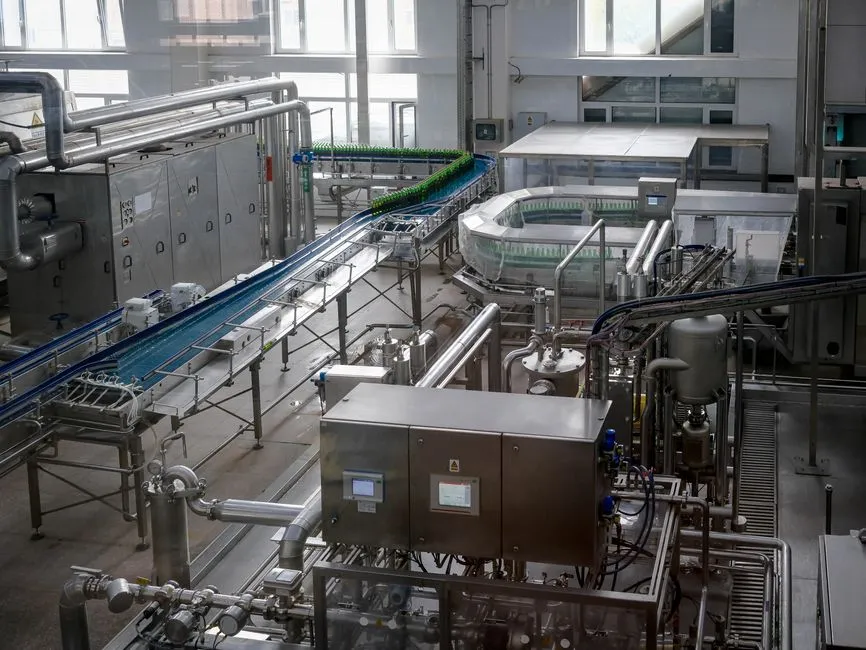
Compliance must be designed as an operating and monitoring system rather than attached after the treatment skid is selected. The HydropureWater 2026 regional benchmark gives BOD₅ at or below 50 mg/L, COD at or below 200 mg/L, TSS at or below 50 mg/L, free chlorine below 1 mg/L, and total chromium at or below 0.5 mg/L with 24-hour composite sampling. These are Isfahan regional analogue values, not verified Orumiyeh limits, and cannot be written into a permit application without current confirmation.
The permit or pretreatment application should identify the discharge route, expected flow and chemistry, chemical package, receiving utility or surface-water authority, monitoring frequency, and responsible operator. Early utility coordination is essential because sewer acceptance, pretreatment requirements, connection fees, and application procedures are site-specific (RSP Engineers).
Blowdown can be acidic or alkaline, hot, and dosed with biocides and corrosion inhibitors (RSP Engineers). Potential pretreatment therefore includes pH and temperature control, suspended-solids removal, and dechlorination, with the exact scope determined by chemistry and authority requirements. The sewer-pretreatment limits guide provides a transferable application structure for industrial pretreatment documentation.
Civil design should reserve sampling ports, calibrated flow and pH monitoring, laboratory sampling points, chemical storage containment, spill drainage, vehicle access, and maintenance space. These are treatment-plant design requirements, not optional site features (RSP Engineers). Confirm whether local authorities require continuous or periodic records, flow-paced composite sampling, accredited laboratory analysis, chain-of-custody procedures, and operator competency.
Do not route industrial process wastewater to stormwater. RSP Engineers states that process wastewater must use an authorized sanitary-sewer or surface-water route under the applicable permit. For Orumiyeh, document the receiving authority’s legal basis, permitted flow, treatment standards, monitoring conditions, connection requirements, and consequences of non-compliance before ordering discharge equipment.
Budget CAPEX, OPEX, and Delivery Risk
A procurement budget should separate treatment-process cost from regional logistics, utility requirements, concentrate handling, and compliance exposure. Genesis Water Technologies 2026 gives directional benchmarks of USD 250,000–500,000 installed CAPEX and USD 1.50–3.00 per kgal OPEX for a 50,000 GPD RO unit. These values are not an Orumiyeh quotation and require sizing, source chemistry, civil scope, freight, import, and commissioning definitions.
The same source gives USD 3–8 million CAPEX and USD 5–15/kgal OPEX for full ZLD, with MVC energy of 15–25 kWh per 1,000 USG. HydropureWater’s 2026 Isfahan benchmark gives 0.8–1.6 kWh/m³ for an MBR-equipped plant and 0.4–0.9 kWh/m³ for a DAF-only scope. Obtain the actual Orumiyeh electricity tariff, expected load profile, and standby-power arrangement before converting energy demand into operating cost.
Delivery duration is a site-specific commercial risk. The HydropureWater 2026 Isfahan benchmark assumes 7–14 days for container clearance and 7–10 days for roughly 1,300 km of overland haul, producing 12–20 weeks from FOB to commissioned-ready. Do not transfer that duration to Orumiyeh until the port, customs process, inland route, unloading, installation, and commissioning scope are confirmed. Clarify whether the quotation is FOB, CIF, or delivered and installed.
Price three scenarios using the same battery limits: complete reuse; reuse plus controlled discharge; and MVC or full ZLD. Then list exclusions and allowances for membrane and critical-spares availability, chemical autonomy, operator training, sludge removal, reject-water disposal, VAT or import treatment, electrical works, civil works, and utility connections. The PLC control architecture for wastewater treatment helps define control-panel scope, while the corrosion-prevention guide for wastewater equipment should inform material allowances.
| Cost element | 2026 directional benchmark | Orumiyeh budget treatment |
|---|---|---|
| RO package | USD 250,000–500,000 installed CAPEX for 50,000 GPD; USD 1.50–3.00/kgal OPEX, Genesis Water Technologies 2026 | Resize to verified peak flow and add freight, import, civil, controls, and utility scope |
| Full ZLD | USD 3–8 million CAPEX; USD 5–15/kgal OPEX, Genesis Water Technologies 2026 | Price residue removal and site-specific utilities separately |
| Plant energy | 0.8–1.6 kWh/m³ with MBR; 0.4–0.9 kWh/m³ for DAF only, HydropureWater 2026 | Apply the measured Orumiyeh tariff and operating profile |
| Logistics | 12–20 weeks FOB to commissioned-ready in the HydropureWater 2026 Isfahan benchmark | Replace with a project-specific route and customs schedule |
| Commercial exclusions | No Orumiyeh values supplied | Request itemized allowances for membranes, spares, chemicals, training, sludge, reject, VAT and import |
Turn the Concept into an Orumiyeh Design Basis
The design basis should progress from measured site data to a defensible equipment enquiry, then to a permit-ready detailed design. Start with a 4–8 week source-characterization campaign covering average and peak wastewater flows, cooling cycles, source-water chemistry, seasonal temperature, chemical inventory, and water-use projections. The 4–8 week duration is the project campaign allowance specified for this blueprint; it is not a regulatory standard.
- Map and meter every candidate stream, including sanitary sewage, washdown, condensate, backwash, and scrubber blowdown.
- Confirm the receiving route and current Orumiyeh authority requirements before fixing a discharge target. Do not use the Isfahan regional benchmark as a legal limit.
- Build separate hydraulic and mass-balance models for each stream, including reuse quality, concentrate and sludge destinations, fouling projections, peak-equipment redundancy, and utility demand.
- Compare reuse, reuse with discharge, and ZLD using the same site forecast and boundary definitions.
- Issue the basis of design, P&ID, equipment schedule, battery limits, control narrative, civil footprint, chemical-storage plan, commissioning protocol, sampling plan, and performance guarantees.
For engineering procurement, require the wastewater mass balance, membrane sizing at worst-case source chemistry, membrane-fouling projections, chemical-compatibility evidence, certified equipment data, and a FAT/SAT plan. The industrial wastewater acquisition-requirements guide provides a transferable due-diligence sequence, but every legal and site-specific input must be replaced with Orumiyeh evidence.
Do not release equipment for detailed manufacture until the current discharge route, reuse destination, source-water analysis, cooling-cycle model, and authority pre-application are sufficiently resolved to prevent a change in membrane type, pretreatment, footprint, or residue handling.
Frequently Asked Questions
How much wastewater treatment capacity does an Orumiyeh data center need?
Capacity must be calculated from measured average and peak flows for each separated stream, including a defined redundancy basis. The HydropureWater 2026 Isfahan benchmark gives up to 2 million litres per day for a 100 MW data center only as an initial scale signal. Request the proposed site’s cooling model, make-up and blowdown water balance, seasonal demand projection, and peak-equipment criteria before selecting plant flow.
Is reverse osmosis enough for cooling-tower blowdown in Orumiyeh?
RO alone is not a complete answer. The Isfahan benchmark identifies side-stream filtration, UF pretreatment, and then brackish RO or NF, while warning that sulfate- and silica-prone chemistry can require antiscalant and biocide control. Request hardness, sulfate, silica, TDS, temperature, saturation-index, biocide, and inhibitor results, then size pretreatment and membrane recovery against the verified Orumiyeh source water.
What does a data-center wastewater reuse and ZLD package cost in 2026?
Request a scenario-based quotation rather than applying the benchmark directly. Genesis Water Technologies 2026 gives USD 250,000–500,000 installed CAPEX and USD 1.50–3.00/kgal OPEX for a 50,000 GPD RO unit, and USD 3–8 million CAPEX with USD 5–15/kgal OPEX for full ZLD. The supplier should state flow, feed-water chemistry, recovery, treatment boundary, utilities, freight, import, civil works, commissioning, and residue handling behind each price.
Which treatment equipment can be supplied for an Orumiyeh project, and how long should delivery take?
Equipment scope can include DAF, MBR, multi-media filtration, UF, RO or NF, chemical dosing, ClO₂ generation, controls, and containerized skids, but the final list must follow measured water quality and the selected reuse or discharge route. The HydropureWater 2026 Isfahan logistics benchmark is 12–20 weeks FOB to commissioned-ready; require the supplier to confirm the actual port, customs route, inland haul, installation schedule, and commissioning scope for Orumiyeh.
What permit and sampling information should be confirmed before ordering equipment?
Confirm the receiving authority, legal discharge route, permitted flow, applicable limits, pretreatment requirements, monitoring frequency, sampling method, laboratory, reporting schedule, and responsible operator. The Isfahan regional analogue specifies BOD₅ at or below 50 mg/L, COD at or below 200 mg/L, TSS at or below 50 mg/L, free chlorine below 1 mg/L, total chromium at or below 0.5 mg/L, and 24-hour composite sampling; obtain current Orumiyeh requirements before using any of those values in equipment guarantees.
Related Equipment
- integrated MBR membrane bioreactor — specifications, capacity range, and technical data