Which Treatment Fits Cedar Grove Twp Fabricated-Metals Wastewater?
For fabricated-metals wastewater in Cedar Grove Twp, choose DAF when testing shows that free oil, emulsified coolant, grease, or flocculable suspended solids dominate; choose a clarifier when swarf, grit, or precipitated metal-bearing solids settle readily and free oil is minor. Neither DAF nor clarification reliably removes dissolved metals. A 2026 selection should therefore begin with separate-stream sampling and testing, then compare both mechanisms using the same characterized wastewater, chemical assumptions, hydraulic profile, and acceptance criteria.
The contaminant fraction—not the broad label “metals”—controls the equipment decision. A dissolved air flotation clarifier uses pressurized air to form microbubbles that attach to floatable or chemically conditioned particles; surface skimming then removes the resulting float. A gravity sedimentation clarifier separates settleable solids by gravity, while inclined lamella plates shorten the effective settling path.
DAF is the stronger candidate when free oil and grease, emulsified coolant, or conditioned floc constitute the measured load. Clarification is the stronger candidate when swarf, grinding fines, grit, or precipitated metal-bearing solids can settle without relying on flotation. The U.S. EPA’s metal-industry wastewater performance-evaluation and troubleshooting document provides authoritative background, but equipment selection still depends on current site data. This broader DAF versus clarifier guide for fabricated metals explains the mechanism differences in more detail.
Do not treat either separator as a complete metals-removal system. DAF removes oil, FOG, and conditioned floc; clarification removes settleable solids. Dissolved metals remain in solution unless a downstream treatment step removes them.
Separate the Wastewater Streams Before Choosing Equipment
A blended sample can conceal the treatment load that determines equipment selection. Sampling at the point of each production or wash stream, before any common equalization tank, gives the engineer a defensible basis for comparing DAF and clarification.
Keep machining and grinding wastewater, equipment washdown, floor wash, oily drainage, process cooling or quench water where present, stormwater, and batch discharges separate during sampling. For every stream, request average and peak flow, TSS, particle-size distribution, oils and greases, pH, alkalinity, total and dissolved metals, temperature, and observations of free oil or emulsion behavior.
Total metals describe the overall metal inventory. Dissolved metals identify the fraction remaining in solution; DAF or clarification alone will not remove that dissolved fraction. An analytical result for the blended discharge can still be useful for compliance planning, but it should not replace stream-specific characterization.
| Design-basis item | Evidence required | Why it affects the selection |
|---|---|---|
| Hydraulic profile | Average flow, peak flow, batch-discharge profile | Determines equalization needs, separator capacity, and peak-transfer conditions |
| Pollutant loading | TSS, particle-size distribution, oils and greases, mass loading by stream | Separates floatable material from readily settleable solids |
| Chemical condition | pH, alkalinity, emulsion observations, proposed coagulant and flocculant assumptions | Defines whether DAF attachment or lamella settling is practical |
| Metals fraction | Total and dissolved metals | Identifies the need for precipitation, filtration, or another downstream step |
| Equalization | Working volume, mixing behavior, and discharge profile after equalization | Establishes the flow and concentration entering the selected separator |
The design basis should connect the equalization outlet directly to the selected DAF or clarifier. If that link is missing, a supplier can size equipment against an idealized average that does not represent the actual plant. Use the measured batch profile to establish the hydraulic condition bidders must meet, and check sewer pretreatment limits for fabricated metals plants when defining the discharge objectives.
DAF and Clarifier Performance Side by Side
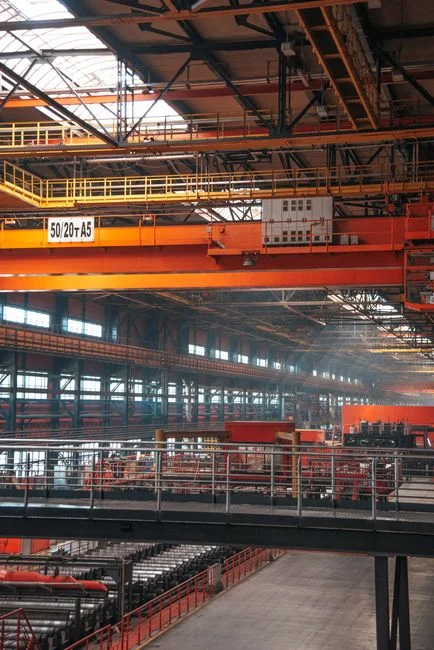
DAF separates material that can attach to bubbles, while lamella clarification depends on floc formation and settling; a fair comparison must give both mechanisms the same wastewater, chemical assumptions, hydraulic profile, and acceptance criteria.
| Design issue | DAF | Lamella clarification |
|---|---|---|
| Separation mechanism | Microbubbles attach to floatable or conditioned particles, which are skimmed from the surface | Settleable solids separate by gravity; inclined plates shorten the effective settling path |
| Primary fit | Free oil, grease, emulsified coolant, and conditioned floc | Swarf, grit, and precipitated metal-bearing solids |
| Operating dependency | Bubble generation, particle attachment, conditioning where needed, and effective skimming | Flocculation, adequate settling area, and reliable solids withdrawal |
| Residue route | Surface float | Bottom underflow |
| Metals limitation | Does not inherently remove dissolved metals | Can remove precipitated metal-bearing solids, but not dissolved metals |
Published performance belongs to a specific system and test basis, not to every DAF installation. DAF Corp reports 92%–98% TSS removal for its FC Maximizer and 85%–90% for its RC UniMax. These are supplier-reported figures and should not be transferred to Cedar Grove Twp equipment without wastewater-specific confirmation.
HydropureWater’s 2026 catalog lists 13 DAF models covering 4–300 m³/h, while its lamella surface-loading range is 20–40 m/h. These are published catalog ranges, not automatic selections for a factory. The selected equipment must also match the measured hydraulic profile, solids loading, chemical treatment, and site constraints. See the industrial DAF system for metalworking wastewater and the high-efficiency lamella clarifier as equipment references rather than substitutes for site-specific sizing.
DAF float and clarifier underflow are separate residue streams. Evaluate each independently against the selected plate-and-frame filter press or another dewatering route, including solids characteristics, collection logistics, and handling assumptions. A favorable TSS result still does not establish compliance or prove that the residue can be dewatered as assumed.
What Changes the Recommendation for Fabricated Metals
The dominant wastewater fraction determines whether DAF, clarification, or an additional process step is justified; the presence of metals alone does not.
For free oil, grease, and emulsified coolant, begin with a DAF evaluation. Observe whether the emulsion is broken or simply dispersed, because an emulsified coolant may require chemical conditioning before reliable bubble attachment and skimming can be achieved. The automatic chemical dosing system should then be evaluated as part of the complete process rather than as an accessory added after the separator has been selected.
For swarf, grinding fines, grit, and precipitated metal-bearing solids, evaluate clarification. Lamella separation merits consideration when the measured hydraulic and solids-loading conditions support it. If metals have first been precipitated, clarification can remove the resulting metal-bearing solids, but it cannot remove metals that remain dissolved.
Significant dissolved metals require a separate treatment decision. Ask bidders to identify the proposed downstream step and its acceptance basis; otherwise, a separator may produce acceptable-looking TSS while leaving the dissolved-metal compliance problem unresolved.
A DAF-then-clarification train is justified only when both floatable and settleable fractions remain significant and the mass balance demonstrates a reason for two stages. Compare the DAF versus clarifier guide for metals wastewater, then test each stage independently. Avoid buying a two-stage train because one mechanism produced a favorable pilot result under conditions the other mechanism never saw.
Pilot Testing and Supplier Comparison for a 2026 Purchase

A valid pilot compares the same wastewater and operating conditions across bidders; otherwise, the result establishes only that one arrangement worked under one set of assumptions.
Issue one common design package to every bidder. It must state average flow, peak flow, batch-discharge profile, pollutant mass loading, hydraulic profile, wastewater characteristics, chemical assumptions, and equalization basis. Ask each bidder to show where equalization ends and how the resulting flow and concentration pass into its proposed DAF or clarifier.
The acceptance test should reproduce actual wastewater chemistry, temperature, flow profile, conditioning, and sampling conditions. Define the input conditions, analytical methods, sampling points, performance limits, chemical consumption, operating hours, and residue quantities before the pilot. A test based on one homogenized sample or a smooth laboratory flow does not establish performance during a production batch discharge.
DAF Corp states that it conducts laboratory DAF feasibility analysis of process waters and on-site pilot feasibility studies. Its published systems range from 48 gpm to 11,000 gpm, with product-specific flow ranges also listed on its website. These supplier capabilities can inform the shortlist, but they do not replace a Cedar Grove Twp-specific pilot or acceptance protocol.
Require every bidder to document the expected float or underflow characteristics and compare that residue separately with the proposed dewatering route. Include collection, transport, cleaning, and handling assumptions in the commercial comparison. Neither a DAF nor a clarifier automatically proves regulatory compliance.
| Procurement check | Evidence every bidder must provide | Buyer decision enabled |
|---|---|---|
| Comparable basis | Same characterized wastewater, flow profile, chemical assumptions, and equalization basis | Whether bids are technically comparable |
| Pilot fidelity | Actual chemistry, temperature, flow profile, conditioning, and sampling conditions | Whether observed performance supports the proposed scale |
| Acceptance criteria | Agreed analytical methods, performance limits, chemical use, and operating duration | Whether the equipment passes the same objective test |
| Residue handling | Separate float and underflow evaluation against the proposed dewatering route | Whether downstream solids handling is feasible |
| Materials and options | Proposed construction and available alternatives | Whether the selected materials suit the actual wastewater and site |
Clearwater Industries identifies 30–50 micron microbubbles and standard 304 stainless-steel construction for its DAF systems, with 316 stainless steel and other materials available on request (Clearwater Industries, April 27, 2026). Treat these as product-option facts, not universal recommendations. For operating-cost planning, use the methodology in DAF operating-cost and OPEX analysis; for a broader refinery comparison, review DAF system engineering guidance.
Frequently Asked Questions
How should a Cedar Grove Twp factory size DAF or clarification equipment?
Size from the measured hydraulic profile, not a plant-wide average. Provide every bidder with average flow, peak flow, batch-discharge profile, equalization arrangement, pollutant mass loading, and wastewater characteristics. HydropureWater’s 2026 catalog spans 4–300 m³/h across 13 DAF models and 20–40 m/h for lamella surface loading, but the appropriate point within those ranges depends on the site data and the selected loading basis.
How can a buyer compare pilot results fairly between suppliers?
Require the same wastewater, chemical assumptions, hydraulic profile, temperature, conditioning, and sampling conditions for every pilot. Define analytical methods, acceptance limits, chemical consumption, operating duration, and residue quantities before testing. A result produced under different wastewater chemistry or a smoother flow profile is not directly comparable.