Start with the discharge point, not a generic COD limit
The applicable limit for Quito industrial wastewater depends on where the discharge enters: a freshwater body, public sewer, marine outfall, or an authorized reuse point. The Ecuador discharge tables and wastewater cost guide identifies Ministerial Agreement 097-A, dated 30 July 2015, as the national framework, while noting that a municipality may impose tighter pretreatment conditions. In 2026, the correct engineering sequence is to characterize each industrial stream, remove materials that can inhibit biology, reduce soluble COD, polish to the required receptor or reuse target, and verify performance through commissioning and monitoring.
| Compliance basis | COD | BOD5 | TSS | Oil and grease | Basis |
|---|---|---|---|---|---|
| Freshwater, Table 9 | 200 mg/L | 100 mg/L | 130 mg/L | 30 mg/L | Daily means |
| Public sewer, Table 8 | 500 mg/L | 250 mg/L | 220 mg/L | 70 mg/L | Daily means |
| EPMAPS pretreatment condition | 250 mg/L | Not stated in supplied data | 50 mg/L | 20 mg/L | 2023 Industrial Discharge Guidelines |
HydropureWater’s 2026 Quito guide cites EPMAPS industrial discharge conditions of COD at or below 250 mg/L, TSS at or below 50 mg/L, oil and grease at or below 20 mg/L, and pH from 6 to 9 under the 2023 Industrial Discharge Guidelines. The same guide states that EPMAPS requires industrial pretreatment before discharge to Quito’s combined sewer. These are not interchangeable with the national sewer table: a plant discharging to a public sewer may find Table 8 as the legal reference while EPMAPS enforces additional site-specific pretreatment conditions.
Before equipment selection, the permit file should identify the current authorization, receiving point, sector conditions, discharge sampling point, and any EPMAPS pretreatment requirements. It should also establish whether the water will be discharged or reused. Freshwater discharge generally requires the stricter finishing target; a combined-sewer discharge may have a different pretreatment objective; and process-water reuse calls for additional biological, membrane, and disinfection performance. A published table is a screening basis, not a substitute for the current permit.
Characterize the trade waste before sizing the treatment train
Average COD cannot size a treatment train for variable factory effluent because batch discharges, FOG, pH excursions, and hydraulic peaks can overload individual units even when the monthly average appears manageable. The Quito guide recommends a two-week sampling campaign. The broader Ecuador guide recommends at least seven days of composite sampling across the real production cycle and records missing certified laboratory results and weak influent-variability data as common causes of permit-file rejection.
| Sector | Supplied influent characteristics | Design implication |
|---|---|---|
| Food processing | BOD 1,500–3,000 mg/L; TSS 800–2,000 mg/L; FOG 300–1,000 mg/L; pH 4–11 | Equalization, pH control, and DAF are needed before biological treatment |
| Textile | COD 1,000–4,000 mg/L; surfactants 50–200 mg/L | Protect biology from surfactants and assess the need for color and metals treatment |
| Chemical and pharmaceutical | COD 5,000–20,000 mg/L; TDS 1,000–10,000 mg/L | Dilution and equalization may be necessary before biological loading |
These bands come from HydropureWater’s 2026 Quito guide and describe typical influent, not discharge limits or guaranteed equipment performance. The design dataset should include average and peak flow, batch-discharge duration, production schedule, pH range, temperature, COD/BOD ratio, and the separate fate of domestic sanitary wastewater. Toxicity indicators should be added where the sector or process requires them.
Certified laboratory results must retain the sampling record because they support both process design and permit review. During characterization, distinguish soluble COD from particulate COD and identify how much oil, grease, colloids, surfactants, color, metals, or salts may inhibit the selected biological process. A DAF unit can remove recoverable floatables and suspended material, but soluble organic load still requires biological treatment or another validated COD-removal process. Keep domestic flow separate so dilution does not conceal the industrial load.
Build a train that removes each contaminant at the right stage
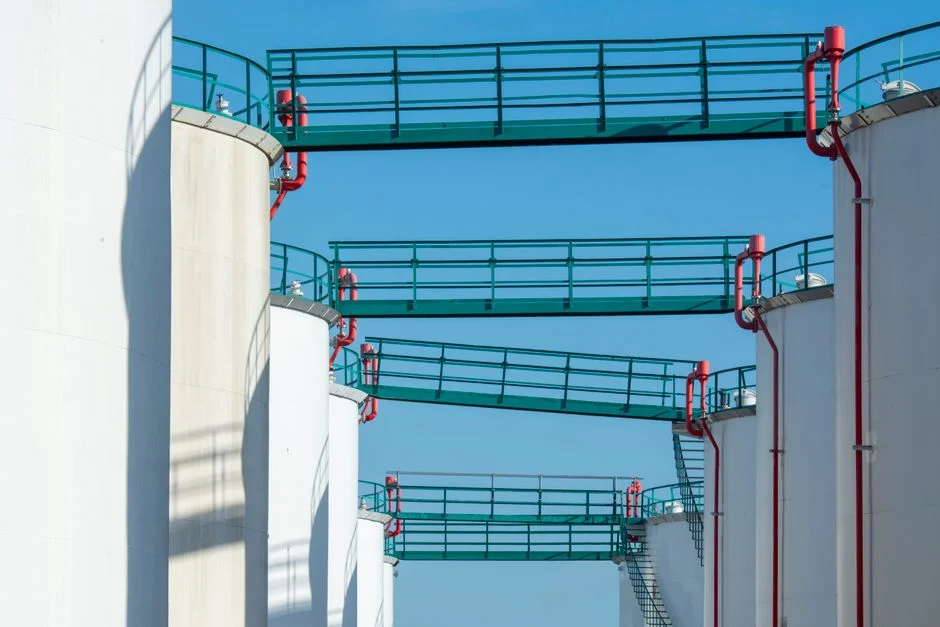
A high-COD treatment train should divide the work among mechanical screening, equalization, pH control, DAF or equivalent primary treatment, biological treatment, optional tertiary polishing and disinfection, and sludge handling. The sequence is important: protection of downstream biology comes before polishing, and sludge handling must be included from the beginning rather than added after commissioning.
| Stage | Primary function | Evidence or design condition |
|---|---|---|
| Screening and equalization | Remove debris and buffer batch discharges | Quito guide recommends 24-hour equalization retention |
| pH control | Protect biological and chemical treatment | Food-processing influent may range from pH 4–11 |
| DAF | Remove FOG and suspended solids | 92–97% TSS and 85–90% FOG removal at 4–300 m³/h |
| Biological treatment or MBR | Reduce soluble biodegradable COD and BOD | MBR COD removal reported at 90–98%; TSS removal above 99% |
| Tertiary polishing and disinfection | Meet reuse or sensitive-receptor requirements | Conditional; MBR followed by RO is the cited reuse route |
| Sludge handling | Reduce hauled sludge volume | Plate-and-frame presses reportedly reduce sludge volume by 70–80% |
The DAF performance is reported in HydropureWater’s 2026 Quito guide: 92–97% TSS removal and 85–90% FOG removal at 4–300 m³/h. The same source states that this treatment can reduce food-processing primary effluent to TSS at or below 100 mg/L and FOG at or below 50 mg/L before biology. An altitude-corrected DAF pretreatment system should therefore be specified around oil, grease, suspended solids, and hydraulic duty rather than presented as a complete COD solution.
HydropureWater’s 2026 Ecuador guide identifies DAF as the oil-and-TSS tool, MBR as the soluble-COD and reuse tool, and chemical dosing as the pH-and-metals tool. It reports MBR COD removal of 90–98%, TSS removal above 99%, and a capacity range of 10–2,000 m³/day. Actual membrane flux, cleaning frequency, and aeration demand still require validation with local influent. For a smaller-footprint or reuse project, an integrated MBR system for soluble COD and reuse combines activated sludge with submerged PVDF membrane filtration, replacing the conventional clarifier while retaining biological treatment.
Reuse targets should be treated as a separate design basis. The Quito guide cites COD at or below 50 mg/L, TSS at or below 5 mg/L, and fecal coliform at or below 1,000 CFU/100 mL, with MBR followed by reverse osmosis identified as the usual route. For ordinary discharge, tertiary polishing may not be required if the permitted train and sampling results demonstrate compliance.
Correct aeration and membrane duty for Quito’s altitude
Quito’s altitude must enter blower and membrane sizing because reduced atmospheric pressure lowers oxygen availability. HydropureWater’s 2026 guide uses 2,700 m as its design benchmark and reports dissolved oxygen saturation of approximately 7.5 mg/L, compared with 9.1 mg/L at sea level. It therefore recommends 10–15% greater aeration capacity for activated-sludge and MBR systems and 10–15% higher aeration energy use at high-altitude plants.
| Design item | Quito-specific requirement | Buyer action |
|---|---|---|
| DO saturation | Approximately 7.5 mg/L at the guide’s 2,700 m benchmark | Require site pressure and temperature inputs |
| Aeration capacity | 10–15% increase recommended for activated sludge and MBR | Check blower curves against site conditions |
| MBR energy | 0.8–1.5 kWh/m³ in the Ecuador comparison | Include aeration and membrane power in OPEX |
| Temperature | Cooler water can slow biological reactions and FOG separation | Validate reaction rates and flotation performance locally |
The design correction should not end with a blanket capacity increase. Confirm blower performance against site barometric pressure rather than a sea-level catalogue curve, and obtain the site water temperature. The source notes that cold water can hold more dissolved oxygen even while biological reaction rates and FOG separation slow; the two effects must therefore be evaluated together.
Before freezing guarantees, require local confirmation of membrane flux, chemical-cleaning frequency, DAF recycle saturation, biological reaction rates, and blower power. The MBR versus activated sludge buyer’s guide provides the relevant equipment comparison, but the final air and membrane duty should reflect site-specific tests rather than catalogue defaults.
Match the equipment package to the purchase objective
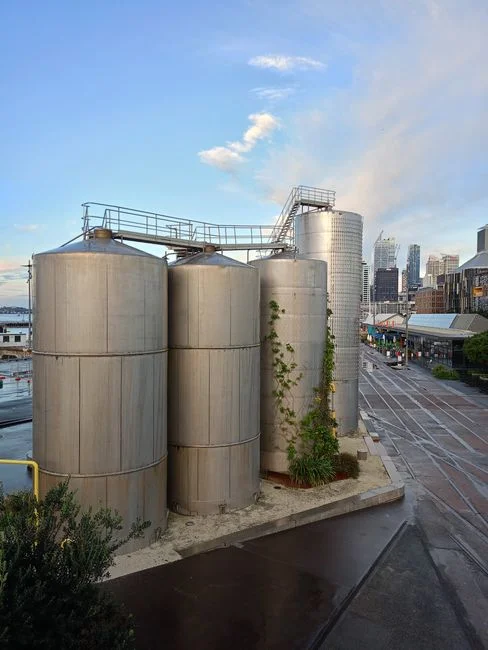
The appropriate package depends on the contaminant and the receiving objective: DAF addresses oil, grease, and solids; biology or MBR addresses soluble COD; chemical dosing controls pH and selected metals. Comparing all three only by purchase price can conceal different performance, footprint, energy, and sludge obligations.
| Purchase objective | Appropriate architecture | Key quotation check |
|---|---|---|
| Remove FOG, oil, and suspended solids | DAF package, with staged biology if soluble COD remains | Peak flow, recycle saturation, and performance at site altitude |
| Reduce soluble COD or support reuse | MBR, or activated sludge followed by clarification | Reactor loading, membrane flux, aeration demand, and cleaning assumptions |
| Control pH, metals, or coagulation | Automatic chemical dosing as a supporting process | Reagent demand, duty range, and containment |
| Deliver a complete discharge train | Integrated package including civil works and commissioning | Exclusions, controls, performance tests, and local guarantees |
HydropureWater’s Ecuador cost guide reports DAF capital cost of $50,000–$300,000, MBR package cost of $100,000–$500,000, chemical dosing at $20,000–$100,000, and broader turnkey industrial systems from $50,000 to over $2 million. These ranges are 2025 market figures from the guide and should be treated as planning benchmarks, not quotations.
For the narrower 50 m³/h Quito scenario, HydropureWater’s 2026 guide estimates $250,000–$450,000 in capital expenditure and $0.80–$1.50/m³ in operating expenditure. The wider Ecuador scope reports operating cost of $0.50–$3.00/m³. These figures cover different scopes and must not be merged into a false universal price.
A request for quotation should state the design flow and peak-load basis, influent characterization, applicable permit, equipment duty at site altitude, reactor sizing basis, membrane-flux assumptions, civil scope, controls, commissioning tests, exclusions, guarantees, and local acceptance criteria. Until those inputs are supplied, request a scoped quotation rather than accepting a package price based only on flow.
Commission, monitor, and document the operating margin
Commissioning should demonstrate performance across representative flow and contaminant loads, not only clean-water operation. HydropureWater’s 2026 Quito guide says food processing, textile manufacturing, and chemical plants are audited quarterly, while lower-risk industries are audited annually. The acceptance plan should therefore establish operating logs, sample records, calibration procedures, and response rules before the first compliance inspection.
Monitor flow continuously and use permit-based sampling for COD. Log pH and TSS, with FOG monitoring where oil and grease remain design drivers. The chemical dosing maintenance guidance supports disciplined monitoring of the dosing process, but each plant still needs monitoring frequencies tied to its permit and actual process risk.
Escalate action when hydraulic load rises, FOG breaks through, pH moves outside the operating range, membrane flux declines, or COD performance deteriorates. The operating-cost model should include sludge handling, membrane replacement, chemicals, blower power, waste transport, and operator training. These items determine whether the selected train retains enough margin after commissioning.
Frequently Asked Questions
What COD limit should a Quito manufacturer design to when national tables and EPMAPS limits differ?
Use the current permit and receiving point as the controlling basis, not an isolated national number. Table 9 specifies freshwater COD of 200 mg/L and Table 8 specifies public-sewer COD of 500 mg/L as daily means, while EPMAPS pretreatment conditions may be tighter. Ask EPMAPS to confirm the outfall, sampling point, sector conditions, and applicable pretreatment limits in writing before freezing the treatment target.
Is DAF enough for high-COD food-processing effluent, or is biological treatment required?
DAF is enough only when oil, grease, and TSS are the permit problem and residual soluble COD already meets the applicable target. The 2026 Quito guide reports DAF removal of 92–97% TSS and 85–90% FOG, but also states that food effluent can retain BOD of 1,500–3,000 mg/L. Ask the supplier to demonstrate primary-effluent COD and BOD before committing to DAF-only treatment.
How much should a complete high-COD treatment package cost in 2026?
There is no single defensible price without flow, load, treatment scope, and civil-work boundaries. HydropureWater estimates $250,000–$450,000 CAPEX and $0.80–$1.50/m³ OPEX for a 50 m³/h Quito scenario, while the wider Ecuador guide reports $50,000 to over $2 million for turnkey systems and $0.50–$3.00/m³ operating cost. Request a line-item quotation tied to the measured design basis.
How does altitude change MBR and blower sizing?
At the guide’s 2,700 m benchmark, dissolved oxygen saturation is approximately 7.5 mg/L rather than 9.1 mg/L at sea level. The 2026 Quito guide recommends 10–15% greater aeration capacity and energy use for activated-sludge and MBR systems. Require the quotation to show site-pressure blower performance, aeration demand, membrane-flux assumptions, and local validation rather than accepting sea-level catalogue data.
What information should a supplier receive before quoting equipment?
Provide the current permit and outfall, composite influent data, average and peak flow, batch-discharge schedule, pH and temperature range, COD/BOD relationship, FOG, toxicity indicators where relevant, required effluent or reuse target, site altitude, civil-work limits, and sludge-disposal route. Require the quotation to state its flow basis, sizing calculations, altitude duty, membrane assumptions, commissioning tests, exclusions, and local performance guarantees.