What Is Verified About the Samsung SDI Acquisition—and What Still Requires Due Diligence
On August 11, 2026, Samsung SDI announced that it had acquired General Motors’ 49.99% stake in the New Carlisle, Indiana SynergyCells joint venture. The company described the facility as its first independently operated North American production base, initially intended for energy storage system batteries, with possible future prismatic-cell production. The supplied research does not verify a Samsung SDI battery-plant acquisition in Mexico, so the wastewater framework below is an acquisition due-diligence and design basis—not confirmation of a specific Mexican transaction. An Indiana permit concept cannot be translated directly into a Mexican application because the applicable federal, state, discharge, and reuse requirements differ.
For context, Samsung SDI reported a 42% water-reuse rate, representing 6.24 million tons of reused water, in 2024 and set a 58% reuse target for 2030 (Samsung SDI, March 22, 2024). Those corporate figures demonstrate reuse experience, but they do not establish the discharge route, treatment capacity, or permit conditions for a Mexican site. The acquisition team must obtain the asset’s location, operating status, production plan, utility arrangements, and current permits before treating any Mexican equipment scope as final. Further acquisition context is reviewed in the Samsung SDI Mexico wastewater compliance due-diligence framework.
Map the Four Wastewater Streams Before Selecting Equipment
Battery cell wastewater must be divided into four treatment-relevant streams because NMP solvent, nickel-cobalt-lithium-bearing rinse water, paint-shop wash water, and sewage impose different recovery, pretreatment, biological, and polishing requirements. The design error is to combine them at the inlet and let a general biological plant absorb every contaminant load.
| Stream | Principal contaminants | Required treatment boundary |
|---|---|---|
| NMP coating condensate | High-BOD, poorly biodegradable NMP-bearing condensate | Dedicated NMP recovery before any biological contact; do not co-mingle upstream of biology |
| Electrode-making and DI rinse | Ni, Co, Li, fluorinated salts, and LiPF₆ residues | Source control, equalization, biological treatment, and metal-removal polishing; discharge limit depends on receiving body |
| Paint-shop and general-assembly wash water | Oil and grease, fillers, surfactants, overspray, and suspended solids | DAF or lamella clarification before biological treatment |
| Sanitary sewage | Organic load and sanitary peak flow | Separate sanitary collection and hydraulic equalization |
NMP condensate is the hard separation point. Samsung SDI’s wastewater research describes it as high-BOD and poorly biodegradable and states that a spike entering an MBR can kill the biomass; dedicated vacuum-distillation or evaporative recovery must therefore precede biological treatment (HydropureWater, 2026). The solvent mass balance—not the average discharge rate—must determine recovery capacity, including condensation, residual NMP, off-gas treatment, and recovered-solvent quality.
Electrode-making and DI rinse water is the principal source of Ni, Co, and Li in the four-stream model, so it drives both biological treatment and any downstream polishing. Paint-shop wash water creates the variable oil, grease, fillers, surfactants, overspray, and solids load that makes DAF or lamella clarification necessary. Sanitary sewage must not dilute or obscure these process loads; it requires its own collection and equalization.
Equalization should be sized from peak flow, not the daily average. The cited sanitary peak factor is 1.5–2.0 times average flow, which must be confirmed through diurnal monitoring (HydropureWater, 2026). For a preliminary 27 GWh/year-class envelope, the research estimates approximately 5,000–9,000 m³/day process flow plus 1,000–2,000 m³/day sanitary flow, using a 1.5–3.0 m³/kWh cell-manufacturing benchmark (HydropureWater, 2026). That benchmark is not a site guarantee. A rotary mechanical bar screen can protect downstream equipment from foil trims, packaging film, rags, and overspray media.
Build the Mexican Compliance Stack Before Locking the Effluent Route
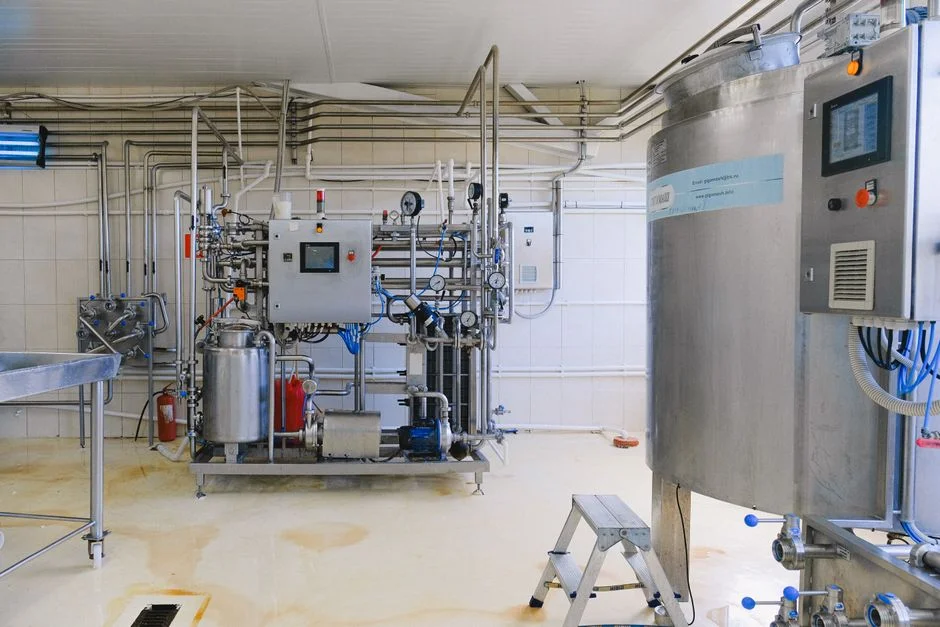
Mexico’s approval sequence is layered: the discharge standard, sewer rules, operating authorization, water concession and reuse registration, and state controls must be considered together before Stage 4 equipment is specified. A discharge that meets a federal concentration limit may still require basin-specific conditions, reuse registration, or authorization that changes the treatment train.
| Approval layer | Technical role | Decision affected |
|---|---|---|
| NOM-001-SEMARNAT-2021 | Sets receiving-body-specific limits for BOD₅, TSS, COD, oils and grease, TN, TP, Ni, Co, and Li | Discharge limits and required treatment intensity |
| NOM-002-SEMARNAT-1996 | Governs sanitary sewer discharges, including fecal-coliform provisions and restrictions on substances interfering with downstream biology | Whether process water may enter the municipal sewer and what pretreatment is required |
| LGEEPA | Requires the Manifestación de Impacto Ambiental and Licencia de Funcionamiento for the applicable new industrial facility | Environmental authorization and operating status |
| CONAGUA and Ley de Aguas Nacionales | Requires the Título de Concesión and, under the cited 2024–2025 reform, registration of a treated-water reuse stream’s volume, quality, and end use | Validity of industrial reuse and discharge strategy |
| Nuevo León CEA and, where applicable, LPTA | Adds state restrictions, including conditions in the Santiago/Santa Catarina watershed, and federal review where discharges affect federal waters | Site-specific limits, monitoring, and route viability |
NOM-001-SEMARNAT-2021 differentiates limits by receiving body, so the receiving body must be fixed before polishing equipment is purchased. NOM-002-SEMARNAT-1996 applies where sanitary sewage discharges to a municipal sewer and prohibits substances that would interfere with downstream biological treatment. The LGEEPA environmental-impact and operating-license sequence establishes the facility’s authorization framework, while CONAGUA’s water-right requirements remain separate from the discharge permit.
The cited 2024–2025 Ley de Aguas Nacionales reform makes registration of reuse volume, quality, and end use a separate checkpoint. A treated-water reuse plan is therefore not complete merely because the proposed RO or MBR can meet a water-quality target. The buyer must confirm how the reuse stream will be registered before relying on a “treated wastewater only” operating claim.
Nuevo León’s Comisión Estatal del Agua, or the equivalent state authority, must be engaged before MIA submission so basin conditions are addressed in the authorization sequence rather than discovered after the Licencia de Funcionamiento. The research describes the Santiago/Santa Catarina watershed as water-stressed and subject to additional state scrutiny; a regional high-COD treatment reference is available in the Santiago manufacturers’ high-COD wastewater guidance.
Choose Between Sewer Discharge, RO Reuse and Full ZLD
The receiving body and reuse end use determine the final treatment route. Municipal sewer discharge, on-site RO reuse, and full ZLD are not equivalent options: they create different permit obligations, equipment risks, residual-waste obligations, and operating constraints.
| Route | Receiving authority or end use | Principal equipment | Registration and operating issue | Open engineering inputs |
|---|---|---|---|---|
| Municipal sewer discharge | Municipal sewer authority | Equalization, clarification, MBR, and UV polish | NOM-002 fecal-coliform and interfering-substance rules; cited UV dose is at least 40 mJ/cm². Sewer acceptance remains site-specific | Local discharge limits, prohibited constituents, sewer capacity, sampling point, and downstream treatment compatibility |
| On-site industrial RO reuse | Cooling-tower makeup, toilet flushing, or another registered end use | MBR followed by an industrial reverse osmosis system for treated wastewater reuse | CONAGUA registration must identify reuse-stream volume, quality, and end use; cited industrial RO recovery is 60–75% | Real feed-water profile, scaling potential, concentrate fate, end-use demand, pretreatment, and recovery validation |
| Full zero liquid discharge | No liquid discharge; salt or solids management | Advanced treatment, evaporation, and crystallization | Residual solids and concentrate disposal require their own permit and waste-management route | Complete mass balance, water chemistry, salt composition, energy demand, crystallizer product, and disposal economics |
Municipal discharge is the hydraulically simpler route, but it does not eliminate pretreatment: the receiving authority may reject NMP, metals, suspended solids, or other substances that interfere with its biological system. The cited UV requirement of at least 40 mJ/cm² is a preliminary sewer-polish basis, not evidence that a particular sewer will accept the plant’s wastewater.
RO reuse provides an internal industrial water supply, but the recovery figure is not a guarantee. The cited 60–75% industrial RO range is a preliminary design basis and must be confirmed against the actual feed profile and concentrate-management route. Cooling-tower makeup and toilet flushing are candidate end uses, not pre-approved uses; CONAGUA registration must reflect the selected volume, quality, and application.
Full ZLD becomes relevant when reuse or discharge is not legally or operationally viable. The research presents Santa Catarina/Santiago as a heightened reuse-or-ZLD case because of political and watershed pressure, but not as a universal prohibition on municipal discharge. No guaranteed recovery, cost, or energy consumption can be assigned without a site-specific mass balance. Stage 4 specifications should remain open until the receiving body and end use are locked.
Specify a Pretreatment, MBR and Reuse-Ready Treatment Train
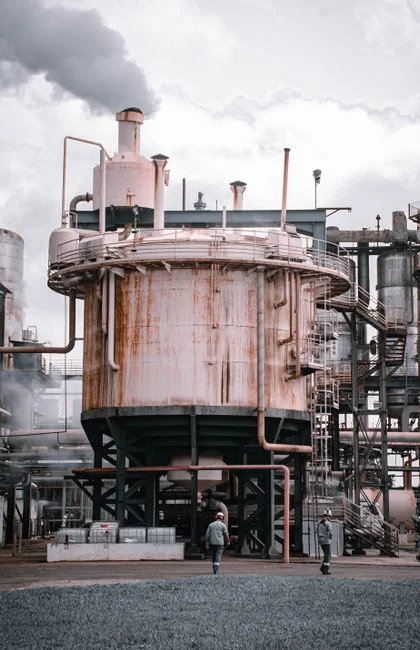
The recommended process sequence is headworks, primary clarification, integrated MBR, disinfection or RO polishing, and controlled discharge or reuse. This train is a preliminary design framework; final equipment capacity and performance must be established from site-specific influent testing, receiving-body limits, and vendor hydraulic calculations.
| Stage | Equipment and cited basis | Design requirement |
|---|---|---|
| Headworks | Rotary mechanical bar screen with 3–6 mm aperture | Remove foil, packaging, rags, and overspray before pumps and fine screens |
| Primary clarification | DAF with HRT of 20–40 minutes and surface loading of 10–25 m³/m²·h, or lamella clarification | Confirm suitability through jar tests and vendor hydraulic design |
| Biological treatment | Integrated MBR with 0.1 µm PVDF submerged flat-sheet membranes, MLSS of 8,000–12,000 mg/L, and denitrification/nitrification zones | Meet the applicable TN and metal limits while protecting membrane performance |
| Final polishing | UV at at least 40 mJ/cm² for the cited sewer-polish route, or industrial RO with cited recovery of 60–75% for reuse | Select only after receiving-body or reuse-quality requirements are fixed |
| Solids | DAF float and MBR waste activated sludge to a plate-and-frame filter press; cited dry-cake target of at least 22% DS | Use a homogenizing sedimentation or conditioning stage ahead of the press |
The integrated MBR membrane bioreactor system provides biological treatment and solids separation in one package. The supplied basis specifies 0.1 µm PVDF submerged flat-sheet membranes, MLSS of 8,000–12,000 mg/L, and an anoxic/oxic arrangement for denitrification and nitrification. The cited MBR effluent target is TN ≤15–20 mg/L; the research states that MBBR is harder to reach approximately 20 mg/L or lower without polishing. The choice between MBR and conventional activated sludge should therefore be tested against the actual nitrogen and reuse specification, as discussed in the MBR versus conventional activated sludge comparison.
DAF is particularly important for paint-shop wash water, while lamella clarification may be appropriate where the solids are predominantly inorganic and footprint is constrained. The cited HRT and surface-loading values remain preliminary and require jar tests and vendor design. MBR modules, including the submerged MBR membrane module, must be selected against the measured flow, pollutant loading, hydraulic profile, and membrane-fouling risk.
NMP recovery remains outside the biological ETP. Its equipment should be sized from a solvent mass balance covering generation, condensation, distillation or evaporation, recovered NMP quality, residual solvent, and off-gas. Solids handling should connect DAF float and waste activated sludge to a plate-and-frame filter press, with the cited dry-cake target of at least 22% DS. Actual cake performance must be confirmed using representative sludge.
Use a Due-Diligence Checklist for Bids and Vendor Selection
Equipment bids should be rejected as incomplete if they price treatment before the receiving body, discharge point, and reuse destination are identified. The bidder must define the regulatory basis, then demonstrate that each stream, unit operation, and residual-waste route is compatible with that basis.
- Lock the route and authority. Identify the receiving body, proposed discharge point, reuse volume, reuse quality, and registered end use before final equipment pricing.
- Require source-specific data. Obtain NMP, COD, BOD₅, TSS, FOG, TN, TP, Ni, Co, and Li results, together with diurnal flows and production-campaign data.
- Audit the flow diagram. Verify four-stream segregation, upstream NMP recovery, equalization based on peak flow, solids handling, and provisions for upset, backup, and bypass.
- Evaluate guarantees against the actual specification. MBR performance should be tied to the applicable receiving-body or reuse requirements, not generic reuse-water language.
- Verify the authorization path. Confirm current permit status, CONAGUA reuse registration, LGEEPA authorization, and site-specific CEA requirements before calling the design compliance-ready.
- Require a mass balance. Each bidder should explain how water, NMP, sludge, RO concentrate, and evaporation residues are accounted for across normal and off-design operation.
Vendor evaluation should also address membrane fouling, DAF chemical consumption, equalization turnover, odor control, NMP off-gas treatment, solids transport, instrument reliability, and operator maintenance. These are acceptance and operating-risk questions, not differentiators to be answered by generic equipment brochures. A vendor may use the method for sizing DAF capacity in a Mexican EV plant as a structured starting point, but must replace its assumed wastewater profile with measurements from the acquired site.
The final commercial recommendation should state which values are measured, which are permitted, which are preliminary, and which depend on vendor guarantees. Final design values must be verified against current permits, influent testing, the confirmed production and reuse plan, and the final equipment proposal; no equipment order should convert an assumption into a permit condition.
Frequently Asked Questions
Can an Indiana permit be translated directly into a Mexican SEMARNAT application?
No. The verified Samsung SDI transaction concerns New Carlisle, Indiana, not Mexico (Samsung SDI, August 11, 2026). A Mexican site requires its own analysis of NOM-001-SEMARNAT-2021, NOM-002 where relevant, LGEEPA authorization, CONAGUA requirements, and Nuevo León state conditions. The acquisition should commission a site-specific regulatory gap analysis rather than reuse the Indiana permit concept.
What information is needed before pricing the DAF, MBR, equalization, and NMP-recovery equipment?
Request stream-by-stream flow and analysis data, production and campaign schedules, diurnal and shift-change measurements, NMP generation and recovery data, and receiving or reuse specifications. The 27 GWh/year-class envelope of roughly 5,000–9,000 m³/day process flow plus 1,000–2,000 m³/day sanitary flow is preliminary and uses a 1.5–3.0 m³/kWh industry benchmark, not a site guarantee (HydropureWater, 2026). A priced design should show how the supplier’s sizing responds to measured peaks and loads.
Is industrial RO recovery at 60–75% a guaranteed design value?
No. The 60–75% range is the cited preliminary basis for industrial RO reuse and must be confirmed from the real feed-water profile, scaling potential, pretreatment, concentrate fate, and end-use demand (HydropureWater, 2026). The buyer should require a supplier mass balance and site-specific recovery guarantee, not accept the range as an unconditional performance claim.
How should a supplier demonstrate regulatory and reuse compliance?
Require the supplier to identify the receiving body, discharge point, reuse volume, water quality, and end use; provide a permit-compliance schedule; and assign responsibility for CONAGUA registration of the reuse stream’s volume, quality, and end use. The design package should also confirm LGEEPA and current CEA requirements. A generic statement that the equipment produces “reusable water” is not an acceptable compliance response.
Why must NMP recovery be specified separately from the biological wastewater plant?
NMP-bearing coating condensate is described as high-BOD, poorly biodegradable and capable of harming MBR biomass (HydropureWater, 2026). It therefore requires dedicated recovery before biological treatment and must not be co-mingled with sanitary flow upstream of biology. Bidders should submit a separate solvent mass balance covering recovery efficiency, residual NMP, off-gas treatment, and recovered-solvent quality.