What the Alexander City discharge pathway requires
Mining and metals plants near Alexander City generally meet sewer limits by treating wastewater on site, verifying compliance with Alexander City’s Sugar Creek wastewater authority requirements, and obtaining ADEM authorization before discharge. For the reported Kellyton graphite project, the proposed sequence was to recycle processing chemicals, neutralize the wastewater, and filter it before transfer to Sugar Creek. The project reportedly requires an ADEM State Indirect Discharge permit, renewed every five years or when processing changes. Reported wastewater flow was about 0.17 million gallons per day, while the Sugar Creek Wastewater Treatment Plant had 8.5 million gallons per day of capacity. Final equipment sizing must use the issued permit, current local limits, peak flows and measured wastewater chemistry.
A sewer discharge is not a direct surface-water discharge. Indirect discharges to a publicly owned treatment works are governed through Clean Water Act §307(b), 40 CFR Part 403 and the local sewer-use ordinance; NPDES applies to a direct discharge to surface water. The EPA’s mineral-mining effluent guidelines address mine drainage, mineral processing and stormwater runoff through NPDES requirements, which is a different regulatory path.
Industrial classification must be established before numerical design criteria are fixed. Ore mining and dressing may require 40 CFR Part 437 treatment, while plating, pickling or anodizing can bring 40 CFR Part 433 into the compliance basis. Graphite processing must be assessed against the actual processes performed rather than described only as mining.
- Characterize the wastewater and establish peak and batch flows.
- Identify applicable categorical standards and current POTW limits.
- Develop, commission and demonstrate the pretreatment train.
- Obtain the required ADEM authorization and any POTW approval.
- Operate under the permit’s monitoring, reporting and discharge controls.
| Decision layer | Governing issue | Evidence needed before equipment selection |
|---|---|---|
| Discharge route | Sewer discharge versus direct surface-water discharge | Site discharge map and authorized destination |
| Federal applicability | 40 CFR Part 403 and any applicable Part 437 or Part 433 category | Industrial process and SIC classification |
| Local requirements | Alexander City sewer-use ordinance and issued SID permit | Current ordinance, permit, amendments and written POTW acceptance |
| Authorization | ADEM State Indirect Discharge permit | Issued permit conditions and renewal status |
The general mining and metals pretreatment compliance guide provides the broader regulatory framework, but it does not establish Alexander City’s enforceable conditions.
What is confirmed about the Kellyton graphite project
Lake Watch of Lake Martin reported that the Kellyton graphite facility would be west of Alexander City and described a specific pretreatment sequence before transfer to the Alexander City Sugar Creek Wastewater Treatment Plant.
According to Lake Watch of Lake Martin, the project representatives proposed recycling processing chemicals, neutralizing the wastewater and filtering it at an on-site wastewater treatment plant before pumping it to Sugar Creek. The same report identified Jacobs Engineering as the designer of the transport pipeline. That pipeline role is separate from the treatment process: a compliant pipeline does not neutralize pH, remove dissolved metals or control discharge quality.
The report stated that the graphite wastewater flow would be approximately 0.17 million gallons per day and that Sugar Creek had several million gallons per day of its 8.5-million-gallon-per-day capacity unused. Dividing 0.17 by 8.5 gives a scale comparison of approximately 2%. That comparison does not establish treatment adequacy, because plant capacity is not a substitute for wastewater characterization, peak-flow control or permit compliance.
Lake Watch also reported that the State Indirect Discharge permit must be renewed every five years or when changes are made to the processing facility. That is a reported project fact, not a substitute for the issued permit. Before purchase, obtain the actual permit and amendments rather than inferring limits from local reports.
| Reported item | What the report establishes | What remains unresolved |
|---|---|---|
| Location | Kellyton, west of Alexander City | Final process configuration and operating conditions |
| Treatment concept | Chemical recycling, neutralization and filtration | Unit capacities, performance guarantees and bypass controls |
| Average flow | About 0.17 mgd | Peak, batch and permitted discharge flow |
| Sugar Creek capacity | 8.5 mgd total capacity | Available industrial capacity and local discharge conditions |
| Authorization | ADEM SID permit required | Issued limits, monitoring requirements and permit status |
The unresolved design inputs are substantial: issued SID limits, permitted flow, sampling points and frequencies, monitored analytes, batch-discharge controls, chemical handling, residual disposal and pipeline operating conditions. Until those are resolved, the reported project concept should remain outside the compliance basis.
Build the compliance envelope before sizing the plant
Treatment sizing begins with the enforceable permit and the wastewater’s actual variability, not with the reported average flow.
Request the current Alexander City sewer-use ordinance, issued SID permit, applicable federal categorical standards, monitoring instructions, prohibited-discharge provisions, surcharge rules and written POTW acceptance of the proposed waste stream. These documents establish which limit applies, where monitoring occurs and whether batch discharges are restricted.
HydropureWater’s broad 2026 pretreatment article describes representative 2026 local limits of zinc at 0.3–1.0 mg/L monthly average and copper at 0.3–0.5 mg/L monthly average. Those values are screening references only; the Alexander City ordinance and issued permit must confirm them. Where a metal-finishing category applies, the same article cites 40 CFR Part 433.15 limits of copper at 3.38 mg/L daily maximum and 2.07 mg/L monthly average, and total chromium at 2.77 mg/L daily maximum and 1.71 mg/L monthly average.
Federal categorical standards and local requirements operate as separate layers. The categorical rule establishes the applicable federal floor; the POTW’s sewer-use ordinance or SID conditions may be tighter. A facility should not select a pH target, precipitate chemistry or solids-removal efficiency until both layers have been mapped to the same parameters and averaging periods.
| Design input | Required characterization | Reason it controls treatment |
|---|---|---|
| Flow | Average, peak, batch and maximum permitted discharge duration | Determines equalization and hydraulic capacity |
| pH | Range, variability and required control precision | Controls neutralization and metal precipitation |
| Metals | Copper, zinc, chromium and other permit-relevant species | Defines precipitation and polishing requirements |
| Solids | Suspended solids, settleability, oil and grease | Determines DAF, lamella and filtration needs |
| Dissolved salts | Sulfate and TDS, including variation | Affects reagent strategy and sludge properties |
The broad article characterizes acid drainage and spent process streams as potentially carrying low pH, suspended solids, dissolved heavy metals, sulfate and TDS. These are screening inputs, not measured values for Kellyton. Sample process areas, clean-outs and dump-leach cycles rather than relying on a single routine sample.
Confirm whether the permit defines the facility as an industrial user, whether it is a Categorical Industrial User, which monitoring and reporting apply and what operational changes trigger permit modification. Use the 2026 mining and metals pretreatment guide as a secondary reference, then reconcile every numerical input against the Alexander City permit package.
Select a treatment train that protects both the sewer and the sludge
A defensible treatment train controls hydraulic variability first, then pH and metals chemistry, then removes the resulting solids and manages residuals.
Place equalization first so batch discharges are blended before they reach clarification. The broad HydropureWater article recommends 8–24 hours of average daily flow and warns that a four-hour basin can pass upstream spikes into the clarifier. Use actual peak conditions to verify detention rather than adopting the recommendation mechanically.
Follow equalization with staged pH adjustment. The same article identifies lime, caustic soda and sodium hydroxide as workhorses, identifies 6.5–9.0 as a target range, and recommends two-stage reactors when influent swings exceed two pH units. An automatic chemical dosing system for pH control and coagulant feed should be evaluated for flow-paced operation, interlocks, alarms and records.
Hydroxide precipitation is the baseline because the chemistry is established and the broad article reports residual metals of 0.5–2.0 mg/L. Sulfide polishing is justified where residual requirements are stricter. The article reports sulfide residuals of 0.01–0.05 mg/L and reagent costs at two to four times higher than hydroxide, with sealed reactors and hydrogen sulfide controls required. Jar testing and pilot work should establish the required pH and reagent dose for the actual stream.
Choose the solids separator according to waste character. An industrial DAF system for metal-bearing wastewater is suited to oil, grease and fine colloidal metals. A lamella clarifier for high-flow precipitation sludge is suited to primarily metal-hydroxide sludge, higher flow or a constrained footprint. The broad article gives DAF hydraulic loading of 5–25 m/h and 90–98% TSS removal, and lamella surface loading of 20–40 m/h. These are broad design references, not performance guarantees for Alexander City.
Add filtration where the permit or POTW requires low residual solids. The broad article positions multimedia filtration as a barrier between clarification and the sewer manhole. Size the unit for its backwash cycle as well as average flow, and define where backwash water returns within the equalization system.
| Train position | Primary purpose | Key design question |
|---|---|---|
| Equalization basin | Blend batches and dampen flow peaks | Does detention contain the actual batch surge? |
| Staged pH adjustment | Set the precipitation condition | Can dosing maintain control across the influent range? |
| Hydroxide precipitation | Remove dissolved metals | What removal does jar testing demonstrate? |
| DAF or lamella | Separate metal-bearing solids | Which waste properties dominate: oil, colloids or hydroxide sludge? |
| Filtration | Reduce residual solids before discharge | Is filtration required by the permit or selected as redundancy? |
| Sludge management | Condition, dewater, store and dispose or recover residuals | Is there an authorized destination for cake and filtrate? |
Treat sludge as a designed waste stream. The broad article states that a plate-and-frame filter press can dewater sludge to 25–35% dry solids, with filtrate returned to the treatment-plant headworks. Confirm the applicable method with an plate-and-frame sludge dewatering system, and establish chemical conditioning, storage capacity, destination and filtrate return before award.
Compare DAF and lamella clarification for the actual waste stream
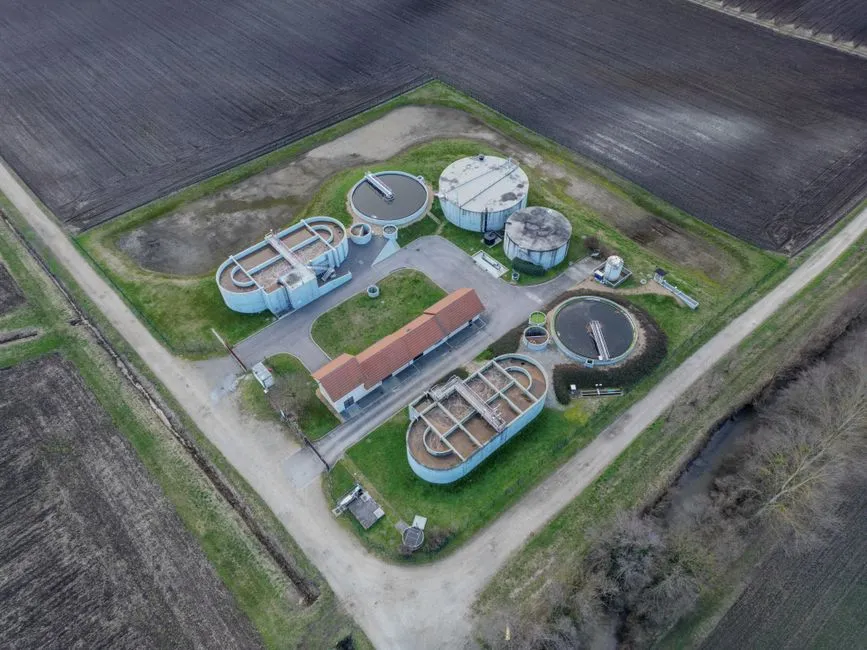
DAF and lamella clarification solve different solids-separation problems, so the wastewater characterization should determine the choice.
Use DAF when oil, grease or fine colloidal metals are important removal targets. The broad HydropureWater article gives DAF hydraulic loading of 5–25 m/h and TSS removal of 90–98%. It also states that the product range covers 4–300 m³/h across 13 models, that packaged skids are common below 10 m³/h, and that parallel DAF trains or lamella become more typical above 100 m³/h.
Use lamella when the stream is mainly metal-hydroxide sludge, hydraulic loading is high or footprint is constrained. The broad article gives lamella surface loading of 20–40 m/h. HydropureWater’s product data also states up to a 30% reduction in chemical consumption, but that claim still requires validation against the actual chemistry, polymer demand and operating conditions.
| Selection criterion | DAF | Lamella |
|---|---|---|
| Best fit | Oil, grease or fine colloidal metals | Metal-hydroxide sludge |
| Broad reference loading | 5–25 m/h hydraulic loading | 20–40 m/h surface loading |
| Reported separation performance | 90–98% TSS removal | Chemical-consumption benefit stated in product data |
| Procurement focus | Guaranteed solids and oil removal, turndown, sludge quality | Peak-flow handling, footprint, sludge blanket and chemical use |
| Common weakness to test | Carryover or poor flotation with unsuitable feed | Less effective removal of free oil and colloidal fines |
Require bidders to compare guaranteed effluent performance, peak-flow turndown, chemical consumption, sludge concentration, utilities, maintenance and installed footprint. Use the mining-wastewater DAF versus clarifier comparison to structure that review, and the data-driven DAF capacity calculation to test flow assumptions.
The total-cost comparison must include reagent use and sludge disposal, not only equipment price. No supported equipment quotations are available in the supplied research, so a budget should be requested as a complete operating estimate once the waste chemistry, flow envelope and sludge destination are defined.
Prove compliance with monitoring, records and contingency controls
The operating plan must show how each permit limit will be measured, who will respond and what prevents an off-spec batch from reaching the sewer.
Create a compliance matrix containing every limit, averaging period, monitoring frequency, sample point, test method, reporting duty, responsible operator and corrective-action trigger. Keep local and categorical requirements separate in the matrix so the stricter applicable condition is not lost behind a general federal limit.
The broad HydropureWater article notes that PLC-controlled dosing can hold pH within a ±0.2 band. That precision matters when a monthly-average metal limit is as tight as 0.3 mg/L, as described in the article’s 2026 local-limit discussion. Use automated pH control and flow-paced chemical feed where justified, but retain the permit-required manual verification and records.
| Event | Detection | Contingency action |
|---|---|---|
| High discharge flow | Flow meter and high-flow alarm | Stop or restrict batch discharge and route to equalization |
| Off-spec pH | Continuous pH measurement | Adjust feed, suspend discharge and verify compliance before release |
| Elevated metals | Permit-required sampling or online proxy where justified | Increase treatment, investigate sampling validity and apply hold-and-release controls |
| Clarifier carryover | Sludge blanket, turbidity or solids observation | Reduce feed, correct chemistry and inspect sludge withdrawal |
| Filter differential-pressure rise | Pressure instrumentation | Initiate backwash and divert filtrate to the approved destination |
| Chemical delivery failure | Low inventory or delivery alarm | Maintain safe storage, divert flow and prevent unadjusted discharge |
| Pipeline interruption | Flow and pressure confirmation | Stop pumping, hold wastewater within the treatment system and notify responsible personnel |
Use composite or grab sampling only as directed by the permit. A sampling protocol for one waste stream should not be transferred to another without regulatory confirmation. Maintain treatment-plant operating logs, calibration records, laboratory reports, chemical inventories, sludge records and corrective-action documentation. The Hernando mining-plant pretreatment guide provides a useful adjacent framework for converting permit conditions into operating controls.
Turn the design basis into a procurement checklist
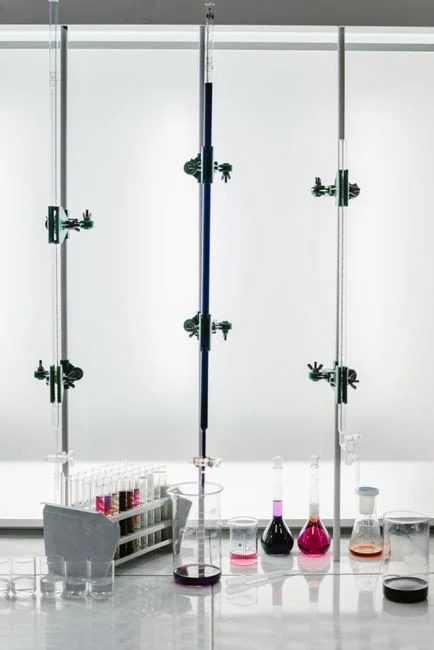
Comparable bids require bidders to receive the same wastewater, permit, flow and residual-handling information before equipment is selected.
| Procurement package | Required bidder response |
|---|---|
| Wastewater characterization | Parameter list, sampling period, analytical methods and flow envelope |
| Permit and local limits | Compliance matrix and equipment-performance guarantees for every regulated parameter |
| Hydraulic basis | Guaranteed peak-flow capacity and minimum turndown |
| Controls | Architecture, alarms, interlocks, data logging and failure responses |
| Chemical systems | Storage, metering, delivery contingency and compatibility with the waste stream |
| Sludge | Conditioning, dewatering, storage, disposal route and filtrate-return plan |
| Implementation | Redundancy, maintenance access, commissioning, startup support and operator training |
| Assumptions | Complete schedule of permit-sensitive assumptions for owner verification |
Require a process-control narrative showing how the train detects an upset and prevents an off-spec discharge. Every bidder should identify which conclusions depend on the issued SID permit, the current sewer-use ordinance, measured influent, peak-flow duration or the sludge destination. Do not award against a generic metals-removal percentage where the permit requires parameter-specific compliance.
Frequently Asked Questions
Does the Kellyton graphite project need an ADEM permit before discharging to the Sugar Creek sewer?
Yes, according to Lake Watch of Lake Martin. The reported graphite treatment plant requires an ADEM State Indirect Discharge permit before operation. The report also states that the permit must be renewed every five years or when processing-facility changes occur. The owner must obtain the issued permit and amendments; the reported renewal cycle does not establish the applicable numerical limits.
Can treatment be sized from the reported 0.17 mgd flow and Sugar Creek’s 8.5 mgd capacity?
No. Those figures provide a scale check, not a treatment design. Lake Watch of Lake Martin reported approximately 0.17 mgd of graphite wastewater and 8.5 mgd of Sugar Creek capacity. Final sizing must use the permitted flow, peak and batch discharges, wastewater chemistry, equalization requirements and parameter-specific limits in the issued SID permit and current sewer-use ordinance.
Is DAF or lamella clarification better for mining or metals wastewater near Alexander City?
Neither is universally better. DAF is the stronger candidate when oil, grease or fine colloidal metals dominate; lamella is generally more suitable for metal-hydroxide sludge, higher flow or a constrained footprint. The broad article gives DAF loading of 5–25 m/h and lamella loading of 20–40 m/h, but those are screening references. The selection should follow measured waste properties, guaranteed effluent performance, peak flow, sludge quality and site constraints.
How should the owner establish a pretreatment budget without unsupported equipment prices?
Request a complete cost estimate after the waste characterization, flow envelope and permit basis are issued. It should separate equipment, installation, reagent consumption, laboratory testing, controls, maintenance, sludge dewatering, storage and final disposal or recovery. The broad article reports sulfide reagent costs at two to four times hydroxide costs, while hydroxide treatment generates the larger sludge burden; the comparison must therefore include both chemical purchases and residual handling.
What should a buyer check before selecting a mining wastewater treatment supplier?
Check whether the supplier can demonstrate permit-compliant parameter guarantees, similar mining or metals service, peak-flow capacity, minimum turndown, controls and alarm architecture, sludge-route experience, commissioning support and operator training. Ask the supplier to identify every assumption that depends on the issued SID permit or Alexander City ordinance. Award should follow verification of those assumptions, not capacity claims alone.