What controls a mining plant's sewer discharge near Pathfork?
Mining and metals plants near Pathfork that discharge to a municipal sewer must comply with the receiving publicly owned treatment works’ (POTW’s) industrial user pretreatment permit, not merely an NPDES permit for direct surface-water discharges. Federal categorical standards may apply under 40 CFR Part 437 for ore mining and dressing or 40 CFR Part 433 for metal finishing, while site-specific local limits may be tighter. EPA identifies local limits as numeric or narrative effluent limits, including best management practices, imposed at the industrial user’s end-of-pipe connection. A defensible treatment train therefore begins with stream characterization, equalization, pH control, metals and suspended-solids removal, and verification against the exact POTW permit and sewer-use ordinance.
The jurisdictional question remains unresolved: no supplied research identifies the receiving POTW, its current sewer-use ordinance, or the applicable Pathfork-area permit version. That means a buyer should not adopt a regional numerical limit before those documents are confirmed. For adjacent context, mining and metals sewer-limit guidance for Highland provides a useful comparison, but it cannot substitute for the controlling Pathfork jurisdiction.
| Document or authority | What it controls | Buyer action |
|---|---|---|
| Clean Water Act section 307(b) and 40 CFR Part 403 | Indirect discharges through a POTW, including pretreatment standards and prohibited discharges | Determine whether the operation is an industrial user and which federal provisions apply |
| 40 CFR Part 437 or Part 433 | Ore mining and dressing or metal finishing categorical requirements, where applicable | Confirm the applicable subcategory, production basis, and permit conditions |
| POTW industrial user pretreatment permit | Site-specific discharge conditions, monitoring, reporting, and compliance duties | Obtain the current permit and all incorporated attachments |
| Sewer-use ordinance and local-limit worksheets | Local sewer limits, prohibited discharges, fees, monitoring, and slug-control rules | Request the enacted ordinance and the POTW’s calculation worksheets |
| Approved discharge characterization and sampling plan | Representative flow and pollutant data, monitoring points, frequencies, and analytical methods | Reconcile with end-of-pipe sampling and slug-load notification requirements |
EPA’s pretreatment guidance states that an indirect discharger’s obligations are determined by the POTW industrial-user permit, equivalent control mechanism, or applicable regulatory requirements. Obtain the discharge-characterization report, monitoring schedule, approved sampling point, slug-load notification rules, and correction procedures before finalizing treatment sizing.
Build a permit-to-equipment compliance checklist
EPA’s five-part local-limits sequence provides a defensible path from regulatory research to equipment scope: identify pollutants of concern, collect and analyze data, calculate maximum allowable headworks loadings, designate and implement local limits, and address collection-system concerns. This sequence belongs to the POTW’s local-limit development process, but it gives industrial users a clear way to test whether their treatment scope reflects the receiving system’s actual concerns.
- Build the pollutant list from the industrial user permit, applicable categorical standards, local limits, POTW influent and sludge information, prior monitoring, and prohibited-discharge rules.
- Develop a source-by-source wastewater inventory covering flow, pH, TSS, oil and grease, copper, zinc, lead, cadmium, nickel, arsenic, sulfate, TDS, and batch or slug events where relevant.
- Confirm the sampling basis, analytical methods, monitoring frequencies, averaging periods, approved sample point, and notification requirements for an industrial user slug discharge.
- Document pass-through and interference risks, including effects on POTW biological treatment, collection-system operation, sludge handling, and discharge performance.
- Translate the confirmed requirements into treatment functions, performance guarantees, alarms, recordkeeping, and corrective-action duties.
The source-reported wastewater profiles—low pH in acidic streams, suspended solids in the hundreds to several thousand mg/L, dissolved heavy metals, and elevated sulfate and TDS—are not Pathfork permit limits. They are screening descriptions from HydropureWater’s 2026 pretreatment article and must be verified against representative site sampling.
| Compliance input | Required evidence | Equipment-design consequence |
|---|---|---|
| Applicable categorical subcategory and permit | Current regulations, permit text, and categorical-production basis | Defines the federal floor and applicable monitoring parameters |
| Local limits and maximum allowable industrial loading | Enacted local limits and POTW worksheets, where applicable | Sets mass-loading controls rather than concentration-only targets |
| Representative stream characterization | Flow records and analytical data for normal and batch conditions | Determines equalization, reagent, solids and sludge duties |
| Slug and prohibited-discharge controls | Permit notification rules, approved sampling plan, and operating procedures | Defines storage, diversion, monitoring and automatic shutoff functions |
| POTW operating concerns | Local-limit worksheets, influent, effluent, and sludge data | Tests whether treatment prevents pass-through or interference |
For a broader permit-review sequence, use the 2026 mining-plant sewer compliance guide as a checklist framework, not as evidence of Pathfork requirements.
Design a treatment train around stream chemistry and flow variability
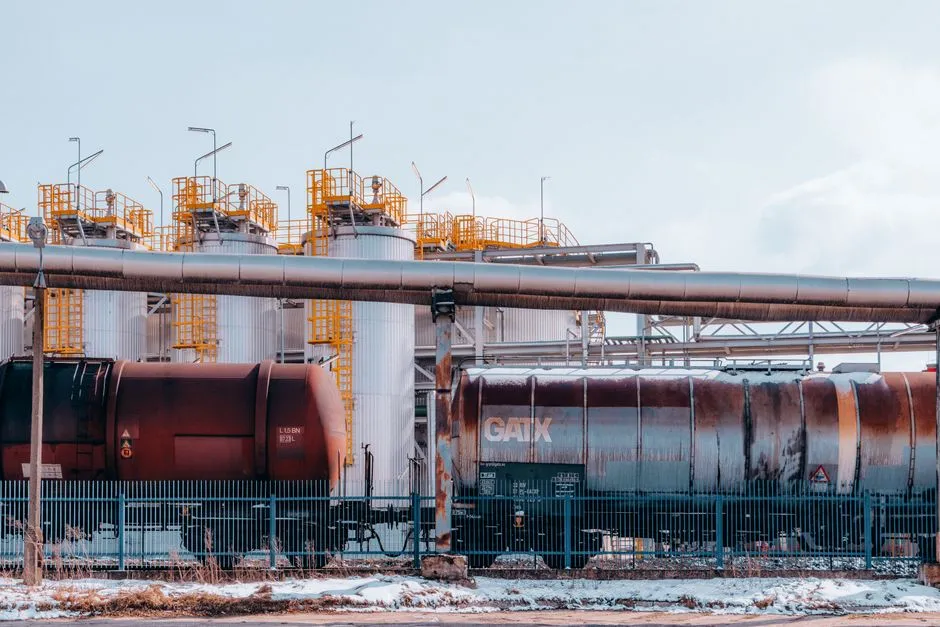
The appropriate treatment train follows the wastewater functions in sequence: characterize and segregate streams; equalize them; control pH; precipitate or otherwise remove metals; flocculate; separate solids; filter if required; sample and control the discharge; then dewater the resulting sludge. Each step should answer a defined compliance or operating problem rather than add equipment because it appears in a generic package.
Equalization protects downstream chemistry from shift changes, batch dumps, and variable production. HydropureWater’s commercial pretreatment article recommends 8–24 hours of average daily flow as a screening value, but that is not a Pathfork design mandate. Confirm basin performance against actual peak flow, minimum flow, metal loading, and slug-storage requirements.
Automatic chemical dosing is the practical interface between influent variability and precipitation chemistry. A PLC-controlled pH and coagulant dosing system can support staged reagent addition, while the treatment design must establish the actual reagent type, dose, and operating pH through jar testing. HydropureWater describes skid-mounted, pre-wired, factory-tested dosing systems with PLC-controlled injection.
Metal hydroxide precipitation is commonly the starting point for removing dissolved metals. The same commercial source reports that properly operated systems in mining and metals service commonly achieve 85–95% total metals removal, citing Fluence, 2024-11; that figure is not a Pathfork guarantee. Jar tests must establish whether hydroxide precipitation is adequate for the confirmed permit limits and the actual stream.
Use a dissolved air flotation system for metals wastewater when oil, grease, floatable material, or difficult colloidal fractions are recurring duties. Use lamella clarification when the primary objective is separating metal-bearing hydroxide floc and footprint is constrained. Final filtration, monitoring, and slug-storage functions should follow the permit review and technology selection.
| Process function | Primary design question | Evidence required before selection |
|---|---|---|
| Stream segregation and equalization | Which flows and batch events require independent control? | Continuous flow records and batch-release observations |
| pH adjustment | What operating pH supports the selected treatment chemistry? | Influent pH range, jar testing, and permit requirements |
| Metal precipitation | Which metals must be removed and to what residual performance? | Confirmed limits and representative metal analysis |
| Flocculation and clarification | Which solids characteristics determine the separation method? | TSS, oil and grease, colloid behavior, and settleability data |
| Filtration and discharge control | Is additional solids removal required, and how will compliance be demonstrated? | End-of-pipe performance requirement and sampling method |
| Sludge handling | What residual solids characteristics and disposal route are required? | Solids analysis, dewatering objective, and disposal acceptance criteria |
Compare DAF and lamella clarification for metals pretreatment
DAF is the stronger candidate when oil, grease, floatable material, or difficult colloidal fractions are recurring constituents; lamella clarification is generally better suited to settling metal-hydroxide floc where a compact solids-separation footprint is needed. Neither selection should be based on nominal flow alone.
HydropureWater’s DAF catalog identifies removal of oil, grease, and floatable materials and covers 4–300 m³/h across 13 models, according to the supplied commercial source. Its related article reports hydraulic loading of 5–25 m/h, packaged DAF below 10 m³/h, and a shift toward multiple parallel DAF trains or lamella clarification above 100 m³/h. Treat those figures as commercial screening assumptions requiring confirmation in the final design, not Pathfork criteria.
For lamella clarification, HydropureWater lists a 20–40 m/h surface-loading range and reports chemical consumption up to 30% lower than the comparison used in its commercial article. That claim must be tested against the selected reagents, sludge production, floc properties, and operating envelope.
| Selection criterion | DAF | Lamella clarification |
|---|---|---|
| Primary advantage | Capture of oil-bearing and floatable solids | Compact separation of settleable metal-hydroxide floc |
| Colloidal capture | Stronger candidate when difficult colloids are important | Dependent on floc conditioning and settling behavior |
| Hydraulic behavior | Requires stable bubble generation and solids withdrawal | Requires controlled sludge blanket and surface loading |
| Chemical sensitivity | Evaluate polymer compatibility and floc disruption | Evaluate floc carryover, channeling, and polymer conditioning |
| Plant constraints | Compare tank footprint, recycle demand, and oil handling | Compare available footprint, sludge withdrawal, and access |
| Procurement evidence | Request a representative-water FAT and media/solids performance protocol | Request a representative-water FAT and sludge-blanket demonstration |
Peak and minimum flow, batch dumps, metal-loading variation, turndown, maintenance access, and required end-of-pipe chemistry govern the choice. The additional DAF-versus-clarifier comparison for fabricated-metals wastewater provides a useful technical reference, but site wastewater testing remains the deciding input.
Set acceptance tests and operating safeguards before purchase order
An acceptance test must prove compliance at the point and under the conditions defined by the POTW permit, not merely demonstrate a generic equipment performance claim. Require the supplier to state the guarantee point, test method, sample location, averaging period, representative influent basis, and retesting protocol. Every performance guarantee should map directly to a confirmed permit or local-limit requirement.
Include automatic pH control, flow monitoring, batch-load recording, chemical inventory alarms, high-level protection, and an auditable local-limit alarm. Specify duty-standby arrangements for critical pumps where the consequence of failure warrants it. A pump failure, dosing interruption, or storage excursion should trigger a defined response rather than depend on an operator noticing an excursion after it occurs.
For sludge, define the dewatering objective, cake characteristics, filtrate destination, and disposal route before selecting equipment. HydropureWater offers plate-and-frame presses in manual, hydraulic, and fully automatic PLC-controlled configurations for industrial sludge dewatering. Use the plate-and-frame filter press maintenance checklist to define inspection, cleaning, and operating records after delivery.
| Procurement package | Required commitment | Acceptance evidence |
|---|---|---|
| Performance guarantee | Limit, test method, location, averaging period, influent basis, and retesting procedure | Representative-water FAT followed by documented site acceptance testing |
| Automatic controls | pH, flow, batch load, chemical inventory, and high-level interlocks | Simulated alarm and shutdown demonstrations |
| Operating documentation | Manuals, electrical drawings, PLC logic, and recommended spares | Reviewed and accepted document turnover |
| Training and support | Operator instruction, startup support, and sampling assistance | Training records and completed startup checklist |
| Sludge handling | Dewatering objective, filtrate management, cake handling, and disposal interface | Sludge mass balance and dewatering demonstration |
The EMD Millipore settlement illustrates the enforcement risk: the 2017-03-30 Williams Mullen summary reports that treatment upgrades, annual operator training, sampling, analysis, quarterly monitoring, and a $385,000 civil penalty were required in a POTW enforcement matter involving pH, slug-loading, flow, pass-through, and interference violations. These controls should therefore be documented before, not after, purchase.
Frequently Asked Questions
What Pathfork-area POTW permit and sewer ordinance should a mining plant obtain before selecting equipment?
Obtain the current industrial user pretreatment permit, sewer-use ordinance, local-limit worksheets and narrative requirements, categorical-standard determination, discharge-characterization report, monitoring schedule, approved sampling point, prohibited-discharge rules, and slug-load notification procedures from the receiving POTW. No numerical Pathfork-area limit should be assumed until the POTW, applicable subcategory, and permit version are confirmed.
Is DAF or a lamella clarifier the better fit for mining and metals wastewater?
Choose DAF when representative wastewater contains recurring oil, grease, floatable material, or difficult colloidal fractions. Choose lamella clarification when metal-hydroxide floc is the main solids load and compact separation is the priority. Confirm the decision through representative testing and the end-of-pipe chemistry in the confirmed permit.
How much should a plant budget for pretreatment equipment?
The supplied research contains no Pathfork-equipment price. Request a site-specific quote based on wastewater characterization, peak flow, duty cycle, required performance, chemical storage, civil work, controls, sludge handling, commissioning, and sampling support. Require each bid to separate equipment, installed accessories, civil work, utilities, validation testing, and optional sludge equipment so costs can be compared consistently.
How long does compliance equipment take to specify, fabricate and commission?
No universal Pathfork lead time appears in the supplied research. Require each supplier to provide a project schedule tied to permit submittal, fabrication, factory acceptance testing, delivery, installation, operator training, and site acceptance testing. The permit document list and representative wastewater data should be identified as approval dependencies because unresolved local limits can change final sizing and guarantees.
Can a mining plant operate its treatment system before receiving the final local limits?
Preliminary design can proceed from representative wastewater data, but final sizing and performance guarantees should remain tied to the applicable permit and local limits. If operation must begin earlier, document assumptions, design margins, monitoring plans, and hold points, and obtain written POTW acceptance before treating the preliminary scope as the final compliance basis.
Related Equipment
- dissolved air flotation system for metals wastewater — specifications, capacity range, and technical data