
What Oil Form Determines the Treatment Design
The treatment design for a DAF system for edible oil wastewater depends first on whether the oil is free-floating, emulsified or a combination of both. Free oil is readily separated by gravity, whereas an oil-water emulsion requires a mechanism that breaks or destabilizes the droplets before flotation can remove the oil effectively (Energy Sources Part A Recovery Utilization and Environmental Effects, 1990). This distinction determines whether gravity separation, chemical conditioning, DAF, biological polishing or a combination should be included in the treatment train.
Edible-oil facilities produce streams with materially different duties. Distilling, oil-washing and deodorizing wastewater may contain free fatty acids, residual gums, aromatics, pesticides and degumming acids including phosphoric acid. Acid wastewater from soap splitting may contain excess sulfuric acid, free fatty acids and soap-adhered organics. These constituents affect pH, chemical demand and the behavior of the oil during settling and flotation (Watericon, 2020).
Emulsifying agents used in margarine production can prevent effective gravity settling after flocculation because they allow oil and water to remain dispersed rather than separate by density (Watericon, 2020). Emulsion behavior therefore has to be established with representative samples before the final process route is fixed. Boiler, heat-exchange and cooling-tower water should also remain segregated where practical because those streams do not necessarily carry the same oil-removal duty as extraction, washing or refining wastewater (Watericon, 2020). The detailed equipment trade-off is covered in this DAF versus oil water separator comparison.
| Wastewater form | Primary behavior | Design implication |
|---|---|---|
| Free-floating oil | Oil separates from water under gravity | Evaluate gravimetric separation before or alongside flotation |
| Unstable emulsion | Droplets can be destabilized mechanically or chemically | Establish chemical response and settling behavior on site samples |
| Highly stable emulsion | Droplets resist straightforward separation | Demonstrate conditioning and flotation performance with representative wastewater |
| Soapstock or acid wastewater | May contain acids, fatty acids and soap-adhered organics | Define pH correction, chemical demand and oil-recovery route before equipment selection |
How DAF Removes Oil and Suspended Matter
DAF is a physico-chemical process in which coagulation-flocculation is combined with fine air bubbles that attach to flocculated particles and carry them to the surface for mechanical removal (Watericon, 2020). In oily wastewater, the coagulant destabilizes dispersed material, the flocculant creates larger structures suitable for capture, and the bubbles provide the lifting mechanism. The oil-bearing float is then removed by a skimming device.
For edible-oil effluent, the process depends on correct chemical conditioning. Watericon reports that a correctly designed chemical pretreatment program breaks emulsions and allows emulsified and free oil to be removed during flotation (Watericon, 2020). This is why the automatic chemical dosing for emulsion conditioning is a process interface, not an accessory to be considered after the skid has been ordered. Chemical selection should be based on jar or pilot testing against the actual stream.
DAF is particularly useful for low-density material that does not settle reliably and for streams where emulsifying agents interfere with gravity separation (Watericon, 2020). The industrial DAF system for edible oil wastewater is therefore commonly evaluated as an oil and solids-removal stage rather than as a complete treatment process.
COD reduction, biological polishing and membrane-grade reuse remain separate design questions. A DAF skid can remove oil, FOG and suspended matter, but its contribution to soluble or finely dispersed COD depends on wastewater chemistry and the performance of the upstream conditioning step. Buyers should not infer biological treatment or reverse-osmosis suitability from a generic flotation removal claim. That distinction should be established through site-specific testing and a defined treatment-train model.
Build a Treatment Train for Variable Refinery Streams
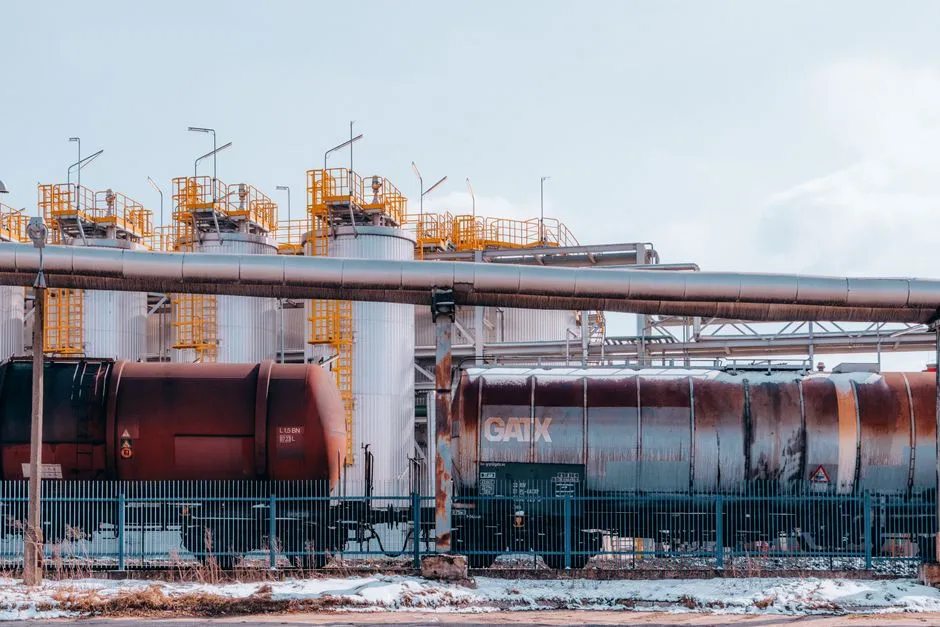
A staged treatment train is more defensible than applying one DAF duty to every refinery stream because equalization, flotation, biological treatment and sludge handling perform different functions. A food-processing reference architecture published by Jorsun uses an oil separator, equalization tank, primary DAF, A/O tank, sedimentation tank, secondary DAF and discharge to the municipal sewer (Jorsun, 2026). That sequence is a useful reference, not a mandatory template for every edible-oil refinery.
Equalization stabilizes flow and wastewater composition before chemical dosing and flotation. Primary DAF captures the readily floatable oil and suspended material. Biological treatment addresses a different objective: biodegradable organics and soluble COD. Sedimentation separates biomass or settled solids, while secondary DAF captures residual floatable material before discharge (Jorsun, 2026).
Within the specific Jorsun case, which concerns a fast-food and convenience-food processing installation in Shanghai rather than an edible-oil refinery, influent SS was 150–300 mg/L and effluent SS was less than 30 mg/L. The same case specifies wastewater pH of 6–8 (Jorsun, 2026). Those results must not be transferred to FOG, COD or oil-recovery performance for an edible-oil plant.
Relatively clean boiler, heat-exchange and cooling-tower streams can be segregated to support reuse, while oil-contaminated extraction, washing and refining streams receive the required oil treatment (Watericon, 2020). The material removed from the water also needs a defined route: identify whether recovered oil can be returned to process, sold or disposed of, and how oil-bearing sludge will be dewatered. The connected equipment includes an industrial DAF system for edible oil wastewater, an automatic chemical dosing for emulsion conditioning, and a plate-and-frame filter press for oil-bearing sludge.
| Stage | Primary function | Design output to verify |
|---|---|---|
| Stream segregation and equalization | Keep distinct duties separate and stabilize flow and composition | Source inventory, flow profile, equalization volume and bypass strategy |
| Primary DAF | Remove floatable oil and suspended solids after conditioning | Oil form, chemical demand, recycle arrangement and skimming duty |
| Biological treatment, if required | Reduce biodegradable soluble organics and COD | Influent biodegradability, nutrients, alkalinity and final solids handling |
| Secondary clarification or flotation | Separate residual solids or floatable material | Clarified-water quality and downstream solids route |
| Sludge and oil recovery | Recover or dispose of separated material | Ownership, dewatering, recovered-oil quality and final destination |
Select DAF Capacity and Operating Parameters
A DAF proposal should be selected from the plant’s wastewater duty and peak-flow behavior, not from nominal catalog throughput alone. The verified HydropureWater product catalog covers 4–300 m³/h across 13 standard models using micro-bubble technology and automatic skimming (HydropureWater verified product catalog, 2026). That range identifies available equipment configurations; it does not establish the correct model for a refinery without site data.
Before selecting a model, obtain representative flow analysis, peak-flow requirements, a wastewater-source inventory, COD, FOG, TSS, pH, oil form and emulsifier behavior. Include temperature where it affects viscosity, chemical demand or process behavior. Define the intended discharge or reuse objective and the required solids and oil-recovery route.
Nominal throughput and hydraulic duty are separate checks. The proposal must confirm peak-flow handling, equalization, saturation recycle and automatic-skimming capacity for the actual plant. Saturation details should identify the recycle arrangement and operating basis rather than merely use the term “micro-bubble.” Chemical dosing must be integrated with the emulsion-breaking strategy, and the controls scope must cover the operating sequence, alarms, sampling and sludge collection.
Performance evidence should be tied to a defined parameter, test method, influent condition and operating period. A generic removal percentage does not establish compliance for the buyer’s wastewater. The Jorsun food-processing case provides one useful comparison prompt: influent SS of 150–300 mg/L and effluent SS below 30 mg/L at pH 6–8 (Jorsun, 2026), but it is not an edible-oil refinery dataset. The broader best DAF unit selection framework for industrial wastewater can support supplier comparisons, while the industrial DAF system for edible oil wastewater provides the current catalog basis.
| Proposal field | Information the supplier should state |
|---|---|
| Design basis | Representative flow, peak-flow strategy, wastewater characterization, oil form and reuse or discharge objective |
| Micro-bubble and saturation details | Saturation method, recycle arrangement and operating basis |
| Chemical dosing interface | Chemical assumptions, dosing control, preparation and containment |
| Automatic skimming | Mechanism, collection capacity, controls and sludge discharge route |
| Controls and instruments | Local and supervisory controls, alarms, monitoring instruments and sampling points |
| Materials and drawings | Wetted materials, process and general-arrangement drawings, utilities and downstream connections |
| Commissioning tests | Acceptance parameters, test methods, influent condition and performance-guarantee boundaries |
Verify Performance Before Discharging or Reusing Effluent
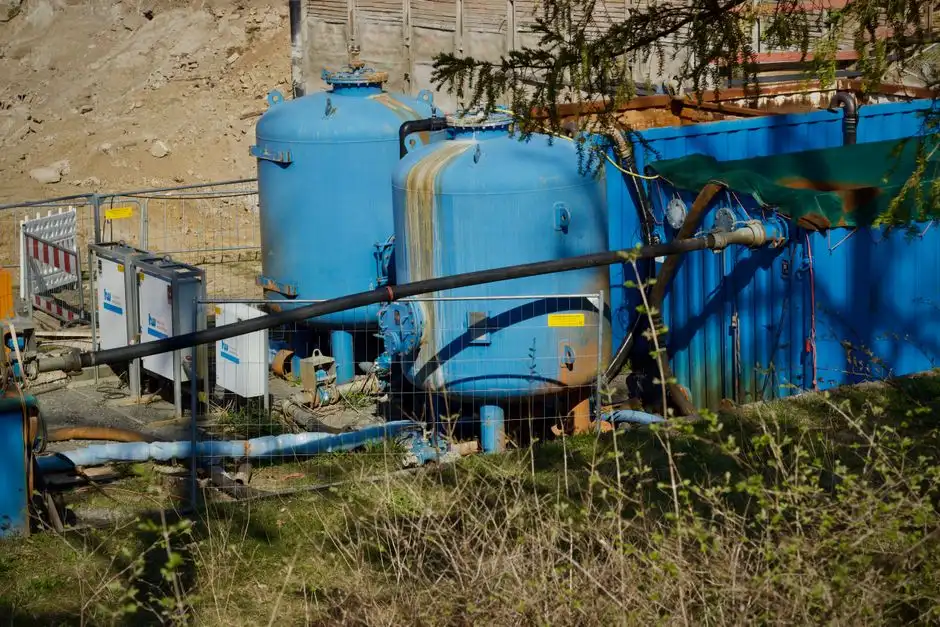
Acceptance testing should establish the actual oil, FOG, COD, TSS and pH performance of the proposed treatment train. Watericon identifies COD, fats, oils and grease, total suspended solids and pH as relevant final-effluent parameters for the edible-oil industry, and notes that phosphates and sulfates may also be high (Watericon, 2020). Those additional constituents should be assessed where stream chemistry or reuse conditions make them relevant.
The Jorsun reference reports influent SS of 150–300 mg/L and effluent SS below 30 mg/L in a fast-food and convenience-food processing installation (Jorsun, 2026). It does not report edible-oil FOG, COD or oil-recovery outcomes. Commissioning should therefore include representative operating periods, variable oil loading, chemical-dosing response, flotation stability, skimming performance and clarified-water sampling rather than relying on a favorable visual condition.
Clarified reuse and membrane-grade reuse are different claims. Watericon states that complete oil removal is required before reverse osmosis to avoid membrane fouling, and that RO polishing may follow effective DAF treatment where the clarified effluent is suitable (Watericon, 2020). A plant considering industrial RO water purification should assess the entire upstream train rather than specify RO from a DAF outlet alone.
Advanced treatment remains conditional: biological polishing addresses biodegradable organics and soluble COD, while RO addresses dissolved salts and other membrane-relevant contaminants. Neither should be assumed from a clean-looking flotation surface. The plant must also confirm who owns the separated oil, how sludge is dewatered and whether the recovered material has a practical reuse or disposal route. Further configuration detail is available in this DAF configuration for edible oil soapstock water.
Make the Supplier Decision with a Site-Specific Brief
A defensible procurement brief requires every supplier to state the same design basis so quotations can be compared on engineering scope rather than presentation. It should identify treated flow, peak-flow strategy, wastewater characterization, oil form, chemical assumptions, downstream objective and the boundaries of any performance guarantee. A supplier that cannot connect its proposed duty to representative plant data should be asked to state the missing information rather than substitute a generic removal claim.
Require process drawings that show equalization, DAF, saturation recycle, sludge collection, automatic skimming, chemical preparation, controls, sampling points and downstream connections. State whether the DAF, automatic chemical dosing and sludge-dewatering equipment are included or supplied by others. These are separate equipment categories in the HydropureWater catalog, so omissions should be visible in the commercial schedule rather than inferred from the skid price.
The supplier should also define commissioning boundaries, operator training, spare parts, control philosophy, monitoring instruments and local service support. References and site-specific performance are complementary evidence: the Jorsun case provides a concrete treatment train and SS outcome for a food-processing installation (Jorsun, 2026), while the academic literature explains why free oil, unstable emulsions and highly stable emulsions require different recovery approaches (Energy Sources Part A Recovery Utilization and Environmental Effects, 1990). Neither substitutes for testing the buyer’s wastewater.
The best DAF unit selection framework for industrial wastewater provides the broader comparison structure, while the DAF configuration for edible oil soapstock water addresses the reuse and discharge context. Use both as checklists, then require the bidder to complete the site-specific fields.
| Bid-document requirement | Acceptable evidence |
|---|---|
| Design basis | Source-by-source flow and wastewater characterization, including peak and equalization assumptions |
| Process scope | Drawings identifying equalization, DAF, recycle, chemical preparation, skimming, sludge handling and sampling points |
| Equipment boundaries | Supplied-by-item list, utilities, materials and downstream connections |
| Performance boundary | Named parameter, test method, influent condition, operating period and acceptance criterion |
| Commercial completeness | Itemized price, exclusions, commissioning boundary, training, spares and service support |
Frequently Asked Questions
Can an oil separator be omitted if the DAF skid removes oil?
Not without site-specific evidence. Free-floating oil is readily removed by gravimetric separators (Energy Sources Part A Recovery Utilization and Environmental Effects, 1990). A combined or staged arrangement may therefore be more efficient than installing both without an operating basis. Compare the DAF versus oil water separator options using measured oil form, flow, peak loading and downstream objectives.
How should a DAF system for edible oil wastewater be sized?
Use representative wastewater testing and peak-flow data rather than nominal catalog capacity alone. The verified range is 4–300 m³/h across 13 standard models with micro-bubble technology and automatic skimming (HydropureWater verified product catalog, 2026). The selected duty must also reconcile equalization, saturation recycle, chemical conditioning and skimming.
What should a supplier demonstrate during selection?
Require a defined design basis, relevant oily-wastewater evidence, process drawings, automatic skimming, controls, chemical-dosing interface, sludge handling and measurable acceptance criteria. Also request commissioning boundaries, operator training, spares and local service support. The selected scope should be checked using the published best DAF unit selection framework for industrial wastewater.
Can DAF effluent be reused, and what should the budget include?
Clarified effluent may support reuse if it meets the intended application. Complete oil removal is required before RO to avoid fouling (Watericon, 2020). Because no site-specific quotation is provided, request itemized pricing for the DAF skid, chemical dosing, equalization, sludge dewatering, controls, commissioning and any RO or biological polishing. Obtain quotations against the same design basis and exclusions.