What treatment does a Reynosa data center actually need?
A Reynosa data center needs stream-specific treatment, not one universal system. Sanitary wastewater may require biological treatment or conveyance to an authorized sewer, while cooling-tower blowdown requires characterization for dissolved solids, temperature, pH, residual biocides, scale or corrosion inhibitors, and other site-specific constraints. The appropriate route depends on measured flows, make-up-water quality, cooling configuration, cycles of concentration, peak summer demand, reuse targets, and the receiving authority’s requirements. Internal reuse may reduce blowdown, but equipment capacity, recovery, and residual-discharge obligations cannot be fixed without site data and confirmatory testing.
The first design decision is therefore separation. Sanitary wastewater, cooling-tower blowdown, RO concentrate, softener reject, glycol-bearing maintenance wastewater, and periodic drain-downs should remain separate until their quality, variability, and destination are known. The same site-specific data center blowdown treatment blueprint illustrates why one combined wastewater assumption is not a defensible basis for equipment selection.
Cooling demand can dominate the site water balance. HydropureWater’s 2026 Tuxtla guide reports that cooling—including evaporative towers, adiabatic sidecars, and humidification—typically represents 60–80% of hyperscale-campus water demand. That figure is comparative planning context, not a Reynosa design input.
For each stream, the project team must choose among internal reuse, treatment followed by permitted discharge, or direct conveyance to an authorized receiver after demonstrating acceptance. Local source-water analyses, cooling drawings, sewer or discharge rules, and peak operating data are still required before the treatment train can be specified.
Build the Reynosa water balance before selecting equipment
The measured water balance must establish both average and peak wastewater generation because generic flow rules cannot represent a Reynosa cooling system. The mechanical engineer should provide the cooling configuration, evaporation rate, circulation flow, cycles of concentration, make-up-water source and quality, continuous-blowdown arrangement, drain-down frequency, and peak summer operating conditions.
The governing mass-balance principle is simple: make-up water that is not removed by evaporation or another intended consumption may become wastewater, while evaporation concentrates the circulating water. This makes cycles of concentration and make-up-water quality interdependent; changing either changes blowdown quantity and chemistry.
Average flow and event flow must remain separate. Black Forge reports that utilities have studied extreme cooling discharges during heat waves, when multiple facilities may increase discharge simultaneously. A sewer or receiving system must therefore be checked for the project’s operating profile and any coincident peak conditions, not merely its annual average.
Assumptions from Tuxtla, Samarkand, or a United States permit framework should not be transferred to Reynosa. Local climate, source-water chemistry, operating practice, and authority requirements must replace them. The water-balance and wastewater treatment planning framework provides a useful workflow, but its place-specific values remain illustrative.
| Required input | Engineering use | Decision affected |
|---|---|---|
| Cooling configuration and circulation flow | Defines evaporation and circulation boundaries | Blowdown rate and treatment capacity |
| Make-up-water source and analysis | Establishes incoming salt and contaminant loads | Cycles of concentration and pretreatment |
| Cycles of concentration | Sets circulating-water chemistry targets | Blowdown volume, RO feed, reuse potential |
| Continuous blowdown and drain-down data | Separates routine flow from episodic discharges | Equalization, pumping, residual-discharge design |
| Peak summer conditions | Tests the water balance under maximum cooling demand | Peak discharge and receiving-capacity check |
| Occupancy and workload forecast | Connects facility development to water demand | Average and future design cases |
Characterize each wastewater stream before choosing a process
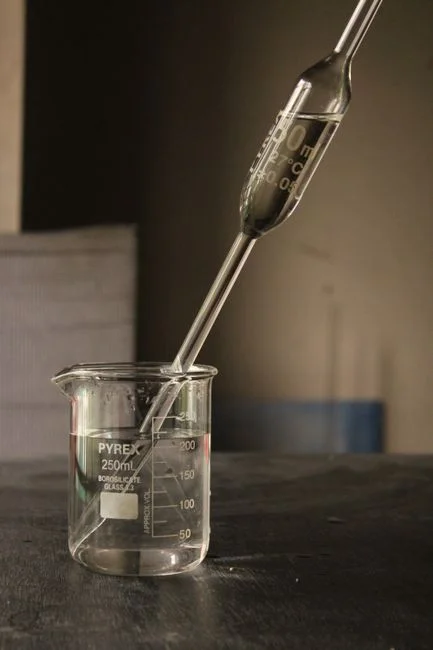
Wastewater chemistry and variability determine the treatment train; flow volume alone does not. Black Forge identifies dissolved solids, temperature, pH, and residual treatment chemicals—including biocides and scale or corrosion inhibitors—as the principal cooling-blowdown discussion points. These parameters must be measured in Reynosa make-up water, circulating water, and actual blowdown rather than inferred from a generic composition.
Sanitary wastewater requires an independent assessment. If the municipal sewer cannot accept the flow, routing is constrained, or local rules require onsite treatment, an MBR or integrated biological process may be relevant. A cooling-water treatment train should not be repurposed as a sanitary process because the organics, biological load, solids handling, and effluent objectives differ.
RO concentrate, softener reject, glycol-bearing maintenance wastewater, and periodic drain-downs should also remain segregated. Each may change in concentration or composition during a campaign, and combining them can obscure the source of a permit exceedance or make a reusable stream unnecessarily difficult to treat. The engineering guidance for high-TDS RO treatment provides relevant pretreatment context, but it does not replace project sampling.
Front-end characterization should use side-by-side sampling during representative operating periods. For blowdown, include conductivity or total dissolved solids, hardness, alkalinity, silica, temperature, pH, and relevant treatment chemicals. For sanitary flow, document the expected flow and organic and solids characteristics. For maintenance streams, identify glycol type and concentration where applicable. These results determine both unit sizing and discharge conditions.
| Stream | Minimum characterization focus | Treatment implication |
|---|---|---|
| Sanitary wastewater | Flow, organics, solids, biological treatment suitability | Authorized sewer or separate biological treatment |
| Cooling-tower blowdown | Dissolved solids, temperature, pH, biocides, scale and corrosion inhibitors | Characterization, controlled discharge, or pretreatment and reuse |
| RO concentrate | Salt load, scaling species, residual treatment chemicals | Concentrate treatment or permitted disposal |
| Softener reject | Ion loading and discharge chemistry | Segregated recovery or disposal |
| Glycol-bearing maintenance wastewater | Glycol type and concentration, other contaminants | Source control and dedicated characterization |
| Periodic drain-downs | Volume variability and cooling-water chemistry | Equalization and event-discharge capacity |
Choose the disposal route before optimizing treatment
The authorized destination must be established before treatment equipment is optimized because acceptance, sewer capacity, and residual-discharge obligations can eliminate otherwise attractive reuse cases. For each stream, evaluate the nearest authorized receiver, lift-station and sewer capacity, treatment-plant acceptance, applicable local limits, connection requirements, and the consequences of an interrupted reuse system.
A United States example can frame the questions but cannot supply a Reynosa limit. Black Forge reports that a significant-industrial-user framework includes users discharging an average of 25,000 gallons per day or more of process wastewater. The referenced count excludes sanitary, noncontact cooling, and boiler blowdown flows, while capacity or harm tests can still trigger designation. That is a U.S. framework, not a Mexican regulatory threshold.
United States NPDES, state, and publicly owned treatment works rules should not be assumed to apply in Mexico. The project must identify the competent Mexican authority, applicable water and discharge requirements, sewer conditions, and any connection or capacity agreement. The pretreatment requirements for facilities in Nuevo León illustrates the type of receiving-authority questions to resolve, but it does not establish Reynosa requirements.
Internal reuse is a separate destination and should be evaluated as a complete system. It requires defined water-quality limits for cooling make-up, reliable permeate production, chemical and energy inputs, concentrate management, monitoring, and redundancy. A reuse system that stops during maintenance still needs a lawful residual-discharge route unless the project can demonstrate another acceptable contingency.
Match treatment to cooling-blowdown reuse goals
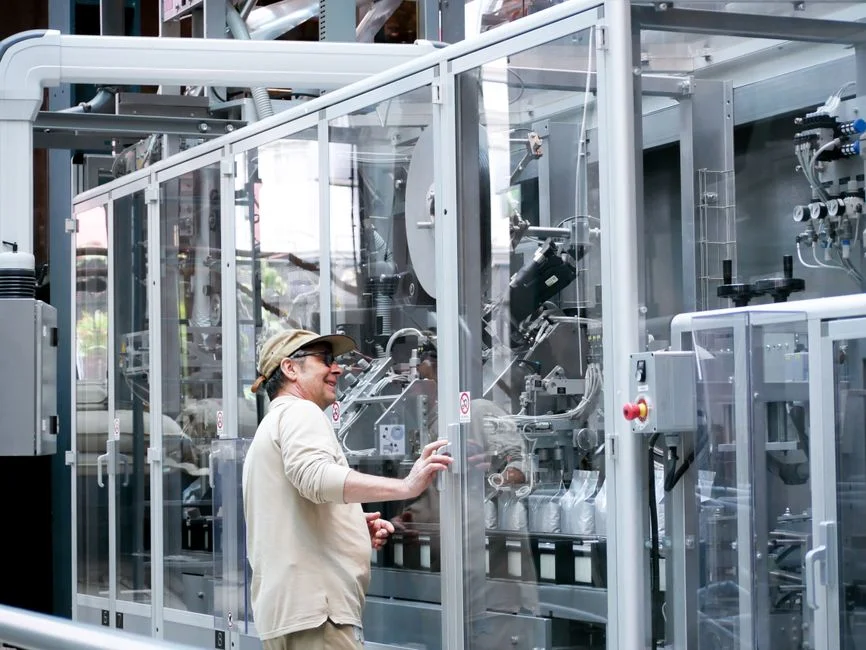
Cooling-blowdown reuse is technically credible when the recovery target matches the feed chemistry and the concentrate has a defensible destination. UF–RO can recover water for reuse, but performance depends on pretreatment, scaling control, temperature, recovery, and concentrate handling.
HydropureWater’s UF specification covers 2,000–40,000 L/h, uses 0.03-micron PVDF membranes, removes bacteria, colloids, and suspended solids without chemicals, accepts turbidity up to 300 ppm, and includes automatic backwash and air scour. These specifications identify a candidate for ultrafiltration pretreatment for cooling blowdown reuse, but feed testing must confirm applicability.
HydropureWater’s 2026 research context reports a 40–70% blowdown reduction at 7–10 cycles relative to a 4-cycle freshwater baseline for an advanced UF–RO train. This is research context, not a guaranteed Reynosa outcome. Actual reduction depends on the measured water balance, permeate quality, cooling chemistry, recovery, and operating stability.
IDE states that conventional brackish-water RO typically reaches 75–80% recovery before scaling becomes unmanageable. Silica, calcium carbonate, and calcium sulfate require deliberate management as recovery increases. IDE’s MAXH2O case reported approximately 95% recovery and about 1 mg/L permeate silica for a specific brine-desalter application; that case is a reference, not a universal performance guarantee.
The industrial RO system for blowdown reuse catalog states recovery rates up to 95%. Project recovery must nevertheless be validated against actual feed chemistry, temperature, pretreatment, scaling, and concentrate disposal. The high-salinity RO engineering guide provides a useful comparison framework for these constraints.
| Option | Technical role | Principal design risk |
|---|---|---|
| Characterization and controlled discharge | Direct management of blowdown chemistry | Receiving-authority acceptance and residual volume |
| UF followed by RO | Recovery of water for cooling make-up | Recovery, scaling, and concentrate destination |
| Conventional brackish-water RO | Salt separation for reuse | Recovery limits imposed by scaling chemistry |
| High-recovery salt-management concept | Recovery beyond conventional RO limits | Complexity, solids handling, and unproven project performance |
Treat sanitary wastewater with a separate biological process
Sanitary treatment begins with a sewer-acceptance check, not an MBR quotation. The receiving utility must confirm whether the flow can enter the municipal system, what pretreatment or connection controls apply, and whether routing, capacity, or local conditions require onsite treatment.
Where onsite treatment is necessary, an MBR should be evaluated as a sanitary process with its own biological treatment, solids separation, effluent-quality, sludge-handling, and disinfection requirements. Cooling-blowdown UF–RO cannot substitute for that biological function. The MBR treatment for separate sanitary wastewater is therefore relevant only after the sanitary design basis and final effluent destination are defined.
HydropureWater’s MBR catalog specification lists capacities from 10–2,000 m³/day, filtration below 1 micron, and a footprint stated as 60% smaller than conventional systems. These are catalog specifications, not a guarantee of suitability, footprint, or discharge acceptance at a Reynosa site.
Near-reuse-quality membrane filtration alone does not establish a lawful discharge route. The final effluent must be checked against the applicable requirements, and the receiving authority must accept the proposed quality, flow, monitoring, and connection conditions.
Compare lifecycle, operating, and procurement risks
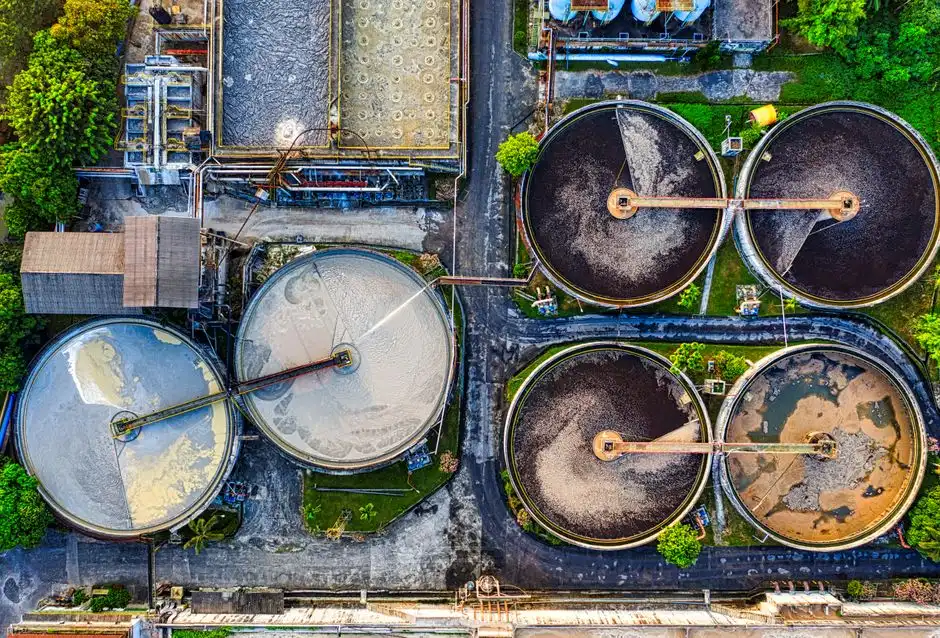
Energy and operating obligations can outweigh an apparently favorable water-reuse balance. Open Engineering Inc.’s 2026 lifecycle assessment found that the wastewater scenario had about twice the global warming potential of the freshwater case, with treatment energy accounting for roughly 80% of the difference. In the UF–RO scenario, wastewater energy use grew to over five times the freshwater case, although improved cycles of concentration reduced blowdown and chemical consumption.
The same study reported an indirect water penalty of approximately 0.93 L/m³, less than 0.1% of the direct displacement benefit. That percentage is a result from the study’s assumptions; it is not a Reynosa cost or water-savings estimate. A project must model local power conditions, treatment train, chemical demand, and cooling operation.
Supplier comparisons should therefore cover membranes, pumps, pretreatment, chemical use, sludge or salt handling, monitoring, operator competence, redundancy, and concentrate or residual-discharge obligations. Reference installations must be separated from guaranteed project results, with source data for recovery, permeate quality, energy use, and operating conditions. The RO capacity evaluation for a Panasonic Energy Texas plant illustrates why site inputs belong in capacity and lifecycle decisions.
| Procurement check | Information required from supplier | Risk if omitted |
|---|---|---|
| Performance basis | Reference conditions, feed chemistry, recovery, permeate quality, and test data | Unverifiable performance claim |
| Operating cost drivers | Energy, chemicals, cleaning, membrane replacement, and labor assumptions | Lifecycle comparison based on incomplete inputs |
| Residual streams | Concentrate, sludge, spent media, and disposal assumptions | Hidden disposal or handling obligation |
| Reliability | Redundancy, bypass, alarm response, and contingency arrangements | Cooling or discharge interruption |
| Compliance | Permit assumptions, authority interface, monitoring, and reporting scope | Equipment mismatch to discharge conditions |
| Budget maturity | Itemized basis, exclusions, schedule assumptions, and site-specific quotation | False price comparability |
Turn the design basis into an execution plan
The design basis should be completed before major equipment procurement through a sequenced engineering, approval, and verification plan.
- Complete front-end engineering. Obtain cooling drawings, water-balance calculations, source-water analyses, representative blowdown samples, peak summer conditions, and expected occupancy or workload changes.
- Map every discharge stream. Identify sanitary wastewater, continuous blowdown, drain-downs, softener reject, RO concentrate, and maintenance wastewater separately, including their normal and peak generation rates.
- Confirm the destination and authority requirements. Document sewer capacity, treatment-plant acceptance, residual-discharge options, applicable connection conditions, and the residual route needed if reuse is interrupted.
- Validate the treatment concept. Pilot-test the selected train against site water, especially for any high-recovery RO proposal where scaling compounds, temperature, recovery, and chemical demand can alter performance.
- Specify monitoring and contingency controls. Add metering and controls for flow, conductivity, pH, temperature, and treatment chemistry, with alarms tied to cooling-loop limits and a defined bypass or contingency plan.
- Close the handover requirements. Establish acceptance criteria, operator training, maintenance intervals, spares, and responsibility for concentrate and residual-discharge monitoring. The Mexico-focused RO capacity guide provides an example of the site-specific preparation required before committing to capacity.
Frequently Asked Questions
What is the first information needed to size treatment for a data center in Reynosa, Mexico?
Start with the measured water balance and separate flow records for each stream. Request cooling configuration, evaporation rate, circulation flow, cycles of concentration, make-up-water analysis, continuous-blowdown arrangement, drain-down frequency, and peak summer conditions. These inputs are needed to calculate routine and event flows before treatment capacity can be selected.
Can an industrial RO system treat all wastewater from the data center?
No. RO may be relevant to cooling-blowdown reuse, but it does not replace biological treatment for sanitary wastewater and does not automatically resolve softener reject, glycol-bearing maintenance wastewater, or drain-downs. Each stream needs characterization and an identified destination.
What should a buyer request when comparing treatment-system prices and lifecycle costs?
Request an itemized quotation tied to the measured flow, feed analysis, recovery target, permeate specification, concentrate route, energy assumptions, chemical consumption, maintenance, redundancy, and residual-discharge obligations. No defensible local price can be stated without those inputs; the supplier should distinguish reference installations from guaranteed project results.
How should a project reduce compliance risk when selecting a supplier?
Require the supplier to state its design assumptions and provide test data or source citations for recovery, permeate quality, energy use, and operating conditions. Also verify the receiving authority’s acceptance route separately, because equipment performance does not establish permission to discharge. Missing chemistry, peak-flow, or destination information should remain an explicit procurement hold point.