
What Changes When Mining Wastewater Meets MBR or Activated Sludge
For mining and metals wastewater in Copland, select MBR when reliable solids separation, a constrained footprint, or valuable reuse justifies added cost; retain conventional activated sludge when the flow is large and dilute, power is inexpensive, and existing basins remain serviceable. Neither process automatically removes dissolved metals, so precipitation or another dedicated step may be required before biology and membrane separation. The decision should follow the current permit, actual wastewater chemistry, reuse target, available footprint, pretreatment needs, sludge-handling route, and site pilot results rather than a generic technology preference.
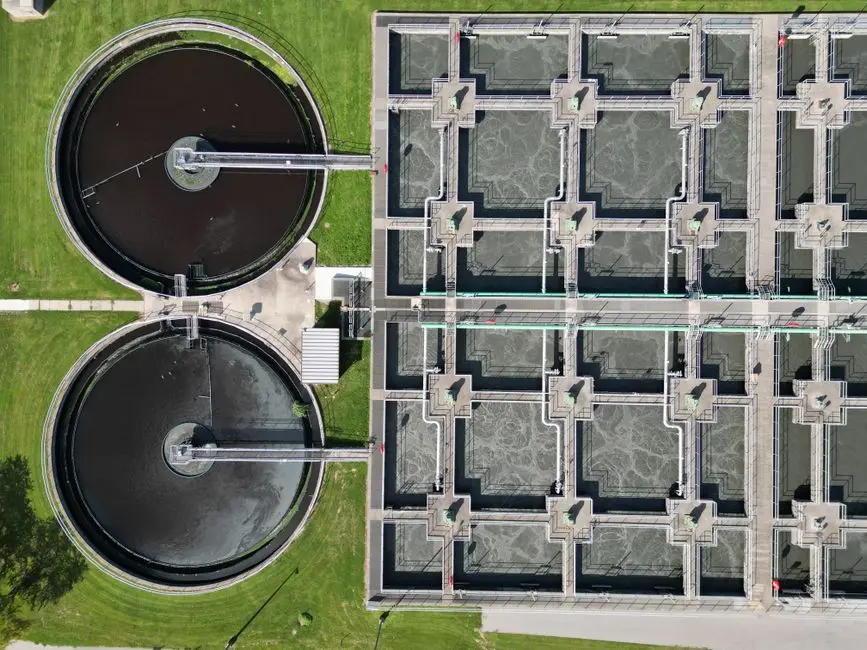
Conventional activated sludge, or CAS, treats biodegradable organics in an aeration basin. Mixed liquor then enters a secondary clarifier, where biological floc settles by gravity. Settled solids are returned as return activated sludge, while excess solids are removed as waste activated sludge. Performance therefore depends on both biological treatment and the settleability of the sludge produced.
An MBR combines activated-sludge biology with submerged membrane modules that physically retain biomass and suspended material. It replaces secondary clarification and can support higher biomass concentrations in a smaller reactor. The MBR wastewater membrane bioreactor cost per m³ guide describes the resulting treatment train as biology, solids separation, dedicated dissolved-metals treatment, and reuse-specific polishing when required.
That distinction is regulatory, not semantic. The US EPA's Membrane Bioreactors Fact Sheet, published 2021, identifies arsenic, lead, zinc, copper, nickel, and cadmium among the metals addressed by federal ore-mining and dressing requirements under 40 CFR Part 440. It also states that MBRs are effective for solids and microbiological constituents, while dissolved wastewater components require additional treatment. Membrane solids retention alone therefore does not establish compliance.
MBR and Conventional Activated Sludge Compared by the Numbers
MBR separates solids through a physical membrane barrier, while CAS depends on gravity settling of biological floc. That operating difference affects clarification reliability, reactor volume, sludge properties, and lifecycle cost. HydropureWater's 2026 field data cite an MBR operating range of 8,000–12,000 mg/L MLSS, compared with 2,000–4,000 mg/L for CAS using its Lamella-clarifier engineering reference, also dated 2026.
| Parameter | MBR | Conventional activated sludge |
|---|---|---|
| Biomass concentration | 8,000–12,000 mg/L MLSS, HydropureWater field data, 2026 | 2,000–4,000 mg/L MLSS, Lamella-clarifier engineering reference, 2026 |
| Solids separation | Physical retention by submerged membranes | Gravity settling in a secondary clarifier |
| Referenced effluent quality | 0.01–1.31 NTU turbidity and 0.10–0.72 mg/L BOD5, EPA MBR Fact Sheet values cited by HydropureWater in 2026 for referenced facilities; not a universal mining guarantee | No equivalent guaranteed range established by the supplied research |
| Sludge-handling risk | Potentially lower settleability and more colloidal material | Conventional biosolids-processing technologies may remain applicable |
| Peak-flow design | Generally no more than 1.5–2 times average design flow without added membrane capacity or equalization, EPA Membrane Bioreactors Fact Sheet, 2021 | Clarifier and basin hydraulic capacity must be checked separately |
The referenced turbidity and BOD5 values describe the cited facilities, not a promise for Copland mining influent. The MBR effluent quality versus cost and ROI comparison is useful for screening, but site wastewater determines biological loading, solids separation, and fouling.
EPA's 2021 fact sheet identifies higher MBR capital and operating costs for the same throughput. Those operating costs include membrane cleaning, fouling control, eventual replacement, and air-scour energy. It also reports that MBR waste sludge can settle more slowly because of colloidal particles and filamentous bacteria, although conventional biosolids-processing technologies may still apply.
Peak flow is therefore a design constraint, not merely an operating preference. When peak demand exceeds 1.5–2 times average design flow, EPA recommends additional membrane capacity or equalization. A purchase order that omits equalization volume, redundancy, or adequate pretreatment can shift capital savings into operating risk.
Which Mining Conditions Favor MBR
MBR deserves pilot priority when clarifier carryover during a metal or loading pulse would be unacceptable, available land is constrained, or treated water has a defined reuse value. The decision must remain tied to actual Copland wastewater because the same membrane that protects effluent quality can be challenged by sulfate, hardness, soluble salts, low organic carbon, and metal-associated fouling.
HydropureWater's 2026 guidance identifies BOD/COD below 0.3, hardness in the thousands of mg/L as CaCO3, sulfate above 1,000 mg/L, and TDS above 5,000 mg/L as demanding mining-influent conditions. These are validation flags, not universal design thresholds. Low biodegradable carbon can leave biological treatment without sufficient substrate, while salinity and TDS can inhibit nitrifiers.
That makes chemical characterization before equipment selection essential. Establish soluble and total metals, hardness, sulfate, TDS, alkalinity, pH, BOD, COD, and the anticipated organic fraction. A municipal loading assumption applied to a low-carbon mining stream can produce a process that treats turbidity effectively while failing the biological duty.
Cyanidation-related swings in cyanide, ammonia, and thiosulfate can create variable oxygen demand. Equalization should attenuate hydraulic and load shocks before biological treatment; it does not remove metals. During a metal pulse, the buyer also needs to know whether metal-bearing sludge will depress settleability, alter biological activity, or precipitate on membrane surfaces.
MBR permeate can support some reuse routes, but it is not automatically suitable for process water, boiler feed, cooling water, or zero-liquid-discharge duties. The reuse specification determines whether filtration, disinfection, UV, reverse osmosis, or another polishing step is required. An integrated MBR membrane bioreactor system should therefore be quoted as a treatment stage within a complete train, not as the entire permit solution.
High turbidity or oil-laden influent also affects membrane protection. Where justified by characterization, mechanical screening can remove damaging material before the membranes, but the selected pretreatment must follow the actual solids and foulant profile.
When Conventional Activated Sludge Remains the Better Buy
CAS remains the stronger economic candidate for large, dilute flows with inexpensive electricity, little or no reuse value, and an aeration basin and clarifier with useful remaining life. In that case, the equipment decision is primarily whether the existing system can meet hydraulic, biological, settling, and permit duties without major reinforcement.
HydropureWater's 2026 screening condition identifies electricity below about $0.07/kWh as favorable for CAS. This is a screening threshold rather than a quotation or guaranteed project outcome. The buyer should insert the actual tariff and duty profile into a lifecycle model.
The principal process risk is loss of settling. Metal-bearing biological floc can escape through a secondary clarifier when sludge bulking or similar settleability problems develop, even though the biological reactor remains operational. The consequence is not necessarily a complete loss of biological treatment; it is the escape of solids that may carry particulate-bound metals.
HydropureWater's 2026 field data report that CAS systems lost 30–60% of removal efficiency during a 24–72-hour window after a metal pulse. This is an observed failure mode in the cited comparison, not a universal performance claim. It nevertheless demonstrates why a short metal-loading disturbance matters and why a controlled pulse test should be part of site validation.
Retaining CAS requires documented confirmation of basin structural condition, remaining hydraulic capacity, diffuser and blower performance, sludge settleability, polishing requirements, waste-activated-sludge handling, and NPDES compliance margin. If the existing basin has useful life and the flow is dilute, replacing a functioning clarifier with membranes may add cost without adding enough value.
Metals Removal and Copland Compliance Still Require a Complete Treatment Train
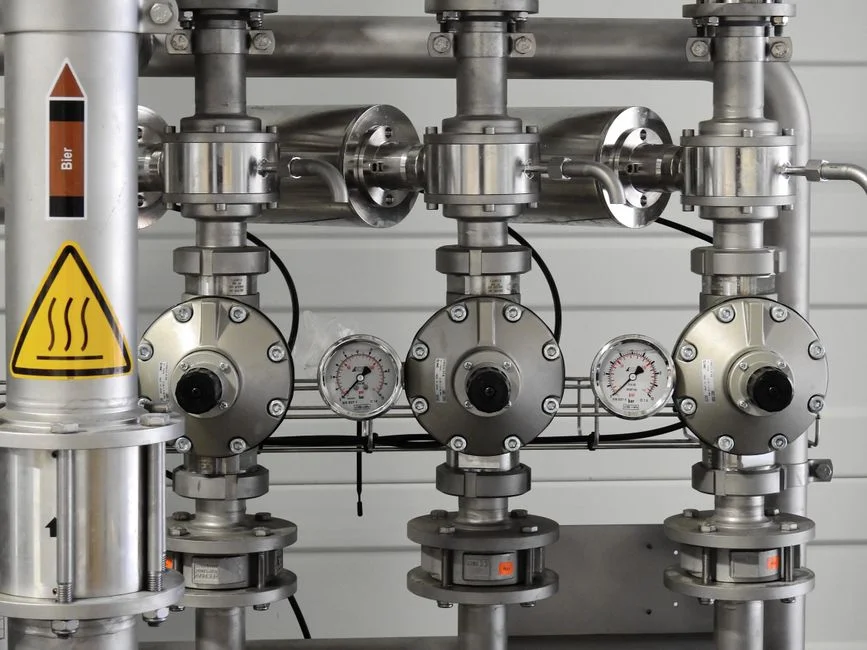
Particulate-bound metals can report to captured sludge, but dissolved metals require chemical precipitation or another dedicated removal step before biological and membrane stages. This distinction prevents an equipment-only comparison from becoming a compliance failure.
HydropureWater's 2026 comparison gives approximate pH ranges of 8.5–9.5 for a CAS precipitation stage and 6.5–7.5 ahead of MBR membranes. These are comparison inputs, not universal operating instructions. The final pH envelope, chemical sequence, and residual metal performance must come from jar testing and pilot work using actual Copland wastewater.
The pilot should establish lime or reagent demand, reaction and settling time, pH control, sludge production, and filterability. An automatic chemical dosing system for mining wastewater can then be specified around validated controls, including reagent delivery, interlocks, and operator-visible operating records.
The compliance review must start with the current NPDES permit and site-specific limits, including any selenium or sulfate limitations. Federal ore-mining provisions under 40 CFR Part 440 are only one part of the applicable envelope. Permit limits, receiving-water requirements, monitoring conditions, and the selected reuse specification must all be considered.
Demonstrate both dissolved and particulate metals through the complete train. A membrane can retain solids carrying metals, but that observation does not establish that dissolved-metal concentrations comply. Likewise, a clarifier can overflow during a pulse without any adverse effect on the biological reactor; effluent compliance still fails if metal-bearing solids escape.
Any polishing train should be justified by the receiving environment or reuse application. UV or reverse osmosis should not be included merely because an MBR is proposed. MBR permeate may support some reuse routes, while process-water, boiler-feed, cooling-water, and zero-liquid-discharge applications can require additional treatment determined by their own water-quality specifications.
Build a Total-Cost and Footprint Comparison for the Same Duty
A decision-grade comparison must give MBR and CAS the same flow, effluent basis, civil scope, pretreatment, sludge handling, power basis, cleaning provision, and membrane-replacement allowance. Comparing an MBR with a clarified effluent against CAS without polishing can materially distort the result.
| Cost or scope item | Screening basis | Procurement treatment |
|---|---|---|
| Capital cost | MBR is 20–40% above equivalent-flow CAS in the 1,000 m³/day example from HydropureWater field data and the Lamella-clarifier engineering reference, both dated 2026 | Request like-for-like site quotations with civil works, pretreatment, controls, sludge handling, and commissioning included |
| Operating cost | MBR is 15–30% higher per m³ in the same 1,000 m³/day comparison | Model actual power tariff, air scour, chemical cleaning, chemicals, labor, and membrane replacement |
| Civil footprint | Approximately 60% less concrete and civil footprint for MBR, according to HydropureWater and the Lamella-clarifier engineering reference, both 2026 | Confirm the saving against site layout, excavation, access, utilities, and treatment duty |
| Payback screening | Approximately 4–6 years when make-up water costs more than about $2/m³ or brine disposal has a real cost, HydropureWater field data, 2026 | Replace the thresholds with the actual water tariff, disposal cost, and recovered-water value |
| MBR-specific scope | Not a one-time equipment-only purchase | Include cassettes, fine screens, permeate pumps, PLC upgrades, air-scour energy, chemical cleaning, and eventual replacement |
The footprint comparison is a screening estimate, not a site guarantee. Reduced concrete area can be offset by higher membrane, power, cleaning, and replacement costs. Conversely, a valuable reuse stream can justify a higher-cost train even where the lowest-cost discharge solution would be CAS.
Sludge handling belongs in the same model. MBR waste sludge can have lower settleability and more colloidal material than CAS waste activated sludge. A 2026 MBR cost and footprint guide therefore supports pilot-based sludge dewatering tests rather than selection from a generic filter-press specification.
Require bidders to state the design flow, average and peak duties, duty cycle, effluent limits, civil assumptions, power tariff, cleaning intervals, replacement allowance, sludge destination, and commissioning acceptance tests. Without those inputs, the quoted cost difference is not decision-grade.
Pilot the Selected Train Before Ordering Equipment
HydropureWater's 2026 guidance recommends a 60–90 day cassette pilot using actual wastewater when metal pulses, low BOD/COD, sulfate, hardness, or high TDS could affect biological performance, settleability, or membrane flux. For Copland, the test should reproduce representative operating and upset conditions rather than only steady average flow.
| Pilot item | Required evidence | Procurement consequence |
|---|---|---|
| Influent matrix | Dissolved and particulate metals, BOD/COD, hardness, sulfate, TDS, pH, alkalinity, oil and grease, turbidity, and diurnal flow data | Fix biological loading, precipitation chemistry, equalization volume, pretreatment, and module configuration |
| Membrane performance | Transmembrane pressure, normalized flux, cleaning frequency, cleaning recovery, and fouling trend | Validate throughput, aeration demand, redundancy, and membrane guarantee |
| Separation and compliance | TSS, turbidity, BOD5, dissolved metals, and particulate metals under normal and pulse conditions | Compare CAS carryover and MBR separation against the actual permit |
| Chemical demand | Reagent consumption, pH envelope, cleaning chemicals, and residual after precipitation | Confirm automatic dosing, storage, delivery, and operating cost |
| Sludge | Solids production, settleability, dewatering performance, filtrate quality, and disposal route | Select thickening, dewatering, and disposal equipment from measured properties |
| Hydraulics | Average and peak flow, equalization performance, bypass behavior, and recovery from upset | Confirm peak-flow capacity and membrane redundancy |
EPA's 2021 fact sheet requires 1–3 mm fine screening immediately before membranes, depending on the manufacturer. It cites 1–2 mm for hollow-fiber modules and 2–3 mm for plate membranes. The specified screening must match the selected module and be accompanied by frequent screen cleaning, bypass provisions, and integrity monitoring.
Equalization should be sized from measured diurnal data. Characterize oil, grease, turbidity, and other foulants before finalizing pretreatment; a rotary mechanical bar screen may protect the membrane train, but it does not replace chemistry control or remove dissolved metals.
The operating plan should include automatic pH adjustment and reagent feed, cleaning sequences, membrane-condition assessment, reagent delivery, and eventual replacement. A supplier should document how the integrated package covers those functions rather than treating them as optional accessories.
Use This Decision Framework for a Copland Treatment Train
The preliminary choice is conditional: advance MBR to pilot when reliable solids separation, constrained land, or meaningful reuse value justifies its additional capital and operating burden. Retain CAS as the baseline when the flow is large and dilute, electricity is inexpensive, reuse value is low, and the aeration basin and clarifier have useful remaining life. In either case, require actual wastewater testing and a site pilot before ordering.
| Site condition | Preliminary direction | Required validation |
|---|---|---|
| Large dilute flow, inexpensive power, no meaningful reuse, serviceable aeration basin and clarifier | Retain CAS as the economic baseline | Metal-pulse testing, sludge settleability, hydraulic capacity, polishing and permit margin |
| Low TSS required, limited footprint, or valuable reuse | Advance MBR to pilot | Actual wastewater flux, fouling, cleaning recovery, pretreatment, redundancy, and lifecycle cost |
| Dissolved metals dominate the compliance duty | Do not select MBR as the metals-removal solution | Jar and pilot precipitation before biological and membrane stages; demonstrate dissolved and particulate metals |
| High sulfate, hardness, or TDS, or low biodegradable carbon | No technology decision before characterization | Biological inhibition, membrane fouling, chemical demand, sludge properties, and pretreatment validation |
The final procurement brief should contain the current permit, discharge location, reuse target, flow and diurnal data, actual influent matrix, existing-asset condition, pilot report, equal-scope lifecycle model, and supplier guarantees. This sequence also provides a clearer basis for evaluating a DAF versus clarifier comparison for mining and metals wastewater where floatables or settleability complicate solids separation.
Copland's location alone does not determine the answer. The permit duty, wastewater chemistry, reuse pathway, available footprint, existing assets, and verified lifecycle cost determine whether MBR, CAS, or a hybrid train provides the better treatment basis.
Frequently Asked Questions
Does an MBR remove dissolved metals from mining wastewater?
Not reliably by itself. The EPA's 2021 fact sheet states that MBRs are effective for solids and microbiological constituents, while dissolved wastewater components require additional treatment. For many mining streams, dissolved metals precipitation or another dedicated removal step must precede biological and membrane stages. The MBR wastewater treatment guide supports treating the MBR as one stage in the permit-ready train.
How should MBR and conventional activated sludge costs be compared?
Request equal-scope quotations covering the same flow, effluent basis, pretreatment, civil works, sludge handling, power, cleaning, controls, and membrane replacement. HydropureWater's 2026 field data and the Lamella-clarifier engineering reference, also dated 2026, place MBR capital cost at 20–40% above equivalent-flow CAS and operating cost at 15–30% higher per m³ for a 1,000 m³/day screening example. Do not treat those percentages as a Copland quotation; insert the actual tariff, duty profile, disposal cost, and recovery value.
How should an MBR supplier be selected and sized?
Require testing of actual wastewater, a representative pilot, pretreatment confirmation, membrane guarantees, cleaning procedures, replacement pricing, and a stated capacity basis. Size from required flow, actual influent chemistry, permit duty, pretreatment, and reuse profile—not peak nominal flow alone. Ask the supplier to identify how peaks above the design average will be handled through equalization or additional membrane capacity.
What pilot data should be required before a purchase?
Require a 60–90 day cassette pilot with actual wastewater when metal pulses, low BOD/COD, sulfate, hardness, or high TDS could affect performance, as recommended by HydropureWater in 2026. Record solids separation, dissolved and particulate metals, transmembrane pressure, normalized flux, chemical demand, cleaning recovery, sludge dewatering, and performance during representative disturbances. These results should become acceptance criteria in the equipment proposal.
Related Equipment
- automatic chemical dosing system for mining wastewater — specifications, capacity range, and technical data