What Streams Does an Al Mahallah Data Center Need to Treat?
An Al Mahallah al Kubra data center generally needs two coordinated treatment systems: biological treatment and disinfection for domestic sewage, and dedicated pretreatment for cooling-tower blowdown. Blowdown can be reused as cooling makeup after suspended solids, scaling ions and treatment-chemical residues are controlled. The correct train depends on facility size, makeup-water chemistry, design cycles of concentration and sewer conditions. UF is appropriate as RO pretreatment, while BWRO may be needed where high recovery justifies the added energy and operating complexity. A 2026 LCA found that UF+RO treatment used more than five times the energy of the freshwater case, so reuse should be selected against measurable water and discharge savings. Final equipment sizing and compliance must follow site testing, an Egyptian EEAA permit envelope and HCWW connection approval.
Start by separating streams rather than sending every drain to one treatment unit. Domestic sewage, cooling-tower blowdown, cooling condensate and any process wastewater have different hydraulic loads, chemical compositions and intended destinations. The domestic stream requires biological treatment, solids separation and disinfection. The cooling-blowdown stream is an industrial pretreatment problem involving evaporation-derived salts, suspended solids, treatment chemicals and scaling risk.
ASCE (2024) describes cooling effluent as the larger wastewater stream in many data centers and notes that evaporation concentrates dissolved solids and chloride, which municipal sewage treatment normally does not target. A site water balance should therefore include cooling-system configuration, rack load, fire-suppression demand, domestic consumption, evaporation, drift, blowdown and approved reuse destinations. Use project-specific hourly wet-bulb data and measured tower performance to establish evaporation and the feasible concentration target; a generic regional value cannot support final equipment sizing.
| Design stream | Characteristic assessment | Primary treatment objective |
|---|---|---|
| Domestic sewage | Biological loading, solids, nutrients, temperature and microbiological indicators | Biological treatment, solids separation, disinfection and permitted disposal or reuse |
| Cooling-tower blowdown | pH, conductivity, TDS, chloride, sulfate, silica, calcium, hardness, alkalinity, TSS, temperature and residual chemicals | Suspended-solids removal, scaling control and recovery of suitable cooling makeup |
| Cooling condensate | Temperature and contamination risk at each collection point | Confirm whether it can join another stream without affecting water quality |
| Other process wastewater | Source-specific chemistry and flow profile | Characterize separately before combining with either main train |
Request current makeup-water and blowdown analyses rather than relying on nominal utility data. At minimum, the sample program should cover pH, conductivity, TDS, chloride, sulfate, silica, calcium, hardness, alkalinity, suspended solids, temperature, residual treatment chemicals and microbiological indicators. For domestic sewage, add the parameters required by the selected biological and disinfection process. This data set determines whether filtration alone is sufficient, UF is needed as membrane pretreatment, or a broader recovery train is justified.
Where a preliminary filtration package is being developed, compare the multimedia filtration equipment for cooling-water pretreatment against the operating requirements of the actual cooling chemistry. For domestic sewage, the integrated MBR wastewater treatment package represents a separate biological route rather than a substitute for CTBD pretreatment.
How the Cooling-Tower Water Balance Determines Blowdown Volume
Cycles of concentration provide the clearest relationship between tower-water chemistry and blowdown volume. Genesis Water Tech (2026) defines cycles of concentration, or CoC, as circulating-water dissolved solids divided by makeup-water dissolved solids, and the blowdown ratio as 1/(CoC − 1). The calculation must be reconciled with evaporation, drift and tower performance rather than used as an isolated assumption.
| Selected CoC | Calculated blowdown ratio | Engineering interpretation |
|---|---|---|
| 4 CoC | 25% of makeup-water flow | Baseline benchmark for the recovered-water mass balance |
| 6 CoC | 20% of makeup-water flow | Five-percentage-point reduction, equivalent to about 20% less blowdown than at 4 CoC |
The incremental result matters for equipment selection. Moving from 4 to 6 CoC reduces blowdown by five percentage points of makeup flow, or approximately 20% relative to the 4-CoC blowdown volume (Genesis Water Tech, 2026). It does not halve blowdown. The recovered-water equipment should be sized around the design CoC, not around the entire freshwater-makeup flow.
Open Engineering Inc. (2026) reports that cooling towers account for 20–30% of water demand at power plants. That percentage justifies investigating blowdown recovery for a cooling-intensive site, but it is not a universal data-center design factor and cannot be inserted directly into an Al Mahallah water balance. Data-center rack loading, cooling architecture and site climate determine the applicable evaporation and blowdown rates.
- Build the facility water balance from domestic, fire-protection, process and cooling demands.
- Determine evaporation from project-specific hourly wet-bulb conditions and the selected cooling configuration.
- Measure or verify tower drift and operational losses.
- Select a provisional CoC based on makeup chemistry, scaling limits and the permitted residual bleed.
- Calculate blowdown from the CoC relationship and reconcile it with the measured tower balance.
- Size filtration, UF, RO, dosing and residual-discharge facilities on the reconciled feed flow.
Before equipment selection, test whether the proposed tower can hold the selected CoC without unacceptable scaling, corrosion or biological growth. The multimedia pretreatment package for the blowdown stream should be evaluated against those operating conditions. The result is a defensible blowdown flow and recovery duty, rather than a skid selected from nominal facility rating.
Treatment Options for Cooling-Tower Blowdown
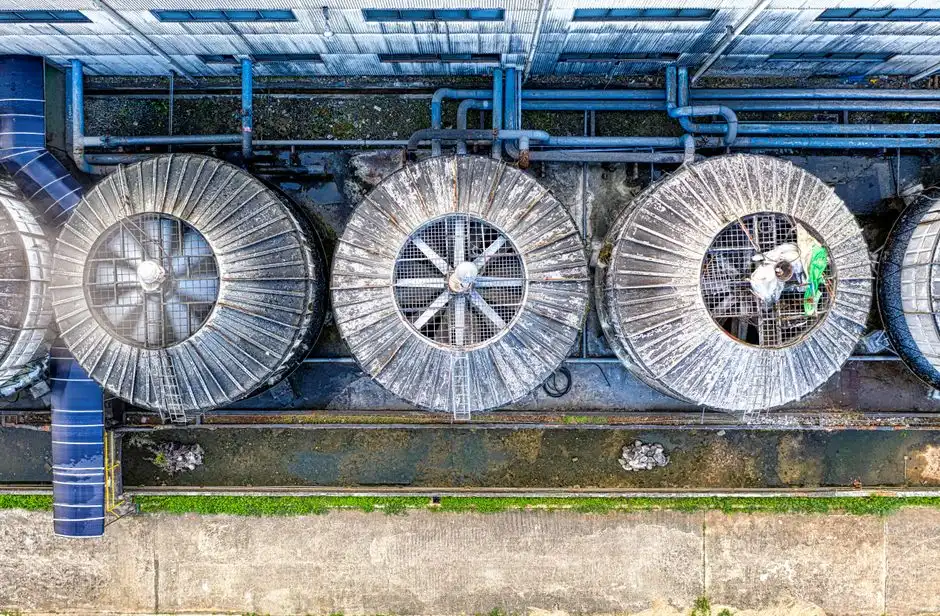
The treatment train should be the simplest configuration that meets the required reuse quality and residual-discharge envelope. Moving from filtration to UF+BWRO increases water recovery but also increases energy, controls, chemical demand and operator burden.
| Option | Process role | Recovery and reuse | Main engineering concern |
|---|---|---|---|
| Filtration-based | Multimedia filtration, optional softening and scale-inhibitor dosing | Non-critical reuse or a controlled sewer bleed | Limited TDS reduction |
| DAF and UF | DAF for suspended solids, oil/grease or colloidal carryover; UF where membrane pretreatment is warranted | Prepare a controlled reuse stream or protect downstream RO | Chemical compatibility, sludge removal and membrane maintenance |
| UF plus conventional BWRO | UF pretreatment followed by brackish-water reverse osmosis | Permeate blending for cooling-tower makeup | Standard BWRO on CTBD typically plateaus at 75–80% recovery before scale chemistry constrains the train (IDE Tech, 2026) |
| UF plus BWRO plus controlled salt precipitation | Adds a high-recovery brine-concentration step | High recovery for large-volume cooling applications | Higher capital cost, controls and operating complexity; the supplied research describes this architecture for hyperscale use |
For non-critical reuse or a controlled sewer bleed, multimedia filtration with optional softening and scale-inhibitor dosing may be sufficient. It removes suspended material but does not materially reduce dissolved salts, so the discharge chemistry remains largely that of the incoming blowdown. Where suspended solids, oil/grease or colloidal carryover are material, dissolved air flotation equipment for industrial effluent pretreatment can remove that load before finer treatment.
UF becomes relevant when the project needs a controlled feed to RO or a more reliable reuse stream. The supplied research describes approximately 0.03 μm ultrafiltration for CTBD pretreatment, subject to feed chemistry and temperature. An engineered 0.03 μm ultrafiltration system for cooling-blowdown pretreatment should protect downstream membranes from suspended solids and support stable permeate production.
UF+BWRO is the appropriate conventional recovery route where significant blowdown volume must be converted into cooling makeup. IDE Tech (2026) reports that standard BWRO on CTBD typically plateaus at 75–80% recovery before scale chemistry constrains the train. An industrial reverse osmosis system for cooling-water recovery therefore needs a defined feed chemistry, scaling calculation, antiscalant strategy and concentrate route rather than a headline recovery percentage.
Controlled salt precipitation adds another recovery step for hyperscale applications. The source research associates this configuration with substantially higher overall recovery and reports approximately 95% for its reference architecture (IDE Tech, 2026). It should not be transferred automatically to a small or mid-sized Qalyubia data center, where lower recovered volume may not justify the extra equipment and operating burden.
Scale is the practical decision boundary. The supplied guidance places a modular media-filter, UF and dosing skid below about 5 MW, while full high-recovery systems become increasingly justified as facility volume and recovered blowdown rise. The economics also matter: Open Engineering Inc. (2026) found that the UF+RO wastewater scenario used more than five times the treatment energy of the freshwater case, although higher achievable CoC reduced blowdown and chemical consumption. Select the train from site flow, staffing, recovery value and permit constraints.
How to Treat and Reuse Domestic Sewage
Domestic sewage should be designed as a biological treatment and disinfection problem, not as feed to the CTBD membrane train. Its key inputs are organic loading, suspended solids, nutrients, temperature and microbiological quality. These parameters determine reactor capacity, sludge handling, clarification requirements and disinfection, while the receiving route determines the final effluent criteria.
An MBR is appropriate where a compact, automated biological process and reuse-oriented effluent quality are required. The supplied research specifies the HydropureWater MBR product for flows from 10 to 2,000 m³/day and filtration below 1 μm. The integrated MBR treatment system for domestic sewage should be checked against the confirmed peak and average domestic flow, organic loading and the selected reuse or sewer-discharge route.
For smaller or distributed flows, an underground package plant can combine an anoxic or aerobic biological process, sedimentation and disinfection in a compact buried installation. The underground integrated sewage treatment package is a separate option from the cooling-blowdown equipment and should be assessed for access, maintenance, odor control, sludge removal and effluent-discharge arrangements.
The supplied research does not establish a numerical domestic-sewage reuse specification for Al Mahallah al Kubra. Final criteria must follow the project permit, the HCWW connection conditions and the selected receiving route. Keep the domestic plant hydraulically separate from CTBD pretreatment unless the engineer has developed an integrated process concept, validated the combined chemistry and obtained approval for that concept.
Discharge, Reuse and the Egyptian Permit Envelope
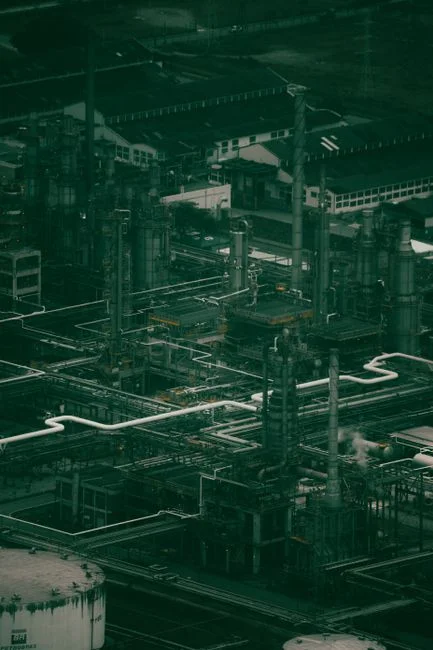
No treatment skid should be frozen against an assumed universal Egyptian discharge limit. The project framework includes Law 48/1982, EEAA implementing decisions and HCWW sewer-connection conditions, but the numerical limits depend on the effluent class, project permit and receiving trunk. The supplied 2026 review of Egyptian desalination and wastewater reuse should be read as regulatory context, not as a substitute for the project permit envelope.
| Compliance item | Information required before final sizing |
|---|---|
| Effluent class and limits | Project-specific EEAA permit envelope defining applicable BOD, COD, TSS, oil and grease, temperature, TDS, pH, sulfate and chloride conditions |
| Discharge control | HCWW connection letter, receiving-trunk conditions, pretreatment requirements and flow measurement at the discharge point |
| Residual bleed | Calculated RO concentrate plus tower drift, with maximum and minimum flow conditions |
| Concentrate route | Approved destination, transport method and operating responsibilities |
| Vendor submittal | Temperature and chemistry data, equipment compatibility, metering, controls and signed design assumptions |
Law 48/1982 and EEAA implementing decisions control industrial effluent characteristics including BOD, COD, TSS, oil and grease, temperature and TDS, with discharge flow measurement at the discharge point. HCWW adds connection conditions involving pH, sulfate and chloride, according to the supplied 2026 research. The project permit and connection letter must state the numerical limits that apply to this discharge; the research does not support publishing a universal 2026 value.
Size the residual sewer bleed from RO concentrate plus tower drift, subject to the approved discharge route. Do not reproduce the freshwater-makeup flow as the discharge assumption. If cooling makeup is supplied by recovered permeate, the remaining bleed still requires a permitted route and metered control.
Before issuing a purchase order, obtain and include in the vendor package:
- The project-specific EEAA permit envelope and HCWW connection letter.
- Feed temperature, conductivity, TDS, chloride, sulfate, silica, hardness and residual-chemical data.
- Design CoC, calculated blowdown, permeate flow, concentrate flow and permitted residual bleed.
- Flow metering at the discharge point and a documented concentrate-disposal route.
- Equipment and material compatibility with the measured temperature and chemistry.
Recovered water can reduce freshwater demand and discharge flow, but it does not remove the obligation to manage residual bleed and concentrate. That route must be accepted before treatment recovery can be credited in the project business case.
Build a Treatment Train That Operators Can Run
A treatment train is operable only when its controls respond to water chemistry rather than a fixed schedule. Use online conductivity, pH, ORP and silica monitoring on tower water and RO permeate to maintain the design CoC and trigger blowdown according to scaling conditions. These measurements should feed the PLC, interlocks and operator displays rather than remain isolated laboratory instruments.
Coordinate antiscalant and biocide dosing with the recovered-water chemistry. Assess chemical carryover before routing permeate back into the cooling tower, because an RO process does not automatically remove every dissolved treatment-chemical residue. A PLC-controlled automatic chemical dosing system should be specified with chemical compatibility, adjustable feed control, low-flow and high-level alarms, and clear operator set points.
Where a disinfection duty remains in the permeate line, select the method appropriate to that line and its downstream use. A chlorine dioxide generation package for controlled disinfection and a UV sterilization unit for the permeate line should be compared on water chemistry, flow, temperature, maintenance and residual requirements. Do not add chemical oxidation merely because the equipment is available; the selected method must close the biological-control requirement without creating an unacceptable carryover condition.
Open Engineering Inc. (2026) compared depth filtration, granular activated carbon with chlorination, and UF plus RO. Its wastewater scenario had about twice the global warming potential of the freshwater case, with treatment energy accounting for roughly 80% of the difference. That result does not disqualify reuse, but it requires the project to evaluate energy, chemical use, freshwater displacement and concentrate management together.
Equipment schedules should also address high-temperature and solids compatibility, membrane-cleaning access, standby provisions and control integration. The operator must be able to identify whether a loss of production is caused by fouling, scaling, chemical carryover, excessive conductivity or mechanical failure.
Procurement and Vendor Selection Checklist
Issue one performance-based request for proposals that defines the duty by operating envelope, not nominal capacity. The package should state the design CoC, measured blowdown flow, feed-water analysis, required permeate quality, residual sewer bleed, concentrate route, operating availability and utility requirements. Every bidder should return the same mass balance so that proposals can be compared on water recovery, discharge and operability rather than equipment count.
| Bid information | Evidence required from each supplier |
|---|---|
| Process design | Design CoC, feed flow, permeate flow, residual bleed and concentrate flow |
| Performance guarantee | Permeate quality, membrane recovery, chemical consumption, cleaning frequency and availability |
| Equipment | Flow capacity, materials, controls, redundancy and compatibility with measured feed conditions |
| Operations | PLC philosophy, alarm coverage, operator training, maintenance plan and spare-parts strategy |
| Compliance | Written discharge-envelope review, metering provisions and concentrate-management assumptions |
| Commercial basis | Current Al Mahallah water and sewer tariffs, treatment costs, replacement assumptions and a repriced payback |
Use the published 15 MW case as a benchmark, not as an Egyptian quotation: it cites 60% blowdown recovery, 3 million gallons per year, $200,000 capital cost and a 6.7-year simple payback on water alone (Genesis Water Tech, 2026). Require bidders to reprice the business case using current Al Mahallah industrial water and sewer tariffs. The 2026 engineering guide to RO for high-TDS wastewater can support technical review, but it does not replace a site-specific quotation.
Ask each supplier to identify an operating reference under a comparable discharge regime and to accept written responsibility for the proposed discharge envelope, permeate assumptions and concentrate route. Do not award solely on recovery percentage. Check whether the proposed system can be maintained by the operator’s staffing model and whether its guarantees include realistic feed variability. Below about 5 MW, the supplied scale guidance favors a modular media-filter, UF and dosing family; larger UF+BWRO or high-recovery systems require sufficient recovered volume to justify their added burden.
Frequently Asked Questions
What wastewater and cooling blowdown treatment does a data center in Al Mahallah al Kubra, Egypt need?
It needs separate domestic-sewage treatment and CTBD pretreatment. Domestic sewage normally requires biological treatment, solids separation and disinfection. CTBD requires characterization for suspended solids, scaling ions, residual chemicals and temperature before selecting filtration, UF, BWRO or a higher-recovery configuration. Final sizing must follow the site water balance, EEAA permit envelope and HCWW connection approval.
Should a small data center install UF and RO, or is filtration enough?
Facility scale is the first screen. The supplied guidance identifies a modular media-filter, UF and dosing skid as the appropriate family below about 5 MW. Conventional UF+BWRO becomes more defensible as recovered blowdown volume and water value justify the additional energy, controls and membrane maintenance. High-recovery salt precipitation is described in the research as a hyperscale architecture and should not be assumed for a smaller facility.
How should an Egyptian supplier be selected for wastewater reuse and discharge compliance?
Require a site-specific feed analysis, a process narrative, a performance guarantee and a written compliance package. The supplier should state the proposed CoC, permeate and concentrate flows, chemical consumption, cleaning frequency, metering and residual bleed, and identify an analogous operating reference. Compliance acceptance should remain conditional on the project’s EEAA permit envelope and HCWW connection conditions; a generic equipment certificate does not guarantee discharge approval.
What will the operating team need to manage after commissioning?
The operating burden depends on the train. Media filtration requires routine media and valve inspection, while UF requires membrane-condition monitoring and cleaning. RO adds permeate-quality control, antiscalant management, membrane replacement planning and concentrate handling. Automated dosing requires calibration, chemical-safety controls and alarm response. Confirm that the staffing plan covers these tasks before accepting the supplier’s availability guarantee.