Which Wastewater Streams Does a Huambo Data Center Generate?
A Huambo data center should segregate wastewater by origin and treatment route rather than send every discharge through one plant. The principal streams are cooling-tower blowdown, sanitary wastewater, construction fill-and-flush water, firefighting water, process wastewater, and sludge or spent-media residues. Their treatment requirements differ substantially, so the first engineering task is to define ownership, flow, chemistry, destination and testing requirements for each stream.
Cooling blowdown is removed to prevent the accumulation of minerals and scale in the circulating water. University of Georgia Cooperative Extension identifies corrosion-control chemicals, antiscalants, biocides, chlorine compounds and glycols as possible cooling-system additives. Sanitary wastewater needs a dedicated treatment route; construction flushing water may require testing before sewer acceptance; firefighting water should be held for assessment and controlled release; and process wastewater requires stream-specific characterization.
E&E News reports that some utilities require data-center construction fill-and-flush water to be tested before treatment-plant acceptance. It also reports that Loudoun Water has encountered data-center wastewater containing high metals and nutrients. These are utility precedents, not Huambo requirements, but they support segregation and source control. No facility-specific Huambo wastewater inventory was supplied; the matrix below is therefore a design-basis template, not a statement about an existing or proposed facility.
| Stream | Likely contaminants or controls | Treatment and responsibility |
|---|---|---|
| Cooling-tower blowdown | Concentrated salts, scale-forming ions, corrosion-control chemicals, biocides, suspended solids, heat | Cooling operations team owns the stream; pretreatment or reuse treatment depends on chemistry and discharge route |
| Sanitary wastewater | Organic matter, nutrients, pathogens and cleaning chemicals | Facility sanitary system; normally kept separate from process water |
| Construction fill-and-flush water | Possible metals, nutrients, sediments and microbial contamination | Construction manager controls discharge; characterize and obtain acceptance before sewer connection |
| Firefighting water | Suspended solids, possible foam or chemical residues | Contain, sample and obtain release approval; do not route automatically to sewer |
| Process wastewater | Depends on generators, chillers, laboratory or other equipment | Identify each source and characterize before assigning a treatment step |
| Sludge, precipitate and spent media | Concentrated solids and treatment chemicals | Separate waste stream with its own handling and disposal plan |
Mechanical screening should be considered only where a credible solid or debris pathway exists; the rotary mechanical bar screen is one equipment example for evaluation, not a justified default for every stream.
Build the Huambo Water Balance Before Choosing Equipment
The Huambo design flow must come from the facility’s cooling water balance and operating envelope, not from a generic data-center consumption factor. Separate average daily flows from peak hourly flows, off-design cooling events and future-load conditions. Equipment that must absorb a short upset requires a peak-flow basis; storage and operating-cost comparisons should also use representative annual volumes and operating hours.
Collect the source-water analysis, cooling-system configuration, evaporation rate, cycles of concentration, chemical additions, operating hours, make-up-water source, planned redundancy and expected future load. For an open evaporative system, the governing relationship is a water balance in which make-up water replaces evaporation, drift and controlled blowdown. The site data should then be tested against the selected cooling configuration and backup-water arrangements.
| Input | Why it changes the treatment design | Required project evidence |
|---|---|---|
| Cooling configuration | Determines whether a continuous blowdown stream exists and how much water can be recirculated | Process schematic, heat-rejection method and operating philosophy |
| Evaporation, drift and blowdown | Sets make-up demand and treatment flow | Vendor cooling calculations reconciled with the facility water balance |
| Cycles of concentration and chemistry | Controls salt concentration and scaling risk | Design chemistry, chemical inventory and source-water analysis |
| Operating hours and load profile | Distinguishes continuous treatment from campaign treatment | Design day, annual operating profile and planned redundancy |
| Receiving route | Sets discharge limits, heat constraints and reuse targets | Utility confirmation and environmental approval requirements |
| Power, backup and staffing | Determines feasible recovery, automation and operability | Reliability studies, outage assumptions and operator competency assessment |
University of Georgia Cooperative Extension provides context rather than a Huambo design input: its 2026 bulletin cites an estimate that 57% of data centers use potable supplies, 80%–90% of cooling water comes from watersheds, and 75%–90% globally primarily use water-based cooling. The same source reports that closed-loop systems can use up to 70% less water than traditional open evaporative cooling, while requiring greater system complexity and potentially more electricity. That trade-off should be evaluated against Huambo’s source-water reliability and power conditions.
Document seasonal source-water variability, power reliability, backup-water arrangements and access to qualified operators before freezing the flow basis. A more detailed data-center cooling blowdown treatment guide provides comparative context, but Huambo’s own water balance remains controlling.
Characterize the Blowdown and Wastewater Chemistry
The treatment train should be selected from measured source-water, circulating-water and representative blowdown chemistry, not from pH or turbidity alone. At minimum, test pH, conductivity, hardness, alkalinity, silica, chloride, sulfate, calcium, sodium, total dissolved solids, suspended solids, temperature and residual treatment chemicals. Where construction flushing, generators, fire systems or process equipment are involved, add oil and grease, metals and nutrients.
Microbiological testing is also a design input where closed-loop retention, stagnation or construction flushing creates a risk. E&E News reports a utility investigation involving a rare bacterium in contaminated construction wastewater. The research does not establish the presence of that organism in Huambo, but it demonstrates why a construction discharge can be rejected without characterization and acceptance criteria.
| Design question | Required measurement or input | Decision supported |
|---|---|---|
| Can blowdown be reused as cooling make-up? | Complete ionic analysis, temperature, scaling indices calculated for the actual cooling chemistry | Recovery target, pretreatment and polishing requirements |
| Will discharge overload the receiving route? | Flow, temperature, pH, conductivity, solids and applicable constituents | Discharge feasibility and cooling or dilution requirements |
| Could construction flushing contaminate a sewer? | Metals, nutrients, suspended solids and biological indicators | Testing, treatment or off-site disposal |
| Is chemical control required? | Residual corrosion inhibitor, biocide, antiscalant, chlorine or other treatment chemicals | Dosing, neutralization and residual-management requirements |
| Can the route be permitted? | Current requirements from the environmental authority, province, municipality and receiving utility | Discharge authorization, monitoring and reporting scope |
The supplied research contains no Huambo sewer discharge limits. Before procurement, obtain written acceptance criteria from the receiving utility and relevant environmental authority, and record the applicable temperature, chemical, solids and reuse-quality limits. The automatic chemical dosing system may be relevant where confirmed products require controlled addition, but dosing should follow the measured chemistry and complete inventory of cooling additives.
Compare Discharge, Reuse and High-Recovery Treatment
Discharge and reuse are different engineering concepts with different acceptance tests. A discharge concept typically requires equalization, solids removal, chemical control, heat management where relevant, disinfection where required, and monitoring before the sewer or environmental discharge route. A reuse concept treats blowdown to a specified cooling make-up quality, then manages the resulting concentrate separately.
IDE Tech states that cooling-tower blowdown is enriched with sparingly soluble salts, including silica, calcium carbonate and calcium sulfate, and that conventional brackish-water reverse osmosis commonly reaches 75%–80% recovery before scaling becomes unmanageable. Higher recovery requires additional treatment and more complex operation. These are reference figures from a commercial 2026 source, not guarantees for Huambo.
IDE Tech also reports an industrial brine-desalter case operating at around 95% recovery with approximately 1 mg/L permeate silica. That result demonstrates chemistry-aware treatment of a blended industrial stream; it is not a prediction for Huambo cooling blowdown. The design must be based on the actual source water, cooling cycles, chemical inventory and concentrate-disposal route.
| Concept | Main advantages | Engineering constraints | Decision triggers |
|---|---|---|---|
| No blowdown reuse | Simplest treatment concept; lower process complexity | Freshwater demand and discharge volume remain; thermal and chemical limits still apply | Choose where receiving capacity is reliable, freshwater is not constrained, and discharge authorization is straightforward |
| Partial blowdown reuse | Reduces freshwater withdrawal and final blowdown while retaining conventional membrane treatment | Scaling, pretreatment demand and brine disposal must be controlled | Choose where source chemistry supports the required recovery and the receiving route cannot accept the original discharge |
| High-recovery reuse | Maximizes recovery and reduces freshwater withdrawals and discharge volume | Higher process complexity, chemical control, precipitation or solids handling and residual disposal | Consider only after pilot testing, operator review and a confirmed route for concentrate and solids |
Evaluate all three against receiving capacity, freshwater reliability, power availability, chemical use, operator capability and residual handling. The industrial RO system for cooling blowdown reuse is a reference configuration, while ultrafiltration pretreatment for data-center wastewater may protect downstream membranes when the analysis supports it.
Design the Treatment Train and Residual Management
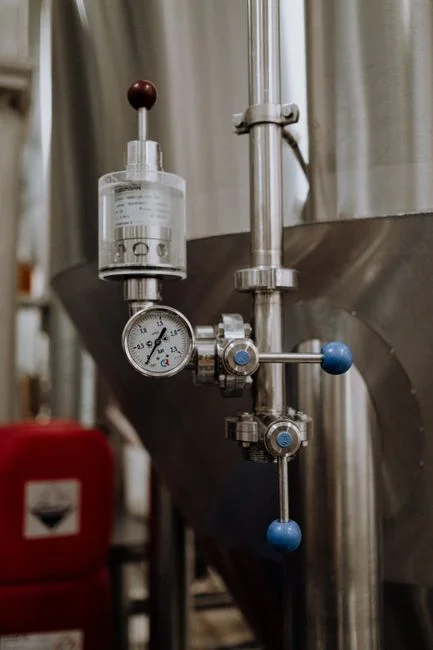
A typical treatment sequence is screening, equalization, pH and chemical control, clarification or multimedia filtration where solids justify it, membrane or polishing treatment where reuse quality requires it, and disinfection where the selected pathway needs microbial control. Each step should have a defined purpose, measurable performance and an operator response when its limit is exceeded.
| Process stage | Include when | Design and procurement focus |
|---|---|---|
| Screening and equalization | Debris, variable flow or batch discharges are credible | Peak-flow and upset-event capacity; screened material disposal; bypass isolation |
| pH and chemical control | Measured chemistry requires adjustment or treatment residuals require management | PLC-controlled dosing, containment, calibration and chemical inventory |
| Clarification or multimedia filtration | Suspended solids or precipitate threaten pumps, membranes or cooling equipment | Filtration rate, pressure loss, backwash and spent-media route |
| UF or RO | Reuse quality requires membrane separation | Feed chemistry, flux, temperature correction, cleaning and redundancy |
| Disinfection | Microbial risk assessment or receiving requirement identifies the need | Residual control, contact conditions, monitoring and chemical compatibility |
| Residual management | Any concentrate, sludge, precipitate or spent media is generated | Characterization, storage, transport, treatment and final destination |
Do not install dissolved-air flotation solely because it is a common industrial treatment method. It should be considered only where oil, grease, colloids or floatable contaminants are confirmed in the relevant stream; the research does not establish that a Huambo data center requires DAF.
Use ultrafiltration where removal of bacteria, colloids or suspended solids and chemical-free backwash provide a demonstrated operating advantage, subject to compatibility with the complete cooling chemistry. For chemical-intensive streams, separate PLC-controlled dosing may be required for coagulants, flocculants, pH adjusters and specialty chemicals rather than one generic dosing package.
If reuse requires sterilization, the chlorine dioxide generator is relevant to industrial cooling loops and process wastewater, but the selection must follow a site-specific microbial risk assessment and chemical-compatibility review. The multi-media filtration equipment should be selected only against confirmed solids loading and required filtrate quality.
Size the Plant from Real Operating Inputs
Equalization and pretreatment should be sized around peak wastewater flow, with a separate check for the maximum credible chemical-cleaning or upset event. Average flow can be used for chemical consumption and annual-cost estimates, but it should not define the hydraulic capacity of equipment required to absorb a batch discharge.
RO and reuse equipment should be sized from required treated make-up flow, an anticipated recovery range, membrane flux, temperature correction and permitted redundancy. Neither the 75%–80% conventional-recovery figure nor the around 95% industrial case reported by IDE Tech should be inserted automatically into a Huambo equipment calculation.
| Sizing parameter | Minimum input requested | Bid requirement |
|---|---|---|
| Hydraulic flow | Average and peak blowdown, sanitary flow, construction and upset events | Design flow, freeboard, equalization time and redundancy |
| Membrane treatment | Feed analysis, make-up target, recovery, flux and temperature | Net permeate duty, cleaning assumptions and membrane replacement cost |
| Chemical systems | Confirmed products, dosing rates, turnover and containment | Tank size, duty and standby arrangement, metering and spill controls |
| Residuals | Expected concentrate, sludge, precipitate and media quantities | Characterization, storage, transport and disposal responsibility |
| Controls and resilience | Operating modes, outage response and utility requirements | Online flow, pressure, conductivity, pH and temperature instrumentation; bypass isolation; remote notification |
Chemical storage and dosing should be based on confirmed products, measured or supplier-supported dosing rates, turnover requirements and containment needs. Include valves, sample points, metering and consumable interfaces; the treatment parts, valves and filter media package illustrates the type of auxiliary scope that must be defined rather than omitted.
Request site-specific capital and operating-cost proposals covering energy, chemicals, membrane replacement, sludge or concentrate handling, operator training, maintenance and freshwater savings. No Huambo quotation or cost benchmark was supplied, so suppliers should price the actual flow, chemistry, utility conditions and residual route.
Commission, Monitor and Communicate the Environmental Controls
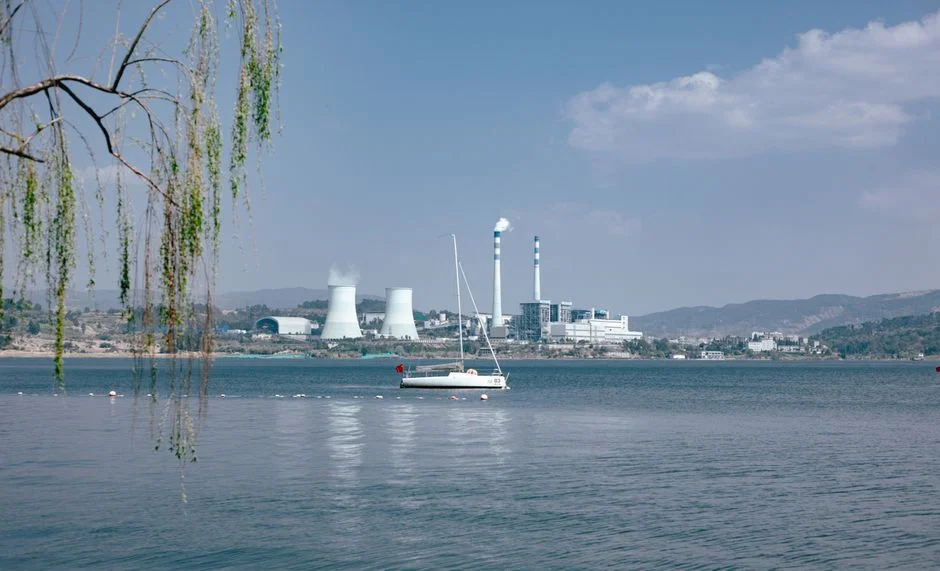
Commissioning should establish whether the facility itself changes receiving-water quality. Sample the receiving sewer or water body before commissioning, then repeat sampling during initial operation so later changes can be compared with a defined baseline. University of Georgia Cooperative Extension recommends establishing baseline water quality and cautions against attributing later changes without supporting evidence.
Provide operating procedures for chemical delivery, spill containment, bypass prevention, abnormal-discharge response and remote notification. The environmental communication plan should identify the responsible operator, municipal authority, nearby community representatives and escalation route. It should also cover workers and contractors, not only public communications.
A 2025 study in RECIMA21 found that none of four surveyed Huambo radio stations had a dedicated environmental-education program. That does not establish that no local environmental communication is possible, but it supports direct operator, community and municipal communication as part of the project. The industrial wastewater pretreatment for sewer acceptance provides useful context on managing utility acceptance, but Huambo’s requirements must be obtained directly.
Control erosion and routine spill pathways around the site because a 2026 study in Huambo Province identified compaction and erosion as major land-degradation processes, particularly where vegetation cover is limited. Bunding, controlled drainage, covered chemical storage and restoration of disturbed ground should therefore appear in the environmental-management scope.
Frequently Asked Questions
Does a Huambo data center need one wastewater plant or several treatment trains?
It usually needs several treatment trains or clearly segregated treatment routes. Cooling blowdown, sanitary wastewater, construction flushing, firefighting water and process wastewater have different chemistry, destinations and acceptance requirements. Segregation should follow stream chemistry, reuse destination and receiving-utility rules; one combined package is justified only when the streams can be shown to have compatible treatment and discharge requirements.
What flow and water-quality information should a supplier receive for sizing?
Provide average and peak blowdown, source-water and circulating-water analyses, cooling configuration, evaporation rate, cycles of concentration, chemical inventory, operating hours, reuse target, future load and redundancy requirements. Also provide peak construction, firefighting and upset flows where they can enter the treatment system. Generic consumption statistics cannot substitute for a reconciled site water balance.
Is conventional reverse osmosis sufficient for cooling blowdown reuse?
Not necessarily. IDE Tech reports that conventional brackish-water RO commonly plateaus at 75%–80% recovery because scaling becomes unmanageable, but that figure is not a Huambo design guarantee. Confirm silica, calcium, sulfate, alkalinity, temperature, treatment chemicals, target make-up quality and concentrate disposal before selecting RO configuration or recovery.
What should the project request before purchasing treatment equipment?
Request written confirmation of current environmental, provincial, municipal and utility requirements, including sewer acceptance criteria, discharge route, monitoring, temperature limits, chemical constituents and permit responsibilities. No site-specific Angolan discharge limits were supplied in the research, so suppliers should not fill this gap with assumed limits. Also obtain the residual-disposal route and responsible party before pricing.
How should suppliers be compared on cost, delivery and support?
Compare site-specific capital and operating-cost proposals rather than headline recovery rates. Require peak-flow sizing, process guarantees, metering, backup strategy, utilities demand, operator training, maintenance support, membrane and media replacement pricing, commissioning tests and a clear residual-disposal plan. Request delivery milestones and acceptance criteria that depend on confirmed utility approval, source-water results and site readiness.