What Wastewater Strategy Should a GM Assembly Plant Use in Germany?
Wastewater at a General Motors assembly plant in Germany should be handled through a permit-led, source-separated treatment system. First confirm the operator’s existing WHG water permit, notify the competent Wasserbehörde within one month of closing, and determine whether production or capacity changes trigger an IED review. Then characterize each stream before selecting pretreatment, biological treatment, sludge handling and reuse. GM’s Detroit-Hamtramck operation demonstrates the value of controlling stormwater: a retention pond increased capacity to 213 megaliters and helped cut water use by 20%. In Germany, final discharge limits must come from the applicable permit, indirect-discharger rules and relevant BAT conclusions—not from a generic wastewater package.
The commissioning sequence should run from legal and process due diligence to stream-by-stream mass balance, treatment selection, reuse assessment, sludge management, monitoring and handover. This is more defensible than purchasing one generic pretreatment package, because assembly wastewater can include incompatible flows and contaminants that should not be combined prematurely.
Begin with a source-separated assessment covering stormwater, sanitary sewage, vehicle and component washing, paint-related streams, floor and equipment cleaning, cooling-water discharge, laboratory wastewater and sludge-bearing residuals. Confirm the legal operator and current authorization before procurement. HydropureWater’s Germany acquisition guidance states that the permit belongs to the legal operator and that §16 WHG requires notification to the competent Wasserbehörde within one month of closing.
Review whether assembly output, electric-vehicle production, wastewater composition or treatment capacity has changed enough to require permit modification or IED re-licensing. Stormwater reuse should be evaluated as an operating-cost decision from the outset, not after the process design is frozen. The Detroit-Hamtramck precedent combined stormwater retention with cooling-water reuse, but its figures do not establish German legal limits or guarantee the same economics at another plant.
The table below separates the information that should drive design from values that must remain site-specific.
| Design input | What the buyer must establish | What it controls |
|---|---|---|
| Permit and operator status | Legal operator, authorization, amendments and authority correspondence | Permit modification, notification and approval pathway |
| Wastewater inventory | Flow, contaminant, discharge point and reuse data for each stream | Screening, DAF, biological treatment, sludge and reuse design |
| Production plan | Current output and planned ramp-up | Hydraulic and biological loading |
| Stormwater model | Event flow, runoff quality, storage and discharge route | Retention, equalization and reuse capacity |
| BAT and indirect-discharger constraints | Applicable limits, sampling points and averaging periods | Effluent targets and acceptance tests |
For the acquisition-specific starting point, review German wastewater requirements for a GM plant acquisition. The key procurement rule is simple: do not order equipment until the permit, stream inventory, production forecast and reuse objective are sufficiently defined.
Confirm Permits, Indirect-Discharger Rules and BAT Obligations
The legal operator, existing permit and discharge route determine the approval and pretreatment framework before any equipment selection begins. Under the supplied Germany acquisition guidance, the buyer inherits the existing WHG permit under §8 WHG and must notify the competent Wasserbehörde within one month under §16 WHG; the permit is held by the legal operator, and self-monitoring is mandatory.
Establish whether the site discharges to a municipal sewage treatment works, through a direct industrial outfall or by another route. HydropureWater’s Germany guidance states that Germany has no federal POTW pretreatment programme; where indirect discharge occurs, the applicable local Indirekteinleiter limits and related AbwV requirements govern. Those local constraints must be obtained in writing and reconciled with the site’s existing sewer-use conditions.
Request the following from the seller before the purchase closes or treatment specifications are issued:
- The current permit and every issued amendment;
- Local sewer-use conditions and applicable indirect-discharger limits;
- Self-monitoring records, water-balance data and laboratory results;
- Accident reports and authority correspondence;
- Stormwater plans, retention documentation and current discharge routes;
- Sludge destinations, waste classifications and handling contracts.
Evaluate the IED regime separately. HydropureWater’s Germany source notes that a relevant capacity or process change can trigger re-licensing of the entire site if an Annex I threshold is crossed. That review should test whether changes in assembly output, electric-vehicle processes, wastewater composition or treatment capacity alter the applicable industrial-category status.
Implementing Decision 2024/2995/EU can inform preliminary design, but it cannot replace the site permit. The same source gives indicative BAT-associated values of COD 30–100 mg/L, total nitrogen 10–15 mg/L and total phosphorus 0.3–2 mg/L, plus metal-specific BAT-AEL values for nickel, chromium and lead. These are BAT-associated design values cited by HydropureWater’s Germany source, not automatically applicable German discharge limits.
| Constraint | Status before procurement | Required confirmation |
|---|---|---|
| WHG authorization | Existing permit may transfer under §8 WHG | Legal operator, validity, conditions and transfer position |
| Authority notification | Notify competent Wasserbehörde within one month of closing under §16 WHG | Submission date, responsible party and accepted documents |
| Indirect discharge | Local Indirekteinleiter limits and AbwV requirements apply | Receiving authority, sewer-use conditions, analyte list and averaging periods |
| IED status | Material capacity or process change may require site re-licensing | Annex I category, threshold analysis and competent-authority consultation |
| BAT conclusions | Implementing Decision 2024/2995/EU provides design inputs | Permit-specific limits, sampling points and definitions |
Use the supplied ETP due diligence for a factory acquisition as a document-control model, but do not transfer another plant’s limits or treatment assumptions. The exact concentration limits, averaging periods, sampling locations and analyte definitions must come from the permit, the applicable indirect-discharger rules and the competent Wasserbehörde.
Map Each Waste Stream Before Choosing Treatment Equipment
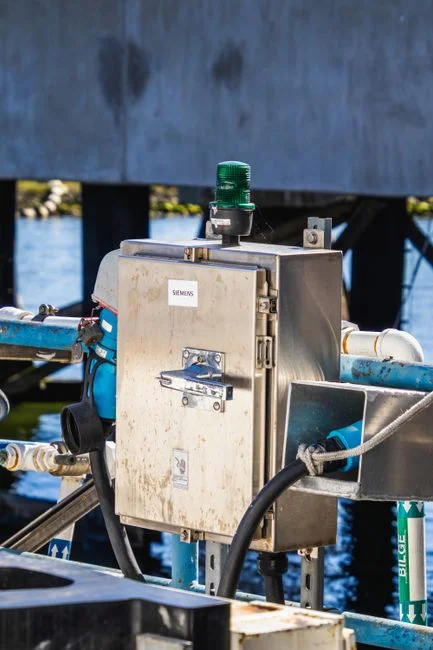
A complete mass balance is the minimum basis for sizing because average flow alone hides production peaks, storm dilution, batch discharges and the hydraulic demand of reuse. It should reconcile withdrawal, process consumption, treatment, recycling, evaporation, sludge-bearing losses and final discharge.
Separate the streams initially: stormwater, sanitary sewage, vehicle and component washing, paint-related wastewater, floor and equipment cleaning, cooling-water discharge, laboratory wastewater and sludge-bearing residuals. For each stream, record average flow, peak flow, discharge timing, production relationship, contamination risk and intended reuse or disposal route.
The analytical programme should follow the permit and the actual manufacturing process. Relevant parameters can include pH, COD, total nitrogen, total phosphorus, suspended solids, oil and grease, metals, temperature and process-specific contaminants. Do not add unnecessary analytes at the expense of repeatability, sampling frequency or defensible mass-balance calculations.
Equalization should precede biological treatment whenever flow or pH variation could upset the process. HydropureWater’s Germany article specifically identifies the need to absorb pH swings from 2 to 11 where streams converge at the headworks. That project-specific observation supports a design check; it does not establish the expected pH range at another assembly plant.
| Stream | Characterization focus | Design decision |
|---|---|---|
| Stormwater | Runoff path, event flow, oil, metals, suspended solids and contamination hotspots | Separate retention, treatment or discharge route; assess reuse potential |
| Sanitary sewage | Flow, COD, nitrogen, phosphorus and discharge destination | Confirm whether municipal treatment is sufficient |
| Vehicle and component washing | Detergents, oil, grease, suspended solids and production variability | Equalization, screening and targeted pretreatment |
| Paint-related streams | Process-specific contaminants and reuse constraints | Separate treatment and application-specific water quality |
| Floor and equipment cleaning | pH, COD, cleaning chemicals, oils and solids | Controlled collection, neutralization or dosing where justified |
| Cooling-water discharge | Flow, temperature, chemicals, scaling and corrosion risk | Reuse assessment, blowdown and discharge treatment |
| Laboratory wastewater | Analytical inventory and hazardous constituents | Segregate incompatible streams and define disposal |
| Sludge-bearing residuals | Solids, oil, chemicals and destination restrictions | Thickening, conditioning and dewatering |
Keep stormwater separate until its reuse potential, contamination risk and legal discharge route have been assessed. The 2017 Detroit-Hamtramck case study from CEO Water Mandate states that the site covers almost 1.5 km² and channels stormwater through drains to its retention pond. This illustrates the importance of site drainage and storage design; the 213-megaliter capacity remains specific to that facility.
Rainwater may be suitable for direct reuse, suitable only after defined treatment, or subject to discharge controls. That decision should follow contamination mapping, downstream process requirements and worker-safety controls. Request production schedules, commissioning protocols and ramp-up assumptions so equipment is sized for actual plant operation rather than only nameplate output.
Build a Source-Separated Pretreatment and Biological Treatment Train
Assign each treatment stage to the contaminant class it reliably removes, and avoid forcing incompatible streams through one generic package. Mechanical screening protects pumps, valves and downstream biological processes from rags, plastics, fibrous debris and other suspended material. If washing or cleaning streams contain recoverable material, the rotary mechanical bar screen provides a mechanical pretreatment option, subject to duty and headloss verification.
DAF is appropriate where oil, grease, suspended solids, colloids or floatable material must be removed before biological treatment. The supplied HydropureWater DAF catalogue covers 4–300 m³/h across 13 standard models, a documented catalogue range rather than a demonstrated capacity for a particular GM site. An DAF system for industrial wastewater pretreatment should be selected only after the wastewater duty, oil-loading tests, required removal and reuse target are defined.
Equalization and chemical dosing should stabilize the stream where necessary. HydropureWater states that its automatic chemical dosing systems use PLC-controlled injection for coagulants, flocculants, pH adjusters and specialty chemicals. The procurement specification should still define the chemical, dose range, control response, containment, duty cycle and verification method; PLC control alone does not establish treatment performance.
Use biological treatment where biodegradable organic loading warrants it. Where compact biological treatment, solids separation and reuse are priorities, the supplied data describes an integrated MBR wastewater treatment system covering 10–2,000 m³/day and providing near-reuse-quality effluent with filtration below 1 μm.
The separate Germany project described by HydropureWater used submerged MBR modules with PVDF hollow fibres, producing turbidity below 1 NTU at MLSS of 8,000–12,000 mg/L and reactor volume sized for peak flows near 5,000 m³/day at full EV scale. Those figures retain that project’s scope. They are not generic German limits, and they do not establish that one catalogue module can treat the full flow.
| Treatment function | Preferred response | Design condition |
|---|---|---|
| Remove bulky solids | Mechanical screening | Visible debris and material that could damage downstream equipment |
| Remove floatables, oil and solids | DAF | Confirmed oil, grease, colloid or suspended-solids load |
| Stabilize flow and pH | Equalization and controlled dosing | Variable inflow or pH excursion that could impair biological treatment |
| Remove biodegradable organics | Biological treatment | Confirmed biodegradable COD and nutrient balance |
| Separate biomass and polish effluent | MBR where justified | Compact installation, reuse quality and solids separation need to justify capital and operating complexity |
| Disinfect | UV or chlorine dioxide | Permit, reuse application, residual, by-products, safety and process compatibility |
| Stabilize residuals | Conditioning and dewatering | Sludge characterization, destination and handling route |
Include disinfection where the permit or reuse application requires it. Compare ultraviolet and chlorine dioxide systems only after considering residual requirements, by-products, site safety, storage, contact conditions and compatibility with downstream materials.
Residual sludge must not leave the site with the liquid effluent. Characterize it, condition it and define the dewatering and disposal route as part of the treatment train. A plate-and-frame filter press can be evaluated where batch dewatering suits the operating schedule and sludge properties; however, cake-moisture results and disposal acceptance must be demonstrated with representative sludge rather than inferred from equipment capacity.
Close the Water Loop Without Creating a New Discharge Risk
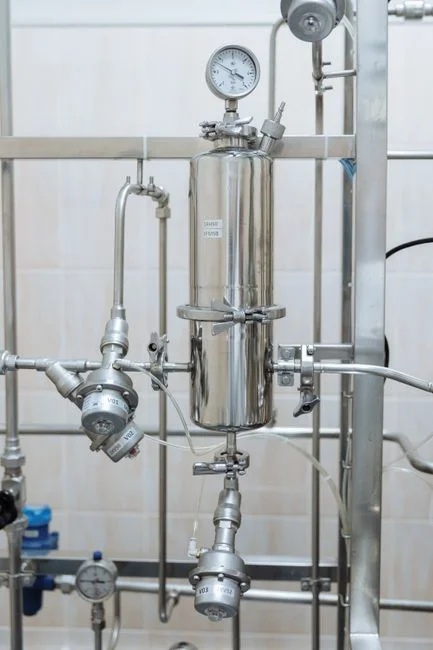
Water reuse should be allocated by application-specific quality, public-health controls and process compatibility rather than by a single site-wide water-quality target. Candidate uses include selected cooling, washing, floor cleaning, toilet flushing or other services only after each use has been assessed. Paint pretreatment is a more demanding application and should not receive recycled water without explicit process-owner approval and validation.
GM’s 2021 CDP Water Security disclosure identifies water as important for vehicle-body pretreatment before painting, weld cooling, machining and powerhouse operations. It also identifies internally recycled water in paint pretreatment and cooling water as important for reducing withdrawal. This supports a use-by-use assessment, but it is not a blanket approval for reuse at every plant.
The Detroit-Hamtramck case provides a quantified operating precedent. CEO Water Mandate’s 2017 case study reports that an added retention pond increased total stormwater capacity to 213 megaliters, equivalent in that case to holding a 100-year storm event. Floating pumps moved collected water across the manufacturing facility for cooling use. The project reduced water use by 20% through rainwater harvesting and generated an additional US$140,000 in annual savings, with the case study reporting a two-year payback.
Those results belong to the Detroit-Hamtramck project. They are not a German-site guarantee because rainfall, stormwater charges, freshwater prices, storage geometry, pumping energy, water quality and reuse demand differ. Use the figures to frame a business-case discussion, then request German site data before calculating returns.
Control the risks created by recirculation. Monitor biological growth, scaling, corrosion and residual chemicals; confirm materials compatibility; and disinfect where required. Maintain an auditable water balance connecting withdrawal, treatment, reuse and final discharge. The 2026 RO versus ion-exchange analysis for cooling blowdown provides useful context for evaluating treatment alternatives, but the German plant decision must rest on its own water chemistry, reuse application and permit conditions.
Commission the Plant Around Measurement, Compliance and Failure Response
Commissioning should test the permit and design basis as an operating system, not merely demonstrate that equipment starts. Install and calibrate flow meters, sampling points and any online monitoring before performance testing. Confirm that their locations, readings and records correspond to the permit’s monitoring obligations.
GM’s 2021 CDP disclosure reports monitoring of withdrawals by source, discharge volumes by destination and treatment method, and discharge quality by standard effluent parameters at 100% of major facilities. That is a management benchmark for the German site’s data architecture, not evidence of German regulatory compliance.
- Empty-water inspection: Verify pipework, equipment, instruments, containment and control logic.
- Hydraulic testing: Demonstrate routing, equalization, peak-flow behavior, stormwater isolation and emergency modes.
- Biological-loading test: Establish treatment response under representative organic and nutrient loading.
- Clean-water test: Confirm polishing, reuse quality, disinfection and sampling results against agreed acceptance criteria.
- Failure-response drill: Exercise power loss, chemical failure, high COD, pH excursion, flow overload, membrane fouling and stormwater bypass scenarios.
Build facility-level and site-level records for discharge volume, destination, treatment route, effluent quality and reuse volume. The 2026 wastewater process-control engineering guide can inform monitoring architecture, but the operating rule must remain understandable to the site team and independent of unverified algorithmic assumptions.
| Commissioning area | Acceptance evidence | Failure response |
|---|---|---|
| Hydraulics and routing | Measured flows, equalization performance and verified sampling points | Protect downstream equipment and divert or hold flow where permitted |
| Biological treatment | Representative loading and effluent results against permit-derived criteria | Adjust operation, reduce accepted load and escalate to authority if required |
| DAF or pretreatment | Removal performance with representative contaminants | Review chemical dose, recycle, hydraulic loading and equipment condition |
| MBR | Filtration, turbidity, MLSS and operating trend | Inspect fouling, initiate cleaning and manage solids inventory |
| Disinfection | Dose, contact condition and residual or inactivation evidence | Stop unsafe reuse and provide alternate water where required |
| Stormwater | Event routing, storage and reuse or discharge response | Operate retention and report bypasses under site procedures |
| Sludge | Characterization, dewatering and destination acceptance | Adjust conditioning and contain material pending disposal |
Before handover, confirm sludge handling, spare parts, membrane-cleaning procedures, waste characterization, operator competency, alarms, interlocks and escalation contacts. Acceptance criteria should come from the design basis, permit and agreed performance protocol—not from general equipment brochures.
Procurement Checklist for GM's German Assembly Plant
A defensible equipment tender begins with the site duty, not a preferred treatment technology. Give each supplier the current permit, stream inventory, water data, production forecast, stormwater model, reuse targets and required documentation. The request for proposals should distinguish legal requirements, design assumptions, supplier guarantees and items still awaiting authority confirmation.
Require proposals to separate pretreatment, biological treatment, sludge handling, disinfection, reuse, controls, civil work and utility consumption. Ask for guaranteed process and equipment performance under the stated wastewater and production conditions, not only membrane specifications or peak-flow ratings. Each guarantee should identify test method, acceptance criterion, test duration, sampling point and remedy for non-compliance.
| Tender package | Minimum information | Bid evaluation question |
|---|---|---|
| Design basis | Permit, stream inventory, 12 months of water data, production forecast, stormwater model and reuse targets | Was the proposal designed for the actual site duty? |
| Process guarantee | Flow, contaminant, removal, reuse quality and operating conditions | Can the result be demonstrated by an agreed test? |
| Lifecycle assessment | Membrane replacement, chemicals, sludge route, operator workload, automation and spare parts | What is the cost and operational consequence over the asset life? |
| Compliance | Permit interfaces, monitoring, self-monitoring, reporting and document control | Does the design support the legal operator’s obligations? |
| Uncertainty | Worst-case wastewater, production ramp-up and pilot or bench tests where needed | Has performance been tested with representative conditions? |
Evaluate sludge dewatering separately from liquid treatment. The plate-and-frame filter press is one dewatering option, but the supplier should demonstrate cake characteristics and compatibility with the disposal route. Where disinfection is required, assess the chlorine dioxide generator only after the reuse or discharge purpose, safety requirements and by-product controls are defined.
Do not use the cited 5,000 m³/day submerged-MBR project flow, 213-megaliter retention benchmark or US$140,000 annual saving as universal sizing or return-on-investment inputs. They belong to their stated project scopes. If wastewater variability or removal performance cannot be established from historical data, require a site-specific pilot or bench test before final equipment selection.
Frequently Asked Questions
What will the wastewater treatment system cost for a new GM assembly plant in Germany?
The supplied research does not contain a project quotation, so no defensible price can be stated. Request a cost breakdown covering flow and contaminant design duty, permit targets, pretreatment, biological treatment, sludge handling, disinfection, reuse connections, civil work, controls, utilities, commissioning and lifecycle items such as membrane replacement, chemicals and waste disposal. Separate unavoidable site works from optional reuse benefits and require each supplier to state its pricing assumptions.
How should a wastewater treatment supplier be selected?
Select against the site’s verified duty, not against a generic MBR or DAF claim. The supplier should demonstrate fit with the actual wastewater, permit conditions, monitoring locations, reuse objectives, sludge route and operating team’s capabilities. Ask for comparable tests, define performance guarantees and acceptance methods, and check references for comparable manufacturing and discharge conditions. A documented pilot is a different decision from a supplier’s catalogue capacity.
Should peak flow, average daily flow and stormwater volume be sized separately?
Yes. Average daily flow supports the biological mass load, peak treatment flow controls hydraulic equipment and equalization, and stormwater-event volume determines retention requirements. They cannot be substituted for one another. Build a water balance that includes production ramp-up, cleaning cycles, storm contribution, reuse and discharge, then ask each supplier to state which flow basis governs every item of equipment and civil works.
Can indicative BAT-AEL values be used as the plant’s German discharge limits?
No. The cited COD, nitrogen, phosphorus and metal values are indicative BAT-associated values presented by HydropureWater’s Germany source; the enforceable limits must be established from the applicable permit, indirect-discharger rules and competent-authority confirmation. Failing to verify the legal operator, permit status or modification pathway can leave the facility without an accepted discharge basis, delay commissioning and expose the operator to enforcement risk.
Related Equipment
- automatic chemical dosing system — specifications, capacity range, and technical data