
Why Cooling-Tower Blowdown Is a Reuse Problem at Mining and Metals Plants
Cooling-tower blowdown at a copper concentrator, zinc roaster, or gold CIL plant typically runs 5–15% of the makeup stream once the tower is held at 3–6 cycles of concentration, and at a 50,000 m³/day site that translates to 2,500–7,500 m³/day sent to drain that could otherwise be reused as cooling-tower makeup, gland water, or dilution water for the mill. The dominant species are hardness (Ca, Mg), silica (SiO₂), sulfate, chloride, and trace dissolved metals — Cu, Zn, Ni, Fe, Mn — that bleed in from process leaks and from acid mine drainage cross-connections. FilterSmart confirms that ion exchange resins are widely used to strip Ni, Pb, Cr, Cu, and Cd from industrial streams, so metals removal is built into both technology paths (filtersmart.com).
Feed water quality in this duty lands in a tight but punishing band: TDS 800–5,000 mg/L, conductivity 1,500–8,000 µS/cm, hardness 400–1,500 mg/L as CaCO₃, SiO₂ 20–150 mg/L, and chloride 200–1,500 mg/L. The technology choice cannot be made on a generic "metals removal" question; it has to be indexed to feed TDS and to the cost of disposing the reject brine. In 2026, water-stress permits, fresh-water withdrawal caps, and ZLD rules in Chile, Peru, Australia, and the U.S. Southwest have converted blowdown from a free discharge line into a regulated cost line. A brackish water reverse osmosis system can recover 75–95% of that stream as permeate (per the industrial RO specification, up to 95% recovery), and the rest becomes a small, manageable concentrate stream instead of a large, dumped one.
How Reverse Osmosis and Ion Exchange Actually Treat Metals-Laden Blowdown
Reverse osmosis in mining-blowdown duty is a pressure-driven membrane process that rejects more than 97% of multivalent ions (Ca²⁺, Mg²⁺, SO₄²⁻) and the bulk of silica, forcing water molecules through a semi-permeable membrane against the osmotic pressure of the feed. On brackish feed at 10–35 bar, an industrial RO system with up to 95% recovery draws 0.5–1.2 kWh/m³, and the energy scales with feed TDS and recovery target. Commercial membranes used in 2026 mining installations are cellulose acetate (CA), thin-film composite (TFC), and cellulose triacetate (CTA); TFC dominates because of its 2–11 pH tolerance and tolerance to free chlorine up to about 0.1 mg/L (filtersmart.com).
Ion exchange is a stoichiometric chemical process. A strong-acid cation resin in the sodium form swaps Na⁺ onto the resin and pulls Ca²⁺, Mg²⁺, and dissolved Cu²⁺, Zn²⁺, Ni²⁺, Fe²⁺ into the resin bed; a strong-base anion resin in the chloride or hydroxide form exchanges for SO₄²⁻, NO₃⁻, and metallate anions. The resin is regenerated on a fixed cycle using NaCl brine (6–10% w/w) for the cation and HCl or NaOH for the anion, generating a concentrated regeneration waste that contains the captured hardness and metals. FilterSmart notes that ion exchange does not remove pathogens and that oxidizing disinfectants such as free chlorine degrade the resin matrix, shortening bed life (filtersmart.com).
The selection rule the OPEX numbers rest on is this: if calcium and magnesium are present in the feed, ion exchange must sit ahead of the RO, otherwise the RO membrane scales within weeks. FilterSmart is explicit: "If magnesium and calcium are present in the process stream, they can lead to scaling on the downstream equipment and RO membranes. To boost the RO efficiency and life span, most people install ion exchange systems before the RO filters" (filtersmart.com). In practice that means a twin-tank industrial water softener feeds the RO high-pressure pump, and the RO permeate is either reused directly or polished further.
Cooling-Blowdown Feed Quality and Product Targets: Set the Boundary Conditions First
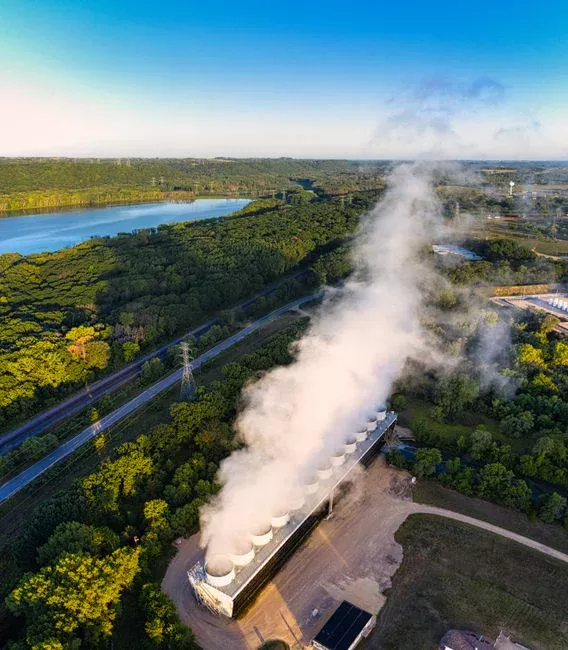
Before picking RO or IX, an engineer has to plug the site-specific feed numbers into the table below, because the OPEX verdict flips on these values. The "typical" column is drawn from a 4-cycle cooling tower at a copper concentrator and is illustrative of industry-typical ranges; the "RO permeate target" and "IX polisher target" columns are the values an engineer should be specifying into the RFQ in 2026 to push cycles of concentration from 4 to 6–8 and cut makeup volume.
| Parameter | Typical blowdown value | RO permeate target | IX polisher target | Which tech wins on this parameter |
|---|---|---|---|---|
| TDS | 1,800–3,500 mg/L | < 200 mg/L | 500–1,000 mg/L (single-pass) | RO |
| Conductivity | 2,800–5,500 µS/cm | < 400 µS/cm | 1,000–2,000 µS/cm | RO |
| Hardness as CaCO₃ | 600–1,200 mg/L | < 20 mg/L | < 5 mg/L (softener) | IX (then RO) |
| SiO₂ | 30–80 mg/L | < 10 mg/L (with anti-scalant) | Not removed by standard IX | RO |
| Cl⁻ | 200–800 mg/L | < 50 mg/L | Limited removal (anion IX) | RO |
| SO₄²⁻ | 300–1,200 mg/L | < 20 mg/L | Removed by strong-base anion | RO or anion IX |
| Residual Cu / Zn / Fe / Ni | 0.5–10 mg/L each | < 0.1 mg/L | < 0.05 mg/L (cation IX) | IX polish, then RO |
The reuse-quality target for cooling-tower makeup in 2026 is TDS < 200 mg/L, SiO₂ < 10 mg/L, and hardness < 20 mg/L as CaCO₃, because that envelope lets the tower operator run 6–8 cycles of concentration and cut fresh-water makeup by 30–50%. RO hits all three targets in a single pass; ion exchange alone hits hardness but not silica and not bulk TDS, which is why IX is almost always a polisher or a softener, not a stand-alone reuse train on a mining blowdown.
OPEX Head-to-Head: Energy, Chemicals, Membrane and Resin Life, Brine Disposal
The two OPEX-defining cost lines in this duty are chemical consumption (NaCl, HCl, NaOH for IX; anti-scalant and CIP chemicals for RO) and brine disposal, which is the line where RO usually loses its lead if the site has no ZLD. FilterSmart puts the reject-volume split at 2–4% for IX versus 10–50% for RO as a percentage of treated water volume (filtersmart.com); on a 1,000 m³/day blowdown stream, RO at 80% recovery sends 200 m³/day to brine and 800 m³/day to reuse, while an IX train that produces reuse-quality water sends only 30–40 m³/day of regeneration waste to brine but burns 6–10× more reagent cost per cubic meter of treated water.
| Cost line | RO (brackish, 2,500 mg/L TDS, 80% recovery) | Strong-acid cation IX (Na-cycle softener) | Notes |
|---|---|---|---|
| Energy | 0.5–1.2 kWh/m³ × USD 0.08–0.12 = USD 0.04–0.14/m³ | 0.05–0.15 kWh/m³ (pumps only) = USD 0.005–0.02/m³ | RO loses on energy; IX loses on chemicals |
| Chemicals | Anti-scalant + CIP = USD 0.02–0.06/m³ | NaCl 200–400 g/m³ + HCl/NaOH = USD 0.15–0.35/m³ | IX is the chemical-intensive path |
| Membrane / resin replacement | RO membranes every 3–5 years ≈ USD 0.02–0.05/m³ amortized | Cation resin every 2–4 years on metals-laden feed ≈ USD 0.05–0.12/m³ | Resin life shortens with Fe, Mn, free Cl₂ |
| Labor & maintenance | USD 0.02–0.05/m³ (CIP, instrument calibration) | USD 0.03–0.06/m³ (brine tank, regeneration cycles) | Comparable |
| Brine disposal | 15–25% of feed at USD 3–12/m³ concentrate = USD 0.55–1.80/m³ of reused water | 3–4% of feed at USD 3–12/m³ = USD 0.10–0.45/m³ of reused water | The single largest OPEX line; site-dependent |
| Total OPEX (per m³ reused) | USD 0.65–2.10/m³ (typical band) | USD 0.35–1.00/m³ (typical band) | Cost values are 2026 industry-typical ranges |
Two worked examples make the choice concrete. At 1,000 m³/day blowdown with 2,500 mg/L TDS feed and brine disposal at USD 6/m³: RO at 80% recovery produces 200 m³/day of brine and 800 m³/day of reuse-quality permeate; the disposal line alone is USD 1.20 per m³ of reused water, but the chemical line is only USD 0.04/m³, so total OPEX lands at roughly USD 1.40/m³ of reused water. The same feed through a stand-alone cation IX train produces 30–40 m³/day of regeneration waste, 960 m³/day of treated water, and a chemical bill around USD 0.25/m³ — but the regenerated water still contains the bulk of the silica, sulfate, and chloride, so it cannot be returned to the cooling tower at the 6–8 cycle target without an RO polish.
On feeds above 1,500 mg/L TDS, RO OPEX per cubic meter of reused water runs 20–40% below IX once the full reuse-quality spec (TDS < 200 mg/L, SiO₂ < 10 mg/L) is enforced, because the IX path needs an RO polish anyway. On feeds below 800 mg/L TDS with cheap brine disposal (USD < 4/m³) and no silica limit, IX-only OPEX can come in 15–25% below RO because the reject volume and disposal cost are small and the chemical bill per cubic meter of soft water is low. The verdict is therefore feed-TDS-driven, not technology-driven.
Decision Framework: Pick RO, Ion Exchange, or RO + IX Polishing
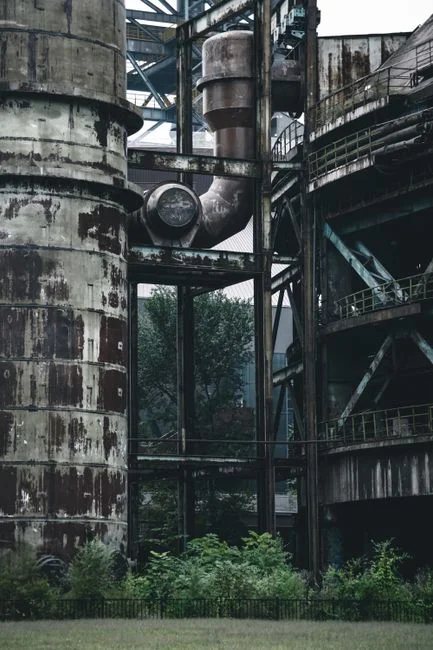
Three branches cover the mining-blowdown use case in 2026, and each branch maps to a specific equipment line so the reader can walk into a vendor meeting with a defensible selection.
- Feed TDS > 1,500 mg/L OR brine disposal > USD 8/m³: Specify a softening-IX pretreatment in front of an industrial RO system with up to 95% recovery. The softener strips Ca and Mg to < 5 mg/L as CaCO₃ and protects the RO membrane from hardness scale; the RO does the bulk TDS, silica, and metals rejection. Pair with an automatic chemical dosing system for anti-scalant and pH trim to keep the RO recovery at 80% without silica breakthrough.
- Feed TDS 500–1,500 mg/L, no ZLD, cheap brine disposal (USD < 4/m³): Specify a stand-alone strong-acid cation IX train for hardness and trace metals polishing, sized for 30–40 m³/day of regeneration waste, with discharge to the existing effluent line. This is the only branch where IX-only OPEX undercuts RO by 15–25% on a per-m³-reused basis, but the operator has to accept that silica and bulk TDS are not being removed.
- High-purity boiler feed downstream OR reuse spec < 1 µS/cm: Specify RO followed by mixed-bed IX polish or, preferably, an EDI stack that replaces mixed-bed ion exchange. EDI removes the last few percent of ionized species without the resin-replacement OPEX of a mixed-bed IX and is now the 2026 default for > 50 m³/day high-purity polish trains.
The non-negotiable rule, repeated because it is the one operators get wrong: ion exchange must be installed before RO when Ca and Mg are present, otherwise the RO membrane scales within weeks and the OPEX case collapses (filtersmart.com). For a deeper comparison of concentrate handling options that pair with branch 1, see the ZLD vs high-recovery RO brine management guide; for the engineering detail on the RO equipment line itself, the industrial RO system engineering guide for 2026 covers the high-level design parameters that apply to mining duty as well.
Frequently Asked Questions
Which technology is cheaper for cooling-blowdown reuse on a copper or zinc site in 2026?
On feed TDS above roughly 1,500 mg/L, reverse osmosis OPEX is 20–40% lower than ion exchange per cubic meter of reused water once the full reuse-quality spec (TDS < 200 mg/L, SiO₂ < 10 mg/L, hardness < 20 mg/L as CaCO₃) is enforced, because IX cannot hit that spec on a single pass. Below 800 mg/L TDS with cheap brine disposal and no silica limit, IX-only can come in 15–25% lower on OPEX, but it is the exception, not the rule.
Can ion exchange remove dissolved copper, zinc, and nickel from blowdown?
Yes. Strong-acid cation resin in the sodium or hydrogen form strips Cu²⁺, Zn²⁺, Ni²⁺, Pb²⁺, Cr³⁺, and Cd²⁺ from blowdown, and FilterSmart lists Ni, Pb, Cr, Cu, and Cd as routine IX targets (filtersmart.com). The caveat is fouling: residual iron above 0.5 mg/L and silica above 30 mg/L will shorten cation resin life from a typical 4–6 years to 2–3 years on metals-laden feed, which is why IX is almost always paired with iron filtration upstream and an RO polish downstream.
What is the typical RO recovery rate on brackish mining blowdown?
Industrial RO systems in mining duty are rated for 75–95% recovery, with 80% as the safe design point on brackish feed (2,000–3,500 mg/L TDS) when anti-scalant is dosed for silica and sulfate. Pushing recovery above 85% raises the osmotic pressure of the concentrate and starts to drive silica and calcium-sulfate scaling, which is why the catalog upper bound of 95% is reserved for feeds below about 1,500 mg/L TDS.
Why is brine volume higher with RO than with IX?
RO rejects 10–50% of the feed water as concentrate to push the permeate to reuse quality, while IX rejects only 2–4% as regeneration waste (filtersmart.com). On a 1,000 m³/day stream at 80% RO recovery, that is 200 m³/day of brine versus 30–40 m³/day of IX regeneration waste. If the site has no ZLD and brine disposal runs above USD 8/m³, the disposal line can flip the OPEX verdict and force the operator toward an IX-plus-ZLD or an RO-plus-ZLD hybrid.
When does a hybrid RO + IX polish make sense?
The hybrid makes sense in two cases: (1) the downstream demand is high-pressure boiler feed requiring < 1 µS/cm conductivity, where RO does the bulk reduction and a mixed-bed IX or EDI polishes the last few percent of ionized species; and (2) the cooling-tower makeup spec is so tight (TDS < 50 mg/L, SiO₂ < 2 mg/L) that a single RO pass is not enough on its own and an IX or EDI polish is needed to hit the target without pushing the RO recovery to a scaling regime.