Which treatment fits a Youngstown fabricated metals facility?
For fabricated metals wastewater in Youngstown, MBR is usually the stronger fit when land is limited, clarified effluent supports reuse, and oils, suspended solids, pH, and batch shocks can be controlled before the membranes. Conventional activated sludge may be more practical when wastewater is consistent, pretreatment needs are modest, space is available, and operators can reliably manage settling and sludge handling. Neither system independently removes every metal, oil, coating, or machining-fluid contaminant. The decision should follow the actual Youngstown discharge or reuse objective, source-specific characterization, pretreatment design, footprint, lifecycle cost, and sludge-disposal route.
MBR combines biological treatment with membrane solids separation: microorganisms treat biodegradable contaminants in an activated-sludge reactor, while membranes retain biomass and suspended solids as treated liquid passes through. Conventional activated sludge uses a suspended-growth biological reactor followed by secondary clarification, where biomass settles from the treated liquid.
Choose MBR when the objective requires low suspended solids, clarified permeate has a defined reuse value, available space is constrained, or membrane separation justifies the added fouling-control and maintenance burden. Retain conventional activated sludge when flows and wastewater quality are relatively consistent, pretreatment is limited, land is available, and the site can operate clarifiers, sludge return, wasting, and solids handling reliably.
The governing objective must come first: direct discharge, sewer pretreatment, or water reuse may require different outcomes. The supplied research does not provide verified Youngstown discharge limits or sewer rules, so the buyer should obtain the current applicable requirement from the facility and reviewing authority rather than infer it from a generic metals treatment page. The 2026 MBR cost and lifecycle guide provides a useful framework, but not site-specific limits or prices.
Membranes retain microorganisms and solids; they do not automatically remove dissolved metals, volatile organic compounds, or salts. Those require a defined physical or chemical process and an appropriate effluent specification.
| Decision condition | More defensible direction | Condition to verify |
|---|---|---|
| Constrained footprint or clarified reuse objective | Evaluate MBR | Upstream oil, solids, pH, and shock-load control |
| Consistent wastewater, adequate land, modest pretreatment | Evaluate conventional activated sludge | Reliable settling, sludge return, wasting, and disposal |
| Dissolved metals, VOCs, or salts must be removed | Neither process alone | Site-specific polishing or treatment design |
Start with the waste streams, not a generic metalworking wastewater profile
A biological loading calculation must not combine streams merely because they leave the same plant. Cutting and grinding fluids, machining coolant, wash water, paint or coating rinse water, floor washdown, cooling-water blowdown, and process rinse water can differ materially in flow, chemistry, toxicity, and required pretreatment. Incompatible batches may need segregation rather than dilution into a common treatment train.
For each stream, request flow, pH, oil and grease, total suspended solids, metals, toxicity indicators, surfactants, temperature, and batch-release patterns. These measurements determine biological loading, equalization requirements, source control, and membrane protection. A single averaged sample can conceal the release that causes foaming, loss of biological activity, or membrane fouling.
Oil-bearing and particulate streams may need targeted physical or chemical treatment before biology. Where oil, grease, and floating material are confirmed, DAF pretreatment for metalworking wastewater is one candidate unit, not an automatic requirement. DAF sizing should follow measured contaminants and the proposed biological loading.
The supplied research provides no fabricated-metals wastewater composition ranges. Municipal, mining, and food-processing data should not be substituted for site testing, and those datasets cannot establish biological loading or membrane-fouling conditions for a Youngstown fabricator.
| Stream to characterize | Information required | Decision affected |
|---|---|---|
| Cutting and grinding fluids; machining coolant | Flow, pH, oil and grease, surfactants, suspended solids, toxicity indicators, and batch pattern | Source control, biological loading, equalization, and membrane protection |
| Wash water and coating rinse water | Flow, pH, oil and grease, suspended solids, surfactants, color, metals, and discharge timing | Stream-specific pretreatment and release control |
| Floor washdown and process rinse water | Solids, metals, temperature, chemicals, and batch-release pattern | Solids removal, shock-load exposure, and disposal route |
| Cooling-water blowdown | Flow, temperature, pH, metals, chemicals, and dilution implications | Whether segregation or reuse changes the treatment objective |
Build the pretreatment train that protects biology and membranes
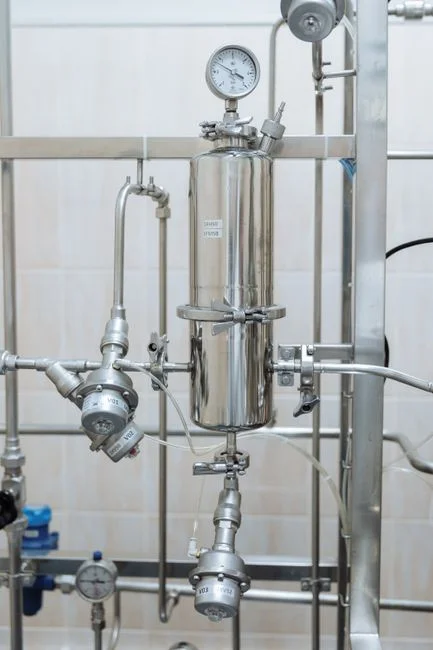
A defensible treatment train begins with source segregation and equalization, followed by stream-specific pretreatment, biological treatment, solids separation, and final polishing or disinfection where the objective requires it. MBR replaces the secondary-clarifier function; it does not replace upstream oil, grease, solids, pH, or shock-load control.
Where characterization confirms oil, grease, and floating material, DAF may be used to remove them before biology and membrane filtration. If DAF is not justified by the measured stream, another physical or chemical treatment may be necessary. Either way, the supplier should identify the contaminant, design objective, expected removal duty, residual effects on biology, and resulting solids route.
Chemical dosing must be tied to measured chemistry, required dose, mixing, and control response. A generic recipe can create unnecessary chemical consumption or shift the contaminant burden downstream. If automatic chemical dosing is proposed, require the control basis, tank and metering arrangement, chemical inventory, failure response, and operator involvement.
The 2021 Case Studies in Chemical and Environmental Engineering cheese-whey case study reported that coagulation removed 26% of organic matter and activated sludge removed 75%, with approximately 98.8% overall COD reduction. That result demonstrates dependence on the preceding treatment train, but it is cheese-whey evidence—not fabricated-metals performance—and cannot guarantee a Youngstown outcome.
- Segregate incompatible sources and define batch-release controls.
- Equalize the selected wastewater flow and characterize temporal variation.
- Apply measured oil, solids, pH, and chemical pretreatment where required.
- Provide biological loading, solids separation, and the required polishing train.
- Verify the complete train against the discharge or reuse objective.
Compare MBR and conventional activated sludge on the operating variables that matter
Conventional activated sludge depends on secondary settling to separate biomass from treated liquid. MBR retains biomass and separates suspended solids through membranes. That substitution changes footprint, solids inventory, aeration, maintenance, and downstream sludge handling; it does not establish superiority without a common design basis.
HydropureWater’s vendor-reported claim of a 60% smaller footprint for its integrated MBR is manufacturer-specific, not a universal result. Require dimensioned plan views, equipment envelopes, maintenance clearances, and the conventional activated-sludge layout used as the comparison basis.
The University of Cincinnati-hosted review, The status of membrane bioreactor technology, reports flocculant solids of 8–18 g/L in most MBR plants depending on solids retention time, compared with 2.5–3.5 g/L for conventional activated sludge. The higher MBR inventory affects vessel sizing, wasting, mixing, pumping, and sludge treatment.
Energy must also be evaluated from the supplied design basis. The same review states that 30–50% of energy demand for an immersed MBR can arise from membrane aeration. That does not establish a Youngstown power cost; request calculated aeration demand, blower sizing, controls, operating profile, and a site-specific energy estimate.
| Variable | MBR | Conventional activated sludge | Supplier evidence required |
|---|---|---|---|
| Solids separation | Membranes retain biomass and suspended solids | Secondary clarifier settles biomass | Design flux or settling criteria, solids inventory, effluent solids target |
| Solids inventory | 8–18 g/L in most plants, depending on SRT, according to the University of Cincinnati-hosted review | 2.5–3.5 g/L, according to the same review | Volume, SRT, wasting rate, mixing, pumping, and sludge route |
| Energy | 30–50% of immersed-MBR demand can arise from membrane aeration, according to the review | Includes biological aeration and solids handling | Blower basis, controls, load profile, and site-specific estimate |
| Maintenance | Inspection, cleaning, scouring, integrity management, and eventual replacement | Sludge return, settling, wasting, and solids handling | Labor, frequencies, spare strategy, service response, and warranty |
| Reuse potential | Clarified permeate | Settled effluent followed by required polishing | Dissolved-contaminant removal and disinfection remain separate design questions |
An integrated submerged-PVDF MBR system may fit the liquid-side requirements, but its suitability still depends on source control, pretreatment, peak flow, fouling controls, and the stated effluent objective.
Design for Youngstown peak flow, redundancy, and local site constraints
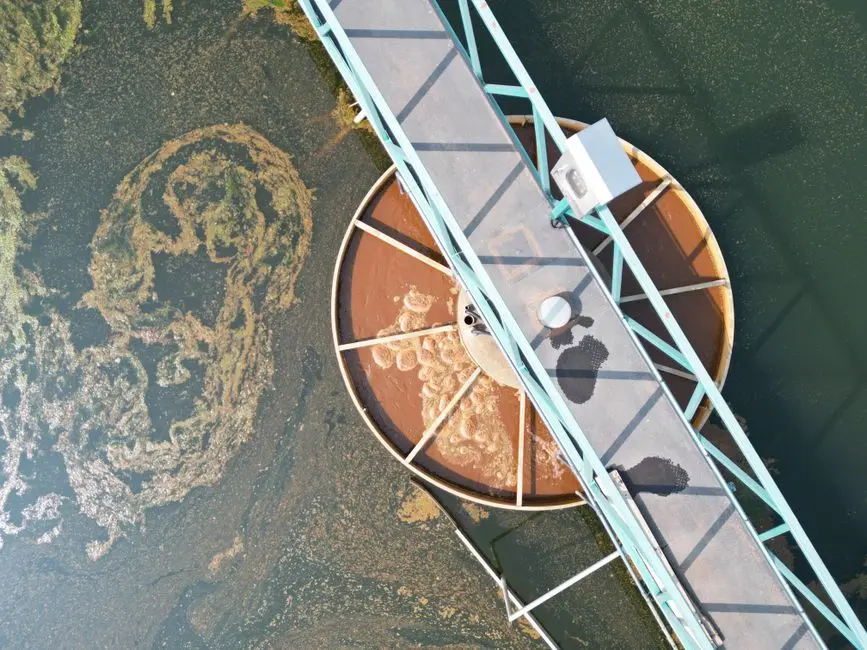
EPA guidance from June 2021 states that peak design flows should be no more than 1.5–2 times average design flow. If excursions exceed that range, the design must add membrane capacity or provide equalization. A Youngstown buyer should therefore provide suppliers with average flow, actual peak-flow history, batch-release patterns, and the proposed equalization response—not only average daily flow.
The same EPA guidance recommends N-plus-1 membrane capacity at full-treatment installations so treatment remains available during maintenance. Require suppliers to identify what capacity remains operable when one membrane unit is isolated and how that condition affects the discharge or reuse commitment.
EPA also states that MBR systems require fine screening immediately before membranes. Manufacturer-dependent cutoffs are generally 1–3 mm: hollow-fiber systems typically use 1–2 mm, and plate systems 2–3 mm. The selected membrane manufacturer must confirm the exact requirement, screen-cleaning frequency, and consequences of debris or grit reaching the membrane.
Ask each bidder to address power reliability, operator capability, maintenance access, installation clearances, remote support, available footprint, and treatment continuity during cleaning or equipment repair. Upstream mechanical screening can remove debris, but it does not replace stream-specific solids management or fine screening immediately ahead of the membranes.
Price the complete treatment train and residual sludge route
The supplied research contains no validated fabricated-metals capital or operating cost figures for Youngstown, so no defensible generic price comparison can be presented. Equipment purchase price is not a lifecycle comparison, particularly when one option includes membranes, membrane aeration, and more demanding residual-sludge handling.
Request itemized quotations covering the selected wastewater design basis, membranes, aeration, pretreatment, controls, installation, cleaning chemicals, energy assumptions, labor, and sludge disposal. The lifecycle comparison should also include membrane replacement, downtime, chemical consumption, operator hours, maintenance, sludge treatment and disposal, and production interruptions.
The University of Cincinnati-hosted review describes MBR sludge as less readily dewaterable than conventional activated-sludge sludge. The supplier must therefore define the waste activated-sludge basis: intended route, expected volume, consistency, conditioning assumptions, and consequences at the selected dewatering method. Changing the wasting rate can alter sludge volume and biological operation.
A plate-and-frame filter press can be considered after sludge properties are characterized, but its selection does not prove that the disposal problem is solved. Solids characterization, conditioning, cake handling, transport, receiving facility acceptance, and off-site disposal remain separate requirements.
| Cost element | Comparable information to request |
|---|---|
| Initial treatment train | Flow basis, characterization, pretreatment, biological equipment, solids separation, polishing, controls, and installation |
| MBR-specific ownership | Membrane area and material, design flux, air scour, cleaning chemicals and frequency, service life, replacement, and warranty |
| Operating resources | Energy calculation, chemical consumption, operator hours, maintenance, spare parts, remote support, and cleaning downtime |
| Residual solids | Expected volume and consistency, conditioning, dewatering method, disposal route, transport, and receiving charges |
Use this evidence checklist to compare supplier proposals
Give every supplier the same average and peak flow, wastewater characterization, equalization assumptions, effluent objective, available footprint, pretreatment basis, power assumptions, operator capability, and sludge-disposal route. Without that common design basis, headline capacity and price comparisons are not like-for-like.
For an MBR, request membrane material, pore size, configured area, design flux, cleaning method and frequency, air-scour design, redundancy, service life, replacement scope, and warranty terms. For either process, request biological loading, hydraulic retention time, solids retention time, aeration design, controls, startup support, operator training, remote diagnostics, and maintenance response.
Separate evidence classes in the proposal review. Identify manufacturer claims as claims requiring verification, EPA guidance as design guidance, academic review findings as technology-level findings, and site assumptions as inputs requiring testing or confirmation. A less-than-1-micrometre filtration claim describes separation capability; it is not evidence that dissolved metals, volatile organic compounds, or salts were removed.
For footprint, require dimensioned layouts and a defined comparator. For energy, require calculation inputs rather than a generic consumption figure. For performance, require the applicable analytical method, influent condition, operating envelope, and treatment train behind every guarantee. Where compliance, reuse, or scale-up risk is material, pilot testing with agreed analytical methods can provide stronger evidence than catalog performance claims.
The MBR versus activated sludge for metals wastewater comparison is a useful adjacent reference, but mining wastewater cannot substitute for fabricated-metals site data. The final award should follow documented screening, not vendor terminology alone.
Frequently Asked Questions
What will MBR versus conventional activated sludge cost for a Youngstown fabricated metals facility?
No supported Youngstown fabricated-metals capital or operating cost range is available in the supplied research. Require itemized bids for equipment, pretreatment, aeration, controls, installation, power, chemicals, labor, membrane replacement, maintenance, downtime, sludge treatment, and disposal, all using the same design basis. The EPA’s June 2021 fact sheet identifies typically higher capital and operating costs for MBR at the same throughput, but that general finding cannot price this project.
How should the system be sized from flow and wastewater data?
Start with average and peak flow, source-by-source characterization, and equalization. Biological loading, hydraulic retention time, solids retention time, and membrane area or design flux cannot be selected from flow alone. For MBR, also define pretreatment, fouling controls, cleaning, N-plus-1 redundancy, and the operating capacity available during maintenance.
Can MBR alone make the wastewater compliant for sewer pretreatment or reuse?
No. Membranes retain microorganisms and solids but do not automatically remove dissolved metals, VOCs, or salts. Obtain the current Youngstown receiving-water, sewer-pretreatment, or reuse requirement and require site-specific treatment performance for each listed constituent. Where necessary, define physical or chemical polishing separately.
How should suppliers be selected?
Use a common design basis and require written evidence for biological loading, pretreatment, membrane configuration, aeration, controls, redundancy, maintenance, training, warranty, and sludge disposal. Verify manufacturer claims against dimensioned layouts and calculation inputs. For material compliance or reuse risk, require pilot evidence with agreed analytical methods and use the metals-plant sewer pretreatment guidance as a prompt to verify the current local requirement.
Related Equipment
- DAF pretreatment for metalworking wastewater — specifications, capacity range, and technical data