What changes when MBR replaces conventional activated sludge?
MBR is usually the better fit when mining or metals wastewater requires a compact plant, very low suspended solids, reliable reuse, or high-quality effluent; conventional activated sludge generally costs less and has simpler solids separation. Both are biological processes, and neither reliably removes dissolved metals without suitable pretreatment or additional treatment. The US EPA’s 2021 membrane bioreactor fact sheet reports better effluent quality, smaller space requirements, and ease of automation for MBR, but typically higher capital and operating costs for the same throughput. Mining projects must also account for variable flows, toxic or saline influents, pretreatment needs, peak-flow capacity, and redundancy before selecting either process.
Conventional activated sludge is a suspended-growth biological process followed by clarification. Microorganisms remove biodegradable organics and other pollutants in the aerated reactor; the secondary clarifier then separates much of the biological solids from the treated liquid. A clarifier failure can therefore compromise solids separation even when the biological stage remains effective.
An MBR combines the suspended-growth biological reactor with membrane filtration. In a typical activated-sludge installation, the membranes can replace both the secondary clarifier and sand filters, according to the EPA’s Wastewater Management Fact Sheet: Membrane Bioreactors, published in June 2021. Membranes retain microorganisms and other solids while permeate passes through.
That distinction controls the project decision. The EPA states that MBRs are good for removing solid material, while dissolved wastewater components require additional treatment steps. A mine-water MBR may therefore improve solids separation and biological effluent quality, but dissolved metals still require precipitation, adsorption, ion exchange, or another suitable polishing process selected from influent chemistry and the applicable discharge or reuse criteria. A general 2026 MBR cost and lifecycle guide is useful for developing the comparison, but it cannot replace a project-specific treatment train.
How mining and metals wastewater changes the comparison
Mining wastewater must be segregated by source before an MBR or activated-sludge process can be selected, because mine drainage, stormwater, tailings seepage, process wash water, and metals-processing effluent may have materially different flows, pH, salinity, toxicity, and solids profiles. Combining them at the inlet can make biological loading and membrane protection conditions less predictable than the nominal plant capacity suggests.
The first technical boundary is the form of the contaminant. Suspended solids, colloidal material, and part of the biodegradable organic load can be addressed through biological treatment, clarification, and filtration. Dissolved metals remain dissolved unless another process changes their chemistry or captures them. The EPA’s June 2021 fact sheet makes this limitation explicit: membranes retain particles and microorganisms, but dissolved components require additional treatment.
That treatment train depends on the objective. A discharge permit may require different treatment from irrigation, process-water reuse, or another end use. The decision should therefore compare the complete sequence:
- Source segregation and flow metering.
- Equalization and pH control where required.
- Screening, grit removal, and solids pretreatment.
- Biological treatment for compatible biodegradable pollutants.
- MBR separation or conventional clarification and filtration.
- Dedicated polishing for dissolved metals and other regulated constituents.
Flow variability is equally important. Acidic or alkaline influent, salinity, heavy-metal toxicity, and shock loads can inhibit biological organisms or destabilize process control. Request characterization data covering temporal variation rather than relying on a single average sample. Equalization may then be necessary to protect the biological process and membrane flux.
Useful references include a review of heavy-metals removal methods for mining wastewater and an explanation of mining wastewater sewer pretreatment requirements. These should inform project-specific process design, not be treated as proof that any equipment meets an unstated permit or reuse specification.
MBR versus conventional activated sludge: engineering and ownership tradeoffs
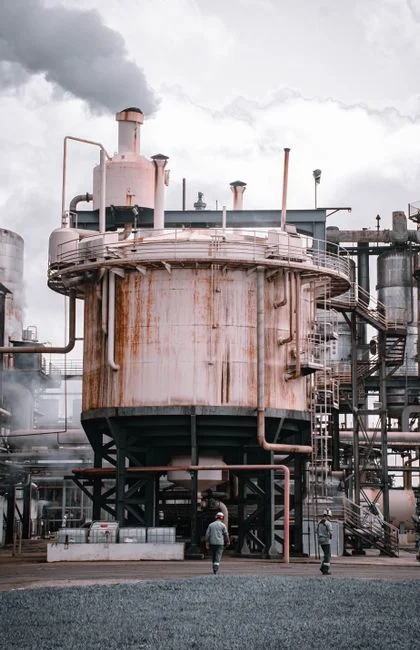
The EPA’s June 2021 fact sheet identifies better effluent quality, smaller space requirements, and ease of automation as principal MBR advantages, while identifying higher capital and operating costs for the same throughput as the primary disadvantage. For a mining buyer, that comparison must include membrane care, sludge handling, energy, peak-flow equipment, and the cost of maintaining treatment capacity during maintenance—not merely the initial bid price.
| Design or ownership issue | MBR | Conventional activated sludge |
|---|---|---|
| Solids separation | Membrane filtration replaces the secondary clarifier and can replace sand filters in a typical activated-sludge system. | Secondary clarification performs the critical solids-separation step; subsequent filtration may be required. |
| Effluent quality | Generally low TSS, BOD, bacteria, and phosphorus, supporting high-level disinfection and reuse applications. | Can meet applicable objectives, but low-TSS performance depends on clarification and filtration performance. |
| Footprint | Smaller bioreactor and solids-separation footprint is an EPA-identified advantage. | Generally requires more space for the biological reactor, clarifier, and associated units. |
| Biological loading | Can operate at higher volumetric loading rates and lower hydraulic retention times. | Uses a conventional suspended-growth reactor and clarifier arrangement. |
| Energy and maintenance | Higher energy demand for air scouring; requires fouling control, cleaning, and eventual membrane replacement. | Fewer membrane-specific maintenance requirements, although aeration, clarifier, pumping, and sludge handling remain substantial. |
| Automation | EPA identifies ease of automation as an advantage. | Can also be automated, but the stated MBR advantage does not remove the need for clarifier and plant controls. |
| Sludge | May have a low settling rate and require chemicals to improve settling before disposal; conventional sludge-processing technologies can still be used. | Generally uses conventional sludge-thickening and dewatering arrangements without the membrane-specific change in settling behavior. |
| Redundancy | The EPA recommends N-plus-1 membrane capacity for full-treatment installations so operating capacity remains available during maintenance. | Redundancy must be designed around biological reactors, clarifiers, pumps, and other unit operations. |
The MBR’s higher effluent quality can be commercially valuable where low suspended solids, reliable reuse, restricted land, or reduced manual operation justify the additional systems. Conversely, conventional activated sludge may be the more practical choice when flows are stable, space is available, gravity-assisted solids separation is suitable, and the project does not need membrane-quality polishing.
Neither option should be assigned a generic lifecycle cost. The purchase comparison should separate equipment capital, membrane replacement, electrical demand, cleaning chemicals, operator labor, sludge treatment and disposal, maintenance, and production downtime. The EPA identifies higher energy use for air scouring and includes cleaning, fouling control, and eventual replacement in MBR operating costs. Supplier warranties and the membrane system provider’s guarantee terms also affect the ownership calculation.
An integrated submerged-PVDF MBR system can be evaluated as one implementation of this biological-plus-membrane arrangement, but its suitability depends on the complete treatment objective and mine-water characterization.
Pretreatment and peak-flow requirements that can decide the outcome
The EPA’s June 2021 fact sheet states that all MBR systems require fine screening immediately before the membranes, with manufacturer-dependent cutoffs of 1–3 mm. It specifies that hollow-fiber systems typically use 1–2 mm screening, while plate membranes typically use 2–3 mm screening. This pretreatment is a design requirement, not an optional accessory.
| Design input | EPA guidance or requirement | Procurement implication |
|---|---|---|
| Fine screening before membranes | Manufacturer-dependent cutoff of 1–3 mm; hollow-fiber systems typically use 1–2 mm and plate membranes 2–3 mm. | Confirm the selected membrane configuration, manufacturer limit, screen type, cleaning method, and performance monitoring. |
| Peak design flow | Peak design flows should be no more than 1.5–2 times average design flow. | Show whether added membrane capacity or equalization handles excursions beyond that range. |
| Full-treatment redundancy | The EPA recommends one additional membrane tank or unit beyond nominal design: N-plus-1. | Price the standby configuration and identify which functions remain available during membrane maintenance. |
| Debris removal | Wastewater should receive a high level of debris removal before the MBR. | Specify screening, grit management, fiber removal, and primary settling where applicable. |
Mine runoff and process flows cannot be reduced to an average daily rate during procurement. The designer should evaluate peak inflow, equalization volume, biological shock loading, membrane flux, downtime, and redundancy as one problem. If runoff contains fibers, grit, debris, or excessive solids, the screens may require frequent cleaning. Equipment such as a DAF pretreatment for suspended solids and colloids may form part of a broader solids-management train, but it does not replace the manufacturer-required fine screen immediately before the membranes.
Mechanical screening should be selected with the actual stream characteristics in mind. The rotary mechanical bar screen illustrates one equipment option for upstream debris removal; project engineers must still verify particle size, removal efficiency, headloss behavior, cleaning access, and compatibility with the complete pretreatment train.
MBR fouling control begins upstream of the membrane tank. Aggressive loading can shorten membrane life even when the plant meets its daily flow target. The designer should therefore explain how each stream reaches the membranes, how long it can wait for treatment, and what operating action occurs when incoming quality deteriorates.
Choose MBR or activated sludge using project-specific criteria
The preferred process is the one that meets the required treatment and ownership conditions under the actual flow and chemistry—not the one with the smallest equipment footprint. A mine or metals project should use the following scenario framework.
| Project condition | Preferred direction | Condition to verify |
|---|---|---|
| Land is constrained and low-TSS effluent is required. | Favor MBR. | The required TSS and other effluent objectives justify membrane separation and its operating burden. |
| Reuse quality or disinfection-ready effluent has clear operational value. | Favor MBR when biological treatment remains viable. | The reuse specification and dissolved-contaminant requirements are both addressed by the complete train. |
| Flow is stable, land is available, and the objective does not require membrane polishing. | Favor conventional activated sludge. | Clarification and any required filtration consistently meet the effluent criteria. |
| Flow is variable, a strict metals limit applies, or reuse is required. | Consider equalization plus biological treatment, MBR separation, and dedicated dissolved-metals polishing. | Treatability and polishing tests demonstrate that the sequence performs as proposed. |
| Power reliability or operator capability is limited. | Compare both options against site resources. | Document power availability, operator staffing, maintenance access, and remote-support arrangements. |
Both proposals should use the same design basis: average and peak flow, equalization assumptions, wastewater characterization, discharge or reuse targets, available footprint, power cost and reliability, operator capability, maintenance access, and sludge-disposal route. Where flow or metal chemistry is uncertain, request treatability testing rather than selecting from a generic capacity schedule. The DF flat-sheet MBR membrane module may be relevant for modular evaluation, but its configuration must be matched to the validated treatment objective.
Questions to ask an MBR or activated-sludge supplier
Comparable proposals should begin with a common design basis rather than a headline daily capacity. Ask each supplier to state the design flow, peak-flow basis, equalization assumption, feed characterization, effluent targets, hydraulic retention time, solids retention time, and required pretreatment. These inputs expose whether two bids describe the same plant.
For MBR proposals, request membrane material, pore size, configured area, design flux, cleaning chemicals and frequency, air-scour design, expected service life, replacement scope, and warranty terms. Also require written information on energy demand, PLC automation, remote monitoring, operator hours, chemical consumption, sludge handling, spare-parts strategy, and N-plus-1 availability.
Ask for startup support, operator training, remote diagnostics, maintenance response, and lifecycle-cost assumptions rather than only equipment purchase price. The EPA reports that membrane guarantees vary among providers and are negotiated during purchasing, making warranty scope part of the process evaluation rather than an afterthought.
HydropureWater’s verified product catalog lists the integrated submerged-PVDF MBR system at capacities from 10 to 2,000 m³/day and with a 60% smaller footprint than conventional systems. Its DF flat-sheet module is listed at 0.1 μm, 80–225 m², and 32–135 m³/day. These are supplier specifications to verify against project flows, treatment objectives, operating conditions, and site constraints—not independently validated performance results.
Frequently Asked Questions
Is MBR always cheaper than conventional activated sludge for mining wastewater?
No. The EPA’s June 2021 fact sheet identifies typically higher capital and operating costs for MBR at the same throughput, including energy, cleaning, fouling control, and eventual membrane replacement. MBR can still be economically preferable when required effluent quality, footprint savings, automation, or reuse value offset those costs. Request a project-specific lifecycle breakdown covering equipment, power, chemicals, labor, membrane replacement, sludge handling, disposal, and downtime.
Can MBR remove dissolved metals from mining wastewater?
Not by itself. The EPA states that dissolved wastewater components require additional treatment steps. Whether precipitation, adsorption, ion exchange, or another unit is appropriate depends on influent chemistry and the applicable discharge or reuse criteria. A buyer should therefore request a complete metals-removal design rather than treating membrane capacity as evidence of dissolved-metals compliance.
How should an MBR system be sized for variable mine-water flow?
Use the EPA’s June 2021 guidance that peak design flows should be no more than 1.5–2 times average design flow. If flows exceed that range, the design must add membrane capacity or include equalization. For full-treatment installations, the EPA also recommends N-plus-1 membrane capacity so operating capacity remains available during maintenance.
Which pretreatment is required before an MBR?
The EPA specifies manufacturer-dependent fine screening immediately before the membranes, generally with a 1–3 mm cutoff. Hollow-fiber systems typically use 1–2 mm screening and plate systems 2–3 mm. Ask the membrane supplier to confirm the exact requirement, screen cleaning frequency, and consequences of debris or grit reaching the membrane.
How should a procurement team select an MBR supplier for a mining project?
Give every supplier the same feed characterization, flow basis, effluent targets, footprint, and pretreatment assumptions, then compare flux, membrane material, cleaning, replacement, warranty, energy, automation, service support, and lifecycle costs in writing. A common design basis is more useful than comparing headline capacities. Obtain a plate-and-frame filter press quotation separately for the solids-handling workstream rather than allowing sludge dewatering assumptions to remain undefined.