What Changes When GM Expands an Assembly Plant in Germany?
General Motors should reduce solvent and water use at the source, then map and segregate paint-shop, body-in-white, metal-finishing, oily and sanitary wastewater before expanding treatment capacity. In Germany, that plan must align with WHG, applicable AbwV annexes, municipal indirect-discharge rules and potentially BImSchG, IED BAT-AEL and PRTR requirements. A modular train may combine equalization, DAF, chemical dosing, lamella clarification, MBR and, where reuse justifies it, RO. Equipment selection should wait until sampling establishes flow, COD, TSS, FOG, metals, pH and PFAS loads.
An expansion can change wastewater quantity, composition and permit status even when the operator and treatment facility remain unchanged. Added body-shop equipment, paint capacity, battery operations or water reuse can alter both hydraulic loading and the contaminants requiring control. The project team should therefore work in this order:
- Define manufacturing and reuse targets.
- Inventory and segregate wastewater streams.
- Confirm the German permit pathway.
- Complete the hydraulic and contaminant mass balance.
- Select the treatment train and residual routes.
- Procure equipment only against verified site duties.
Direct discharge to a Gewässer requires a §8 WHG Erlaubnis, whereas indirect discharge to a municipal Abwasseranlage is governed by §13 WHG, §58 LWG and the local Abwasserverbandssatzung. The applicable authorization, monitoring and local limits differ; municipal requirements may be stricter than the federal AbwV floor.
GM's Zaragoza Assembly is relevant as a source-reduction precedent, not as a transferable water balance. GM’s October 2014 announcement reported that the plant changed its manufacturing process and reused 80% of the solvent previously sent down the drain (GM, 2014-10). For the German expansion, the due-diligence file should include the current Genehmigungsbescheid, drainage drawings, sewer agreement, self-monitoring records, hazardous-waste manifests and representative process-wastewater samples. See also the German wastewater permit requirements for a GM plant.
Map the German Regulatory Triggers Before Designing the Plant
A capacity expansion does not automatically amend a German wastewater authorization; the responsible authority must determine whether the change requires a modified permit, an IED review, a paint-shop BImSchG procedure or a combination. The supplied HydropureWater acquisition analysis describes a §16 WHG Anzeige within one month of closing for an operator change, but that acquisition rule does not substitute for authority review of an expansion.
The compliance workstreams should be kept separate. WHG covers water use and discharge; AbwV supplies sector-specific effluent requirements; BImSchG governs installations subject to German industrial permitting; PRTR, hazardous-waste and waste-register obligations form a separate reporting rail. Collapsing them into one checklist makes it unclear who must act, by when and on what evidence.
| Regulatory pathway | Trigger and relevance | Evidence required before design |
|---|---|---|
| §8 WHG Erlaubnis | Direct discharge to a Gewässer. | Current permit, receiving-water conditions and proposed discharge-point changes. |
| §13 WHG, §58 LWG and local Abwasserverbandssatzung | Indirect discharge to a municipal Abwasseranlage. | Sewer agreement, discharge permit, local parameters and pretreatment obligations. |
| AbwV Anh. 40 and Anh. 9 | Anh. 40 covers surface treatment of metals and plastics, including nickel, cobalt, chromium, zinc and fluoride; Anh. 9 covers broader metal processing. | Applicable annex, process descriptions and analytical results. |
| BImSchG and IED Annex I 6.7 | A surface-treatment installation processing more than 20 t/day of input may require BImSchG authorization and BAT-AEL compliance (HydropureWater, 2026). | Throughput basis, eligible process capacity and authority pre-scoping. |
| Paint-shop authorization | Paint capacity, VOC controls and high-COD overspray washwater can trigger BImSchG review under TA Luft and Lösemittel-RL requirements. | Paint types, booth data, solvent inventory and proposed production change. |
| PRTR and waste law | Threshold-based PRTR reporting and hazardous-waste controls remain separate from effluent limits. | Prior filings, waste codes, manifests and Nachweisver Entries. |
The 2024 BAT-AEL envelope cited by HydropureWater (2026) includes COD of 30–100 mg/L, total nitrogen of 10–15 mg/L, total phosphorus of 0.3–2 mg/L and metal-specific BAT-AELs for nickel, chromium and lead at the discharge point. These values must be checked against the applicable Implementing Decision 2024/2995/EU provisions, BAT category, treatment stage and authorization conditions rather than copied into a guarantee.
The 2024 AbwV PFOS limit is 50 ng/L in the 24-hour mixed sample, with the supplied analysis also referring to a PFOS/PFOA cap (HydropureWater, 2026). Establish an analytical plan that can reliably detect PFAS at the applicable limit; legacy online instruments may not provide sufficient sensitivity. The permit file should also reconcile PRTR reports for nickel, cobalt and NMP, hazardous-waste manifests and the electronic waste register. Start with the DAF versus clarifier comparison for metals wastewater, then finalize equipment only after the authority pathway is understood.
Segregate Every Wastewater Stream Before Selecting Equipment
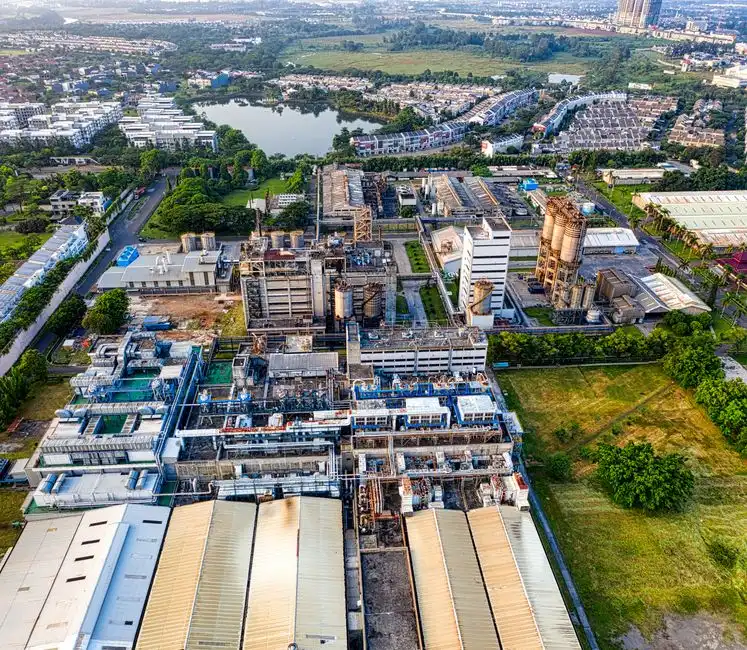
Assembly-plant wastewater should not be represented by one averaged plant-effluent value, because paint, metal-finishing, oily and sanitary streams have incompatible contaminant profiles and residual routes. HydropureWater’s 2026 assembly-plant guide identifies five baseline streams: paint-shop solvent water; phosphate and metal-finishing rinse; compressor and stamping oily condensate; general oily rack wash; and sanitary sewage.
| Stream | Source benchmark | Characterization needed | Treatment implication |
|---|---|---|---|
| Paint-shop solvent water | COD 1,000–5,000 mg/L; TSS 200–1,000 mg/L (HydropureWater, 2026). | Line speed, booth design, paint type, solvent content and overspray capture. | Source reduction, solids capture, then biological polishing. |
| Phosphate and metal-finishing rinse | No design load supplied. | pH, Ni, Co, Cr, Zn, fluoride, phosphate and flow. | Precipitation before biological treatment; polishing where reuse requires it. |
| Oily condensate and rack wash | O&G 200–5,000 mg/L (HydropureWater, 2026). | Free oil versus stable emulsion and emulsifier chemistry. | Coalescing or emulsion breaking, then DAF for oily and solids-bearing assembly wastewater. |
| Sanitary sewage | 100–200 m³/day, BOD 200–400 mg/L and TSS 200–300 mg/L for a 2,000-employee single-shift plant (HydropureWater, 2026). | Actual roster, shift pattern, canteen and laboratory contributions. | Separate biological treatment or an approved municipal route. |
The paint-shop benchmark is an initial characterization range, not a design basis. The Zaragoza model comes first: GM reported in October 2014 that it changed the paint process and reused 80% of the solvent formerly sent down the drain (GM, 2014-10). At the German site, the equivalent question is whether booth capture, paint chemistry or solvent recovery can remove the load before wastewater treatment.
Metal-finishing streams may require pH adjustment, chemical precipitation, lamella clarification, filtration and optional ion exchange or RO. HydropureWater’s 2026 reference gives precipitation windows of pH 8.5–10 for nickel and zinc and approximately pH 7 for chromium reduction. For oily streams, distinguish free oil from stable emulsion before selecting a DAF system for oily and solids-bearing assembly wastewater.
Also survey stormwater, laboratory wastewater, cooling-water blowdown, canteen wastewater and battery- or cathode-related streams if present. The research provides no design loads for those flows, so sampling is required. Equalization-basin influent channels provide an early diagnostic: one channel indicates historically combined flows, while five or more indicate more advanced segregation, based on HydropureWater field data (2026). Use a PLC-controlled pH and coagulant dosing system only after the relevant stream chemistry and operating envelope are established.
Build a Treatment Train That Matches the Discharge or Reuse Route
The reference sequence—equalization, DAF, coagulation and flocculation, lamella clarification, MBR, optional RO and disinfection—must be adapted to stream composition and the authorized discharge or reuse route. A direct-discharge design, municipal indirect discharge and closed-loop reuse impose different targets on pretreatment, monitoring and residual handling.
| Stage | Reference duty | Selection condition |
|---|---|---|
| Equalization | 6–12 hours for hydraulic and load variation; PLC dosing to mixed pH 6.5–7.5 (HydropureWater, 2026). | Required when flow, pH or contaminant concentration varies materially. |
| DAF | 4–300 m³/h equipment range; 80–95% FOG removal and downstream TSS below 100 mg/L (HydropureWater, 2026). | Confirm against actual oil, solids, free-oil and emulsion bench tests. |
| Coagulation and lamella | Ferric chloride or PAC at pH 9–10; lamella surface loading of 20–40 m/h (HydropureWater, 2026). | Use for dissolved metals where precipitation and solids removal are required. |
| Submerged MBR | Turbidity below 1 NTU at MLSS 8,000–12,000 mg/L (HydropureWater, 2026). | Calculate membrane area against site temperature, peak flow and soluble COD; see the submerged MBR system for wastewater reuse. |
| Two-pass RO | Permeate conductivity below 50 µS/cm, 70–85% recovery and 15–30% reject (HydropureWater, 2026). | Use only where reuse value and reject disposal justify the additional stage. |
| Disinfection | Chlorine-dioxide generators from 50 g/h to 20,000 g/h, or UV (HydropureWater, 2026). | Design to the reuse or discharge point; compare chlorine-dioxide generator configurations with UV. |
Metals must be removed before biology because they can inhibit biomass; the reference metal train uses chemical dosing, precipitation, a high-efficiency lamella sedimentation tank, filtration and, where justified, ion exchange or RO. For reuse, the industrial RO purification system should be evaluated against conductivity, recovery, pretreatment and brine requirements rather than selected from an average COD value.
Zero-liquid-discharge readiness should not be the default. HydropureWater’s 2026 reference says an evaporator or crystallizer adds 1.5×–2.5× to the full DAF, MBR and RO configuration. Compare that capital addition with energy demand, pretreatment and brine-disposal cost.
Plan for Sludge, Solvent Recovery and Residual Reject
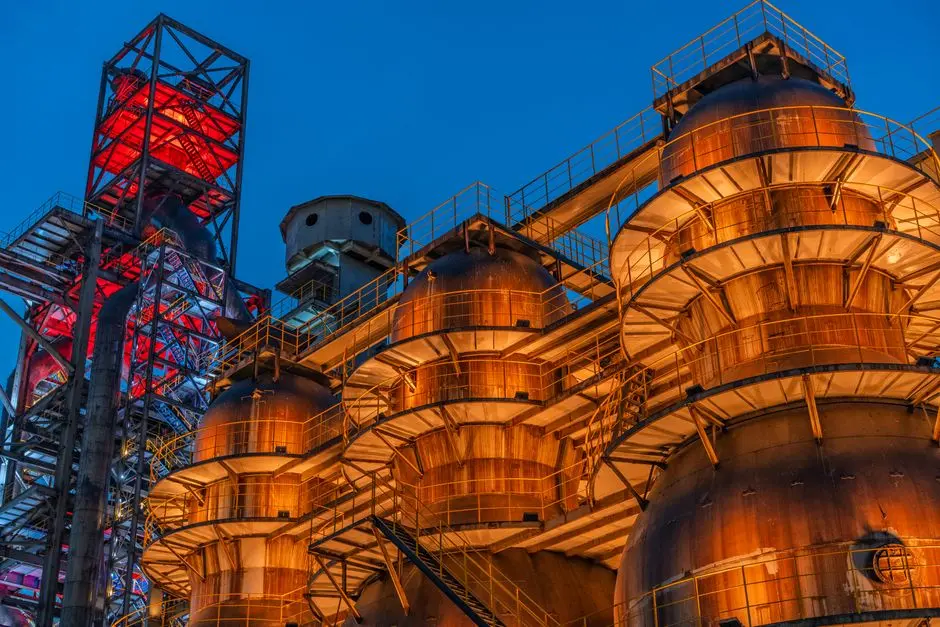
Metal and biological sludge require separate dewatering, classification and destination decisions because their residual pathways differ. HydropureWater’s 2026 guide identifies metal-hydroxide cake as a hazardous-waste route, while biological sludge may be composted or routed to a municipal outlet. Its reference plate-and-frame press with automatic polymer dosing produces cake at 18–25% dry solids (HydropureWater, 2026).
Spent oil, metal sludge, biological sludge and mixed treatment residues must not be assigned one waste code or destination by assumption. The expansion team should request current waste determinations, manifests, disposal contracts, transporter qualifications and laboratory analyses. An industrial plate-and-frame filter press can improve handling, but its configuration must match sludge rheology, solids content and dosing requirements.
NMP or cathode-coating operations require a separate solvent-management decision. HydropureWater’s 2026 reference describes closed-loop NMP vacuum distillation as solvent recovery rather than wastewater treatment; that stage may be omitted when cells are outsourced. If cathode coating remains in scope, assess solvent inventory, distillation capacity, worker-exposure controls and waste classification separately.
RO reject belongs in the expansion business case because it creates a continuing disposal obligation. In HydropureWater’s 2026 reference scenario, a 1,500 m³/day plant produces 225–450 m³/day of reject at 15–30% recovery, with off-site disposal priced at €30–€60/m³ and an annual consequence of €2.5M–€9.9M. This is a reference scenario, not a quotation for a GM plant. The actual case requires projected feed water, recovery, concentrate chemistry, destination and current disposal price.
Compare the Commercial Options Before Approving Capital?
The investment comparison should place sewer discharge, industrial reuse and zero-liquid-discharge-ready treatment on the same lifecycle basis. HydropureWater’s 2026 field-data reference gives approximately €1,000–€3,800 per m³/day for a full DAF, MBR and RO configuration without NMP distillation or an evaporator. A ZLD-ready configuration carries the stated 1.5×–2.5× multiplier, with brine disposal, energy and pretreatment included in the comparison.
| Decision | What to compare | Required evidence |
|---|---|---|
| Indirect discharge to municipal sewer | Local capacity, sewer fees, pretreatment requirements and future tariff exposure. | Current Abwasserverbandssatzung, discharge agreement and written acceptance. |
| Treated industrial reuse | Capital and operating cost against purchase-water, chemical and disposal savings. | Reuse demand, quality specification, seasonal load and tested membrane performance. |
| ZLD-ready treatment | Evaporator or crystallizer, energy, pretreatment, brine and residual disposal. | Complete mass and energy balance plus firm residual-disposal pricing. |
Do not combine source-reduction benefits with treatment savings. Recovered solvent, reduced water consumption and lower sludge generation can change the preferred route even when sewer-discharge capital expenditure appears lower. The research does not support a universal payback period, so the project should prepare at least three scenarios using projected flow, contaminant loads, reuse demand and residual routes rather than inserting an unsupported return metric.
Procurement packages should itemize equipment, civil works, chemical storage, PLC and I/O, installation drawings, FAT and SAT, guarantees tied to site-specific influent and effluent duties, membrane and chemical compatibility data, commissioning, training, spares and German service support. Permit preparation, authority review, sampling and commissioning services are separate line items; equipment delivery alone does not create an AbwV-, WHG- or BAT-compliant operating plant.
Sequence the Expansion from Due Diligence to Commissioning?
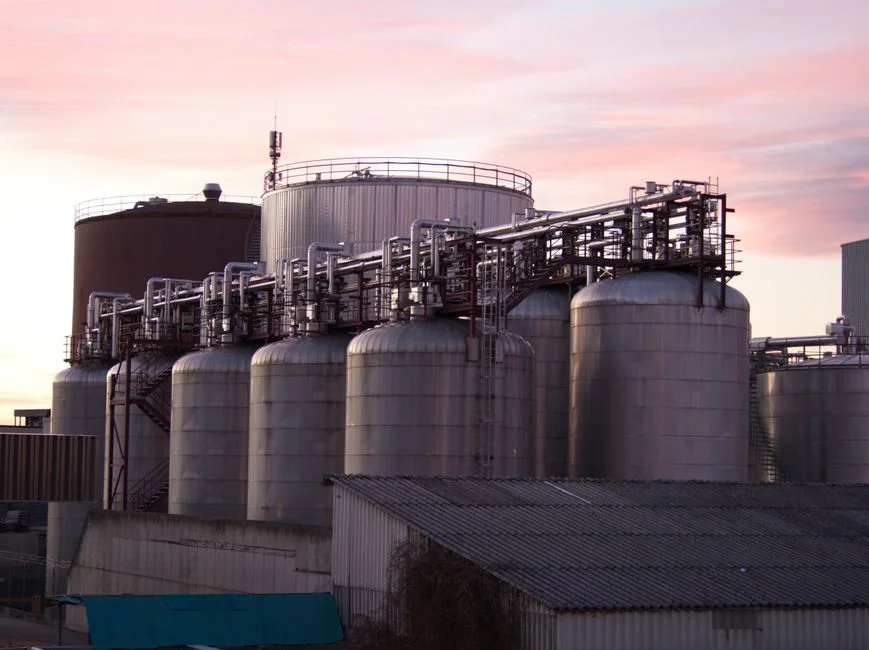
The expansion should advance through explicit decision gates, with each phase producing evidence for the next rather than treating sampling as a late procurement exercise. The schedule below organizes the supplied HydropureWater 2026 due-diligence sequence around the German expansion.
| Timing | Actions and decision gate |
|---|---|
| Days 0–30 | Confirm permit holder and operator details; open authority-change and expansion workstreams; collect the Genehmigungsbescheid, sewer agreement and self-monitoring calendar. |
| Days 30–60 | Perform the 2-hour Mischprobe baseline for the applicable AbwV Anh. 40 parameter list; compare with the prior operator’s last eight quarters of self-monitoring; reconcile PRTR filings for nickel, cobalt and NMP. |
| Days 60–90 | Verify hazardous-waste manifests and the Nachweisverordnung electronic register; complete the equalization-channel diagnostic and stream-by-stream sampling campaign. |
| Days 90–180 | Complete the 12-month forward projection against the 50 ng/L PFOS/PFOA cap, the 2024 BAT-AEL COD, nitrogen, phosphorus and metal envelope, and municipal indirect-discharge rules (HydropureWater, 2026). |
| Before procurement | Reconcile every treatment stage with design flow, contaminant duty, bypass strategy, sludge route, reuse quality and local controls. |
| Commissioning | Verify chemical storage, bunding, odor control, sludge transport, membrane cleaning, instrumentation, alarms, sampling points and operator training. |
For a paint-shop capacity increase, HydropureWater’s 2026 analysis states that a combined WHG and BImSchG procedure typically runs 4–9 months, including public participation. Pre-scope with the Genehmigungsbehörde before submission, but do not present that duration as a guaranteed schedule; the applicable Land procedure and environmental-assessment requirements still govern the project.
At the procurement gate, each stream needs an agreed design flow, daily and hourly load, discharge or reuse destination, residual route, bypass condition and control philosophy. An average COD result is not an equipment guarantee. The final equipment proposal should also demonstrate how compliance will be verified through sampling, online instruments, alarm response, operator records and regulatory reporting.
Frequently Asked Questions
How much would wastewater treatment cost for a GM assembly-plant expansion in Germany?
HydropureWater’s 2026 field-data reference is approximately €1,000–€3,800 per m³/day for DAF, MBR and RO without NMP distillation or an evaporator; ZLD-ready treatment carries a 1.5×–2.5× multiplier. These are reference figures, not project quotations. Request an itemized offer based on actual projected flow, stream loads, civil scope, pretreatment, reagent consumption, energy, sludge disposal and RO reject. Also request current municipal sewer fees and a separate brine-disposal price so OPEX is not understated.
How should equipment be sized and which supplier should be selected?
Size from a stream-by-stream mass balance rather than an average effluent value. Request peak and average flows, the paint-shop COD benchmark of 1,000–5,000 mg/L and TSS benchmark of 200–1,000 mg/L, plus site samples for pH, metals, FOG, PFAS and reuse parameters; these are HydropureWater’s 2026 reference benchmarks, not German-site measurements. The supplier should guarantee site-specific duties, document membrane and chemical compatibility, define PLC/I/O boundaries, include FAT/SAT and commissioning, and provide German service support. Reject any guarantee that does not state its influent envelope and test method.
Can paint-shop and body-in-white wastewater use the same treatment train?
Not without separate characterization and controlled segregation. Paint-shop water contains resin, solvent and surfactants, while body-in-white rinse water can contain metalworking fluids, drawing compounds, lubricants and metals. HydropureWater’s 2026 guide gives paint-shop COD of 1,000–5,000 mg/L and TSS of 200–1,000 mg/L, but that does not establish a German expansion’s design load. Paint solids may need capture or DAF, while metals require precipitation before biological polishing. A combined headworks is acceptable only after hydraulic and contaminant mass balances demonstrate compatible treatment and residual handling.
Does a GM plant expansion require a new wastewater permit in Germany?
Not automatically, but the project cannot assume that the existing authorization covers it. Direct discharge falls under §8 WHG; indirect discharge depends on §13 WHG, §58 LWG and the local Abwasserverbandssatzung. An IED threshold, new surface-treatment process or paint-shop capacity increase may require further authorization or a procedure under BImSchG. The expansion team should obtain written pre-scoping from the competent authority and reconcile the current Genehmigungsbescheid against projected flows, processes, monitoring and discharge route before ordering equipment.