What the GM Expansion Changes for Wastewater
Wastewater from an expanded GM assembly plant in Texas should be handled by segregating metal-finishing, paint, oily, assembly, cooling-blowdown, and sanitary streams before treating them. The expansion cannot be designed from production forecasts alone: verify the existing TPDES authorization, at least eight quarters of Discharge Monitoring Report results, site-specific limits, stormwater coverage, EPCRA Section 313 duties, and conveyance rights. A practical train may combine equalization, DAF, chemical precipitation, lamella clarification, MBR, optional RO reuse, and disinfection. GM’s public Arlington announcement confirms an investment of more than $500 million in new tooling and equipment for stamping, body shop, and general assembly, but it does not disclose wastewater flow, permit capacity, discharge limits, or treatment equipment (GM News, 2023-06-08).
That distinction matters because a production announcement establishes affected plant areas, not the wastewater design basis. The expansion may change rinse requirements, floor drainage, batch dumps, oily-condensate generation, cooling-blowdown, or operating hours. Historical plant averages cannot establish whether the treatment system has hydraulic or contaminant headroom for those changes.
Before ordering equipment, obtain current P&IDs, eight quarters of DMRs, production forecasts, operating-hour scenarios, equipment rinse data, chemical inventories, and the current TPDES permit. Compare measured average and peak flows with permitted hydraulic capacity, then test each expansion-affected stream for flow, pH, oil and grease, suspended solids, COD, metals, toxicity, and reuse suitability. North Texas trade-waste treatment practices provide a useful regional comparison, but they do not replace Arlington site data.
Separate Every Wastewater Stream Before Sizing Equipment
Stream segregation is the primary design decision because body-shop, paint-shop, oily, assembly, and sanitary flows do not share the same contaminant profile or treatment logic. Build a batch-by-batch and continuous-flow mass balance from the expansion boundary to the final outfall, and keep the sanitary sewer separate unless the approved design intentionally combines it with industrial flow. Mixing sanitary sewage with industrial wastewater can increase treatment capacity requirements and create outfall conflicts with site-specific permit limits (HydropureWater, 2026).
Include every candidate stream: metalworking fluids, drawing compounds, and rinse water from body-in-white operations; phosphate pretreatment, E-coat rinse, and solvent-bearing paint overspray washwater; compressor and stamping oily condensate; general assembly rinse; cooling-tower blowdown; cathode, anode, or formation streams if present; and sanitary sewage. Characterize each stream separately before combining it into the equalization basin.
The equalization-basin influent-channel count is a useful field diagnostic: one channel suggests the streams were not segregated, while five or more indicate prior investment in segregation discipline (HydropureWater field data, 2026). For the reference hydraulic and load-variation basis, the treatment train uses six to 12 hours of surge equalization, with PLC-controlled coagulant and pH dosing that adjusts mixed influent to pH 6.5–7.5 before downstream treatment (HydropureWater, 2026).
Source reduction should precede treatment. GM’s 2014 landfill-free expansion included Zaragoza Assembly, where a paint-process change enabled reuse of 80% of the solvent previously sent down the drain (GM, 2014-10). See how DAF process-flow guidance fits the selected oil and solids-removal stage.
| Stream | Principal contaminants or operating issue | First engineering decision |
|---|---|---|
| Body-in-white | Metalworking fluids, drawing compounds, lubricant emulsions, variable pH | Segregate and characterize before equalization |
| Paint shop | Phosphate pretreatment, E-coat rinse, solvent-bearing overspray washwater | Evaluate source reduction and DAF or equivalent solids removal |
| Stamping and compressors | Free oil, stable emulsions, oily condensate | Separate from other wastewater and characterize FOG |
| General assembly and cooling | Rinse water, cooling-blowdown, comparatively lower contamination | Test for RO-reuse suitability |
| EV production, if present | NMP, graphite slurry, electrolyte salts | Determine whether streams are actually in scope |
| Sanitary sewage | Conventional biological load | Keep segregated unless the approved design combines it |
Confirm the Texas Permit and Compliance Position
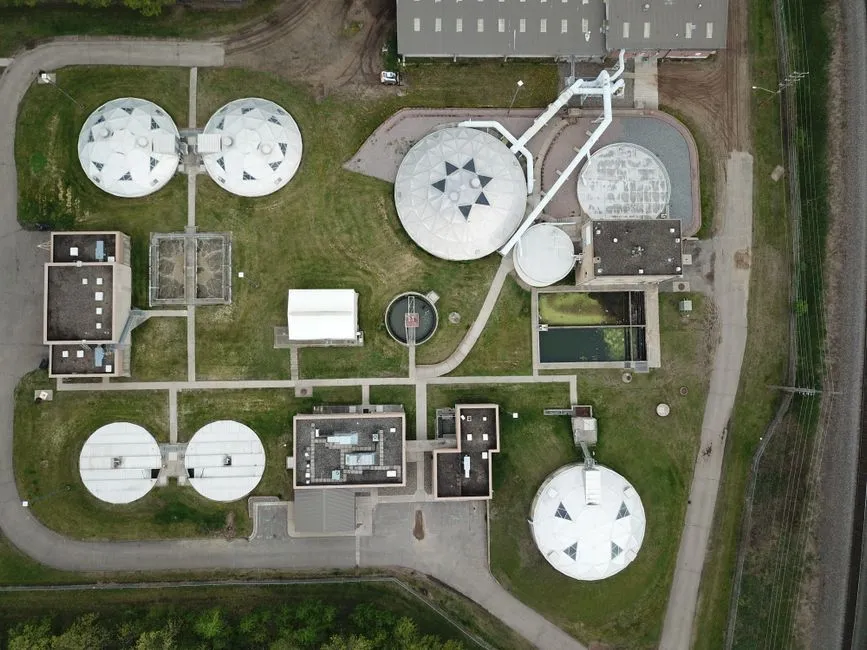
The existing TPDES authorization must be reviewed against four independently enforceable compliance rails: the permit and discharge conditions, discharge monitoring and enforcement history, EPCRA Section 313 reporting, and stormwater and conveyance authorization. Passing one review does not clear the others.
For a Texas acquisition, the existing TPDES permit number transfers and is reissued in the successor’s legal name; the TCEQ change-of-ownership filing is due within 30 days of closing (30 TAC §305.64, 2026). Combined process flows above 50,000 gpd require an individual TPDES permit. Smaller satellite operations may potentially use the TXR050000 multi-sector general permit if each files its own Notice of Intent and remains eligible (HydropureWater, 2026).
Pull at least eight quarters of DMRs from EPA ECHO. Review exceedances, Notices of Violation, open Enforcement Actions, Agreed Orders, and parameters operating within 80% of their limits (EPA ECHO; HydropureWater, 2026). Under 40 CFR 433, the cited metal-finishing categorical standards cap total nickel and total cobalt below 1.0 mg/L. Site-specific limits may be tighter under 30 TAC Chapter 307 and receiving-water capacity (HydropureWater, 2026).
Confirm prior-calendar-year EPCRA Section 313 Form R status for nickel, cobalt, and NMP. The filing deadline is July 1, and successor liability may survive closing if the seller failed to file (HydropureWater, 2026). For active construction, verify Notice of Intent and SWPPP currency. Separately diligence pipeline easements or drainage-district outfalls: a TPDES permit does not grant property or conveyance rights (HydropureWater, 2026).
| Compliance rail | Document or action required | Decision affected |
|---|---|---|
| TPDES authorization | Current permit, transfer status, site-specific limits, 50,000 gpd threshold | Permit expansion or continued coverage |
| Compliance history | Eight quarters of DMRs, NOV ledger, Enforcement Actions, Agreed Orders | Available permit headroom and risk allocation |
| EPCRA Section 313 | Prior-year Form R status for nickel, cobalt, and NMP | Successor reporting liability |
| Stormwater and conveyance | NOI, SWPPP, easements, outfall rights, drainage-district notifications | Construction authorization and lawful discharge route |
The wastewater acquisition diligence framework provides a useful document checklist, but Texas permit and conveyance requirements must be verified independently.
Build a Treatment Train That Matches Each Contaminant
The treatment train should remove contaminants in the order their physics permits: floating and emulsified oil and solids first, precipitated metals next, dissolved organics next, and dissolved salts only when reuse quality requires them. A single clarification step cannot substitute for chemical precipitation, and biological treatment alone is unsuitable for untreated metals streams that can inhibit biomass.
Use DAF as the front-end separator for body-shop and cathode-coating streams where suspended solids, FOG, oil, grease, and colloidal material must be removed. The referenced design specifies 4–300 m³/h skid capacity, 80–95% FOG removal, and downstream TSS below 100 mg/L (HydropureWater, 2026). For an equipment proposal, review DAF versus clarifier for EV and auto wastewater and request a DAF system for oily and solids-rich assembly wastewater.
For metal-finishing streams, use pH-controlled chemical precipitation followed by solids separation. The reference train applies ferric chloride or polyaluminum chloride at pH 9–10 to precipitate nickel, cobalt, and lithium as hydroxides. A lamella clarifier then separates the precipitate; the reference surface-loading rate is 20–40 m/h, making influent chemistry, solids capture, and sludge withdrawal critical sizing inputs (HydropureWater, 2026).
Use a submerged MBR where biological polishing and low-turbidity reuse are required. The reference train targets effluent turbidity below 1 NTU at MLSS of 8,000–12,000 mg/L and sizes for peak flows near 5,000 m³/day at full EV scale (HydropureWater, 2026). An MBR system for biological polishing and reuse should be priced with membrane replacement, controls, chemical cleaning, and off-peak loading included.
Where cathode coating and NMP management are in-house, recover NMP by vacuum distillation before biological treatment. This is solvent management, not merely wastewater treatment. A plant outsourcing cathode coating can omit that stage under the referenced guidance. Add two-pass industrial RO where cooling-tower makeup or another controlled reuse stream is justified; the reference target is permeate conductivity below 50 µS/cm at 70–85% recovery (HydropureWater, 2026). Apply final disinfection at the reuse or discharge point; the reference design identifies chlorine dioxide as one option. Compare MBR and conventional activated-sludge alternatives before selecting the biological stage.
| Contaminant or objective | Required unit operation | Key design input |
|---|---|---|
| Oil, FOG, paint solids, colloids | Equalization and DAF | Peak flow, emulsions, FOG loading, TSS |
| Dissolved nickel, cobalt, and lithium | pH-controlled precipitation and lamella clarification | Metal species, pH, chemistry, sludge generation |
| Dissolved organics and fine solids | MBR biological polishing | COD, toxicity, temperature, reuse target |
| NMP from in-house cathode coating | Vacuum distillation before biological treatment | NMP concentration, recovery objective, fouling |
| Cooling-tower makeup reuse | Two-pass industrial RO | TDS, conductivity, recovery, scaling |
| Final microbial control | Disinfection | Reuse point, contact conditions, residual requirements |
Model Reuse, Brine, Sludge, and Capital Costs
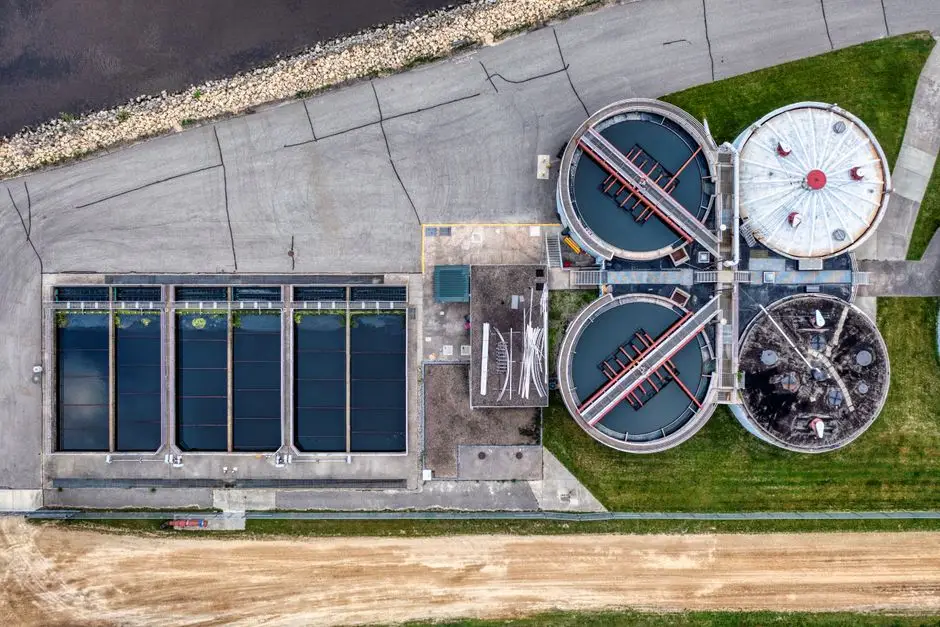
The procurement decision should compare total site cost, not the skid price alone. HydropureWater’s 2026 field guidance cites a $1.5 million–$6 million CAPEX envelope for a 1,500 m³/day DAF, MBR, and RO train excluding NMP distillation, or approximately $1,000–$4,000 per m³/day. That is a reference envelope, not an Arlington quotation; it excludes site-specific civil work, electrical changes, taxes, routing, and other unverified project costs.
Adding NMP vacuum distillation for in-house cathode coating, or an evaporator and crystallizer for ZLD alignment, moves the project toward the upper end or above that base range. A ZLD-ready configuration adds approximately 1.5–2.5 times to the base-train CAPEX (HydropureWater field data, 2026). Compare that increment with avoided disposal, water supply, and production-continuity requirements rather than assuming ZLD is required by the public expansion announcement.
At a 15–30% RO reject ratio, the 1,500 m³/day reference plant produces 225–450 m³/day of liquid reject. The cited disposal tariff is $0.40–$0.90 per 1,000 gallons. The supplied worked example uses 300 m³/day of reject and a $0.60 per 1,000-gallon avoided-disposal credit, producing approximately $48 per day or $17,500 per year (HydropureWater field data, 2026). That supports a brine-minimization line item but does not alone justify an evaporator.
Budget sludge dewatering separately. The reference design identifies a plate-and-frame filter press as the standard unit operation for metal-rich nickel, cobalt, and lithium hydroxide sludge. The industrial sludge-dewatering guide provides a starting point for comparing plate-and-frame and belt-press options.
| Cost case | Supported CAPEX reference | Buyer action |
|---|---|---|
| DAF + MBR + RO | $1.5 million–$6 million for 1,500 m³/day, excluding NMP distillation | Normalize bids by confirmed flow and contaminant loading |
| Add NMP vacuum distillation | Upper end of the base range or above | Confirm cathode coating remains in scope |
| ZLD-ready configuration | Approximately 1.5–2.5 times the base train | Model water, disposal, and continuity benefits |
| Metal-rich sludge dewatering | Discrete equipment and disposal line item | Price filter press, polymer, cake transport, and final fate |
Move from Diligence to Commissioning in Phased Steps
Equipment approval should follow permit, stream, and conveyance diligence rather than precede it. The first 90 days establish the legal and operating constraints; after that, measured peak loads and permit conditions should define the design basis.
- Days 0–30: File the TCEQ change-of-ownership CORE form within 30 days of closing, attaching the NOV and Agreed Order history. Confirm that satellite operations using the TXR050000 general permit have active NOI coverage.
- Days 30–60: Verify SWPPP currency for active construction. Obtain eight quarters of DMR data and flag parameters operating within 80% of their limits because changed operating conditions could move them into exceedance.
- Days 60–90: Confirm prior-year EPCRA Section 313 Form R status for nickel, cobalt, and NMP. Schedule the July 1 successor filing if the seller missed it.
- Day 90 onward: Complete the equalization-basin influent-channel survey, verify current flows and stream characteristics, benchmark the P&IDs, and freeze the treatment design around measured peak loads and permit conditions.
- Before final procurement: Require a vendor-guaranteed process basis covering flow, contaminant loading, pH, temperature, toxicity, reuse targets, sludge fate, controls, and site utilities. Require start-up, validation testing, training, and performance acceptance terms.
The process should then move through shop drawings, equipment selection, fabrication, installation, wet commissioning, and performance testing. Commission each block before introducing the next stream so that a chemical, hydraulic, or control problem is not hidden inside a combined startup. The hybrid treatment design for nickel-bearing wastewater illustrates the need to align unit operations with the actual contaminant pathway.
Frequently Asked Questions
Does GM publish a complete wastewater treatment design for the Arlington expansion?
No. GM’s 2023-06-08 announcement confirms more than $500 million of investment and new tooling and equipment in stamping, body shop, and general assembly, but it does not disclose wastewater flow, selected equipment, discharge limits, or permit requirements. Those items require site-specific documents and testing.
What treatment capacity does a Texas expansion need?
No defensible capacity can be selected from the public announcement or production forecast alone. Obtain current and expanded peak and average flows, batch-dump schedules, stream characterization, operating hours, the TPDES permit, discharge destinations, and reuse targets. Size equalization and downstream units against the verified peak and contaminant loads, not historical plant averages.
How should bids be compared fairly?
Normalize each proposal by design flow, contaminant loading, guaranteed effluent or reuse quality, chemical and energy use, sludge handling, controls, site utilities, delivery and commissioning schedule, and validation testing. For cost comparison, request a separate quote for NMP recovery, sludge dewatering, RO reject treatment, and any ZLD equipment; otherwise vendors may be pricing materially different scopes. A fair comparison also identifies which utilities, foundations, routing, electrical work, disposal, and permit support are excluded.
Does the expansion automatically require a new TPDES permit?
Do not assume that it does. Evaluate the existing TPDES authorization, the 50,000 gpd individual-permit threshold, successor transfer requirements, site-specific limits, stormwater NOI and SWPPP coverage, and pipeline or drainage-district conveyance rights. The permit should be amended or replaced only after the reviewed flows, expanded streams, and discharge conditions establish the necessary change (30 TAC Chapter 307; HydropureWater, 2026).
Which supplier-selection checks reduce project risk before purchase?
Require evidence tied to the site’s actual design basis. Ask each supplier to demonstrate stream segregation, permit-headroom analysis, peak and batch-flow testing, P&ID benchmarking, sludge and residual-disposal pricing, and performance guarantees. For metal finishing, compare DAF and metals-treatment options; for commercial review, use the scope and assumptions in the industrial treatment-plant cost breakdown. A supplier should identify exclusions rather than rely on a generic production-capacity guarantee.