What Changes When Conventional Activated Sludge Becomes MBR
MBR replaces the secondary clarifier in an activated-sludge treatment train with membrane filtration; it does not replace the biological reactor. RWTH Aachen’s 2008 dissertation reports that complete suspended-solids retention, almost complete pathogen removal, and the possibility of a higher sludge retention time can produce high-quality effluent. That advantage remains conditional on compatible wastewater, stable biology, effective pretreatment, and controlled membrane operation.
Conventional activated sludge separates biomass from treated water in a secondary clarifier. In an MBR, submerged membranes retain suspended solids while permeate passes to the next process step. The 2026 MBR cost per m3 guide provides a useful commercial entry point for buyers evaluating the biological, membrane, controls, and maintenance implications of that configuration.
Permeate quality must not be interpreted as proof that the original molecules were destroyed. A compound can remain in retained sludge, adsorb to equipment, pass into permeate, or transform into other compounds. The 2021 Elsevier review identifies membrane fouling as a main obstacle to widespread MBR adoption. For a Baytown ETP, fouling control is therefore part of process design, not an optional maintenance refinement.
Why the Wastewater Stream Changes the Answer
A combined plant average cannot establish whether MBR or conventional activated sludge is appropriate for industrial organic chemicals or natural gas liquids wastewater. The buyer needs a process-by-process characterization because batch dumps, tank cleanouts, product changeovers, and upset flows may differ from routine discharge. An industrial high-COD pretreatment strategy is useful for framing that diligence, but the results must come from representative Baytown samples rather than an assumed industrial profile.
Soluble and colloidal COD should be separated from suspended solids because biological oxidation, not membrane filtration, carries the principal organic-removal burden. Readily biodegradable organics may support activated sludge, while refractory compounds and inhibitory constituents can require longer retention times, altered reactor operation, or another process. Oil and grease can interfere with oxygen transfer and membrane surfaces; toxicity can suppress biomass; and pH, temperature, nutrients, and conductivity affect biological activity and reuse considerations.
Natural gas liquids wastewater may also arrive through batches or slugs. Equalization may therefore be necessary to limit shock loading and short-term biological or membrane instability, but equalization capacity cannot be selected without peak-flow and composition data. If water reuse is the objective, the receiving process must define its quality requirements. Sub-micron filtration addresses suspended material; it does not establish suitability for dissolved organics, salts, conductivity, or specific contaminants.
| Input to establish | Why it affects technology selection | Required evidence |
|---|---|---|
| Flow and variability | Determines hydraulic loading and equalization | Continuous flow record plus batch, cleanout, changeover, and upset samples |
| COD and BOD | Distinguishes soluble biodegradable load from particulate material | Representative COD and BOD analysis by process stream |
| Oil and grease, suspended solids | Controls biological compatibility and membrane fouling risk | Source-specific oil, grease, solids, and colloidal characterization |
| Toxicity and inhibitors | Can suppress biomass or damage process equipment | Specific compound analysis and biological response testing |
| pH, temperature, nutrients | Affects biological reaction rates and dosing needs | Operating envelope, diurnal or batch variation, nutrient balance |
| Reuse or discharge target | Defines the required treatment and polishing sequence | Permit, receiving-process specification, or approved reuse criteria |
The supplied research does not establish a universal removal percentage, a Baytown site-specific effluent limit, or guaranteed performance for these wastewaters. Those values require representative testing, the applicable permit, and pilot results.
Compare MBR and Conventional Activated Sludge for Baytown Chemical Wastewater
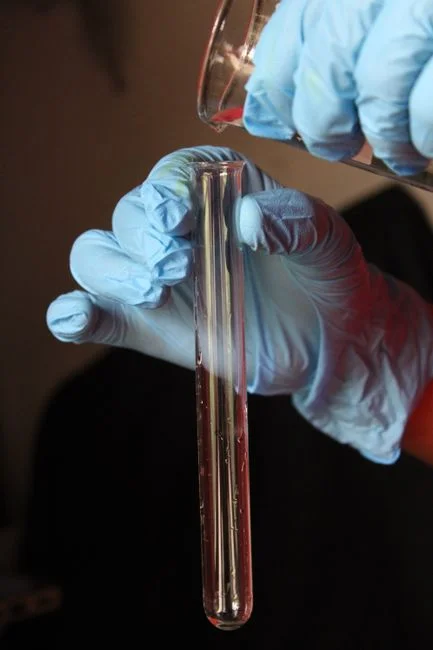
The practical distinction is biological solids retention versus membrane solids retention, not a choice between biological treatment and physical treatment. Both configurations use activated sludge. MBR can support a higher sludge retention time, but that benefit has value only when the retained biomass can biodegrade the relevant organics and the membrane can remain operational with the wastewater’s oil, solids, and fouling tendency.
HydropureWater’s supplier data states that its integrated MBR membrane bioreactor system occupies 60% less footprint than conventional systems. That comparison must be defined before procurement: the buyer should establish whether the basis includes equalization, pretreatment, biological reactor, membrane tank, controls, sludge handling, and required clearances. A footprint claim without a common boundary is not a plant comparison.
For reuse readiness, supplier data specifies filtration below 1 μm and, for the DF configuration, submerged PVDF modules with 0.1 μm specifications. Those features support low-solids permeate, but they do not remove dissolved contaminants or determine whether conductivity, residual organics, temperature, or salts are acceptable to the intended reuse process.
| Decision factor | MBR | Conventional activated sludge | Buyer check |
|---|---|---|---|
| Biological treatment | Activated sludge integrated with membrane separation; higher sludge retention time may be possible | Activated sludge followed by clarification | Match reactor loading and retention time to measured biodegradability |
| Solids separation | Suspended membranes retain solids without a conventional secondary clarifier | Secondary clarifier separates biomass from effluent | Compare solids separation against the required effluent and reuse specification |
| Footprint | <HydropureWater states 60% smaller footprint than conventional systems | Requires a biological reactor and secondary clarifier | Define the comparison boundary and included civil work |
| Permeate characteristics | Sub-micron filtration; DF modules have a 0.1 μm PVDF specification | Clarified effluent quality depends on flocculation and clarifier performance | Assess dissolved contaminants and downstream reuse requirements |
| Operations | Adds membrane aeration, scouring, cleaning, integrity monitoring, and replacement provisions | Simpler solids-separation configuration, with separate biological and clarifier operation | Price labor, chemicals, downtime, spares, and membrane replacement |
| Supplier capacity examples | Integrated systems: 10–2,000 m³/day; DF modules: 32–135 m³/day in 80–225 m² configurations | Equipment capacity depends on the selected clarification configuration | Treat supplier ranges as screening references, not final sizing |
Conventional activated sludge may have the lower complexity advantage where biodegradability is favorable and a well-designed clarifier meets the discharge or reuse target. MBR may protect reuse value or reduce solids carryover where that objective warrants added operating controls. Neither option should be selected on generic cost savings; request lifecycle operating, maintenance, sludge, and disposal quotations and compare their compliance-excursion exposure.
Pretreatment and Fouling Control Are Part of the MBR Decision
For industrial organic chemical and natural gas liquids wastewater, a typical engineering path is characterization and flow equalization, removal of fibrous or gross solids, oil and grease control, pH and dosing control, biological treatment, membrane separation, and downstream polishing where required. Each step addresses a distinct risk: equalization controls hydraulic and concentration shocks; coarse removal protects equipment; oil control limits biological interference and membrane fouling; and biological treatment addresses biodegradable organics.
HydropureWater lists its DAF pretreatment for oil, grease, and solids at 4–300 m³/h and identifies suspended solids, FOG, oil and grease, and colloidal matter as pretreatment applications in petrochemical wastewater. Those supplier-provided figures make DAF a candidate for evaluation ahead of the MBR, not proof that it is required or sufficient for a Baytown stream.
Upstream solids and oil removal reduces membrane loading, but it does not establish biological compatibility. Toxicity, refractory COD, and inhibitory constituents still require treatability testing. A mechanical bar screen for gross solids can also protect downstream equipment, although its required configuration depends on the solids encountered.
Continuous membrane scouring is part of the DF module design, which includes an aeration box for continuous membrane scouring. Nevertheless, the 2021 Elsevier review identifies fouling as a principal practical limitation of MBR deployment. The supplier proposal should therefore define scouring intensity and operation, cleaning triggers, cleaning chemistry, recovery method, condition monitoring, spare-module strategy, membrane replacement, and the operating effect of cleaning or maintenance. These are process guarantees to negotiate, not administrative details to leave for commissioning.
Removal Is Not the Same as Complete Degradation
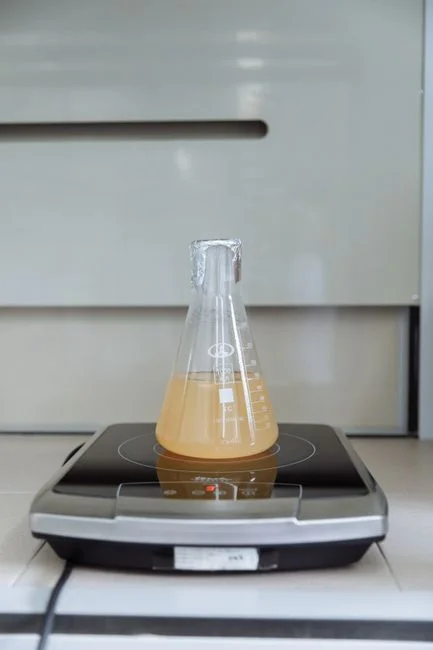
Removal from effluent is a physical separation outcome; mineralization is conversion of the original compound into stable products such as carbon dioxide and water. RWTH Aachen’s 2008 radiotracer work demonstrates why those terms cannot be used interchangeably. In its laboratory MBR study, 42% of applied nonylphenol radioactivity appeared in the effluent as degradation products, 21% left with daily excess sludge, and 34% was adsorbed on MBR components. Under the applied conditions, mineralization and volatilization were each less than 1%.
The result matters because a low permeate concentration does not necessarily demonstrate destruction of the parent compound. Sorbed residues can prolong release, retained sludge concentrates material, and transformation products may remain soluble enough to pass through the membrane. An appropriate site study therefore considers the effluent, sludge, and relevant equipment surfaces rather than relying on one measured concentration.
| RWTH Aachen 2008 nonylphenol radioactivity balance | Result | Interpretation |
|---|---|---|
| Recovered in effluent as degradation products | 42% | Parent-compound disappearance did not equal mineralization |
| Removed with daily excess sludge | 21% | Retained sludge was part of the measured fate |
| Adsorbed on MBR components | 34% | System surfaces affected the measured distribution |
| Mineralization and volatilization | Each less than 1% | Complete conversion to stable products was negligible under the test conditions |
RWTH Aachen’s 2008 bioaugmentation comparison also reported the same 56% effluent, 25% system-sorbed, 9% excess-sludge, and 2.3% carbon-dioxide distribution for the non-bioaugmented and bioaugmented reactors described. The comparison does not support a general performance claim for Baytown wastewater. The source examined pharmaceutical and antibiotic-impact compounds in laboratory work; its value here is methodological. It shows why compound-specific mass balances and sludge-fate analysis should accompany any reuse or removal claim.
Build a Site-Specific Selection and Pilot Plan
A defensible Baytown technology selection proceeds from characterization to pilot evidence, then to a lifecycle and supplier-evaluation package. The MBR versus activated sludge buyer’s guide provides a related framework, but the wastewater characterization and acceptance criteria must remain specific to the facility being evaluated.
- Collect representative samples during normal production, tank cleanouts, product changeovers, and upset conditions. A routine grab sample is not an adequate basis for sizing a variable industrial stream.
- Characterize flow, COD, BOD, suspended solids, oil and grease, pH, temperature, toxicity, nutrients, conductivity, and compounds relevant to the reuse or discharge objective.
- Run bench or pilot biological testing to establish treatability, identify inhibitory effects, and determine whether membrane separation adds enough value over a properly designed conventional clarifier.
- Test a representative MBR configuration for flux behavior, fouling tendency, cleaning response, solids separation, biological stability, and performance variability across the expected feed envelope.
- Develop lifecycle costs from membrane replacement, energy, cleaning chemicals, sludge handling, labor, downtime, reuse value, and compliance-risk scenarios. Use the 2026 MBR cost per m3 guide to structure the model, not as a substitute for a site quotation.
- Require bidders to define performance guarantees, test methods, acceptance criteria, membrane warranty scope, replacement pricing, controls, operator training, and local service support.
| Stage | Decision output | Evidence required |
|---|---|---|
| Characterization | Feed envelope and contamination sources | Representative sampling by production condition |
| Biological testing | Treatability and inhibition assessment | Respirometry or representative continuous testing |
| MBR pilot | Flux, fouling, cleaning, and separation behavior | Operation across the defined feed envelope |
| Lifecycle comparison | Cost and risk-adjusted technology choice | Quoted energy, chemicals, spares, sludge, labor, and downtime |
| Supplier evaluation | Contract-ready performance obligations | Defined methods, acceptance tests, warranties, training, and service support |
Preliminary capacity ranges can support a screening exercise, but final hydraulic and biological sizing requires peak flow, equalization performance, feed characteristics, hydraulic loading, biological loading, temperature, and fouling assumptions. No quoted flow range or supplier capability should substitute for those inputs.
Frequently Asked Questions
How much does MBR cost compared with conventional activated sludge for Baytown chemical wastewater?
There is no defensible generic cost per cubic meter for this wastewater. Ask each supplier to quote the same scope: design flow, wastewater analysis, required effluent or reuse target, pretreatment, controls, civil work, membrane replacement, energy, chemicals, sludge handling, and commissioning. Compare lifecycle scenarios rather than equipment price alone.
Which supplier capacity range should be used to size an MBR system?
Treat supplier flow ranges as screening references, not design values. Final sizing needs peak flow, equalization behavior, feed characteristics, hydraulic and biological loading, temperature, and fouling assumptions. Ask the supplier to show how each design condition translates into membrane area, module count, hydraulic capacity, and redundant capacity.
Which MBR membrane and fouling-control features should the buyer verify?
Require written confirmation of membrane material, module configuration, continuous scouring, cleaning triggers and chemistry, recovery method, integrity monitoring, condition monitoring, spare modules, replacement pricing, and warranty scope. A membrane specification alone does not establish compatibility with the site’s oil, solids, temperature, and chemistry.
Does low suspended solids in MBR effluent prove that chemical wastewater is safe for discharge or reuse?
No. Low suspended solids demonstrates physical separation, not complete degradation of dissolved or transformable compounds. The permit and receiving authority must define governing limits, while the reuse process must define its own quality criteria. RWTH Aachen’s 2008 radiotracer results show why effluent, sludge, and compound-specific fate need separate consideration.