Determine Which Discharge and Permit Requirements Apply
Mining and metals plants near Kansas City meet pretreatment limits by first determining whether they discharge to a KC Water-sanctioned sanitary sewer and whether they qualify as a Significant Industrial User. The treatment train must then characterize pH, metals, TSS, oil and grease, and flow variation; equalize and chemically condition the stream; remove precipitated metals, solids, and FOG; and verify compliance through permit-specific monitoring and reporting. For metal finishing, ore processing, and aluminum forming, applicable federal pretreatment standards may include 40 CFR Parts 433, 434, and 467. Final limits and treatment design require confirmation against the current KC Water permit and site data.
Determine Which Discharge and Permit Requirements Apply
KC Water’s Industrial Pretreatment Program regulates industrial wastewater discharged to its publicly owned treatment works under the federal Clean Water Act, EPA’s General Pretreatment Regulations at 40 CFR Part 403, Missouri Clean Water Law and rules, and Kansas City Municipal Code Chapter 60, Article IV. A direct surface-water discharge instead requires the applicable federal effluent limitations and state NPDES authorization, so it is not a sanitary-sewer pretreatment project.
Use the regional mining and metals pretreatment compliance guide to frame the regulatory route, but do not infer authorization from the plant’s location. KC Water’s Regulatory Compliance Division decides whether a permit or other discharge authorization is required. New industrial users must provide information about the nature and characteristics of their wastewater before discharge begins.
Under Chapter 60, a Significant Industrial User is an industrial user that falls within specified categories. Screen the facility against every applicable criterion rather than evaluating only daily flow.
| KC Water screening criterion | Engineering or administrative question |
|---|---|
| Categorical pretreatment standards | Does the process fall within 40 CFR Part 433, Part 434, Part 467, or another applicable category? |
| Average water use or discharge of 25,000 gallons per day or more | Does the facility meet the Chapter 60 volume threshold? |
| Process waste stream representing 5% or more of the serving POTW’s average dry-weather hydraulic or organic capacity | What is the plant’s process discharge volume relative to the receiving POTW’s capacity? |
| Acceptance of waste from outside the facility boundary | Does the plant receive off-site waste for treatment, storage, or disposal? |
| Designation by the KC Water director | Could the discharge reasonably affect POTW operations or compliance with pretreatment requirements? |
The application sequence begins with KC Water’s Wastewater Permit Survey, which must be submitted within 30 days of a written KC Water request. KC Water then identifies the applicable application. For categorical facilities, the SIU application includes baseline monitoring information, laboratory records, and required certifications. Discharge is authorized only when the issued permit becomes effective and the facility complies with its conditions.
Characterize the Wastewater by Treatment Envelope
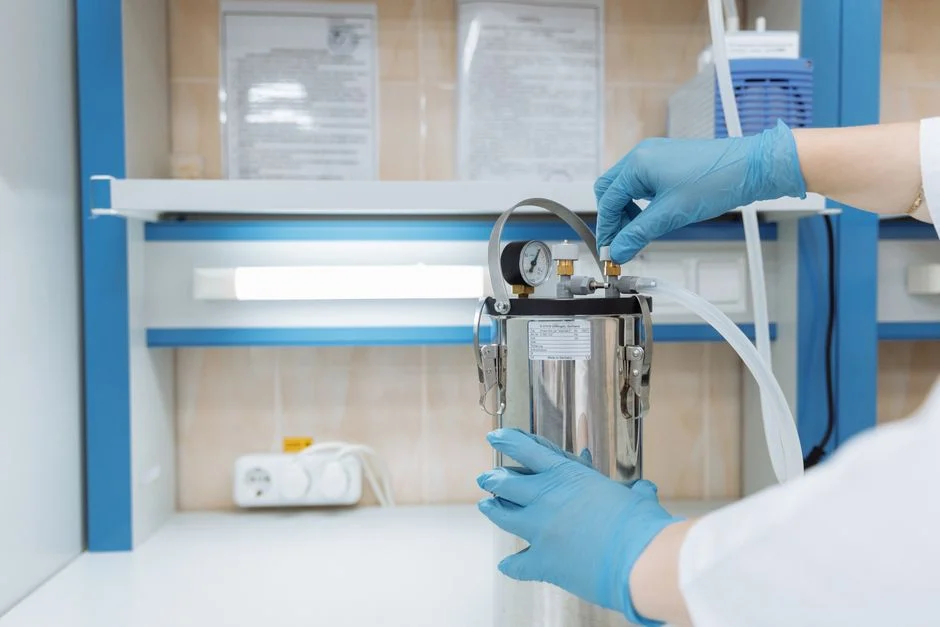
Wastewater characterization must define both concentration and variability before equipment selection because permit compliance applies to the complete discharge, not only an average sample. The supplied HydropureWater article, DAF or Clarifier for Mining/Metals Wastewater in Kansas City 2026, separates three influent profiles that require different treatment envelopes.
Mineral-processing and tailings water generally carries high TSS, silica, iron, and variable pH. Metal-finishing rinsewater contains dissolved lead, cadmium, nickel, zinc, copper, and chromium together with emulsified oils and FOG. Steel and galvanizing contact water combines lubricating oils, mill scale, TSS, and dissolved metals. These are screening profiles, not substitute permit limits or site-specific design data.
| Stream | Dominant contaminants | Treatment implication |
|---|---|---|
| Mineral processing and tailings water | High TSS, silica, iron, variable pH | Emphasize solids separation, pH control, and clarification performance |
| Metal-finishing rinsewater | Dissolved metals, emulsified oil, FOG | Precipitate metals and remove emulsified oil before discharge |
| Steel and galvanizing contact water | Lubricating oil, mill scale, TSS, dissolved metals | Provide a hybrid treatment train for oil, solids, and metals |
Build a representative sampling program around production conditions rather than relying on one composite sample. Obtain the permit’s analytical requirements, then characterize flow and mass loading across normal production, startup, shutdown, cleaning, and upset periods. Include pH, TSS, metals, oil and grease, FOG, and process chemistry; include additional constituents when the permit or categorical standard requires them.
The MBR versus activated sludge for mining wastewater comparison provides useful downstream-treatment context, but biological or membrane polishing should not be selected before the effluent profile and permit limits demonstrate the need.
Identify worst-case batch dumps, stormwater, cleaning chemicals, and slug loads. KC Water requires spill and slug planning, notification procedures, and controls tied to permit conditions. Equalization and chemical-control sizing should therefore reflect peak hydraulic flow and contaminant mass, not average concentration alone.
Build the Treatment Train from Equalization Through Sludge Handling
A defensible treatment train starts with flow equalization and ends with a defined sludge-disposal route, with every intermediate step assigned a permit or process-control function. The supplied HydropureWater process guide presents equalization, pH adjustment, coagulation, flocculation, primary clarification, optional downstream polishing, and sludge dewatering as the screening sequence.
The equalization basin buffers pH and load swings. The guide specifies 24–48 hours of hydraulic retention time, but the selected duration must be confirmed against the permit, production cycle, peak mass loads, and available footprint. A PLC-controlled automatic chemical dosing system should operate within the chemical envelope established by testing rather than applying a fixed recipe.
| Process stage | Screening parameters from the supplied HydropureWater guide | Design verification |
|---|---|---|
| Equalization | 24–48 hours HRT | Confirm against permit, production cycle, peak flow, and mass loading |
| Metal hydroxide precipitation | Adjust pH to 8.5–9.5 with sodium hydroxide or lime | Establish the target pH for the actual metal mix and permit limits |
| Coagulation | 50–200 mg/L polyaluminum chloride or 100–300 mg/L ferric chloride | Confirm through jar testing |
| Flocculation | 1–5 mg/L anionic polyacrylamide; 10–20 minutes of gentle mixing | Optimize dose and control excessive shear |
| Clarification | DAF float or lamella underflow | Match the separator to oil, floc density, and solids characteristics |
| Sludge handling | DAF float at 3–5% dry solids; lamella underflow at 0.5–1.5% dry solids | Specify thickening and dewatering based on actual yield and disposal route |
For metal hydroxide precipitation, pH adjustment to 8.5–9.5 with sodium hydroxide or lime is the guide’s screening range. The listed coagulant and anionic polyacrylamide ranges are not universal recipes. Jar testing is required because the zinc, nickel, and copper ratio, cleaning-chemical chelants, and FOG variability differ by plant.
Maintain the guide’s 10–20 minutes of gentle flocculation as a starting point. Excessive shear can fragment flocs into particles that escape clarification. A dissolved air flotation system then separates floated oil and flocs, while the clarified underflow proceeds to polishing only where required.
Sludge dewatering must be included in the treatment decision. The guide reports DAF float at 3–5% dry solids and lamella underflow at 0.5–1.5% dry solids; dilute lamella underflow typically requires thickening before a plate-and-frame filter press. The belt filter press process guide provides relevant context for comparing mechanical dewatering arrangements.
Choose DAF or Lamella Clarification by Use Case
DAF is the leading candidate for emulsified oil, FOG, fine metal hydroxide flocs, and colloidal material; lamella clarification is stronger for coarse, fast-settling solids with little oil. This is a contaminant-selection decision, not a universal preference for one equipment type.
The supplied 2025-12 industrial DAF figures report up to 97% TSS reduction, 60–80% COD removal, and more than 90% removal of precipitated heavy metals. These are preliminary screening figures, not KC Water permit guarantees. The supplied guide states that the HydropureWater DAF range covers 4–300 m³/h across 13 models.
Lamella clarification fits a mineral-slurry stream dominated by high-density, coarse solids, particularly where an existing concrete basin and lower chemical consumption matter. The supplied guide reports surface loading of 20–40 m/h and chemical use up to 30% lower with sludge recirculation.
| Decision factor | DAF | Lamella clarification |
|---|---|---|
| Best-fit stream | Emulsified oil, FOG, fine metal hydroxide flocs, colloidal material | Coarse, fast-settling solids with little oil |
| 2025-12 industrial DAF screening result | Up to 97% TSS reduction; 60–80% COD removal; more than 90% removal of precipitated heavy metals | Not offered as a comparable permit-performance guarantee |
| Lamella surface loading | Not the governing selection criterion | 20–40 m/h |
| Chemical-use claim | Not used as the principal lamella advantage | Up to 30% lower with sludge recirculation |
| Important limitation | Requires a complete performance demonstration against site chemistry | Emulsified oil droplets below about 20 microns may not coalesce; metal hydroxide flocs below about 50 microns may pass typical 50–80 mm plate spacing |
| Sludge route | Float at 3–5% dry solids | Underflow at 0.5–1.5% dry solids; thickening may be required |
Primary clarification should not be assumed sufficient. Add biological treatment, membrane treatment, filtration, or another polishing step only after the effluent profile and permit limits show that primary clarification cannot meet the applicable requirements. The mining-plant sewer pretreatment guide for 2026 provides additional regional context.
For temporary capacity, the supplied guide cites a WesTech mobile DAF trailer specification dated 2025-09 measuring 47 ft 6 in by 8 ft 6 in or 51 ft 7 in by 8 ft 6 in in operating configuration and delivered online within one day. That is a cited equipment specification, not a Kansas City delivery promise; confirm current availability, transportation conditions, utilities, and site performance.
Demonstrate Compliance with Monitoring and Change Control
A compliant treatment train requires an auditable operating program covering sampling, analysis, reporting, record retention, and notification of violations and planned changes. Equipment performance does not replace these permit duties.
Implement the monitoring frequencies, sampling points, analytical methods, recordkeeping requirements, reporting forms, and notices specified in the facility’s KC Water discharge permit. KC Water states that reporting periods and due dates vary by facility, so the issued permit—not a generic reporting calendar—is controlling.
Retain monitoring results, laboratory reports, sampling records, and required BMP documentation for at least three years. Keep records longer during unresolved litigation or when the applicable authority directs, and make them available for inspection.
Review and update the Accidental/Slug Discharge Control Plan when changes affect spill or slug-discharge potential. Review the Toxic Organic Management Plan or signed applicability letter at permit renewal and when a substantial change affects its basis. KC Water requires a Notice of Change at least 60 days before a planned significant change; a change of more than 10% in effluent quantity is a significant flow change, and substantial changes in wastewater character must also be reported.
If sampling establishes a violation, notify KC Water within 24 hours after becoming aware and submit required repeat-sampling results within 30 days after becoming aware, subject to applicable federal exceptions. These duties should be written into the operating procedure before startup.
The EMD Millipore enforcement action illustrates the consequences of incomplete pretreatment control. Williams Mullen reported on 2017-03-30 that the alleged violations included POTW pass through or interference, federal pH prohibitions, failure to notify the POTW of slug loads, and discharge flow-rate violations. The settlement required treatment upgrades, operator training, sampling, quarterly monitoring, and a $385,000 civil penalty.
The industrial pretreatment compliance guide can support operator training and monitoring-plan development, but its permit requirements must be mapped to the Kansas City facility’s actual authorization.
Procurement and Acceptance Checklist
Equipment bids should be evaluated against the current permit and a site-specific design basis, not generic removal percentages. Ask each supplier to identify the design flow, hydraulic profile, chemical consumption, control sequence, solids yield, sludge interface, utilities, installation footprint, and included testing.
- Issue the current permit, wastewater characterization, production schedule, and identified worst-case batches as mandatory bid inputs.
- Require jar testing to establish the chemical envelope for the actual metal ratio, chelants, FOG, and flow variability.
- Require a pilot or site acceptance test that demonstrates the selected duty before final acceptance.
- State which performance guarantees apply to the DAF, lamella, or downstream polishing equipment and distinguish equipment guarantees from permit compliance.
- Document operator training, control narratives, spare parts, maintenance access, startup testing, and the permit-modification path.
The industrial wastewater system selection guide provides a useful framework for comparing bids. A supplier should document how its proposed equipment addresses the permit limit, not merely report a laboratory removal percentage under unrelated feed conditions.
Frequently Asked Questions
What is the first step when selecting pretreatment equipment for a Kansas City metals plant?
Determine the discharge route and obtain the current KC Water permit before selecting a clarifier. Confirm whether the wastewater enters a KC Water-sanctioned sanitary sewer, screen the plant against every Significant Industrial User criterion, and use the wastewater characterization and permit to define the required treatment envelope. Equipment claims are not permit guarantees.
Should a metal-finishing plant choose DAF or lamella clarification?
Choose DAF as the leading candidate when the stream contains emulsified oil, FOG, fine metal hydroxide flocs, or colloidal material. Lamella clarification is more appropriate for coarse, fast-settling solids with little oil. Size the selected unit from representative hydraulic and mass-loading data, jar-test results, and the final permit—not from average influent concentration alone.
How much does a compliant industrial wastewater treatment system cost?
No defensible price can be stated without the current permit, wastewater dataset, flow profile, treatment objectives, site utilities, sludge-disposal route, and required performance demonstration. Ask bidders for itemized equipment, installation, chemicals, controls, startup testing, training, sludge handling, and acceptance-test costs. Do not treat a generic removal-efficiency claim as a substitute for a priced design basis.
How should an owner select a supplier and manage compliance risk?
Require evidence tied to the site duty: design inputs, jar-test support, pilot or acceptance-test criteria, control narratives, chemical consumption, solids yield, maintenance access, and operator training. Also verify the notification path for permit changes, spills, slug loads, and sampling-derived violations. For planned significant changes, KC Water requires a Notice of Change at least 60 days in advance.