Determine Which Discharge Requirements Apply in Odessa
Mining and metals plants near Odessa meet sewer pretreatment limits by first identifying the discharge path, then characterizing the wastewater and matching treatment equipment to the applicable permit. EPA explains that NPDES establishes activity-specific discharge limits and conditions to protect receiving waters and prevent interference with publicly owned treatment works. Federal mining rules do not replace the local industrial user permit: the plant must obtain the Odessa-area sewer authority’s current rules, prohibited discharges, sampling instructions and applicable pollutant limits. The design should then cover flow control, pH adjustment, solids removal, filtration, metals control where required, monitoring and sludge handling, without assuming numerical limits that were not supplied in the available research.
Start by creating a separate discharge-path record for every proposed stream. A stream sent to a POTW is an indirect discharge; a stream sent through a permitted outfall to surface water or another environmental destination may require an NPDES authorization. EPA states that point-source discharges from mining operations, including discharges from associated impoundments, must be authorized under an NPDES permit. Connecting to a sewer therefore does not, by itself, establish that every requirement has been resolved (US EPA, Industrial Wastewater, current source).
Request the current sewer-use ordinance and industrial user permit from the applicable authority. The request should identify prohibited discharges, local discharge limits, surcharge rules, monitoring requirements, the required sampling point and sample type, reporting method, record-retention requirements and whether production-area drains also require stormwater controls. Keep this mining wastewater sewer-limit compliance guide as a working reference, but use the issued Odessa-area documents—not a general article—as the controlling source.
Use 40 CFR Part 436 as a source-review checkpoint, not as the substitute for the local permit. EPA states that the regulation covers wastewater discharges from mine drainage, mineral processing operations and stormwater runoff, and that its mining requirements are incorporated into NPDES permits (US EPA, Mineral Mining and Processing Effluent Guidelines, current source). Record the result for each stream rather than applying one rule set across the site.
| Permit-matrix field | Record required for each stream |
|---|---|
| Waste stream | Mine drainage, process wastewater, mineral-processing wastewater, stormwater runoff or another identified source |
| Destination | POTW sewer, permitted outfall or another environmental discharge route |
| Governing authority | Sewer authority, NPDES authority and any other permit administrator |
| Limits and prohibitions | Exact pollutant limits, prohibited discharges and applicable surcharge provisions |
| Compliance program | Sampling point, sample type, monitoring frequency, reporting method and record requirements |
Characterize the Wastewater Before Selecting Equipment
Equipment selection should follow representative mining wastewater characterization, not a single compliance sample. Obtain flow and analytical data across normal production, startup, shutdown, storm and upset conditions, then document how long each condition lasts. The design basis must include peak flow and batch discharge behavior because a compliant average result does not establish adequate treatment capacity for a surge or upset.
Test for every pollutant identified in the applicable permit and sewer-use rules. The mining treatment source identifies suspended solids, metals, heavy metals, metalloids such as iron, arsenic and manganese, organic compounds, acidic conditions and, in some cases, high dissolved solids or brackish water as relevant characteristics (Genesis Water Technologies, Mining Water Treatment: How to Meet Stricter Standards, current source). Those constituents are screening considerations, not evidence that every plant near Odessa has the same wastewater.
Map the wastewater to the process that produced it. EPA identifies post-extraction activities including crushing, milling, washing and chemical treatment, all of which can change wastewater composition (US EPA, Mineral Mining and Processing Effluent Guidelines, current source). The review should record ore characteristics, process aids, wash-water use, chemical additions and the points at which drainage and runoff enter the collection system.
| Design input | Why it affects equipment selection | Information the buyer must obtain |
|---|---|---|
| Flow profile | Determines equalization, treatment and discharge-handling capacity | Representative continuous flow, peak flow, batch volume and duration |
| pH | Controls chemical demand and can influence metal precipitation | Range across operating and upset conditions |
| Suspended solids | Sets the solids-separation and filtration duty | Representative concentration and particle characteristics |
| Metals and other regulated pollutants | Determines whether precipitation, adsorption, ion exchange, membranes or another control step is needed | Concentration, and whether the permit specifies total or dissolved metals |
| Oil and grease, if applicable | May require pretreatment or flotation | Applicability, concentration and permit reporting method |
| Laboratory requirements | Prevents incompatible analytical methods or holding times | Required methods, containers, preservation, holding times and qualifiers |
Keep mine drainage, mineral-processing wastewater and stormwater runoff separate during characterization because EPA treats them as distinct discharge categories within 40 CFR Part 436. Do not assign a numeric equipment size until representative flow and required final quality are documented. Confirm that the laboratory’s analytical methods and holding times match the issued permit or sewer-use rules.
For broader method selection, compare the industrial heavy-metals removal methods comparison and assess sulfide-bearing streams separately using the supplied sulfide-removal guide for industrial wastewater. These references help structure the inquiry; the permit and site data determine the selection.
Build a Treatment Train That Tracks the Pollutants
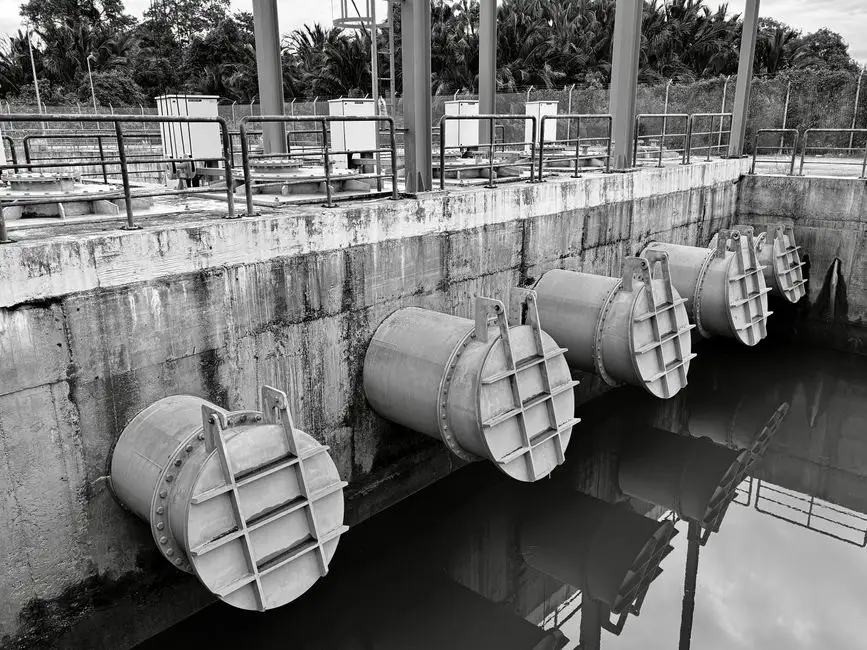
A defensible treatment train follows the contaminant pathway from collection point to compliance point. Equalization and flow management come first when the stream is variable, followed by screening or debris removal where needed. Chemical dosing then controls pH and supports coagulation and flocculation; clarification or flotation removes the resulting solids; filtration provides the final solids barrier where required; and residual solids leave through a controlled dewatering route. A DAF system for suspended-solids pretreatment can fit where flotation is technically appropriate, while a PLC-controlled chemical dosing system supports repeatable reagent addition.
The sequence matters. The mining treatment source identifies pH adjustment as the first step and explains that it can help dissolved metals precipitate before solids removal. It then identifies coagulation and flocculation, clarification, post-filtration and additional chemical controls where needed (Genesis Water Technologies, Mining Water Treatment: How to Meet Stricter Standards, current source). Screening prevents oversized debris from damaging or blinding downstream equipment; equalization prevents a batch from overwhelming dosing or separation.
| Wastewater problem | Trainable treatment response | Design evidence required |
|---|---|---|
| Variable flow or batch discharges | Equalization and controlled feed | Flow profile, operating schedule and batch duration |
| Debris or coarse solids | Screening and appropriate pretreatment | Material description and equipment compatibility |
| Off-spec pH | Chemical dosing and process control | pH range, reagent selection and control response |
| Suspended solids and colloids | Coagulation/flocculation with clarification or flotation | Solids concentration, particle characteristics and required effluent quality |
| Dissolved or particulate metals | Precipitation and solids removal, or another selected metals-control method | Total/dissolved basis, concentration and residual limit |
| Final solids interference | Filtration after clarification or flotation | Required solids concentration and monitoring method |
| Removed solids | Thickening, storage and dewatering | Solids mass, moisture characteristics and destination |
Product capabilities can frame alternatives but cannot size the project. The supplied product catalog describes 13 DAF models spanning 4–300 m³/h for suspended-solids, oil-and-grease and colloidal removal. It also describes a JY integrated system spanning 10–200 m³/h, combining coagulation, flocculation, sedimentation, filtration and automatic backwash; under its stated catalog conditions, it treats surface water with turbidity up to 3,000 mg/L to below 3 mg/L (HydropureWater product catalog, 2026). Those scopes are vendor-stated, not universal mining-wastewater guarantees or substitutes for site-specific design.
For compact sludge separation with recirculation, the catalog specifies lamella clarifier surface loading rates of 20–40 m/h and chemical-consumption reduction of up to 30%. Treat these as product claims. Confirm applicability against actual water chemistry, loading, sludge characteristics and required final quality. Route clarifier, flotation and filter solids to dewatering rather than returning them directly to the process.
Connect Metals Removal to the Permit Limit
A solids-removal device does not automatically demonstrate compliance with a dissolved-metals limit. First determine whether the controlling permit defines the requirement as total metals, dissolved metals or another analytical basis, and obtain the exact definition from the applicable authority.
Use characterization results to compare chemical precipitation, ion exchange, adsorption, membranes and flotation. The industrial heavy-metals removal methods comparison provides a useful starting point for screening alternatives. The selected process must reflect the actual metal species, concentration range, competing ions and required residual quality; a method name alone is not a design.
Chemical precipitation depends on sequence. pH adjustment can support metal precipitation, while coagulation and flocculation convert precipitated material and fine particles into material that can be separated before final filtration or monitoring (Genesis Water Technologies, Mining Water Treatment: How to Meet Stricter Standards, current source). Solids removal then reduces particulate carryover, but it does not demonstrate that dissolved metal has been removed to the permit requirement.
Do not state a guaranteed residual metal concentration without the selected method, reagent strategy, solids-separation step and representative test data. Test the relevant total or dissolved fraction using the method specified by the permit or sewer authority. If the permit requires both forms, assess them separately rather than assuming one predicts the other.
Include metals-bearing solids in the residual-management plan. Precipitated or adsorbed metals become a concentrated solid stream whose quantity and characteristics depend on influent loading, reagent use and solids capture. A water-treatment train should therefore be evaluated together with its sludge route, not as a stand-alone effluent guarantee.
Design for Monitoring, Sampling and Failed Compliance Tests
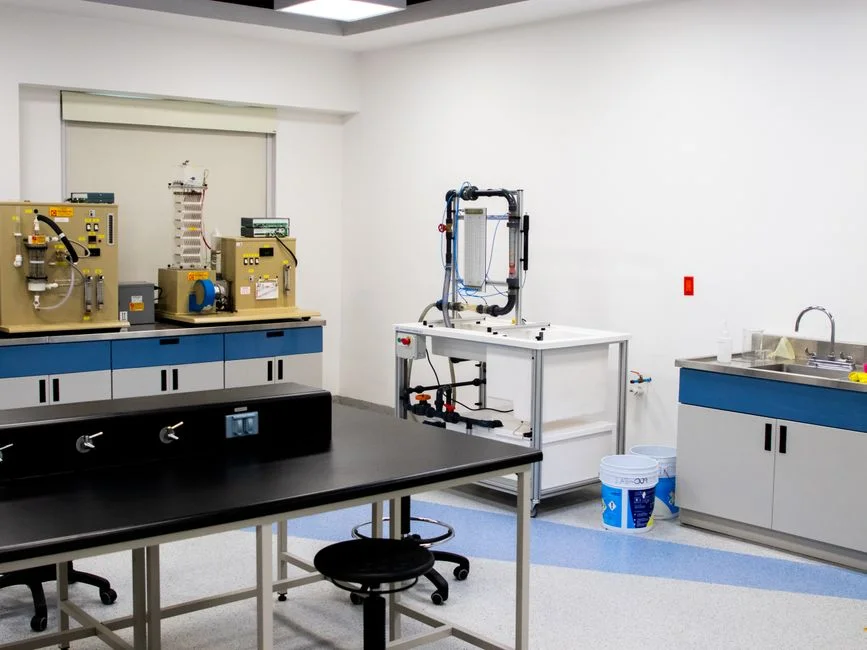
Compliance verification begins at the locations and frequencies stated in the issued permit or sewer-use requirements. Confirm the designated flow-measurement and sampling points, whether samples must be grab or composite, how flows are recorded, which laboratory methods apply and who receives the results. Do not select a convenient sample location merely because it is accessible.
Build process control around pH, flow, solids removal and any metals-control unit. The supplied catalog describes automatic chemical dosing systems as PLC-controlled, skid-mounted and factory-tested (HydropureWater product catalog, 2026). Factory testing supports commissioning, but it is not proof of site performance. During commissioning, verify reagent strength, pump calibration, sensor response, control interlocks and the response to high flow or off-spec pH.
Retain a traceable operating record: influent and effluent analytical results, flow, pH, reagent consumption, operating mode, alarms, calibration records, maintenance, bypass events and corrective actions. Match each laboratory report to the permit condition it demonstrates. The PLC-controlled chemical dosing system should be evaluated for that role, and a mechanical screen such as the rotary mechanical bar screen should be evaluated for upstream debris control where the wastewater warrants it.
Define escalation actions before commissioning: isolate or divert flow if needed, collect a confirmation sample, verify instruments and reagent delivery, investigate process upsets, document the decision and notify the authority where required. Distinguish an equipment malfunction from a genuine exceedance; neither should be resolved by changing the sampling point or method.
Treatment performance does not guarantee discharge compliance. The result depends on the approved design, permit limits, influent variability, operation, residuals management and required monitoring. A supplier should therefore state performance-test conditions and assumptions rather than offer an unconditional compliance promise.
Manage the Sludge and Verify the Complete Package
The treatment package must account for the solids removed by clarification, flotation, filtration and metals recovery or precipitation. Estimate their mass and characteristics from representative wastewater data, including suspended solids and the expected effect of chemical dosing. Assess moisture content, compressibility, hazardous constituents and the proposed handling route before selecting a dewatering method.
A plate-and-frame filter press may be appropriate where the required dewatering duty and solids characteristics support it. The supplied catalog describes filtration areas from 1 m² to 500 m², with manual, hydraulic and fully automatic PLC-controlled operation (HydropureWater product catalog, 2026). These are available configurations, not a recommendation to select an area without feed and cake data.
Confirm the destination, handling method, testing requirements and transport responsibility for the resulting sludge or filter cake. Do not treat dewatering as disposal: concentration changes the waste characteristics and may trigger separate requirements.
Compare the complete package for redundancy, maintenance access, spare parts, operator training and monitoring compatibility. A proposal that prices only the headline water-treatment unit may leave residual handling, controls or verification unresolved. The plate-and-frame filter press options and treatment valves and filter media should be evaluated as parts of that operating package.
Use a Buyer’s Checklist for Odessa Compliance
The most important procurement control is to issue the same requirements and design inputs to every bidder. Request the industrial user permit, sewer-use limits, prohibited discharges and sampling instructions before asking for a quotation. Then provide the wastewater characterization, flow profile, operating schedule, footprint, utilities, residual-solids route and preferred monitoring method. Missing Odessa-specific numerical limits should be identified as unresolved permit inputs, not replaced with assumptions.
Require bidders to map each proposed component to a defined pollutant or control objective. The comparison should cover pretreatment, solids separation, filtration, metals control, sludge handling, automation, monitoring and documentation. Each proposal should state its design assumptions, performance-test method, operating envelope, utility demand, maintenance requirements and permit-dependent items that remain unconfirmed.
| Bidder response | Question the buyer should ask | Acceptable evidence |
|---|---|---|
| Treatment basis | Which documented stream, flow condition and pollutants does the design address? | Traceable assumptions linked to supplied characterization data |
| Equipment capacity | What flow and loading condition determines the selected size? | Calculated sizing basis and identified worst-case condition |
| Pollutant performance | Which unit removes which pollutant, and how will that be verified? | Defined performance test with stated influent and effluent conditions |
| Controls and monitoring | What is measured, recorded, alarmed and sampled? | Control narrative, instrument list and permit-compliance map |
| Residual solids | Where do sludge and filter cake go? | Mass estimate, characteristics and handling pathway |
| Permit risk | Which decisions remain dependent on the sewer authority or an unverified input? | Explicit assumptions, exclusions and closeout actions |
Equipment ranges can support commercial comparison, not final sizing. The supplied catalog lists 13 automated DAF models across 4–300 m³/h and an integrated purification range of 10–200 m³/h (HydropureWater product catalog, 2026). Compare the integrated JY purification package and the high-efficiency sedimentation tank against the same wastewater data, treatment objectives and compliance requirements. Neither catalog range substitutes for flow-based sizing, solids loading, footprint, utilities and permit compliance.
Ask each supplier to identify what will be verified before shipment, what will be proved during commissioning and what remains contingent on the permit, representative sampling or full-scale operation. This separates a documented equipment offer from a defensible compliance proposal.
Frequently Asked Questions
What information is required to size a mining wastewater pretreatment system?
Request representative flow across normal, peak, batch, startup, shutdown, storm and upset conditions; wastewater characterization; the exact permit limits and analytical basis; the required sampling method; available footprint and utilities; and the residual-solids destination. Use these inputs to size equalization, dosing, solids separation, filtration and controls. Do not size from a single sample or a vendor’s general capacity range.
How should a buyer evaluate a supplier’s compliance proposal?
Require a pollutant-to-equipment map, documented sizing assumptions, utility demands, controls and alarm strategy, monitoring provisions, performance-test conditions, commissioning tests, maintenance requirements and residual-handling details. Ask the supplier to identify every item that depends on the industrial user permit or future representative data. The DAF versus clarifier comparison can help structure the solids-separation review, but it cannot replace site-specific sizing.
Are Odessa-specific sewer limits available from the federal mining rules?
No Odessa-specific numerical limits were supplied in the available research, and federal sources should not be used to infer them. Obtain the current sewer-use ordinance, industrial user permit and written discharge requirements from the applicable authority. EPA’s NPDES materials and 40 CFR Part 436 establish the broader regulatory context; they do not replace the local limits and instructions that apply to an indirect sewer discharge.
Can a treatment train be designed before the sewer permit is issued?
Conceptual work can proceed, but final sizing and compliance commitments must remain conditional until the permit conditions, prohibited discharges, sampling point and monitoring requirements are documented. Use an earlier industrial sewer-compliance checklist as a process reference only. The Odessa-area permit and representative wastewater data must govern the equipment specification and performance test.
Related Equipment
- industrial DAF system for suspended-solids pretreatment — specifications, capacity range, and technical data