
Which Treatment Technology Fits the Wastewater?
For mining and metals wastewater in Vaiden, choose a dissolved air flotation system when the target material floats or can be conditioned into light floc, especially oils, FOG, colloids, and some metal-bearing precipitates. Choose a gravity or lamella clarifier when solids are heavy, abrasive, and readily settle, such as sand, grit, dense mineral particles, or high-density sludge. HydropureWater’s 2026 screening guidance points to low-FOG TSS above 5,000 mg/L for clarification and FOG-bearing TSS below approximately 3,000 mg/L for DAF, but these are screening thresholds, not universal design rules or regulatory limits. Final selection requires real wastewater, peak flows, bench or pilot tests, the applicable permit, and the downstream sludge route.
DAF is a flotation process; conventional and lamella clarification are settling processes. An industrial DAF system for mining wastewater is a screening candidate when oils, FOG, colloidal material, fine particles, or conditioned low-density floc dominate the separation problem. A high-efficiency lamella clarifier is a screening candidate for heavy mineral solids and dense sludge that settle readily.
The distinction is contaminant behavior, not the word “clarifier.” Before buying either technology, establish whether the solid fraction floats, settles, or splits into both. That result determines whether one primary separator is justified or whether pretreatment and sequential separation are required.
How DAF and Lamella Clarification Separate Solids
DAF starts with accessible clean water and uses a recirculation pump to draw clarified water through a pressurization and saturation system before the water enters the flotation tank. Clearwater Industries explains that the air dissolves under pressure and forms microbubbles when released; its stated bubble size is 30–50 microns. The bubbles attach to impurities and flocculated particles, creating a floating sludge blanket that a skimmer removes into a collection trough.
That arrangement does not eliminate settling. Heavier material can accumulate in the bottom compartment of a DAF and requires a separate sludge collection and withdrawal route. A buyer should therefore evaluate both the floating blanket and the settled-solids inventory rather than treating DAF as a solids-free outlet.
Gravity clarification relies on settling. A lamella sedimentation tank adds inclined plates, increasing effective settling area within a more compact tank. HydropureWater’s lamella design states a surface-loading specification of 20–40 m/h; that is manufacturer-specific design information, not a universal performance guarantee or a basis for sizing without site data. The broader DAF clarifier specifications and selection data should be treated as technical inputs, not as site acceptance criteria.
| Process element | DAF | Gravity or lamella clarification |
|---|---|---|
| Primary separation force | Microbubble-assisted flotation | Gravity settling |
| Most suitable material | Floatable or light conditioned floc, oils, FOG, and fine matter | Heavy, readily settleable mineral solids and dense sludge |
| Solids withdrawal | Floating sludge by skimmer; settled material separately withdrawn | Bottom collection, often with recirculation in lamella systems |
| Principal mechanical scope | Recycle pump, air supply, saturation vessel, flotation tank, and skimmer | Tank, inclined plates where applicable, mixers, recirculation, and sludge pumps |
| Manufacturer-specific datum | Clearwater specifies 30–50 micron microbubbles | HydropureWater specifies 20–40 m/h lamella surface loading |
Match the Separator to the Mining or Metals Wastewater
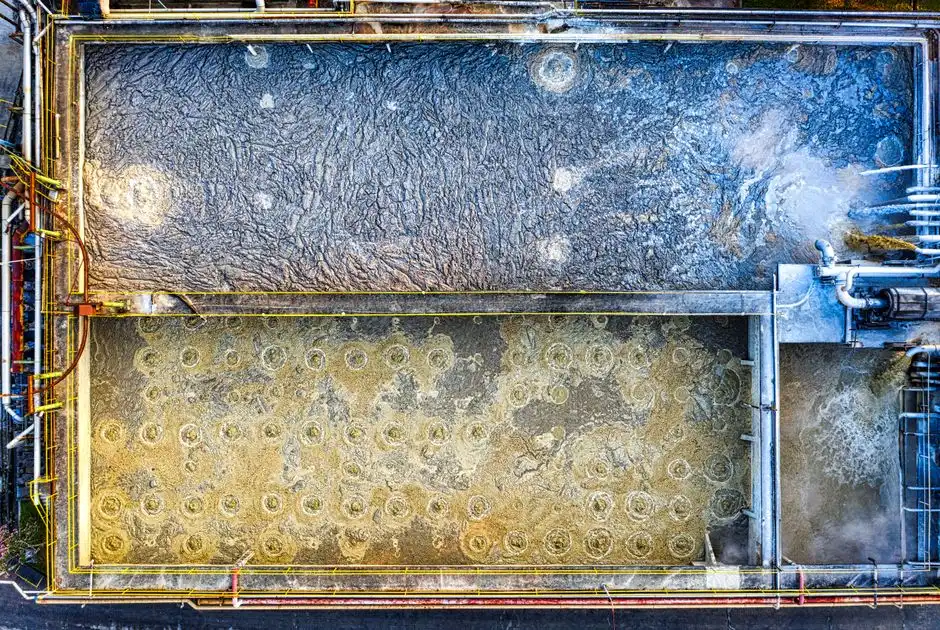
Metal-finishing rinse and pickling streams should first be screened for DAF because emulsified oil and light metal-hydroxide floc can benefit from conditioning and microbubble flotation. Aggregate wash water should first be screened for lamella or conventional clarification because abrasive silica and other heavy solids are more naturally associated with settling. Neutralized acid mine drainage should normally be assessed as a clarification or thickening duty when the metal-hydroxide sludge is dense.
Centralized waste treatment presents a different case. Mixed metals, FOG, variable TSS, and slug discharges may justify DAF as the front end, with clarification or thickening considered where sludge management requires it. A mixed stream containing substantial sand and meaningful FOG may need pretreatment or sequential separation rather than forcing both fractions into one primary unit.
These are screening decisions, not final selections. HydropureWater’s 2026 guidance says DAF is feasible for neutralized acid mine drainage only when the resulting floc is unusually light; it also notes that grit can impair DAF recycle performance and skim efficiency. The JY integrated water-purification system is identified as a possible integrated mine-water treatment train, with a stated capacity range of 10–200 m³/h and a stated turbidity application extending to 3,000 mg/L. Those are product specifications, not evidence that the unit will meet Vaiden’s permit or peak duty.
| Plant stream | First screening candidate | Reason to test it | Critical qualification |
|---|---|---|---|
| Metal-finishing rinse and pickling | DAF | Oil, FOG, and conditioned metal-bearing floc may float | Confirm emulsion behavior, pH control, conditioning, and peak TSS |
| Aggregate wash water | Lamella or conventional clarifier | Heavy, low-FOG mineral solids are suited to settling | Provide grit protection and verify abrasive-solids handling |
| Neutralized acid mine drainage | Lamella clarification or thickening | Dense hydroxide sludge generally settles | DAF remains a candidate only if testing shows unusually light floc |
| Centralized waste treatment | DAF front end, with sludge review | Floatable and variable loads may favor flotation | Test mixed-stream peaks and the complete sludge route |
| Substantial sand plus meaningful FOG | Pretreatment or sequential separation | The stream contains distinct settling and floating fractions | Define which unit handles each fraction and protects downstream equipment |
Use Peak Wastewater Data to Make the Selection
Equipment selection must begin with flow by source, including peak flow, batch-discharge profiles, stormwater contribution, equalization data, and operating schedules. Average flow is not a sufficient design basis when washing, storm runoff, slug dumping, or production changes create transient solids and hydraulic loads.
The characterization request should include TSS, particle-size distribution, settleability, solids density where available, FOG, temperature, pH, alkalinity, total metals, and dissolved metals. This is a mining wastewater treatment decision, not simply a metals analysis: reliable capture of metal-bearing material depends on conditioning that material and then separating the resulting solids. A total-metals result alone does not show whether the contaminant is dissolved or particle-bound.
- Collect source-by-source flow records and identify batch, washdown, and stormwater contributions.
- Characterize TSS, FOG, particle behavior, pH, alkalinity, temperature, and total and dissolved metals.
- Run bench or pilot tests on actual wastewater under comparable chemical and hydraulic conditions.
- Compare flotation and settling using the same feed, sampling plan, conditioning assumptions, and acceptance criteria.
- Size the selected train against peak hydraulic load, peak solids load, pretreatment, equalization, available footprint, headroom, and downstream sludge capacity.
Clearwater states that chemical conditioning improves solids removal and that its flocculation tubes provide 15–45 seconds of flash mixing. That figure describes the cited manufacturer configuration; it is not a Vaiden dosing or residence-time prescription. Chemical demand and contact time must be established through actual wastewater testing. A PLC-controlled chemical dosing system should be evaluated as part of the separator performance because inconsistent dosing can change floatability and settleability. The micro-bubble flotation troubleshooting guide is useful for identifying operating failure modes, but troubleshooting history does not substitute for site pilot data.
Compare Installed Cost, Operating Complexity, and Sludge Handling
The relevant comparison is total installed and operating scope, not the price of a tank or skid. Equalization, screening or grit removal, oil-water separation where needed, pH control, coagulation, flocculation, recycle and saturation equipment, controls, sludge withdrawal, storage, and dewatering all affect the result and should be assigned explicitly in the RFQ.
A DAF bid must include the recycle pump, compressor, saturation vessel, flotation tank, skimmer, controls, and inspection access. Clearwater’s compact skid arrangement handles flows of 66 GPM or less with a single skid and uses modular two-skid construction above that flow; this is a Clearwater configuration, not a universal DAF sizing rule. A lamella bid may omit the air-saturation skid but must include sludge recirculation, mixers, sludge pumps, plate-area design, flow distribution, and tank height in the civil scope.
The supplied research contains no verified Vaiden cost basis, so this article does not publish generic price ranges. Each bidder should state assumptions for equipment, civil work, utilities, chemicals, labor, maintenance, spare parts, sludge storage, dewatering, and disposal. The comparison should also identify which utilities are continuous and which are campaign-based.
For sludge handling, consider a plate-and-frame sludge filter press. The supplied HydropureWater catalog states filtration areas from 1 m² to 500 m² and manual, hydraulic, or automatic PLC operation. The selection should reflect expected sludge volume, moisture content, operating schedule, filtrate destination, plate condition, and labor requirements—not simply filter area.
| Bid item | DAF bid requirement | Lamella or gravity bid requirement |
|---|---|---|
| Core separator | Tank, recycle loop, saturation equipment, air supply, and skimmer | Tank, settling area, plates where applicable, flow distribution, and sludge collection |
| Chemical scope | pH adjustment, coagulation, flocculation, and feed verification | pH adjustment and any conditioning required for the tested settling result |
| Civil and site constraints | Footprint, tank height, skid access, pipe routing, and maintenance clearances | Footprint, tank height, plate access, sludge withdrawal, and excavation constraints |
| Sludge route | Float and settled-solids collection, storage, and dewatering | Bottom withdrawal, recirculation, storage, and dewatering |
| Commercial evidence | Utilities, labor, maintenance, parts, disposal, commissioning, and warranty assumptions | Same cost categories stated separately and without omitted civil scope |
Verify Permits, Materials, and Supplier Commitments
The applicable federal category must be confirmed before selecting equipment. HydropureWater’s 2026 research identifies 40 CFR Part 430 for ore mining and dressing, Part 433 for metal finishing, and Part 437 for centralized waste treatment. Those categories are screening references only; they do not establish which category applies to a particular Vaiden operation, nor do they replace the site’s permit.
Require written confirmation of the applicable Mississippi environmental permit, discharge point, effluent limits, monitoring conditions, and any reuse or pretreatment requirements. The supplied research does not contain Vaiden-specific permit limits, so the equipment specification should not invent them. Any numeric acceptance criterion must come from the confirmed permit or another identified and dated project requirement.
Performance claims need a traceable test basis. Request the wastewater source, flow, TSS and FOG, chemical doses, temperature, analytical method, sampling point, and acceptance criterion behind every removal claim. Both candidates should be evaluated against the same wastewater, chemical-conditioning assumptions, hydraulic profile, peak-flow basis, and performance criteria.
Material selection also requires site evidence. Clearwater’s April 27, 2026 publication identifies 304SS as standard in its DAF configurations, with 316SS, polypropylene, and other materials available. The final choice must follow the actual chemistry, temperature, abrasion, and cleaning requirements; a manufacturer’s standard material list is not a corrosion assessment.
Require a controls and instrumentation schedule covering chemical dosing, pH, flow, level, skimmer or sludge withdrawal, alarms, and data logging. Also request the supplier’s service scope, commissioning responsibilities, training, spare-parts policy, and comparable references for wastewater with similar floatability, abrasiveness, chemistry, and loading. These checks support the broader mining wastewater DAF versus clarifier guide without treating generic case studies as guarantees.
Build a Bid-Neutral Equipment Specification
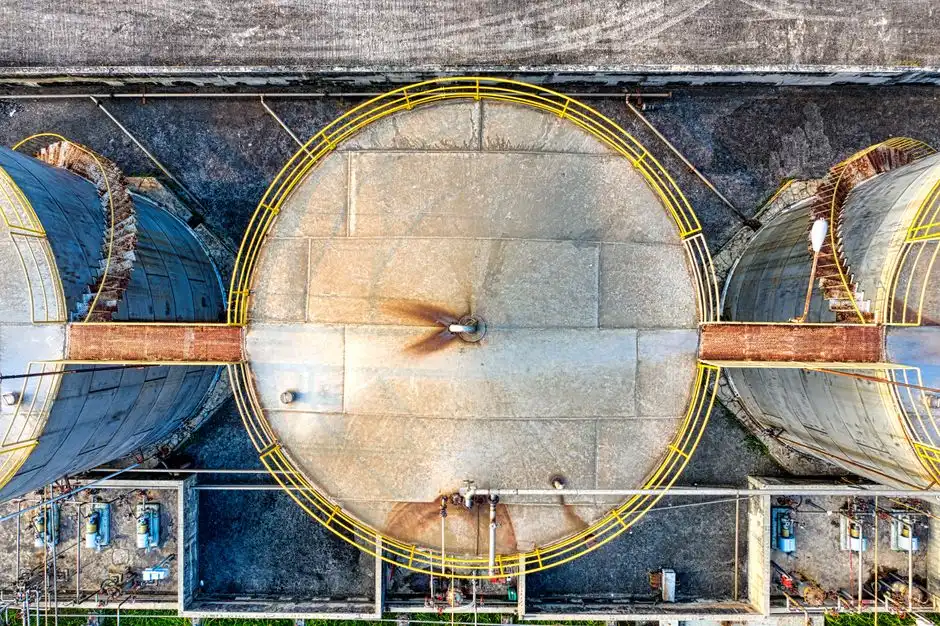
A neutral RFQ should define the process, not pre-select the product. Require each proposal to identify the separation mechanism, tank dimensions, effective separation area, hydraulic design basis, solids-handling arrangement, recycle system where applicable, and material selection. The supplier must explain why the other technology was screened and rejected, using measured wastewater behavior rather than brand preference.
- State the source-by-source flow profile, measured wastewater characteristics, peak loads, permit criteria, and downstream sludge route.
- Define pretreatment, chemical conditioning, controls, sludge removal, storage, dewatering, utilities, installation inputs, commissioning, training, warranty, and service as explicit scope items.
- Require source-specific evidence for each performance claim, including the wastewater, flow, chemical doses, temperature, test method, sampling point, and acceptance criterion.
- Require a site-visit, bench-scale, or pilot-test plan when wastewater variability or uncertain solids behavior remains.
- Make the commercial award and final acceptance dependent on verified site-specific performance criteria rather than a statement that the equipment meets all limits.
The same structure should be used for a DAF bid and a clarifier bid. This makes the technical record auditable and prevents a tank price, product name, or unsupported removal percentage from deciding the award. It also gives reviewers a clear basis for rejecting a proposal that omits pretreatment, sludge handling, controls, utilities, or civil work.
Frequently Asked Questions
Which is cheaper: DAF or a lamella clarifier for mining wastewater in Vaiden?
Neither can be ranked by unit price alone. Require a like-for-like total-cost comparison covering pretreatment, chemicals, utilities, civil work, controls, operators, maintenance, sludge storage, dewatering, and disposal. Because the supplied research has no verified Vaiden cost basis, request itemized quotations and operating-cost assumptions for each technology using the same wastewater and peak-flow basis.
How should a Vaiden plant size DAF or lamella clarification?
Size from peak hydraulic and solids loads, source-by-source flow records, equalization, measured particle behavior, real-wastewater bench or pilot results, available footprint and headroom, and downstream sludge capacity. Do not size from average flow, a generic TSS threshold, or a manufacturer model table alone. Require the selected supplier to state the design basis and acceptance test used for the proposed equipment.
Can DAF meet the metals requirements applicable to a Vaiden plant?
DAF can be technically relevant when conditioning converts metal-bearing material into floc that the microbubbles can float and the skimmer can remove. Reliable capture still depends on chemistry and physical separation, not the DAF name. Confirm the applicable Mississippi permit, distinguish total from dissolved metals, and verify performance on actual wastewater using specified analytical methods and sampling points.
Which technology suits abrasive mine wash water?
Heavy, low-FOG solids are a clarifier screening case because the target fraction is expected to settle. Screen a lamella or conventional clarifier, but include grit protection and verify the plate, collection, and sludge-handling arrangement. Evaluate whether an upstream rotary mechanical bar screen is justified by the measured gross-solids load rather than adding it by assumption.
When are both DAF and clarification justified?
Use both when the wastewater contains distinct pollutant fractions or when a defined polishing requirement remains after the primary separation step. For example, light floatables may require DAF while dense grit or precipitates require clarification. Do not add redundant equipment without test evidence showing that one separation mechanism cannot meet the specified outcome.