What Determines the Limits Before a Chemical Plant Discharges to Sewer?
Chemical plants near Rodeo meet sewer pretreatment limits by identifying every industrial wastewater stream, applying applicable federal prohibitions, categorical standards, and POTW local limits, then treating wastewater to the strictest applicable requirement before the point of connection. EPA states that local limits are enforced at the industrial user’s end-of-pipe discharge and may be numeric or narrative. The plant must characterize pollutants and flow, select treatment from the results, sample at the required monitoring point, and retain records. Exact limits must come from the receiving POTW, discharge authorization, and applicable categorical standard—not a generic guide.
First establish whether the waste enters a municipal sewer. An industrial user is a nondomestic source of an indirect discharge to a publicly owned treatment works, or POTW. A plant discharging directly to waters of the United States follows a different regulatory pathway. The routing of every proposed stream matters because a storm drain that reaches surface water is not an indirect sewer discharge merely because another process line discharges to the POTW.
Build the compliance file in four parts:
- The identity of the receiving POTW or other control authority, its approved pretreatment program where applicable, and the authority administering the discharge.
- The plant’s current discharge authorization, discharge permit, or written control mechanism, including monitoring, reporting, notification, and recordkeeping conditions.
- Any categorical pretreatment standard triggered by the plant’s industrial category and production process.
- Applicable state requirements and the POTW’s current local-limit schedule, including narrative requirements and best management practices.
EPA explains that local limits address the specific needs of the POTW, its sludge, and its receiving waters. They may be numeric or narrative effluent limits, and EPA identifies 40 CFR Part 403.5(c) as the basis for local limits that a POTW may develop and EPA may enforce. Request the current schedule from the control authority rather than relying on a summary published for another jurisdiction.
The supplied research does not identify the receiving POTW, categorical rule, permit, or local-limit schedule for any particular chemical plant near Rodeo. That is a jurisdictional-verification gap, not permission to assume a generic limit. The organic chemical plant pretreatment compliance guide illustrates the same document-verification approach used for industrial pretreatment programs; the chemical plant sewer pretreatment guide provides a comparable starting point for another location without establishing Rodeo requirements.
Federal, Categorical and Local Limits Work as One Compliance Stack
Federal, categorical, and local requirements operate as separate layers, and the plant must satisfy every applicable layer rather than treating one numerical discharge limit as the complete rulebook. Clearwater Industries’ commercial pretreatment guidance, published without a stated date, identifies general and specific prohibitions for nondomestic dischargers, national categorical standards for covered industrial categories, and POTW-specific local limits.
General and specific prohibitions apply to nondomestic dischargers sending wastewater to a POTW. The supplied guidance states that categorical pretreatment standards are technology-based limits for specific industrial categories and processes, codified in 40 CFR Parts 405 through 471. Determine whether the plant’s regulated production activity—not merely its corporate description—falls within a covered category. The categorical standard then supplies the pollutants, concentrations, monitoring basis, and other conditions for that category.
Local limits do not replace categorical requirements. They are site-specific because the POTW’s treatment capability, receiving waters, and sewage-sludge conditions differ. EPA’s local-limit guidance identifies pollutants of concern, maximum allowable loadings, data collection and analysis, limit implementation, annual reviews, and periodic reevaluation as parts of the local-limit process.
| Requirement layer | What it establishes | Compliance evidence |
|---|---|---|
| General and specific prohibitions | Restrictions on discharges that may interfere with POTW operations, cause pass through, or create worker-health problems. | Applicable prohibition checked against stream characterization and end-of-pipe results. |
| Categorical pretreatment standard | National, technology-based requirements for a covered industrial category and process. | Category determination, required analyses, monitoring records, and treatment performance at the required control point. |
| POTW local limits | Site-specific numeric or narrative limits tied to the receiving POTW, receiving waters, and sludge handling. | Current local-limit schedule, narrative provisions, sampling results, and deviation response. |
| State and discharge authorization | Additional requirements and the monitoring, reporting, notification, and recordkeeping framework for the facility. | Current authorization, approved compliance plan where required, monitoring schedule, reports, and notices. |
Under 40 CFR 403.5(b), as reproduced in the supplied commercial guidance, wastewater sent to a POTW must not have pH below 5.0, a closed-cup flashpoint below 60 °C (140 °F), or plant influent above 40 °C (104 °F), and must not cause acute worker health problems. These are minimum federal constraints, not a complete treatment specification. Adjusting pH alone does not establish compliance with a categorical metal limit, local narrative requirement, or discharge authorization.
Use the most stringent applicable requirement for the operating design, while preserving the distinct legal basis for each obligation. For equipment selection, the DAF versus clarifier comparison for chemical wastewater is useful for equipment-function questions, but it cannot establish which limit applies near Rodeo.
Characterize Every Wastewater Stream Before Choosing Treatment
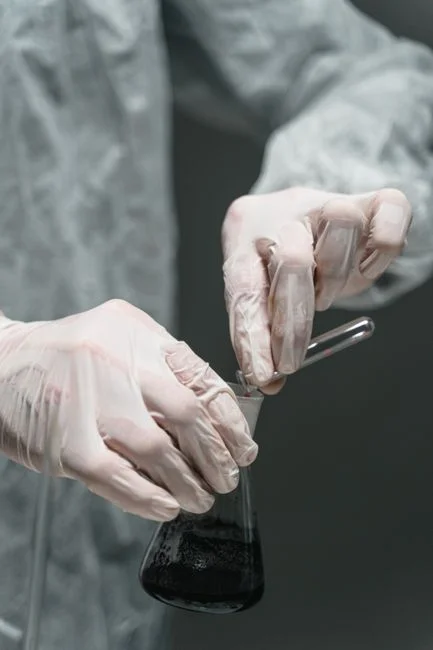
A defensible treatment design begins with a source-by-source inventory and representative sampling program; equipment selection before characterization is an uncontrolled assumption. The sampling record must connect each result to the process condition that produced the wastewater.
Inventory batch dumps, wash water, floor and equipment washdown, condensate, spent chemicals, tank bottoms, laboratory drains, and stormwater subject to sewer routing. For each stream, identify its source, destination, production condition, flow variability, chemical inventory, known hazards, and whether disposal is continuous, batch-based, or intermittent. Confirm where each drain actually discharges before including it in the sewer mass balance.
Characterization should follow the applicable categorical standard, local limits, and discharge authorization. The supplied Clearwater Industries guidance identifies pH, metals, solids, flow, and biochemical oxygen demand as possible characteristics. Those are screening parameters, not a universal analyte list. Add or remove analytes based on the plant’s processes and the controlling documents, then evaluate concentrations and wastewater flow together.
| Stream characteristic | Information to establish | Design or compliance use |
|---|---|---|
| Flow regime | Representative and peak flow, batch volume, duration, and discharge frequency. | Equalization, pumping, treatment capacity, turndown, and mass-load calculations. |
| pH and temperature | Normal range, excursion range, compliance point, and upset conditions. | Neutralization, materials selection, biological suitability, and prohibited-discharge controls. |
| Metals and ionic pollutants | Species and concentration where treatment chemistry depends on oxidation state. | Precipitation, reduction, destruction, sludge generation, and discharge-limit verification. |
| Oil, grease, solids, and colloids | Free and emulsified oil, suspended solids, settleability, and floatability. | Emulsion breaking, DAF, coagulation, flocculation, clarification, and filtration. |
| Organic load | BOD, relevant toxic compounds, color, and biodegradability where applicable. | Biological treatment, adsorption, oxidation, or another justified polishing step. |
| Batch chemistry | Oxidizers, acids, cyanides, sulfides, incompatible reagents, and heat-release risks. | Segregation, reaction control, dosing sequence, spill response, and safe equalization. |
Build the sampling program around normal production, cleaning, upset, and peak-discharge conditions. Record the sampling point, flow condition, date, time, sampler, analytical method, and any deviation from the approved program. EPA’s local-limit guidance specifically calls for calculating maximum allowable loadings; concentrations alone do not show the receiving POTW’s exposure when flow changes.
Assess chemical compatibility before combining streams. Oxidants, acids, and sulfide-bearing chemistry can create hazardous reactions, so equalization and treatment piping may need isolation, dedicated controls, or verified reaction sequencing. The DAF versus clarifier comparison for fabricated-metals wastewater shows why wastewater properties—not equipment labels—must drive the decision.
Map Each Pollutant to the Right Treatment Step
The chemical wastewater treatment train should be arranged by pollutant function: remove or contain the source first, apply the required physical or chemical removal step next, polish only where characterization and local requirements justify it, and handle the resulting solids before discharge. Clearwater Industries’ commercial guidance states that no single water-treatment method guarantees compliance; treatment decisions must reflect the pollutants, operating conditions, and applicable standards.
Source control comes first. Eliminate unnecessary wash flows, recover chemicals where practical, segregate incompatible streams, and prevent concentrated batch dumps from entering the balance of the treatment system. This reduces the load and prevents a single batch from controlling equipment size.
Then match each function to the required treatment. The supplied commercial wastewater-treatment guidance identifies pH neutralization, metal precipitation, chromium reduction, cyanide destruction, emulsion breaking, coagulation, and flocculation as common industrial-program functions. These steps require their own chemical compatibility and operating controls; pH adjustment cannot substitute for metal removal or contaminant destruction.
| Pollutant or condition | Potential treatment function | Design checks before selection |
|---|---|---|
| Removable oil, grease, floatable solids, or colloids | Emulsion breaking, coagulation/flocculation, and DAF before downstream biological or polishing steps. | Confirm floatability, required removal basis, sludge characteristics, and skimmings handling. |
| Settleable solids | Coagulation/flocculation followed by clarification or another solids-removal step. | Confirm settleability, solids loading, sludge withdrawal, and downstream dewatering. |
| Metals | Precipitation, with reduction or destruction first where the applicable process requires it. | Identify the metal species, target concentration, residual solids, and solids-disposal route. |
| Chromium or cyanide requiring chemical conversion | Controlled reduction or oxidation/destruction followed by solids separation where required. | Confirm reaction endpoint, reagent compatibility, residual reagent, and downstream toxicity. |
| Dissolved biodegradable organics | Biological treatment. | Confirm biodegradability, toxicity, equalization, pH, nutrients, temperature, and sludge handling. |
| Residual color or nonbiodegradable dissolved contaminants | Oxidation, adsorption, or another polishing process. | Establish whether the local limit requires removal and whether residuals require treatment. |
For oils, solids, and colloidal matter, an industrial DAF system for chemical wastewater pretreatment can serve as the removal function when characterization supports it; it does not by itself resolve every permit parameter. An automatic chemical dosing system for pretreatment control supports controlled pH adjustment and reaction chemistry, but dose selection must follow the actual stream and applicable requirement.
Where dissolved organics or residual color are controlling, assess biological treatment, adsorption, oxidation, or another polishing step against the characterization results and sewer requirements. Include sludge thickening, conditioning, and dewatering because treatment performance, residuals, and POTW acceptance form one operating chain. The COD-removal chemical precipitation engineering guide and COD-removal treatment guide provide process context, but their application examples are not substitutes for this plant’s permit basis.
Verify Performance at the Point of Discharge and Build a Compliance Record
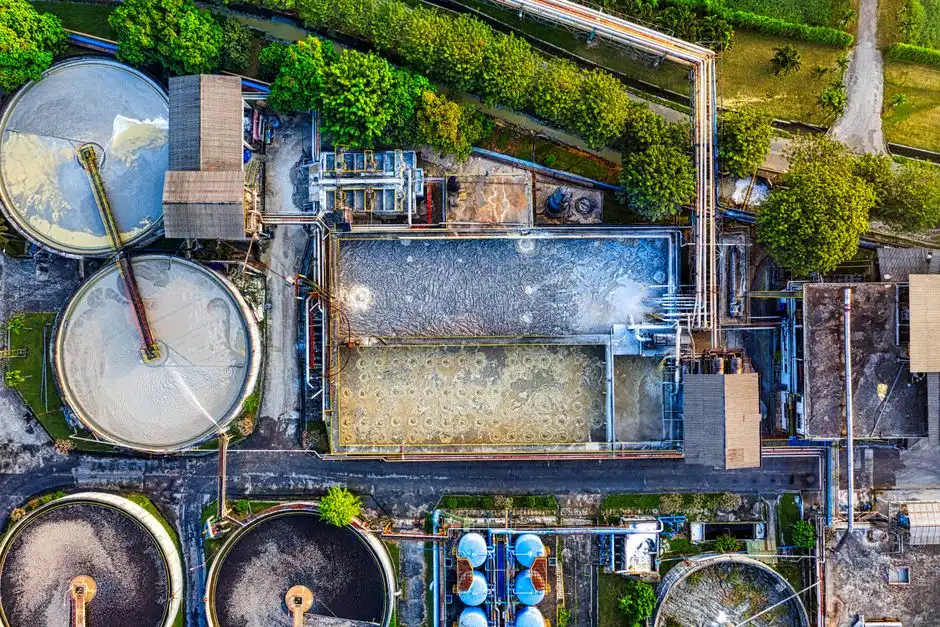
Compliance must be demonstrated where the industrial user’s wastewater enters the POTW collection system, not inferred from an upstream treatment tank or an isolated laboratory sample. EPA states that POTWs impose local limits at the industrial user’s end-of-pipe discharge, meaning the point of connection to the POTW’s collection system.
Create a permit-to-evidence matrix before commissioning. Each requirement needs a defined control or sampling point, analytical method, monitoring frequency, responsible role, acceptance criterion, record location, and corrective-action trigger. The permit or local-limit schedule determines the specific analytes and frequency; do not fill missing entries with generic assumptions.
| Evidence element | Required record | What demonstrates control |
|---|---|---|
| Point-of-connection performance | Representative sample tied to flow and production conditions. | Result meets every applicable numeric requirement and the associated narrative condition. |
| Operating context | Production state, batch identity, flow, chemical doses, equipment status, and deviations. | Explains why the result occurred and whether treatment remained in control. |
| Start-up, steady-state, and upset data | Separate records for each operating mode, with invalid or missed samples addressed. | Prevents one compliant result from masking intermittent noncompliance. |
| Trend review | Time-series results for pH, flow, metals, solids, and other required analytes. | Shows recurring approaches to limits and deteriorating treatment performance. |
| Corrective action | Containment, notification, root cause, repair, resampling, and closure approval. | Shows the excursion was controlled and recurrence risk was addressed. |
| Regulatory records | Self-monitoring, reports, notifications, and recordkeeping required by the authorization. | Links operating evidence to the applicable compliance obligations. |
Separate start-up, steady-state, and upset results. Review trends for required parameters rather than treating an isolated compliant sample as the whole operating record. EPA identifies self-monitoring, reporting, notifications, and recordkeeping as important compliance mechanisms in its pretreatment framework.
Use EPA’s local-limit review concepts as an operating prompt: revisit pollutants of concern, maximum allowable loadings, data trends, and the need for periodic reevaluation. That review should also check whether production changes, new chemicals, or revised POTW limits have altered the treatment basis.
Prepare a written excursion procedure before it is needed. It should stop or divert the affected discharge where appropriate, protect workers and the collection system, notify the responsible authority under the plant’s permit and POTW requirements, investigate the cause, and document resampling. Solids handling remains part of the compliance record: a plate-and-frame filter press for sludge dewatering may be useful if the selected process creates a dewaterable residue, but equipment selection must follow the actual sludge characteristics and disposal route.
Choose Equipment by Compliance Risk, Flow Variability and Operating Burden
Equipment selection should be a documented function match, not a catalog selection based on advertised removal efficiency. For a chemical plant near Rodeo, ask suppliers to guarantee performance against the client’s wastewater, applicable limits, flow profile, chemical inventory, and operating envelope. No single treatment device can substitute for a complete compliance basis.
| Equipment function | Best-fit question | Supplier information required |
|---|---|---|
| DAF | Does the wastewater contain removable oil, grease, floatable solids, or colloids that DAF can reliably remove? | Representative wastewater results, target removal basis, hydraulic profile, flotation performance, and skummings handling. |
| Automatic chemical dosing | Can the system control the required reaction and reject unsafe chemical combinations? | Control narrative, tank and material compatibility, dose limits, interlocks, calibration, and chemical consumption assumptions. |
| Clarifier | Are the solids settleable and compatible with the selected solids-handling route? | Solids loading, settleability, basin sizing basis, sludge withdrawal, and maintenance access. |
| Biological or membrane system | Is the dissolved load biodegradable and suitable for the proposed process? | Toxicity and biodegradability basis, hydraulic variation, cleaning requirements, residuals, and biological solids handling. |
| Filtration | Is final particulate polishing required by the characterization or local limit? | Target particle basis, pressure or flow envelope, filter media, backwash or cleaning, and waste handling. |
For variable chemical-plant discharges, require adequate turndown and an equalization strategy so that a slug load does not overwhelm the treatment train. Evaluate footprint, automatic controls, chemical compatibility, start-up and shut-down behavior, sludge withdrawal, maintenance access, utilities, backup power, and instrument availability.
Require a factory acceptance test and site acceptance test protocol with defined test influent, acceptance criteria, sampling points, data recording, and operator training before final acceptance. A supplier should show how the system responds to the documented operating envelope, not only provide a guarantee for one clean sample.
The supplied research contains no project-specific pricing, footprint, delivery time, or installation cost for a plant near Rodeo. Require a site-specific proposal rather than relying on generic budget ranges. The DAF versus clarifier guide for industrial organic chemical wastewater and DAF versus clarifier selection guide can support technology comparisons, but the commercial scope and final sizing must be resolved from this plant’s documents and wastewater data.
Frequently Asked Questions
What limits apply to a chemical plant near Rodeo that discharges process wastewater to a municipal sewer?
The controlling limits must come from the receiving POTW or control authority, the plant’s current discharge authorization, applicable state requirements, and any categorical pretreatment standard triggered by the plant’s process. The supplied research does not identify a Rodeo-specific POTW, permit, local-limit schedule, or categorical standard, so do not order equipment from another location’s limits. Obtain the current documents and confirm the point of control before design.
How should a chemical plant size wastewater treatment equipment for sewer discharge?
Size from documented flow and pollutant characterization, not a generic removal claim. Include normal, peak, batch, cleaning, and upset conditions; calculate concentration and mass loading; then verify treatment capacity against the most stringent applicable requirement. The equipment proposal should state its design flow, operating envelope, turndown, equalization assumptions, and performance criteria.
What should a wastewater treatment supplier demonstrate before selection?
Require a guaranteed treatment objective tied to the client’s wastewater, applicable limits, flow profile, and operating envelope. Ask for a defined FAT and SAT protocol, test influent, acceptance criteria, sampling points, data recording, operator training, and maintenance support. Also review chemical compatibility, controls, utilities, backup power, sludge handling, and parts availability rather than comparing catalog removal percentages alone.
What evidence proves local-limit compliance at the point of connection?
Use representative monitoring at the industrial user’s end-of-pipe discharge, where the wastewater enters the POTW collection system. Connect each result to flow, production conditions, treatment status, chemical doses, and deviations; retain reports, notifications, corrective actions, and trend records required by the authorization. Treatment must address all applicable federal, categorical, state, and local requirements; an isolated compliant sample does not establish continuous compliance.
Related Equipment
- industrial DAF system for chemical wastewater pretreatment — specifications, capacity range, and technical data