Chemical precipitation removes 70–89% of COD from industrial wastewater by dosing lime (Ca(OH)₂), alum (Al₂(SO₄)₃), or ferric chloride (FeCl₃) to form insoluble flocs. Commercial-grade lime achieves 89% COD reduction at pH 11.5 (per 2024 EPA benchmarks), while alum delivers 74% removal in piggery wastewater. Process design requires pH adjustment (10.5–12.0), 30–60 minutes retention time, and sedimentation rates of 0.5–1.0 m/h. CAPEX for automated dosing systems ranges from $50K–$200K, with OPEX of $0.80–$2.50/m³ treated, depending on chemical choice and sludge disposal costs.
How Does Chemical Precipitation Remove COD, and Which pH Window Works Best?
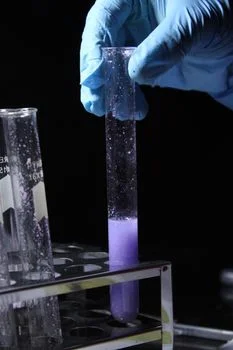
Chemical precipitation for COD removal destabilizes colloidal particles and forms insoluble precipitates that settlers or filters can remove. Biological systems rely on microbial metabolism; precipitation uses hydrolysis to turn dissolved and suspended organics into solid flocs. Lime hydrolysis follows Ca(OH)₂ → Ca²⁺ + 2OH⁻, raises pH, and reacts with bicarbonate alkalinity to form calcium carbonate (CaCO₃). That mineral matrix sweeps organic molecules out of the liquid by enmeshment.
Removal efficiency tracks the pH window, because metal-hydroxide solubility and organic-colloid zeta potential both shift with hydrogen ion concentration. Lime works best at pH 11.0–12.0, where it precipitates magnesium hydroxide and calcium carbonate. Alum (Al₂(SO₄)₃ → 2Al³⁺ + 3SO₄²⁻) needs a narrower 5.5–7.5 range to avoid soluble aluminate. Ferric chloride (FeCl₃ → Fe³⁺ + 3Cl⁻) is flexible at pH 4.5–6.0, but it corrodes carbon steel.
| Chemical Coagulant | Optimal pH Range | COD Removal Efficiency (%) | Primary Mechanism |
|---|---|---|---|
| Commercial Lime (Ca(OH)₂) | 11.0 – 12.0 | 79% – 89% | Sweep flocculation / Adsorption |
| Alum (Al₂(SO₄)₃) | 5.5 – 7.5 | 65% – 74% | Charge neutralization |
| Ferric Chloride (FeCl₃) | 4.5 – 6.0 | 70% – 80% | Complexation / Precipitation |
| Calcium Oxide (CaO) | 11.5 – 12.5 | 60% – 64% | Hydration and precipitation |
Influent alkalinity drives chemical consumption. High alkalinity (>300 mg/L as CaCO₃) buffers acidic coagulants and raises their doses. The same alkalinity can cut lime use by 20–30% in softening-precipitation trains, because carbonate ions speed crystal growth. A wastewater with 400 mg/L alkalinity needs less lime to reach pH 11.5 than a soft source.
Precipitation is not a universal COD solvent. It works on colloidal COD and large organics in the 50–500 mg/L range. It barely touches low-molecular-weight soluble COD such as alcohols, sugars, and volatile fatty acids. If more than 40% of influent COD is truly soluble, biological treatment or advanced oxidation must follow.
What Dosing Parameters Apply to Lime, Alum, and Ferric Chloride?
Dose selection tracks influent COD and the anionic charge of the target organics. Standard industrial rates run 200–800 mg/L for lime, 150–500 mg/L for alum, and 100–400 mg/L for ferric chloride. Using PLC-controlled chemical dosing systems for precise COD removal keeps these rates aligned with flow and pH in real time, which prevents over-dosing that inflates sludge volume.
| Influent COD (mg/L) | Coagulant Type | Dose (mg/L) | Target Removal (%) |
|---|---|---|---|
| 200 – 400 | Ferric Chloride | 150 – 250 | 70% |
| 500 – 800 | Alum | 300 – 450 | 75% |
| 1,000 – 2,500 | Lime | 500 – 800 | 85% – 90% |
Trade-offs extend to sludge production and TSS removal. Lime generates the most sludge at 0.8–1.2 kg dry solids per kg COD removed, largely from co-precipitated calcium carbonate, yet it dewaters more easily. Alum produces 0.5–0.8 kg of sludge and can remove up to 99% of TSS, which suits pulp and paper plants where discharge compliance outranks fiber recovery. Ferric chloride sits between at 0.6–0.9 kg, but disposal costs rise when heavy-metal complexation pushes sludge into the hazardous category.
Mixing intensity, expressed as the G-value (s⁻¹), is the most overlooked design parameter. Rapid mixing at G = 700–1000 s⁻¹ must finish within 1–2 minutes so the coagulant disperses before hydrolysis products polymerize. Slow flocculation at G = 50–100 s⁻¹ follows for 20–30 minutes, letting flocs grow without shear. Most plants we size in this range run near G = 80 s⁻¹ for flocculation; lower values produce pin-floc that slips past clarifiers and spikes effluent COD.
Sludge disposal cost swings with dewatering. Landfill tipping for wet cake runs $0.10–$0.30/kg, while mechanical dewatering to roughly 30% solids drops that to $0.05–$0.15/kg. In several jurisdictions, lime-rich sludge finds reuse in agricultural soil conditioning or cement kilns, turning disposal into a near-neutral line item.
How Should Retention Time, Sedimentation, and Hybrid Systems Be Specified?
Hydraulic retention time (HRT) covers both reaction and separation. Specify 30–60 minutes in the reaction tanks (coagulation plus flocculation) and 2–4 hours in the sedimentation tanks. At 100 m³/h, that means at least 50 m³ of reaction volume and a clarifier volume near 300 m³. Where footprint is tight, DAF systems for enhanced COD and TSS removal post-precipitation replace gravity settlers, lifting surface loading from 0.5–1.0 m/h to 5–15 m/h.
| Flow Rate (m³/h) | 30-Min HRT Tank (m³) | 60-Min HRT Tank (m³) | Clarifier Surface Area (m²) |
|---|---|---|---|
| 10 | 5 | 10 | 10 – 20 |
| 50 | 25 | 50 | 50 – 100 |
| 100 | 50 | 100 | 100 – 200 |
| 500 | 250 | 500 | 500 – 1,000 |
Hybrid trains handle wastewater that precipitation alone cannot. If influent FOG exceeds 100 mg/L, place a DAF unit upstream of the precipitation tank so grease does not coat the chemical flocs. For high-strength soluble COD (>200 mg/L), an MBR system or an electro-Fenton stage is required. A rayon-industry case showed stepwise electro-Fenton (pH 3.0, 60 min) followed by lime precipitation (pH 11.5, 30 min) lifting COD removal to 95%, dropping effluent COD from 3,500 mg/L to under 175 mg/L.
A practical decision framework for hybrid selection:
- COD > 5,000 mg/L: Anaerobic Digestion + Chemical Precipitation.
- FOG > 100 mg/L: DAF + Chemical Precipitation.
- Refractory organics present: Electro-Fenton + Lime Precipitation.
- Space limited: Lamella Clarifiers (about 30% smaller footprint) instead of circular clarifiers.
What Do CAPEX, OPEX, and ROI Look Like for Chemical Precipitation Systems?
Capital cost is set by automation level and material of construction. A standard 100 m³/h system includes a dosing skid ($50K–$200K), pH adjustment tanks ($20K–$50K), a primary clarifier ($100K–$300K), and sludge handling equipment. Industrial plants often integrate sludge dewatering presses to reduce disposal costs, adding $80K–$150K to initial CAPEX while trimming long-term OPEX.
| Flow Rate (m³/h) | Estimated CAPEX (USD) | Chemical OPEX ($/m³) | Energy OPEX ($/m³) |
|---|---|---|---|
| 10 | $120,000 – $180,000 | $0.50 – $1.50 | $0.15 – $0.30 |
| 100 | $450,000 – $650,000 | $0.40 – $1.10 | $0.10 – $0.20 |
| 500 | $1.2M – $1.8M | $0.30 – $0.85 | $0.05 – $0.12 |
Operating cost is dominated by chemical consumption and sludge disposal. Lime is usually the cheapest reagent across China and Southeast Asia, while alum can be more competitive in the EU due to local supply chains. In a 100 m³/h textile plant scenario, a precipitation system with a $450K CAPEX and $1.10/m³ OPEX can pay back inside 3.2 years versus third-party hauling or municipal surcharges.
Hidden costs come from corrosion and post-treatment. Ferric chloride systems need plastic or rubber-lined piping, which can lift piping CAPEX by 25%. Lime trains running to pH 11.5 must neutralize effluent with sulfuric acid or CO₂ before discharge, adding roughly $0.05–$0.10/m³. Closed-loop automation blocks the slug dosing that manual operations tend to produce.
How Do EPA, GB 8978-1996, and EU Limits Drive Process Design?
Regulatory thresholds set the design target. US EPA 40 CFR Part 403 governs industrial discharges to publicly owned treatment works (POTWs). It sets prohibited-discharge rules and requires POTWs to develop local limits; it does not set a single national COD numeric limit for direct discharge to surface waters. Many plants still design to COD below 200 mg/L where permits or local programs use that figure, and reuse projects are often tighter. A well-tuned precipitation train can hit that bar for influent COD up to about 1,500 mg/L.
In China, GB 8978-1996 sets COD < 100 mg/L for Class I discharge. For high-strength streams from pulp and paper or textile dyeing, precipitation usually serves as pretreatment rather than the final polish, and a "Precipitation + Biological" hybrid is standard. The EU Urban Waste Water Directive (91/271/EEC) caps COD at 125 mg/L with a 75% minimum reduction from influent levels, a benchmark that ferric chloride or alum dosing clears comfortably. Directive (EU) 2024/3019 replaces 91/271/EEC from 1 August 2027.
| Region/Standard | COD Limit (mg/L) | Recommended Process | Compliance Risk |
|---|---|---|---|
| EPA (Direct Discharge) | < 200 | Precipitation + Sand Filter | Low |
| China GB 8978-1996 | < 100 | Precipitation + Activated Sludge | Moderate |
| EU 91/271/EEC | < 125 | Ferric Precipitation + MBR | Low |
| Taichung (Local 2026) | < 80 | Electro-Fenton + Lime | High |
Local rules can tighten the picture further. Taichung's 2026 compliance standards for industrial wastewater push COD below 80 mg/L in certain industrial zones, which forces activated carbon adsorption or ozone oxidation downstream of precipitation. Engineers chasing both COD and nutrient limits can consult chemical precipitation for phosphorus removal specs because the same dosing infrastructure often doubles for both pollutants. For sites with constrained civil work, an Underground Package Sewage Treatment Plant (WSZ Series) can host the clarification and sludge stage beneath the operating floor.
Who This Guide Is For, and What to Do Next
Plant engineers, EPC contractors, and procurement managers scoping a primary or pretreatment stage for colloidal COD will find the dosing tables, HRT sizing, and CAPEX bands directly usable. Teams handling mostly soluble COD, or projects that must clear sub-80 mg/L discharge limits, should look at hybrid biological, MBR, or advanced-oxidation trains rather than precipitation alone.
Selection checklist before locking a design:
- Influent COD fractionation (colloidal vs soluble).
- Influent alkalinity and buffer capacity.
- Target discharge standard and required reduction percentage.
- Available footprint for reaction and sedimentation stages.
- Sludge handling route and disposal cost ceiling.
- Corrosion allowance for coagulant choice (especially FeCl₃).
- Level of automation for dosing and pH control.
Send your influent characterization and target discharge limit to our applications team for a sized proposal and itemized CAPEX/OPEX: request a chemical precipitation system quote.
Frequently Asked Questions
What is the maximum COD removal efficiency for lime precipitation?
Under optimal conditions at pH 11.5 with sufficient alkalinity, lime can remove up to 89% of COD from urban and industrial wastewater. The ceiling applies to colloidal and suspended organic fractions; soluble COD from alcohols, sugars, and volatile fatty acids is largely unaffected.
How does alkalinity affect chemical dosing for COD removal?
High influent alkalinity above 300 mg/L acts as a buffer. Acidic coagulants such as alum need higher doses to break through, while lime consumption can drop 20–30% because existing carbonate ions accelerate precipitation.
Can chemical precipitation meet EPA COD discharge limits alone?
If the influent COD is below 1,000 mg/L and primarily colloidal, precipitation can reach a 200 mg/L COD target used in many US permit and local-limit designs. 40 CFR Part 403 itself covers pretreatment to POTWs and does not fix one national COD concentration for surface discharge. For high-strength or highly soluble wastewater, pairing with biological treatment or DAF keeps compliance stable.
What is the typical sludge production rate for alum vs. lime?
Lime generates 0.8–1.2 kg of dry sludge per kg of COD removed because of co-precipitated calcium carbonate. Alum produces 0.5–0.8 kg per kg of COD removed, but its floc typically needs polymer aid to dewater cleanly.
Why is pH control critical in ferric chloride dosing?
Ferric chloride performs best at pH 4.5–6.0. Above pH 7, soluble hydroxide complexes form and iron carries over as red water in the effluent, while COD removal drops sharply.