What Does Third-Generation Semiconductor TMAH Treatment Require?
Third-generation semiconductor TMAH wastewater typically arrives at 50–500 mg/L and needs high removal before discharge or reuse. MCDI and RO commonly deliver 90–99% and 92–97% removal in their stated pH windows. Nanofiltration stays below 70% under the same recovery conditions (Lee et al., 2023). Recovery can reclaim up to 99% TMAH, while ZLD closes the liquid loop at higher CapEx.
SiC and GaN fabs generate developer wastewater with 50–500 mg/L tetramethylammonium hydroxide (TMAH). Discharge designs often target <8 ppm TMAH in Taiwan-facing fabs, <10 ppm under common EU practice, and roughly <50 mg/L TOC under many US pretreatment permits. Taiwan’s Effluent Standards (Ministry of Environment, amended 18 Dec 2024) still list wafer and semiconductor limits in Table 1. Advanced recovery, as in TSMC’s 2019 recycling upgrade, can reclaim up to 99% TMAH and cut CapEx about 30% versus full ZLD on comparable flow.
Why Fab Developer Loads Keep Climbing
Tetramethylammonium hydroxide in photoresist developers is corrosive, aquatic-persistent, and highly toxic, with an oral rat LD50 of about 20–50 mg/kg (EPA 2024). That toxicity profile drives strict effluent control before discharge to sewers or receiving waters. SiC/GaN lines often use two to three times more developer chemical than older silicon lines, so influent commonly sits at 50–500 mg/L rather than the 20–100 mg/L range of older fabs (2023 industry reports).
Regional targets used in fab design packages include <8 ppm TMAH for Taiwan-facing plants, <10 ppm under frequent EU practice, and <50 mg/L TOC (about 50 ppm TMAH equivalent) for many US POTW pretreatment agreements. Earlier guidance treated <8 ppm as a hard Taiwan EPA mandate; current design work should also check Table 1 of Taiwan’s Effluent Standards as amended on 18 Dec 2024. TSMC’s 2019 upgrade cut effluent TMAH from 12 ppm to below 8 ppm, avoided an estimated $2 million per year in potential fines, and supported about 25% lower raw-material cost through recovery.
TMAH Wastewater Treatment Technologies: Mechanisms, Efficiency, and Limitations
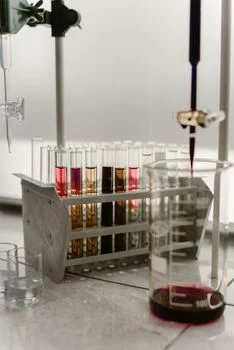
Technology choice follows influent TMAH, required effluent quality, pH window, and how much concentrate you can handle. Most plants we size for developer drains run alkaline feed and need either alkaline-tolerant removal or controlled neutralization before membranes.
- Membrane Capacitive Deionization (MCDI): Electrodes adsorb TMA+ ions. MCDI typically reaches 90–99% TMAH removal at pH 8–12, with stronger monovalent than divalent performance (Lee et al., 2023). Water recovery is usually 50–80% at 0.5–1.2 kWh/m³. Alkaline tolerance suits direct treatment of developer waste.
- Reverse Osmosis (RO): Size-exclusion rejects TMAH and other dissolved solids. High-efficiency RO systems for TMAH wastewater treatment reach 92–97% TMAH removal at 70–85% water recovery. Operators usually hold pH 6–8 to limit divalent scaling that cuts flux and membrane life.
- Nanofiltration (NF): NF is generally insufficient as a standalone TMAH barrier, showing <70% removal where RO and MCDI still perform (Lee et al., 2023).
- Ion Exchange: Cation resins adsorb TMA+. Removal of 95–99% is common, but resin regenerates after roughly every 2–5 m³ of wastewater depending on load. Regenerant creates a concentrated brine that needs disposal or recovery. OPEX often sits at $0.50–$1.20/m³ (LFoundry data, Top 2) from chemicals and brine handling.
- Biological Treatment: Selected strains (for example KR100648494B1) can degrade TMAH. Typical hydraulic retention time is 24–48 h at pH 7–9. Long HRT and pH sensitivity make biology a poor fit for high-flow, rapidly swinging fab drains without large equalization.
Selection is a trade-off among removal, footprint, energy, and concentrate destiny—not a single preferred unit for every fab.
| Technology | Mechanism | TMAH Removal Efficiency | Typical pH Range | Water Recovery | Energy Use (kWh/m³) |
|---|---|---|---|---|---|
| MCDI | Electrostatic adsorption of TMA+ | 90–99% | 8–12 | 50–80% | 0.5–1.2 |
| Reverse Osmosis (RO) | Size-exclusion of TMAH molecules | 92–97% | 6–8 | 70–85% | 1.5–3.0 |
| Nanofiltration (NF) | Size-exclusion (partial) | <70% (insufficient) | 6–8 | 70–85% | 1.0–2.5 |
| Ion Exchange | Resin-based adsorption of TMA+ | 95–99% | 7–9 | 90–95% (with regeneration waste) | 0.1–0.3 (plus regeneration) |
| Biological Treatment | Microbial decomposition | Variable (up to 90%) | 7–9 | N/A | 0.3–0.8 (aeration) |
Engineering Specs for TMAH Wastewater Systems: Design Benchmarks
Influent TMAH from SiC/GaN fabs usually spans 50–500 mg/L, well above the 20–100 mg/L band of older silicon lines. Effluent design points remain tight: <8 ppm for many Taiwan-facing packages, <10 ppm under common EU practice, and <50 mg/L TOC for typical US pretreatment. Meeting those points usually needs multi-stage or hybrid trains rather than a single unit.
For third-generation semiconductor TMAH trains, pH windows drive pretreatment. MCDI prefers pH 8–12 for TMA+ adsorption. RO usually needs pH 6–8, so plants install PLC-controlled pH adjustment for TMAH wastewater systems before membranes. Ion exchange works best near pH 7–9. Water recovery targets matter in water-stressed sites: MCDI 50–80%, RO 70–85%, ion exchange 90–95% with regenerant waste counted separately.
Energy is a standing OPEX line. MCDI typically draws 0.5–1.2 kWh/m³. RO needs 1.5–3.0 kWh/m³ at higher pressure. Ion exchange shows 0.1–0.3 kWh/m³ direct power plus regenerant and brine energy. Footprint at 10 m³/h scale is often 0.5–1.0 m² for MCDI, 1.0–2.0 m² for RO, and 2.0–4.0 m² for ion exchange with regen equipment.
| Parameter | MCDI | RO | Ion Exchange | Biological Treatment |
|---|---|---|---|---|
| TMAH Removal Efficiency | 90–99% | 92–97% | 95–99% | Up to 90% |
| Water Recovery Rate | 50–80% | 70–85% | 90–95% (with regeneration) | N/A (treatment only) |
| Optimal pH Range | 8–12 | 6–8 | 7–9 | 7–9 |
| Energy Use (kWh/m³) | 0.5–1.2 | 1.5–3.0 | 0.1–0.3 (+ regeneration) | 0.3–0.8 (aeration) |
| Footprint (m²/10 m³/h) | 0.5–1.0 | 1.0–2.0 | 2.0–4.0 | Variable (large) |
| Typical OPEX ($/m³) | 0.30–0.80 | 0.60–1.50 | 0.50–1.20 | 0.20–0.60 |
What Limits Semiconductor ZLD Reclaim Scaling?
Semiconductor ZLD reclaim scaling is limited by concentrate salinity, organics fouling, and the CapEx gap between recovery and full evaporation. Recovery systems reclaim TMAH for process reuse. ZLD systems eliminate liquid discharge after advanced treatment, evaporation, and crystallization.
Recovery packages such as TSMC’s 2019 train reclaim 90–99% of TMAH. CapEx typically runs $1.5–$4 million per 100 m³/h, with OPEX about $0.20–$0.50/m³ and a 3–5 year payback when chemical savings dominate. That upgrade reportedly saved $5 million per year in raw TMAH purchases and prevented $2 million per year in compliance penalties.
ZLD trains usually cost $3–$8 million per 100 m³/h CapEx and $0.80–$2.00/m³ OPEX, driven by evaporator energy. Payback stretches to 5–10 years and is often mandate-driven rather than chemical-savings-driven.
What are ZLD water recovery benchmark ranges?
ZLD water recovery benchmark ranges for fab TMAH trains typically target near-total liquid closure after RO or ion-exchange preconcentration, while unit recoveries upstream remain technology-specific. Upstream RO commonly recovers 70–85% of feed water; MCDI recovers 50–80%; ion exchange can show 90–95% water recovery before regenerant volume is counted. Evaporation and crystallization then handle the remaining brine so net liquid discharge approaches zero under design conditions.
Decision factors that matter on real RFQs:
- TMAH concentration: Streams <50 mg/L often favor recovery with cleaner product; >200 mg/L may push ZLD if purity or volume economics fail.
- Fab size and TMAH buy volume: Larger 12-inch-class fabs usually see faster recovery ROI; smaller fabs may prefer treatment-only CapEx.
- Regulatory ceiling: Limits near <5 ppm TMAH or explicit ZLD mandates favor evaporative closure.
- Chemical price and supply risk: High TMAH unit cost strengthens recovery ROI.
Should You Recover or Treat TMAH Wastewater?
- Assess Influent TMAH Concentration:
- Is Average TMAH Concentration <100 mg/L?
- YES: Proceed to "Evaluate Fab Size & Raw Material Usage."
- NO (>100 mg/L): Proceed to "Evaluate Regulatory Limits & ZLD Mandates."
- Is Average TMAH Concentration <100 mg/L?
- Evaluate Fab Size & Raw Material Usage (if <100 mg/L):
- Is Fab >12-inch equivalent & High TMAH Consumption?
- YES: Consider TMAH Recovery System (e.g., MCDI + polishing). High ROI potential from material savings.
- NO: Consider Advanced Treatment (e.g., RO + Ion Exchange) to meet discharge limits.
- Is Fab >12-inch equivalent & High TMAH Consumption?
- Evaluate Regulatory Limits & ZLD Mandates (if >100 mg/L):
- Are ZLD Mandates or <5ppm Discharge Limits in Effect?
- YES: Implement Zero Liquid Discharge (ZLD) System (e.g., RO + Evaporation/Crystallization). Compliance-driven.
- NO: Consider Hybrid Approach: High-Concentration Recovery + Low-Concentration Treatment. Balance economics and compliance.
- Are ZLD Mandates or <5ppm Discharge Limits in Effect?
Selection checklist for fab environmental engineers
- Confirm peak and average TMAH (mg/L) plus flow (m³/h) from developer and rinse drains.
- Map the binding effluent limit: TMAH ppm, TOC mg/L, or ZLD mandate.
- Match pH control to the chosen barrier (MCDI alkaline vs RO near-neutral).
- Size concentrate handling: regenerant, RO brine, or evaporator crystallizer solids.
- Compare CapEx/OPEX at your flow: recovery $1.5–$4M vs ZLD $3–$8M per 100 m³/h.
- Require continuous TOC/pH monitoring and redundant critical trains.
- Pilot foulants (photoresist organics, divalent ions) before freezing membrane type.
Why Is Semiconductor TMAH Effluent Toxicity a Concern?
Semiconductor TMAH effluent toxicity is a concern because TMAH combines strong alkalinity, corrosivity to skin and eyes, and an oral rat LD50 near 20–50 mg/kg, with persistence in aquatic systems (EPA 2024). Discharge without adequate removal risks worker exposure incidents, POTW upset, and permit violations. Design packages therefore treat TMAH as a priority toxic organic rather than a generic COD contributor.
Regulatory Compliance for TMAH Wastewater: Global Standards and Best Practices
Global TMAH compliance for semiconductor fabs is tightening, but the exact number still depends on the receiving permit. Design teams should read the binding table, not a brochure summary.
- Taiwan: Design packages commonly use <8 ppm TMAH as a performance target after large-fab upgrades. Taiwan’s Effluent Standards (Ministry of Environment, amended 18 Dec 2024) assign wafer and semiconductor manufacturing to Table 1. TSMC’s 2019 work brought 12-inch fab effluent below 8 ppm TMAH.
- EU: Practice often references <10 ppm TMAH under Urban Waste Water Directive 91/271/EEC framing, with some German local targets near <5 ppm. Broader Industrial Emissions Directive (IED) discussions point toward <5 ppm by 2027 in some forecasts.
- US: EPA pretreatment under 40 CFR Part 403 is often enforced as TOC, commonly <50 mg/L TOC (~50 ppm TMAH equivalent). Direct TMAH numbers appear mainly in local POTW agreements.
- China: GB 31573-2015 is cited in many fab packages for <10 ppm TMAH with TOC <50 mg/L and pH 6–9; confirm applicability to the specific site permit.
Continuous TOC analyzers and online pH meters catch excursions early. Automated pH control with automatic chemical dosing systems keeps RO and resin trains inside their windows. Dual RO trains or spare ion-exchange columns keep discharge online during maintenance. Fabs usually manage TMAH beside other specialty streams such as arsenic wastewater treatment in third-generation fabs, HF wastewater treatment for semiconductor fabs, and TMAH wastewater treatment for display panel manufacturing.
| Region/Country | TMAH Discharge Limit | Equivalent TOC Limit | Applicable Directive/Standard | Enforcement Trend |
|---|---|---|---|---|
| Taiwan | <8 ppm | <8 mg/L | Taiwan EPA (2019) | Strict, industry-specific |
| EU | <10 ppm (general) | <10 mg/L | Urban Waste Water Directive 91/271/EEC | Tightening to <5 ppm by 2027 (IED) |
| US | Varies by POTW | <50 mg/L | EPA Pretreatment Standards (40 CFR 403) | Considering stricter limits for 3rd-gen fabs |
| China | <10 ppm | <50 mg/L | GB 31573-2015 | Comprehensive, with pH (6-9) limits |
Who This Is For / Next Step
This guide is for fab environmental engineers, EPC process leads, and procurement managers sizing TMAH recovery or ZLD for SiC/GaN lines. Teams without a measured TMAH mass balance or a written discharge limit should finish sampling first. If you need a flow- and concentration-specific train layout, send influent data through our TMAH wastewater treatment inquiry form for a scoped equipment package.
Frequently Asked Questions
What is the most cost-effective TMAH wastewater treatment for a 12-inch fab?
Cost-effectiveness tracks concentration and the compliance ceiling. For streams <100 mg/L TMAH, MCDI often wins at about $1.5 million CapEx per 100 m³/h. For 100–300 mg/L, RO near $2.5 million per 100 m³/h balances removal and cost. Above 300 mg/L or under a ZLD mandate, RO plus evaporation/crystallization near $5 million per 100 m³/h is the usual path.
Can TMAH be recovered from wastewater for reuse?
Yes. TMAH recovery is proven at fab scale. TSMC’s 2019 system recovers 99% of TMAH and supported about 25% lower raw-material cost. Recovery fits best when influent is generally below 200 mg/L TMAH and recovered purity meets developer or recycle specs after polishing.
What are the energy costs for TMAH wastewater treatment?
Energy depends on the barrier selected for the train. MCDI typically uses 0.5–1.2 kWh/m³ at alkaline feed. RO uses 1.5–3.0 kWh/m³ at higher pressure. Ion exchange draws 0.1–0.3 kWh/m³ directly but adds regenerant and brine energy. ZLD evaporation and crystallization can add about 5–10 kWh/m³ on top of pretreatment.
How does pH affect TMAH removal efficiency?
pH sets which technology can run. MCDI prefers pH 8–12 and can reach 90–99% TMAH removal via TMA+ adsorption. RO needs pH 6–8 to limit scaling and membrane damage. Ion exchange and biological systems usually stay near pH 7–9 for stable operation on fab drains.
What are the discharge limits for TMAH in semiconductor wastewater?
Common design benchmarks are <8 ppm in Taiwan-facing packages, <10 ppm in many EU contexts, and <10 ppm in China packages citing GB 31573-2015. US permits often use <50 mg/L TOC (~50 ppm TMAH equivalent). Always verify the binding Table 1 or local POTW limit before freezing CapEx.
Related Equipment
- post-treatment disinfection for TMAH wastewater — view specifications, capacity range, and technical data
Need a customized solution? Request a free quote with your specific flow rate and pollutant parameters.