
Why Hooks, TX Chemical Plants Cannot Discharge Straight to the Sewer
Chemical plants near Hooks, Texas are bound by a four-layer regulatory chain before a single gallon reaches the public sewer. The Clean Water Act of 1972 is the umbrella statute; the EPA's General Pretreatment Regulations at 40 CFR Part 403 sit beneath it; NPDES permits are the federal mechanism for direct discharges; and the locally run Industrial Pretreatment Program (IPP) is the enforcement arm for anything routed to a publicly owned treatment works (POTW). Hooks sits in Bowie County, and industrial flows from the area are received by the Texarkana Water Utilities (TWU) system, which operates a federally authorized IPP — the actual authority an EHS manager answers to on a daily basis (per EPA 40 CFR Part 403 framework).
The IPP keeps pollutants that cause pass-through or interference out of the municipal plant by issuing discharge permits, setting local limits, and inspecting industrial users. Connecticut DEEP's 2025 enforcement sweep, which cited 17 industrial facilities for pretreatment violations under the same federal framework, confirms that IPPs actively enforce; the same risk applies to any chemical plant tied to a Texas POTW (per CT Post reporting, 2025-07). Bypassing or shortcutting pretreatment is a federal and local enforcement decision the moment wastewater enters the TWU collection system.
Pollutant Limits a Chemical Plant Must Hit Before Sewer Discharge
Numeric limits are the design target for industrial wastewater pretreatment. The table below summarizes the parameter ranges a Hooks-area chemical plant typically has to meet under an IPP local-limits program. These are drawn from standard EPA categorical pretreatment categories and 40 CFR 403 categorical standards; local TWU limits may be tighter where pass-through risk is documented (per EPA 40 CFR Part 403).
| Parameter | Typical IPP daily-max limit | Why it matters for a chemical plant |
|---|---|---|
| pH | 5.0–11.0 SU (instantaneous); many local limits 6.0–10.0 | Acid/alkali swings can kill POTW biomass and corrode sewer lines |
| Total Suspended Solids (TSS) | 200–400 mg/L | Excess solids cause sludge bulking and digester upset at the POTW |
| Oil & Grease (O&G) | 50–100 mg/L | FOG coats aeration tanks and can trigger fire/odor events |
| COD / BOD₅ | COD 400–800 mg/L; BOD₅ 200–400 mg/L | High organics consume POTW oxygen and cause permit excursions |
| Sulfides (S²⁻) | 1–10 mg/L | H₂S release corrodes concrete sewers above 0.5 mg/L dissolved |
| Phenols | 0.1–1.0 mg/L | Toxic to aquatic life and stripping-resistant at POTW |
| Cadmium (Cd) | 0.05–0.69 mg/L (cat-dependent) | Heavy-metal pass-through into biosolids and receiving waters |
| Total Chromium (Cr) | 2.0–7.0 mg/L | Cr(VI) is carcinogenic and not removed by conventional POTW |
| Copper (Cu) | 1.0–4.0 mg/L | Toxic to activated sludge and aquatic life |
| Lead (Pb) | 0.2–1.0 mg/L | Persistent; bioaccumulates in biosolids |
| Nickel (Ni) | 1.0–4.0 mg/L | Inhibits nitrification at low concentrations |
| Zinc (Zn) | 1.0–5.0 mg/L | Common in chemical process water; pass-through to effluent |
| Silver (Ag) | 0.1–0.5 mg/L | Photo-imaging and catalyst plants must track specifically |
| Ammonia (NH₃-N) | 20–50 mg/L | Inhibits nitrification; toxic to fish in receiving stream |
| Temperature | ≤ 40 °C (104 °F) at POTW headworks | Hot discharges shift biology and dissolved-oxygen balance |
Two non-numeric rules apply alongside the table. First, the IPP may require a self-monitoring program with regular sampling, chain-of-custody, and Discharge Monitoring Reports submitted to the control authority (per EPA 40 CFR 403.12). Second, any discharge that causes pass-through or interference at the POTW — even if every number is in spec — is a violation. PFAS in chemical-plant wastewater is a 2026 enforcement priority and must be tracked alongside conventional parameters; our 2026 PFAS testing requirements for industrial wastewater guide walks through the current analytical method set (per EPA multi-lab validation studies, 2025-Q4).
The Five-Stage Pretreatment Train Used by Chemical Plants
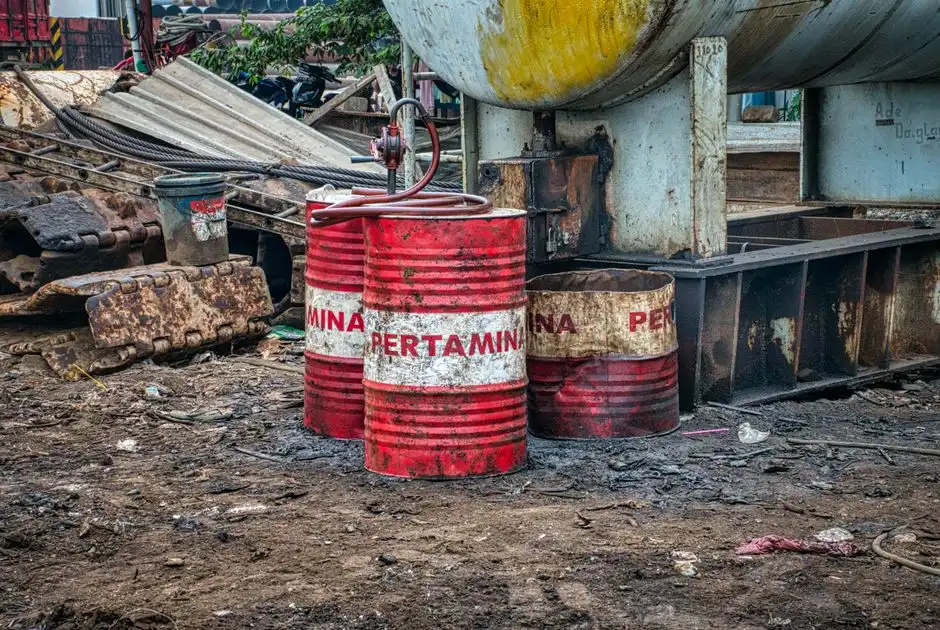
Getting from raw chemical process wastewater to IPP-compliant discharge requires a five-stage mechanical and chemical train. Each stage performs a specific function, as skipping one often leads to permit excursions.
- Mechanical bar screening. A rotary mechanical bar screen at the head of the plant removes rags, plastics, fibrous packing material, and stringy solids that would otherwise rag up downstream pumps and slash DAF efficiency. Typical openings run 3–10 mm, with capture rates above 90% for fibrous debris at design flow (HydropureWater field data, 2026).
- Equalization and pH buffering. A flow-equalization basin sized for 12–24 hours of retention buffers the wild swings in flow, pH, and temperature that chemical batch operations produce. pH swings of more than 2 SU within a shift are the single most common cause of pretreatment non-compliance in our audits (HydropureWater field data, 2026). Coarse pH trim is performed here before finer adjustment downstream.
- Dissolved air flotation (DAF). An industrial DAF system removes free oil, emulsified oil, FOG, and a large fraction of suspended solids by attaching micro-bubbles (typically 30–80 µm) to the contaminant phase and floating it to the surface. Industrial DAF units commonly cover 4–300 m³/h hydraulic capacity and routinely cut O&G from 500–2,000 mg/L down to under 50 mg/L on chemical-plant influent (HydropureWater field data, 2026).
- Chemical dosing and pH adjustment. A PLC-controlled chemical dosing skid injects coagulants (e.g., PAC, ferric chloride), flocculants (PAM), and acid/caustic for pH correction, with redundancy on critical reagents. Heavy-metal precipitation — typically raising pH to 8.5–9.5 for hydroxide precipitation or dosing sulfide for tighter metals — is folded into this stage. Mismatched coagulant-to-flow ratio is the most common reason DAF effluent fails metals targets.
- Biological polishing (MBR or activated sludge). An MBR membrane bioreactor or conventional activated-sludge basin oxidizes residual dissolved organics and ammonia. MBR systems typically deliver effluent BOD₅ under 5 mg/L, TSS under 1 mg/L, and NH₃-N under 1 mg/L — often good enough for in-process recycle and a meaningful cut in fresh-water OPEX (HydropureWater field data, 2026).
Choosing Between Common Treatment Configurations
The correct configuration depends on whether the plant's load consists of high-FOG synthesis, high-TDS brine, or a mixed organic/inorganic stream. The table below maps the standard options against target pollutant, footprint, and cost bands; OPEX risk flags where chemical or sludge handling costs are likely to move with regulatory pressure.
| Configuration | Target pollutants | Footprint (relative) | CAPEX band | OPEX band | OPEX risk |
|---|---|---|---|---|---|
| DAF only | O&G, TSS, FOG | Small | Low | Low | Will fail on metals & COD once limits tighten |
| DAF + chemical dosing | O&G, TSS, heavy metals, sulfides | Small–Medium | Low–Medium | Medium (chemical) | Polymer/ferric price exposure |
| DAF + chemical + activated sludge | Adds BOD/COD, NH₃-N | Medium–Large | Medium | Medium | Biosolids disposal exposure |
| DAF + chemical + MBR | High-COD, water-reuse intent | Medium | Medium–High | Medium | Membrane replacement every 5–8 years |
| MBR + RO / ZLD | TDS, salt line, PFAS-driven recycle | Large | High | High | Energy, antiscalant, brine disposal |
For high-FOG synthesis streams, DAF plus chemical dosing is usually enough to hit local limits. For plants targeting in-process water reuse or facing rising effluent-quality demands, MBR is the preferred polishing step. When TDS or salt-line discharge limits are the binding constraint — increasingly common for chemical plants in 2026 — RO becomes necessary to produce ultra-pure permeate; see our RO water purification system for the polishing-side equipment. A high-efficiency sedimentation tank (lamella clarifier) is a compact alternative for plants with constrained footprints that need high-rate solids removal before DAF. The mining sector faces a parallel decision tree; our guide on how mining and metals plants meet pretreatment limits walks through a comparable comparison for a different influent matrix.
2026 Cost, Compliance, and Audit Reality for Hooks-Area Plants
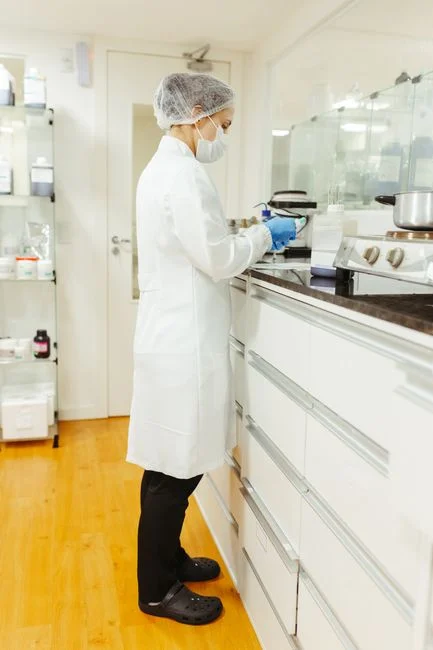
Non-compliance carries significant financial and operational risks. EPA enforcement dockets show multi-million-dollar penalties for industrial pretreatment failures: $3 million in compliance costs plus a $1.5 million civil penalty and a $450,000 community-service payment have been imposed on a single industrial user for chronic permit violations, and a separate case resulted in 3 years' probation plus criminal exposure for illegal discharge of wastewater containing heavy metals (per Hella Water regulatory summary, 2025). In 2018, roughly 11,000 facilities across the U.S. were significantly exceeding permit limits (per Hella Water, 2025).
An IPP inspection — whether scheduled or unscheduled — covers records review, water testing, and equipment walk-down. Chemical plants should expect inspectors to request the last 12 months of self-monitoring reports, chain-of-custody forms, calibration logs for online pH and flow meters, and proof of sludge disposal. The 2026 pressure is shifting toward PFAS, salt-line discharges, and per- and polyfluoroalkyl substance mass-balance reporting; chemical plants that have not yet mapped their PFAS inputs and effluent loadings will be the first ones served with information requests.
Frequently Asked Questions
What permits does a chemical plant near Hooks, TX need before discharging to the sewer?
A chemical plant discharging to the Texarkana Water Utilities collection system needs an IPP discharge permit issued by TWU under EPA's 40 CFR Part 403 framework, plus a TCEQ-administered industrial waste permit if any waste is hauled or land-applied. Direct surface-water discharges additionally require an NPDES permit (per EPA 40 CFR Part 403).
What pH range must a chemical plant hit before sewer discharge?
Most IPPs require instantaneous pH between 5.0 and 11.0 SU, with tighter local limits (commonly 6.0–10.0) where the receiving POTW is sensitive. Achieving this requires both equalization-basin buffering and active pH adjustment on the chemical dosing skid (per 40 CFR Part 403 categorical pretreatment standards).
Does a chemical plant need biological treatment to meet local limits?
Biological treatment is not required for every facility. DAF plus chemical precipitation is typically sufficient to hit oil & grease, TSS, and metals limits. Biological treatment (activated sludge or MBR) becomes necessary when influent BOD₅ or COD is high enough that the POTW's hydraulic-residence-time model would predict pass-through or interference.