Start with the applicable rules and the receiving sewer
Mining and metals plants near Smiley meet sewer pretreatment limits by first identifying the applicable federal category, then characterizing each wastewater stream and confirming the stricter applicable state and local requirements. EPA’s 40 CFR Part 436 covers mine drainage, mineral-processing operations, and stormwater runoff and is incorporated into NPDES permits, but operators must check whether their mineral has an active numeric subpart or a reserved subpart. A defensible treatment train generally follows equalization, pH correction, coagulation, clarification, filtration, optional membrane polishing, and monitoring. Heavy metals, pH, and TSS are common local control points; dissolved salts may require RO.
EPA promulgated the Mineral Mining and Processing Effluent Guidelines and Standards in 40 CFR Part 436 in 1975 and amended it in 1976, 1977, 1978, and 1979. The regulation covers wastewater discharges from mine drainage, mineral processing, and stormwater runoff, and its requirements are incorporated into NPDES permits (US EPA, 2026-02). Start by matching the operation to the correct subpart rather than assuming that every mine wastewater category carries the same federal limits.
The subpart distinction changes the design basis. EPA lists Dimension Stone, Lightweight Aggregates, Lithium, Ball Clay, Feldspar, Talc/Steatite/Soapstone/Pyrophyllite, and Garnet as reserved subparts. A reserved subpart has no current numeric federal effluent limits in Part 436, but it does not remove state, NPDES, or local pretreatment requirements (US EPA, 2026-02). The regional mining pretreatment compliance guide describes the same applicability check for another mining jurisdiction.
For metal-bearing ore mining or processing, also verify 40 CFR Part 440. EPA identifies it as the Ore Mining and Dressing Effluent Guidelines and Standards; it covers wastewater from ore mines and processing operations, including water from extraction, equipment cooling, dust control, precipitation, leaching, milling, and beneficiation. Its requirements are incorporated into NPDES permits (US EPA, 2026). Smelting is a different regulatory pathway: EPA places iron and steel smelting under 40 CFR Part 420, Subpart C, and nonferrous metals manufacturing under 40 CFR Part 421.
Then obtain the current state discharge conditions, NPDES permit, industrial sewer pretreatment permit, and local sewer authority limits. The supplied research does not provide Smiley-specific numeric limits for metals, pH, or TSS, so a permit value should not be inferred from another state or facility. For each design parameter, document the federal, state, and local source and use the strictest applicable condition. This mining wastewater sewer-limit compliance workflow provides a useful structure for that document review.
| Applicability checkpoint | What the operator must establish | Effect on equipment selection |
|---|---|---|
| 40 CFR Part 436 subpart | Whether the mineral is covered by an active numeric subpart or a reserved subpart | Identifies which federal limits must appear in the permit basis |
| 40 CFR Part 440 | Whether the facility mines or processes metal-bearing ore | Adds the applicable ore-mining requirements to the review |
| State and local conditions | Current limits for metals, pH, TSS, and other locally controlled parameters | Sets the actual treatment targets and monitoring basis |
| Receiving sewer | Permit, prohibited discharges, surcharge criteria, monitoring, and sampling requirements | Confirms the required treatment train and documentation package |
Characterize every wastewater stream before choosing a treatment train
Mine drainage wastewater, mineral processing effluent, tailings-pond effluent, and dewatering discharge have different contaminant profiles and should not be assigned one default treatment train. AMPAC USA identifies these as common mining wastewater categories (AMPAC USA, 2025-09). Characterizing them separately identifies whether pH correction and precipitation are sufficient, whether clarification must handle substantial sludge, or whether dissolved constituents require membrane treatment.
For acid mine drainage, investigate acidity and dissolved metals such as iron, manganese, copper, zinc, arsenic, and cadmium. Sulfide oxidation generates sulfuric acid, which can release these metals into drainage water (AMPAC USA, 2025-09). For mineral processing effluent, test the reagents and dissolved ore constituents relevant to the circuit, including cyanide, ammonia, or chloramines where applicable. Tailings-pond effluent requires evaluation for fine solids, processing chemicals, and leached metals; clarified appearance does not establish adequate treatment.
Dewatering discharge also needs its own profile because composition can change with geology and operating conditions. Representative sampling should cover the discharge route, operational periods, storm or upset conditions, and the highest anticipated daily discharge. Do not size from an average or a single clean-weather sample.
LiqTech emphasizes that required capacity, wastewater content, and desired water quality vary significantly between operations, so treatment systems must be matched to site-specific needs (LiqTech, 2025-08). The buyer’s data package should include peak and average flow in m³/h, pH, metals, TSS, conductivity, and process-specific contaminants. It should also identify whether streams will be segregated, blended, or discharged separately.
| Stream | Primary characterization | Design implication |
|---|---|---|
| Acid mine drainage | Acidity; iron, manganese, copper, zinc, arsenic, cadmium | pH correction and metal-hydroxide precipitation are likely central operations |
| Mineral processing effluent | Reagents, dissolved ore constituents, process-specific contaminants | Treatment must address the actual process chemistry, not only metal content |
| Tailings-pond effluent | Fine solids, processing chemicals, leached metals | Clarification and filtration may both be necessary |
| Dewatering discharge | pH, metal loading, geology-dependent composition | May require separate equalization or segregation before treatment |
Build a six-stage pretreatment train around the discharge target
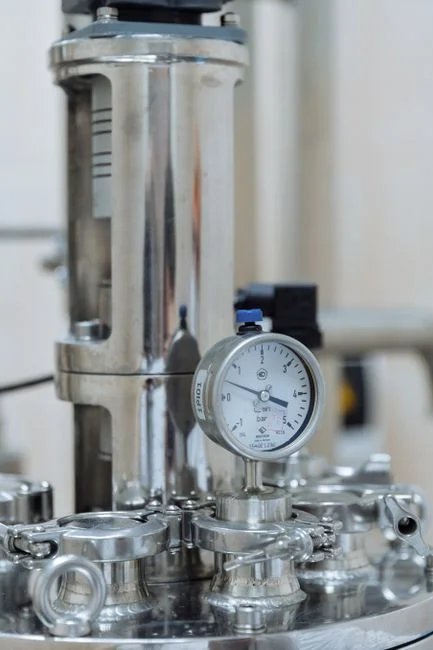
A six-stage train should be selected around the required effluent, with each stage solving a defined contaminant or control problem. Equalization establishes a stable hydraulic and chemical feed; pH correction enables precipitation; coagulation and flocculation prepare solids for separation; clarification removes the bulk; filtration protects downstream equipment; and membrane polishing addresses residual dissolved contaminants when required.
- Equalization. Size the basin and pumps around the highest anticipated daily discharge rather than the average because peak flows drive equalization volume and pump selection (LiqTech, 2025-08). Confirm whether storm, production, dewatering, and upset flows will be combined.
- pH correction. Raise pH so dissolved metals precipitate as metal hydroxides and gypsum drops out. The supplied mining treatment literature references lime raising to pH above 10 before thickening (PMC review, 2024-02). The operating setpoint must be established from influent chemistry and permit conditions, not copied as a universal requirement.
- Coagulation and flocculation. Aggregate suspended solids and fine metal particles into settleable or floatable flocs. Match the chemicals to the next separation mechanism: heavier floc may favor clarification, while buoyant floc supports DAF.
- Solids separation. Use DAF where floc, oils, or floating fines are present. Use a lamella clarifier where metal-hydroxide sludge volume and footprint drive the design (Genesis Water Technologies, 2025-11). An PLC-controlled automatic chemical dosing system can tie reagent injection and pH control into the plant controls.
- Filtration. Remove residual solids, turbidity, and colloids before a membrane. Specify the target SDI after filtration rather than inlet turbidity alone, because those are different acceptance criteria.
- Membrane polish and monitoring. Use RO when dissolved salts or trace metals remain above the required discharge condition. AMPAC USA reports greater than 99% rejection of dissolved metals and salts, with 50–70% recovery for AMD feed and 70–85% for the RO stage of a zero-liquid-discharge train (AMPAC USA, 2025-09). An industrial RO polishing system is warranted only when the analysis shows dissolved constituents require that barrier.
Automate chemical dosing and coordinate it with PLC/HMI controls. The recommended monitoring record includes continuous pH, flow, and conductivity, together with POTW self-monitoring records (LiqTech, 2025-08). Filtration and RO should not be added merely to increase sophistication; each should correspond to a documented discharge or reuse requirement.
| Stage | Primary purpose | Critical design or operating input |
|---|---|---|
| Equalization | Stabilize flow and chemistry | Highest anticipated daily discharge |
| pH correction | Support metal-hydroxide precipitation | Influent acidity, metals, gypsum scaling, target setpoint |
| Coagulation and flocculation | Create separable floc | Reagent selection and compatibility with DAF or clarification |
| DAF or lamella clarification | Remove precipitated solids | Floc behavior, oil loading, sludge volume, footprint |
| Multimedia filtration or UF | Remove residual solids and colloids | Downstream membrane protection and post-filter SDI |
| RO, if required | Reject dissolved salts and metals | Residual dissolved load, recovery objective, concentrate handling |
Match each piece of equipment to the contaminant and sludge constraint
Equipment selection should follow the stream chemistry and the resulting sludge or membrane constraint. The DAF system fits buoyant floc, oils, and floating fines, while the lamella sedimentation tank fits dense precipitation sludge and constrained footprints. Neither mechanism should be selected from a generic equipment list without confirming the influent and the next unit’s requirements.
For chemical control, specify PLC-controlled injection of coagulants, flocculants, pH adjusters, and specialty chemicals. Chemical demand depends on influent loading, target pH, precipitation chemistry, and sludge handling; the supplied research does not provide a universal consumption rate for a Smiley site.
HydropureWater states that its DAF systems cover 4–300 m³/h across 13 standard models and use micro-bubbles with automatic skimming. Its lamella tanks combine sludge recirculation, flocculation, and inclined-plate separation, with stated surface loading rates of 20–40 m/h and chemical-consumption reduction of up to 30%. These are supplier specifications, not demonstrated site performance, so the final selection still requires confirmation against site flow and chemistry.
Use the multimedia filtration system to condition feed for downstream membranes. HydropureWater states that its filters achieve SDI values suitable for RO protection and include automated backwash. Where fine colloids and suspended solids must be removed without added chemicals before RO, the UF pretreatment system uses 0.03 μm PVDF membranes, accepts up to 300 ppm turbidity, and provides automatic backwash and air scour.
Use RO as a polishing barrier only for dissolved salts or metals that remain above the discharge condition. HydropureWater states that its industrial RO systems provide permeate recovery rates up to 95% and PLC-controlled operation. Chemical precipitation creates metal-hydroxide sludge, so include dewatering in the basis of design; the plate-and-frame filter press covers filtration areas from 1 m² to 500 m².
| Equipment | Select when | Verify before purchase |
|---|---|---|
| Automatic chemical dosing | pH, coagulation, flocculation, or specialty reagents require coordinated control | PLC/HMI integration, reagent demand, duty and containment |
| DAF | Floc is buoyant or oils and floating fines are present | Air-to-solids ratio, polymer compatibility, skimming |
| Lamella clarifier | Heavy metal-hydroxide sludge and footprint are constraints | Plate spacing, underflow solids, sludge recirculation |
| Multimedia filtration | Residual solids must be removed before RO | Post-filter SDI and backwash design |
| UF | Fine colloids must be removed without chemical conditioning before RO | Membrane material, feed turbidity, flux and backwash cycle |
| RO | Dissolved salts or metals exceed the required condition | Recovery, concentrate disposal, scaling and pretreatment |
| Filter press | Precipitation produces metal-hydroxide sludge | Cake dryness target, cycle time and cake volume |
Size for peak flow, compliance risk, and reuse value
The supplied research does not publish complete pretreatment-train prices, so a buyer should request a quotation against a site-specific basis of design rather than rely on a generic price range. The request should state peak and average flow in m³/h, a representative influent pH and metal profile, local sewer limits for metals, pH, and TSS, and the desired recovery percentage if reuse is in scope.
Size equalization and pumping around the highest anticipated daily discharge, not the average (LiqTech, 2025-08). Check whether storm runoff, process upsets, or dewatering events can exceed the normal industrial discharge profile. The equipment proposal should then map each unit operation to a design flow, contaminant removal objective, control point, and downstream protection requirement.
Reuse may add value beyond compliance. AMPAC USA reports that internal reuse enabled by RO treatment can reduce freshwater consumption by 40–60% compared with once-through operations (AMPAC USA, 2025-09). That comparison should be evaluated against the site’s water balance, discharge quantity, fouling exposure, and intended reuse quality.
For a zero-liquid-discharge concept, distinguish the RO-stage recovery of 70–85% from the higher energy demand of downstream thermal stages (AMPAC USA, 2025-09). Request a recovery curve and energy profile rather than relying on a nameplate recovery figure. The DAF versus lamella clarifier selection guide provides a more detailed comparison of the two solids-separation routes.
Build the operating and procurement checklist
A compliant installation should be traceable from permit condition to equipment, control, monitoring record, and operating response. Require the final proposal to map every unit operation to a named contaminant, discharge limit, design flow, and control or monitoring point. This prevents a treatment train from being accepted as an assembly of individually functioning pieces without a demonstrated treatment objective.
Confirm that chemical dosing, PLC/HMI controls, membrane equipment, and sludge handling operate as one integrated system. Define alarms, interlocks, chemical-storage provisions, backwash or regeneration sequencing, and the response to off-specification pH, flow, or conductivity. Chemical consumption and sludge-generation assumptions should be included in the operating concept.
| Procurement check | Required evidence | Decision consequence |
|---|---|---|
| Regulatory basis | Current federal category, NPDES conditions, state conditions, and POTW permit | Confirms every design target has an authoritative source |
| Process basis | Representative stream-by-stream influent data, peak and average flow | Sets hydraulic and contaminant loading duties |
| Equipment mapping | Each unit tied to a contaminant, limit, control point, and downstream requirement | Excludes unnecessary equipment and unidentified performance gaps |
| Integration | PLC/HMI architecture, interlocks, chemical handling and membrane controls | Reduces commissioning and operating risk |
| Comparable installations | Suppliers should document the same unit operations at comparable flows | Tests whether proposed performance is transferable to the site |
| Monitoring and records | Continuous pH, flow, and conductivity plus POTW self-monitoring records | Supports compliance evidence and operating accountability |
Ask suppliers to document comparable installed unit operations at flows in the same order of magnitude as the Smiley site. Before purchase, verify all site-specific design values against current permits, representative influent testing, and the final equipment proposal. This is a compliance-assurance step, not a substitute for the permit holder’s compliance program.
Frequently Asked Questions
How do I know whether 40 CFR Part 436 applies to my Smiley-area mining operation?
Start with the EPA subpart list and confirm the mineral, process, discharge route, and permit conditions. Part 436 covers mine drainage, mineral processing operations, and stormwater runoff, and its requirements are incorporated into NPDES permits (US EPA, 2026-02). If the relevant subpart is reserved, Part 436 does not supply current numeric limits for that mineral; that does not eliminate NPDES, state, or local pretreatment requirements.
What flow and wastewater data should I provide in an equipment RFQ?
Provide peak and average flow in m³/h, representative pH, metals, TSS, conductivity, and process-specific contaminant results for each stream. Also provide the applicable local limits for metals, pH, and TSS and the desired reuse recovery percentage. For a priced proposal, request unit prices, installation scope, exclusions, controls, commissioning, and sludge handling against that basis of design because the research supplies no complete-train price point.
When should a mining plant use DAF instead of a lamella clarifier?
Use DAF when the required floc is buoyant or the wastewater contains oils and floating fines. Use lamella clarification when heavy metal-hydroxide sludge volume and footprint are the governing constraints (Genesis Water Technologies, 2025-11). The deciding data are floc behavior, oil loading, sludge characteristics, hydraulic peak, and required underflow performance—not a general preference for one equipment type.
Is RO necessary before sewer discharge, or can chemical precipitation and filtration be sufficient?
Chemical precipitation and filtration can be sufficient when analysis shows that the permitted discharge condition is met without residual dissolved salts or trace metals that must be removed by a membrane. Use RO when those dissolved constituents remain above the applicable limit or when reuse requires further purification. AMPAC USA reports greater than 99% rejection of dissolved metals and salts for RO, but that does not by itself establish that RO is necessary at a specific site (AMPAC USA, 2025-09).
How can I compare suppliers and reduce the risk of a noncompliant installation?
Require a process-to-permit matrix, integrated controls description, comparable installations at comparable flows, commissioning tests, and a monitoring plan covering pH, flow, conductivity, and POTW records. Confirm that chemical dosing, clarification, filtration, membranes, and sludge dewatering form one tested system. Select the proposal that demonstrates the site’s discharge target and operating response, not one that merely lists more equipment.
Related Equipment
- industrial RO polishing system — specifications, capacity range, and technical data