Identify every requirement before choosing treatment equipment
No single “mine-water limit” can be quoted for a Bates City operation until the receiving sewer authority, permit path, waste streams, and applicable mineral category are identified. EPA promulgated 40 CFR Part 436 in 1975 and amended it in 1976, 1977, 1978, and 1979; the regulation covers wastewater discharges from mine drainage, mineral processing operations, and stormwater runoff, and its requirements are incorporated into NPDES permits (U.S. EPA, 2026-02). The federal layer does not displace state permit conditions or the receiving POTW’s pretreatment limits. Confirm whether the mineral falls under an active numeric subpart or a reserved subpart before assuming federal numeric limits apply to a sewer connection.
The cited reserved subparts include Dimension Stone A, Lightweight Aggregates H, Lithium U, Ball Clay AH, Feldspar AI, Talc/Steatite/Soapstone/Pyrophyllite AJ, and Garnet AK (U.S. EPA, 2026-02). A reserved subpart means the plant must verify the current regulatory text and permit conditions rather than infer a limit from another operation. For context, see the mining wastewater pretreatment limits comparison and the 2026 mining and metals pretreatment guide.
| Requirement or document | What it establishes | Status for this Bates City project |
|---|---|---|
| Current NPDES permit and monitoring reports | Permitted discharge path, applicable conditions, monitoring requirements, and any incorporated 40 CFR Part 436 provisions | Request the current permit and recent monitoring reports |
| POTW industrial pretreatment permit and discharge limits | Local sewer-authority requirements for the proposed connection | Must be obtained in writing; no numerical Bates City limit was supplied in the research |
| Local sewer-use ordinance | Connection, discharge, permitting, and enforcement conditions | Verify with the receiving authority |
| Prior influent and effluent data | Observed variability, loading, and operating history | Request representative laboratory records |
| Written approval pathway | Required engineering review, permit modifications, sampling, and commissioning approvals | Confirm before equipment procurement |
Do not transfer limits from Tenino, Houston, Hudson, or another municipality to Bates City. If a sewer connection has not been approved, establish whether the project instead involves direct surface-water discharge or another route; that distinction changes the governing documents and treatment objectives.
Characterize each wastewater stream separately
A defensible treatment design begins with a source-by-source sampling program because acid mine drainage, process water, tailings-pond effluent, and dewatering discharge can differ sharply in chemistry, flow, and treatment response. AMPAC USA’s mining-water characterization identifies acid mine drainage as acidic water carrying dissolved metals from disturbed sulfide-bearing materials, but it does not justify assigning a standard metal profile to every site (AMPAC USA, 2025-09). Actual analysis is required.
| Stream | Characteristic constituents to investigate | Sampling focus |
|---|---|---|
| Mine drainage | pH, total suspended solids, turbidity, dissolved metals, acidity, and relevant salts | Operating changes, groundwater variability, and seasonal or storm-driven loading |
| Process water | Process reagents, dissolved ore constituents, high TDS, pH, TSS, and applicable metals | Representative production periods and reagent changes |
| Tailings-pond effluent | Fine solids, processing chemicals, leached metals, pH, and turbidity | Normal drawdown and storm mixing conditions |
| Dewatering discharge | Geology-dependent metals, pH, TSS, and turbidity | Different mine zones and changing groundwater conditions |
| Stormwater or contact water | Suspended solids, metals, pH, and site-specific contaminants | Representative storm events and contact-water pathways |
Collect samples across normal operating and storm conditions. Test pH, total suspended solids, turbidity, and the metal or salt species identified by the permit and POTW limits; add process-specific analytes where relevant. Process water can contain reagents, dissolved ore constituents, and high TDS, while dewatering quality varies with geology and mine conditions (AMPAC USA, 2025-09). A copper process, coal operation, and dimension-stone quarry therefore should not automatically share one treatment train.
Use the highest anticipated discharge—not the average—when establishing preliminary equalization and pumping requirements. Peak and average flow must be recorded separately, along with the sampling method, location, date, and operating condition. The supplied research does not publish a Bates City flow requirement, so the plant must establish this from its records and approved discharge plan.
Build a pretreatment train that matches each contaminant
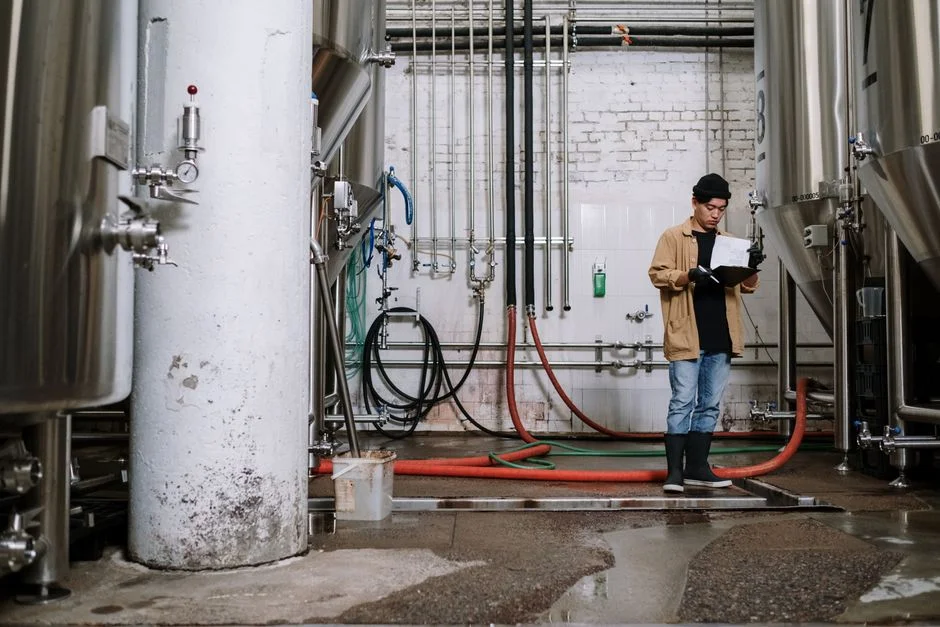
The unit-operation sequence should follow the contaminant removal mechanism: equalization and sampling, pH correction, coagulation and flocculation, solids separation, multimedia filtration, optional UF, optional RO, and sludge dewatering. This sequence is a decision framework, not a requirement to install every unit. AMPAC USA describes the same progression for mining-water treatment and identifies membrane polishing where salts or trace metals persist (AMPAC USA, 2025-09).
Pretreatment begins with equalization and representative sampling. A PLC-controlled chemical dosing skid can then adjust pH and feed coagulant or flocculant. When metals are removed by metal hydroxide precipitation, chemical feed must be set around the required precipitation pH. If lime is used, evaluate gypsum-forming reactions and the resulting sludge rather than specifying only the target pH (PMC review, 2024-02).
Use dissolved air flotation when oils, floatable fines, or buoyant floc favor flotation. A DAF system for mining wastewater is the relevant equipment category. Use a lamella clarifier for precipitated mining solids when dense floc, footprint, and sludge volume drive selection. Genesis Water Technologies identifies DAF for buoyant floc or oils and lamella clarification where sludge volume and footprint are controlling constraints (Genesis Water Technologies, 2025-11).
Follow clarification with a multi-media filter for RO pretreatment when suspended solids, turbidity, and colloids threaten downstream membranes. Specify the required post-filter SDI; inlet turbidity alone does not prove membrane readiness (Genesis Water Technologies, 2025-11). Add a UF system for RO feed conditioning where fine colloids must be removed before RO. Use an industrial RO system for dissolved metals and salts when residual dissolved constituents remain above the required discharge quality. AMPAC USA reports RO recovery of 50–70% for AMD feed, 70–85% for an RO stage in a zero-liquid-discharge train, and more than 99% rejection of dissolved metals and salts for the cited systems (AMPAC USA, 2025-09). Those figures are not a plant guarantee; recovery must be demonstrated against the site’s water chemistry.
| Problem | Primary unit operation | Design basis or check |
|---|---|---|
| Acidic water and dissolved metals | pH correction and metal hydroxide precipitation | Required pH, reagent demand, gypsum formation, and sludge chemistry |
| Floatable fines, oil, or buoyant floc | Dissolved air flotation | Feed characteristics, flotation loading, and polymer compatibility |
| Dense floc in a compact installation | Lamella clarification | Sludge volume, footprint, underflow solids, and plate arrangement |
| Turbidity or colloids before membranes | Multimedia filtration and optional UF | Post-filter SDI, membrane feed condition, and backwash requirements |
| Residual dissolved metals or salts | Reverse-osmosis polishing | Recovery curve, scaling, pretreatment, concentrate management, and permeate quality |
| Chemical-precipitation solids | Thickening and mechanical dewatering | Cake target, cycle time, filtrate quality, and disposal route |
Include sludge handling in the project scope. Chemical precipitation creates metal hydroxide sludge that requires dewatering; a filter press for mining sludge dewatering addresses that obligation, but the final selection depends on cake-volume, solids, and disposal criteria.
Decide between DAF, lamella clarification, and membrane polishing
The correct separation method depends on floc behavior and the project’s operating priorities, not on a generic preference for one machine. HydropureWater’s published DAF catalog covers 4–300 m³/h across 13 standard models, while its lamella-clarifier catalog states a surface-loading range of 20–40 m/h and up to 30% lower chemical consumption (HydropureWater product catalogs, 2026). These catalog values establish available configurations; they do not replace influent testing or vendor guarantees for the selected stream.
| If the wastewater has… | Then evaluate… | Critical design check |
|---|---|---|
| Floatable material, oils, or buoyant floc | DAF | Are the contaminants genuinely floatable, and can the floc remain intact? |
| Dense, settleable floc with footprint or sludge-volume constraints | Lamella clarification | Do sludge properties support the proposed loading and withdrawal arrangement? |
| Suspended solids, turbidity, or colloids threatening membranes | Multimedia filtration | Does the filter achieve the required post-filter SDI? |
| Fine colloids requiring chemical-free removal before RO | UF | Can the feed meet the membrane manufacturer’s limits, and how will backwash residuals be handled? |
| Residual dissolved metals or salts | RO | What are the recovery, scaling tendency, pretreatment needs, and concentrate destination? |
The published UF specification identifies 2,000–40,000 L/h capacity, 0.03 micron PVDF membranes, inlet turbidity up to 300 ppm, automatic backwash, and air scour (HydropureWater UF product catalog, 2026). Confirm these conditions against representative feed data rather than treating catalog maxima as operating guarantees.
RO is a polishing step, not a substitute for control of suspended solids and precipitation chemistry. AMPAC USA reports that treatment reuse enabled by RO can reduce freshwater consumption by 40–60% compared with once-through operation (AMPAC USA, 2025-09). A project-specific mass balance must still establish recovery, water quality, concentrate management, and the volume that can actually be reused.
Turn the permit and influent data into a supplier basis of design
Comparable quotations require the same operating and compliance inputs. Provide peak and average flow in m³/h, representative influent pH and metal profiles, local sewer limits for metals, pH, and TSS, and the desired reuse percentage. Also identify the mineral and process, applicable subpart, NPDES conditions, required sampling frequency, storm-flow contribution, available treatment chemicals, reject-water destination, and sludge-disposal route.
Require each bidder to define every proposed unit process, design flow, operating envelope, chemical consumption, control philosophy, monitoring points, bypass provisions, commissioning tests, and O&M assumptions. For RO or zero-liquid-discharge proposals, request a recovery curve rather than only a nameplate recovery figure. The distinction matters because chemistry, scaling, pretreatment, and concentrate handling determine actual recovery.
Supplier selection should test whether the proposed controls integrate dosing, clarification, filtration, and membrane equipment into one operating system. The related biological versus physical mining wastewater treatment comparison is useful when biological treatment is genuinely under consideration, while the second treatment-selection reference provides a useful basis for comparing complete scopes.
The supplied research does not publish a complete-system price for a Bates City mine. Obtain a project-specific quotation after the basis of design is complete rather than using a generic budget range that omits peak flow, chemistry, sludge handling, controls, or concentrate disposal.
Prove compliance with monitoring and troubleshooting controls
Compliance depends on a documented operating and sampling system, not on a treatment skid running in isolation. Specify continuous pH, flow, and conductivity monitoring where they support chemical dosing and discharge control, with PLC/HMI integration across chemical dosing, clarification, filtration, and membrane operation. LiqTech’s industry guidance identifies continuous pH, flow, and conductivity with PLC/HMI control and POTW self-monitoring records (LiqTech, 2025-08).
Tie automatic dosing to the required pH and coagulation sequence. The PLC-controlled chemical dosing skid supports coordinated injection of coagulants, flocculants, pH adjusters, and specialty chemicals. Define operating responses before commissioning:
- Rising effluent turbidity: check filter breakthrough, floc conditions, solids carryover, and sample integrity.
- Unstable pH: verify chemical delivery, probe calibration, mixing, and the precipitation control sequence.
- Increasing filter or membrane differential pressure: examine pretreatment performance, scaling, solids loading, and cleaning conditions.
- Upset solids separation: review hydraulic loading, floc properties, chemical dosage, air performance, and sludge withdrawal.
Require calibration records, laboratory comparison, data retention, alarm-response procedures, bypass authorization, and a written sampling plan aligned with the NPDES permit and POTW requirements. Online readings support process control, but they do not replace the regulator-specified compliance sampling and reporting protocol.
Frequently Asked Questions
What discharge limits should a Bates City mining or metals plant use?
Use the current POTW discharge limits, NPDES permit conditions, and the applicable 40 CFR Part 436 subpart after confirming the mineral category. The supplied research provides no numerical Bates City sewer limit, so a limit from another city cannot be substituted. Obtain written confirmation of the receiving authority’s parameters, monitoring requirements, and approval pathway before equipment selection.
How much should a complete mine-wastewater pretreatment system cost?
The supplied research contains no complete-system price for a Bates City mine. Request a project-specific quotation based on peak and average flow, representative influent chemistry, local limits, chemical consumption, sludge handling, controls, and reuse targets. Require each quote to separate equipment, civil work, installation, commissioning, training, O&M assumptions, and concentrate or reject-water disposal.
Should the plant choose DAF or a lamella clarifier?
Choose DAF when the wastewater contains floatable material or the treatment objective depends on buoyant floc. Choose lamella clarification when dense floc, footprint, and sludge-volume management are controlling constraints. Make the final decision from representative testing and a pilot or performance basis, not from the equipment name alone.
How large should the treatment system be?
Size equalization and pumping around the highest anticipated discharge, not a generic average-flow band. Use average flow for operating-cost and chemical-use estimates, and use representative chemistry to set solids loading, membrane pretreatment, and polishing requirements. No Bates City flow requirement was supplied, so the plant must establish its own peak and average flows from operating records and the approved discharge plan.
Can treated mine water be reused instead of discharged?
Yes, when the required reuse quality, recovery, and concentrate-management path can be demonstrated. AMPAC USA reports that RO-enabled reuse can reduce freshwater consumption by 40–60% compared with once-through operation (AMPAC USA, 2025-09). That is a screening figure, not a project guarantee: the supplier must provide a site-specific recovery curve and show that every intended reuse stream remains compliant with its process, environmental, and operational requirements.