Separate the data center's wastewater streams first
Cooling-tower blowdown is the primary process-wastewater source in most large-scale data centers, while sanitary sewage follows a different permitting pathway (RSP Engineers, “Process Wastewater Considerations for Data Center Operations”). A Winnipeg project team must separate each wastewater stream before selecting equipment. The data-center cooling blowdown treatment guide provides a useful starting point, but the project requires site-specific measurements and written requirements from the receiving sewer authority.
Build the inventory around average and peak flow, temperature, pH, conductivity or total dissolved solids (TDS), suspended solids, hardness, residual chlorine or selected biocide, relevant metals and the complete cooling-water chemical package. Also record softener or reverse-osmosis backwash, equipment-cleaning wastewater, air-handling-unit condensate and sanitary sewage independently. RSP Engineers notes that sanitary flow is typically minor relative to potential blowdown volume but has a different permit route.
| Wastewater stream | Design information to establish | Initial route |
|---|---|---|
| Cooling-tower blowdown | Average and peak flow; temperature; pH; conductivity or TDS; suspended solids; hardness; biocide or chlorine residual; metals where relevant; full chemical package | Cooling system to a separately controlled treatment and discharge or reuse train |
| Softener or RO backwash | Flow, regeneration frequency, salinity, chemicals and destination | Evaluate separately from cooling blowdown |
| Equipment-cleaning wastewater | Generation rate, detergents, pH, metals and episodic duration | Segregated collection and treatment assessment |
| Air-handling-unit condensate | Flow and water-quality characteristics | Evaluate for reuse or discharge after confirming quality and local requirements |
| Sanitary sewage | Fixture flow and connection requirements | Separate sanitary route |
Do not treat generic treatment ranges as Winnipeg requirements. Obtain the receiving sewer authority’s current pretreatment limits, permit conditions, monitoring obligations and sampling program in writing before freezing the design basis.
Quantify blowdown before choosing equipment
The concentration-cycle relationship provides a preliminary check rather than a final equipment-flow calculation. Genesis Water Technologies, in “Why Cooling Tower Blowdown Is Your Hidden Opportunity,” states that theoretical blowdown equals 25% of make-up water at four cycles of concentration and 20% at six cycles. Moving from four to six cycles reduces blowdown by five percentage points of make-up water: a 20% reduction in the original blowdown volume, not a 50% reduction.
Apply the relationship to measured cooling data to ensure accuracy. The same source provides a 10 MW illustration: at four cycles, it describes monthly intake of 15 million gallons and recoverable blowdown of 3.75 million gallons. That example cannot be transferred to a Winnipeg facility without its cooling configuration, operating profile, make-up-water chemistry and evaporation data.
- Measure make-up water and blowdown over representative operating periods.
- Estimate evaporation from the site water balance and reconcile it with measured flow.
- Check conductivity or TDS in circulating water and make-up water to verify actual cycles of concentration.
- Include unmeasured losses, emergency dumps and peak operating conditions before sizing.
Genesis Water Technologies reports that actual blowdown may exceed theoretical calculations by 15–30% because of unmeasured losses and emergency dumps. That finding makes temporary metering and operating-log review design inputs rather than optional refinements.
Water Use Effectiveness (WUE) cannot by itself distinguish consumption from recoverable discharge. A low WUE result can conceal substantial blowdown leaving the site. The project requires a measured mass balance before comparing a sewer-discharge package, blowdown recovery, or both. For recovery scenarios, include storage capacity, distribution demand, downtime and the consequences of sending off-specification water to the reuse destination.
Match treatment to the discharge or reuse endpoint
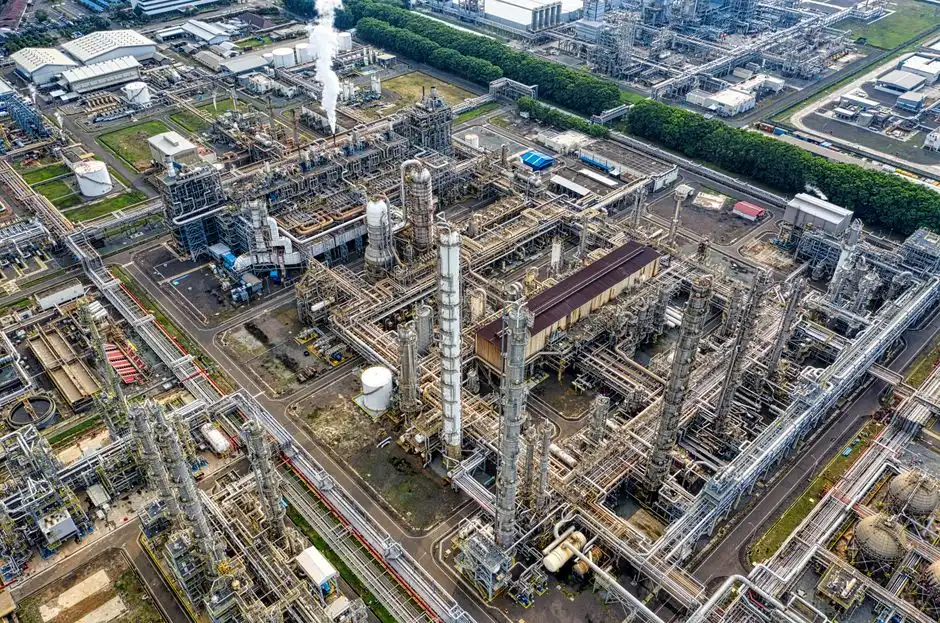
Treatment scope must follow the receiving water quality requirement rather than a generic catalogue of treatment technologies. For sewer disposal, assess solids removal, pH adjustment, temperature management and dechlorination or biocide control against the utility’s written limits. RSP Engineers identifies pH, temperature, residual chlorine and metals among the principal concerns, while noting that total dissolved solids, chlorides, sulfates and phosphates may also require characterization.
| Scenario and endpoint | Potential process train | Key design question |
|---|---|---|
| Sewer pretreatment | Physical separation followed by targeted pH, temperature, biocide or solids treatment as required | Which parameters and analytical methods are in the sewer permit? |
| Landscape irrigation, equipment washing or toilet flushing | Physical separation followed by treatment appropriate to the receiving use | Does the receiving location accept the resulting salinity, chemistry and residual treatment requirements? |
| Cooling-tower make-up reuse | Dissolved-solids control; evaluate ultrafiltration blowdown pretreatment before membranes | What fouling control and membrane-compatibility data are required? |
| Highest-purity reuse or closed-loop application | Reverse osmosis after suitable pretreatment, with concentrate management | Where will concentrate go, and what recovery and water-quality targets apply? |
Genesis Water Technologies reports that the treatment sequence it describes for non-critical reuse can reduce make-up-water demand by 15–25%. This is not a Winnipeg guarantee; the result depends on influent chemistry, operating conditions, endpoint criteria and the treatment train selected.
A DAF wastewater treatment system may be relevant where suspended material warrants physical separation, but it does not remove dissolved salts by itself. For cooling make-up reuse, the lifecycle comparison must include solids control, scaling risk and membrane protection.
Higher treatment purity also carries an environmental trade-off. A 2026 life-cycle assessment by Open Engineering Inc, “Reclaiming Cooling: Wastewater Reuse as a Strategic Resource for Data Center Water Management,” found the evaluated wastewater scenario had about twice the global warming potential of the freshwater case, with treatment energy responsible for roughly 80% of the difference. Its UF+RO scenario used more than five times the freshwater case’s treatment energy, although improved cycles of concentration reduced blowdown and chemical consumption. Reuse requires a whole-site energy and water balance.
Build a pretreatment train the receiving sewer can approve
A permit-ready train begins with the utility’s written limits and the cooling-water chemical package. RSP Engineers provides a common pH range of 6.0–9.0 and a maximum-temperature example of 150°F as screening references only; neither should be inserted into a Winnipeg permit application without confirmation from the receiving authority.
- Characterize TDS, chlorides, sulfates, phosphates, suspended solids, corrosion-inhibitor ingredients, biocides and relevant metals.
- Identify whether pH correction, solids removal, temperature control or residual-chemical treatment is required.
- Use jar testing and site data to determine the chemical dose and process response.
- Define the receiving-sewer monitoring and sampling protocol.
- Provide containment, drainage, maintenance access and a defined upset or bypass response.
Chemical dosing should follow a chemical-compatibility and whole-plant review. An automatic chemical dosing system can control reagent injection, but the reagent, dose, tank arrangement and interlocks must come from the chemistry and permit basis. Associated valves and media should be specified with the complete treatment train through water-treatment parts, valves and filter media.
For a higher-purity route, pretreatment is not optional. Suspended solids, colloids, scale-forming species and incompatible treatment chemicals can impair downstream membranes, so performance criteria must be tied to the selected membrane process. Reverse osmosis also creates a concentrate stream that belongs in the site mass balance and residuals plan.
Include sampling points, flow and pH monitoring, chemical containment, secondary containment or drainage provisions appropriate to the chemical inventory, delivery access and maintenance clearance. The operating plan should define what happens when chemistry, flow or utility power moves outside the approved envelope. A bypass is a permit and operational decision, not a convenience valve.
Confirm Winnipeg climate, reuse and utility constraints
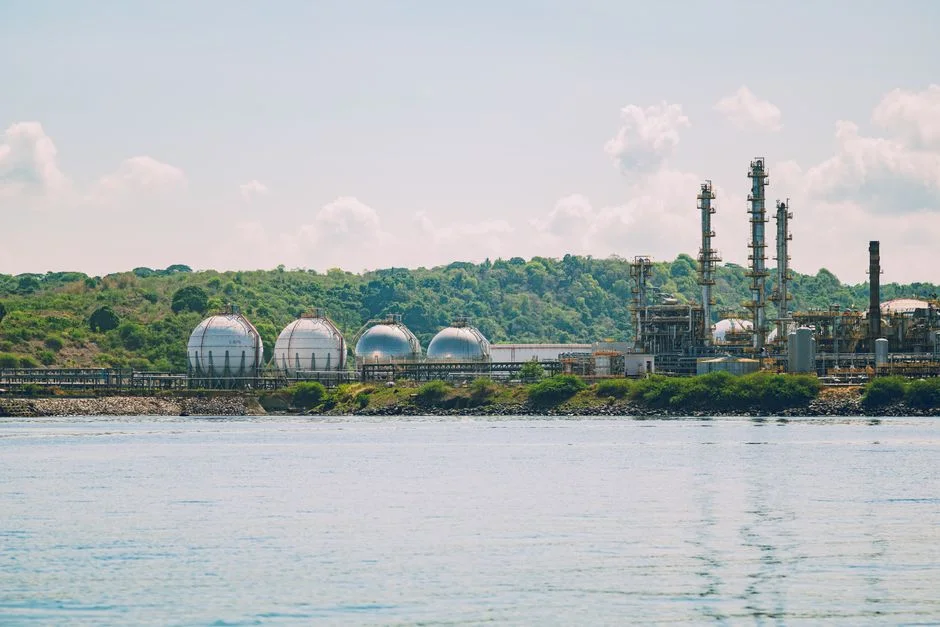
The receiving sewer’s capacity, connection fees, pretreatment application, monitoring requirements and sampling program determine the discharge side of the project. Confirm these factors before selecting equipment or reserving the treatment footprint. In parallel, define the reuse destination and its seasonal demand so recovered water is not produced without a controlled place to use it.
Winnipeg winter design must address exposed piping, basins, instrument draining, freeze protection, chemical storage and safe access. These are site-design inputs that must be assigned in the civil and mechanical scopes; they cannot be solved by treating a generic treatment package as inherently winter-ready.
Use a whole-site water balance to separate four outcomes: freshwater consumption, sewer discharge, reusable water and possible energy recovery. Discharge minimization, wastewater reuse and heat recovery are not interchangeable. A recovered-water system needs a destination and storage strategy, while heat recovery requires a viable thermal load and hydraulic integration.
A Techno-Economic Feasibility of Wastewater Energy Transfer Systems for Cold Climates study, indexed through OpenAlex, modelled 5,464 tonnes of annual greenhouse-gas reduction for a wastewater energy transfer system in Winnipeg. Across six Canadian cities, the same study reported modelled annual savings from $128,544 in Calgary to $2,057,855 in Montreal, with an average of $852,196. These are simulation outputs, not guaranteed savings for a data-center project.
Reserve area early. RSP Engineers notes that pH neutralization alone may require a few hundred square feet, while filtration plus chemical precipitation may require several thousand square feet. The applicable area depends on flow, treatment intensity and chemical storage; request a scaled plot plan rather than relying on broad examples.
Evaluate suppliers with a design and commercial checklist
A comparable supplier proposal must state the assumptions that produce its equipment size. Procurement teams can adapt the planning structure in the 2026 data-center wastewater planning guide and the process sequence described in the data-center wastewater treatment process guide, but must replace nonlocal assumptions with Winnipeg site data and utility requirements.
| Supplier submission item | Required content | Commercial significance |
|---|---|---|
| Design basis | Average and maximum flow; operating hours; influent chemistry; treated-water endpoint; cooling configuration and cycles-of-concentration assumptions | Shows whether the proposed capacity represents the actual project |
| Performance criteria | Water-quality targets, hydraulic throughput, availability and reagent-consumption commitments tied to stated influent conditions | Separates measurable guarantees from generic contaminant-removal claims |
| Mechanical and site scope | Plot plan; tank volumes; pump duty; utilities; chemical demand; drainage; containment; maintenance access | Defines whether the proposal includes installation-ready infrastructure |
| Controls and compliance | Control philosophy; monitoring; sampling provisions; alarms; interlocks; upset and bypass response | Connects equipment operation to the sewer permit and operating plan |
| Lifecycle cost | Energy, chemicals, media or membrane replacement, operator labour, monitoring, residuals and disposal | Supports comparison beyond acquisition price |
| Commissioning and support | Site-data requirements; testing; training; warranty; guarantees; remedy for non-performance | Clarifies responsibility during startup and subsequent operation |
Ask each bidder to identify which items are included, which are exclusions and which require owner-supplied data. Performance guarantees should state the remedy for an upset and the conditions under which they apply. Final sizing requires measured or engineered flows, influent chemistry, cooling configuration, sewer or reuse requirements, winter operating conditions and the intended treated-water endpoint.
Frequently Asked Questions
How should wastewater treatment equipment be sized for a Winnipeg data center?
Size from measured average and peak flows, not from facility megawatts or a generic recovery percentage. Confirm cooling configuration, actual cycles of concentration, make-up and blowdown measurements, evaporation, emergency dumps, full chemical inventory and intended reuse demand. Compare those inputs with the receiving sewer’s peak-flow and monitoring conditions. The theoretical relationship of 25% blowdown at four cycles and 20% at six cycles is a preliminary check reported by Genesis Water Technologies, not a final size.
Which treatment train should be chosen for sewer discharge or water reuse?
For sewer discharge, build the train around written authority limits for pH, temperature, residual chlorine, solids, TDS and any regulated constituents. For non-pot
Frequently Asked Questions
How much does a data center cooling blowdown treatment system cost in Winnipeg?
For a standard Tier III data center in Winnipeg with a cooling capacity of 10 MW, a complete industrial-grade wastewater treatment system typically ranges from $450,000 to $850,000 CAD. This cost includes procurement, local installation, and commissioning, but excludes ongoing operational expenses, which generally average $0.15 to $0.35 per cubic meter of treated water depending on chemical consumption and energy requirements.
What treatment equipment should I ask a wastewater supplier to quote for a data center?
To meet local discharge standards, request quotes for a modular system comprising a pH adjustment tank (using sulfuric acid or caustic soda), a Dissolved Air Flotation (DAF) unit for suspended solids removal, and an automated ultrafiltration (UF) skidded system. If the goal is zero liquid discharge or high-cycle reuse, include a multi-stage Reverse Osmosis (RO) unit and a chemical dosing system for antiscalants and biocides tailored to the specific hardness levels of the Winnipeg regional water supply.
How do I size a DAF or ultrafiltration system for cooling-tower blowdown?
Sizing is calculated based on the maximum daily blowdown rate, which is derived from the cooling tower's evaporation rate and the Cycles of Concentration (CoC). A standard formula is Blowdown = Evaporation / (CoC - 1). For example, a 5 MW facility operating at 5 cycles of concentration typically requires a system sized for a peak hydraulic loading rate of 2.0 to 3.5 cubic meters per hour, incorporating a 20% safety buffer for peak load variability.
Can treated cooling blowdown be reused as cooling-tower make-up water?
Yes, treated blowdown can be reused, provided the RO permeate meets the Conductivity and Total Dissolved Solids (TDS) requirements for the cooling loop. In Winnipeg, where source water is relatively soft, recycling 60% to 80% of blowdown back into the make-up stream is technically feasible. This process requires continuous monitoring of silica and chloride levels to prevent corrosion and scaling within the heat exchangers.
What permits and pretreatment limits apply to a Winnipeg data center discharge?
Data centers discharging into the Winnipeg municipal sewer system must adhere to the City of Winnipeg Sewer By-law No. 92/2010. Mandatory pretreatment limits typically include a pH range of 6.0 to 10.5, a maximum temperature of 65°C, and specific caps on Total Suspended Solids (TSS) and heavy metals. Operators must obtain a Wastewater Discharge Permit from the City’s Water and Waste Department and submit periodic analytical reports verifying compliance with the local limit concentrations.