Start with the discharge route and permit boundary
A Malatya data center needs a permit-specific treatment train for cooling blowdown and other wastewater, not a generic industrial package. Genesis Water Tech (2026) indicates that blowdown is roughly 25–30% of makeup at 4 cycles of concentration and may contain 1,200–6,000 mg/L TDS. Before equipment selection, establish the legal outlet, measured stream chemistry, reuse specification and concentrate destination. Malatya-specific flows, tariffs, receiving-water limits and organized-industrial-zone rules must be verified locally before design freeze.
Three outlet routes lead to different design bases. Direct discharge to a receiving body invokes the Water Pollution Control Regulation and the Su Kirliliği Kontrol Yönetmeliği (SKKY); the Antalya data-center blowdown treatment guide explains that the current consolidated SKKY text and applicable parameter limits must be confirmed with the regulator. Indirect discharge through a municipal sewer invokes the utility’s connection, pretreatment and tariff conditions. Internal reuse still requires a defensible treatment specification, but it changes the outlet from permitted disposal to controlled process-water production.
Obtain written confirmation that the site is inside an organized industrial zone and determine whether its operator imposes pretreatment or acceptance rules beyond the municipal and national framework. Request the current connection rules, tariff schedule, permitted temperature, pH, suspended-solids, salinity and flow conditions. The supplied research contains no verified Malatya-specific numeric limits, so the permit and utility documents—not a generic benchmark—must set those values. Obtain current utility bills as well; without local water and discharge prices, neither reuse nor high-recovery equipment can be assigned a defensible economic case.
| Decision | Authority or evidence required | Design consequence |
|---|---|---|
| Direct receiving-body discharge | Current SKKY text, regulator confirmation and receiving-body conditions | Treatment is designed around confirmed discharge limits and receiving-water impact |
| Municipal sewer discharge | Written connection and pretreatment rules plus current tariff schedule | Equipment must protect the sewer and meet utility acceptance conditions |
| Internal reuse | Reuse-water specification, cooling-system chemistry and confirmed residual fate | Treatment is defined by required water quality; reject disposal remains a separate decision |
| Organized industrial zone | Written confirmation of zone status and operator pretreatment requirements | Add the zone operator’s requirements to the national and municipal basis |
The sewer-limit preparation guide illustrates the same commercial sequence: establish the receiving authority’s conditions before freezing pretreatment scope. For Malatya, retain those confirmations in the permit and supplier brief so an equipment supplier cannot substitute its own discharge assumptions.
Build a complete wastewater register
Cooling blowdown should be treated as the largest recoverable stream, not as the plant’s only wastewater. Genesis Water Tech (2026) places blowdown at roughly 25–30% of makeup at 4 cycles of concentration. The remaining streams must still be inventoried because domestic sewage, glycol, spills and service flows have different chemistry and legal pathways. A single combined equalization tank is appropriate only after the project proves that each admitted stream can be treated by the selected process.
Use an integrated wastewater stream-allocation method to assign each liquid to a permitted route and treatment step. Inventory cooling blowdown, generator or chiller flush water, domestic sewage, washdown, relevant stormwater, glycol-bearing streams, battery-spill containment, scheduled-service liquids and emergency discharges. For every stream, record source, flow variability, chemistry, disposal point, treatment step and operating owner.
Segregate glycol and battery-spill liquids. The Antalya treatment guide states that sending them through RO destroys membranes and almost always violates the intended disposal pathway. Provide segregated storage and a documented on-site treatment or contracted off-site disposal route. The same guide identifies raw domestic sewage as unsuitable for direct blending with industrial pretreatment because ammonia and organics can overload the downstream system; route it through a packaged MBBR or MBR biological step before controlled blending.
| Stream | Allocation decision | Treatment or control requirement |
|---|---|---|
| Cooling-tower blowdown | Primary recoverable stream | Equalization, solids removal, filtration and treatment according to the final outlet |
| Generator jacket cooling or chiller flush | Periodic industrial stream | Equalization and suspended-solids reduction before permitted discharge or blending |
| Domestic sewage | Separate biological stream | Packaged MBBR or MBR before controlled blending |
| Glycol-bearing water | Segregated regulated stream | Separate storage and documented on-site or contracted treatment |
| Battery-spill containment | Segregated regulated stream | Contained response route independent of the normal treatment train |
| Washdown and scheduled-service liquids | Qualified by chemistry | Documented route; settle and filter where reuse is permitted |
| Emergency discharge | Contingency stream | Documented standby capacity or contracted off-site response |
Instrument the operating boundary before final sizing. Measure makeup, blowdown, evaporation, drift, wastewater flow, pH, conductivity, TDS, suspended solids, temperature and hardness. Metered water balances are more reliable than an assumed cycles-of-concentration value, while representative sampling determines whether clarification, UF or RO is technically necessary.
Calculate blowdown and the recoverable-water opportunity
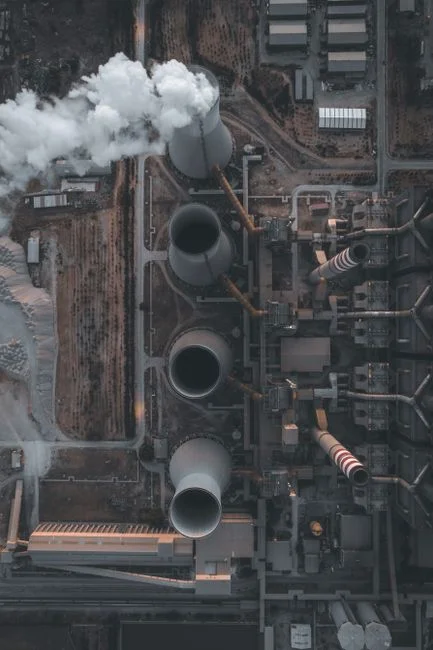
The cooling-water balance must reconcile theory with metered operation. Use B = E/(CoC−1), where B is blowdown and E is evaporation, then compare the calculated value with total blowdown metering. Genesis Water Tech (2026) states that actual blowdown can exceed theoretical calculations by 15–30% because of unmeasured losses and emergency dumps, so a design based only on the formula will miss operating variability.
Changing concentration cycles produces a smaller improvement than often claimed. Genesis Water Tech (2026) gives blowdown equal to 25% of makeup at 4 CoC and 20% at 6 CoC. The change is five percentage points, or a 20% reduction in blowdown volume, not a 50% reduction. Before pursuing a higher CoC, assess silica, calcium carbonate, calcium sulfate, biological growth, corrosion and chemical compatibility. The Bursa cooling-blowdown process design guide identifies these factors as recovery constraints rather than treating TDS as the only design variable.
Use the Bursa guide’s characterization range—1,500–3,000 ppm TDS, pH 7.5–9.0, silica 20–80 mg/L as SiO₂, temperature 30–40°C and suspended solids 10–50 mg/L—as a preliminary comparison envelope only. The regional data-center wastewater treatment guide and Genesis Water Tech (2026) also provide a broader 1,200–6,000 mg/L TDS range for cooling blowdown. Neither replaces Malatya sampling across operating seasons.
- Record metered makeup, blowdown, evaporation and drift for a representative operating period.
- Calculate B from E and the verified CoC, then reconcile the result with total meter flow.
- Sample cooling make-up and blowdown for TDS, silica, hardness, suspended solids, temperature, pH and treatment-chemical residuals.
- Evaluate recovery and reuse only after confirming the permitted outlet and downstream concentrate route.
This calculation establishes a recoverable-water envelope, not guaranteed savings. The usable volume depends on treatment recovery, peak and off-peak capacity, equalization losses, reuse-water quality and whether recovered water can actually displace paid make-up.
Select the treatment pathway against the final reuse target
The treatment pathway should follow the confirmed outlet and required water quality, not begin with a preferred machine. Direct or sewer discharge is viable only if the complete stream—including temperature, suspended solids, salts and treatment-chemical residuals—meets the receiving authority’s written conditions. For cooling-tower make-up reuse, the Antalya data-center blowdown treatment guide cites a target of 500–1,500 mg/L TDS and 10–25 mg/L suspended solids. That target must still be reconciled with the actual cooling chemistry, make-up supply and concentration strategy.
The baseline train for higher-quality reuse is equalization, DAF or lamella clarification, multi-media filtration, UF and RO. The Bursa guide cites 24–48 hours of hydraulic retention time for equalization and 20–40 m³/m²·h surface loading for lamella clarification. Genesis Water Tech (2026) recommends sizing side-stream filtration at 1–5% of circulation flow, with multi-media filtration protecting UF from suspended solids. Where feed variability could compromise RO, use UF; the hollow-fiber UF pretreatment for blowdown reuse uses 0.03-micron PVDF membranes, accepts up to 300 ppm turbidity, handles 2,000–40,000 L/h and includes automatic backwash and air scour.
| Pathway | Indicative treatment scope | Decision condition |
|---|---|---|
| Direct or sewer discharge | Equalization, solids control and chemical conditioning as required | The complete stream satisfies confirmed receiving conditions |
| Cooling-tower make-up reuse | Clarification, multi-media filtration, UF, RO and blending | Permeate quality meets the verified cooling specification |
| Partial zero liquid discharge | RO followed by MVC treatment of concentrate | Restrictions or economics justify 85–95% overall recovery |
| Full zero liquid discharge | RO, MVC and crystallizer | Residual disposal restrictions and site economics support the complete system |
Treat RO recovery conservatively. The Bursa guide cites 75–80% recovery for blowdown-to-cooling-tower reuse, while the Antalya guide gives 50–85% across RO applications. Use site chemistry to select the operating point; do not import a recovery percentage without checking silica, hardness, concentrate disposal and the resulting concentrate flow.
Escalate to partial ZLD only when direct discharge is constrained or the site economics justify concentrating RO reject. The Antalya guide describes RO followed by MVC at 85–95% overall recovery before full ZLD is considered. Do not specify NF, MVC, a crystallizer or full ZLD from a generic benchmark. First obtain the feed salinity, silica and scaling profile, Malatya freshwater cost, electricity price, discharge fee and concentrate-disposal route.
Size the equipment around bottlenecks and operating conditions
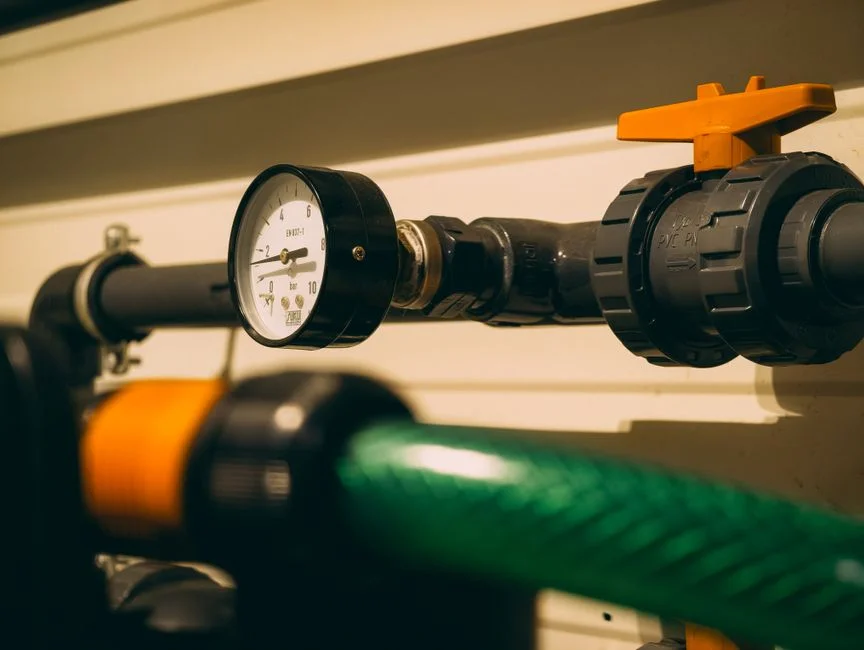
Equipment sizing should reflect measured variability and the hydraulic bottlenecks that can interrupt reuse. The Bursa guide describes 24–48 hours of equalization HRT to buffer TDS, pH and temperature swings. Apply that principle only after quantifying peak blowdown, emergency or service flows, equalization drawdown and the operating strategy. Equalization should absorb the variability that would otherwise overload clarification, UF or RO; it is not a substitute for adequate downstream capacity.
Choose DAF when the stream contains variable suspended solids, oils or flocculated metal compounds. A DAF system for cooling-blowdown solids removal covers 4–300 m³/h across 13 models and uses micro-bubbles with automatic skimming. Choose lamella clarification where footprint is the priority; the Bursa guide cites 20–40 m³/m²·h surface loading. The supplier must size the selected equipment from the project feed rather than from the broad equipment range.
| Item | Supplier brief requirement | Verification |
|---|---|---|
| Equalization | Measured peak flow, operating variability and contingency basis | Mass-balance and level-control review |
| DAF or lamella | Feed solids, oils, metals and required footprint | Vendor hydraulic sizing and pilot or feed test where justified |
| Multi-media filtration | Required solids reduction and UF-protection duty | Dirty-water performance test |
| UF | Flow, turbidity, recovery and backwash sequence | Actual-feed or representative-feed FAT |
| RO | TDS, silica, hardness, recovery and concentrate route | Recovery and flux guarantee at project envelope |
| Controls and dosing | PLC-controlled injection for pH, antiscalant, coagulant, flocculant and biocide functions | Cause-and-effect, alarms and interlocks |
The chemical program must match measured Malatya chemistry and remain compatible with the downstream membranes. Automatic dosing should respond to measured blowdown quality rather than operate as a fixed recipe. Require skid-level testing with the project feed and proposed chemical program; clean-water RO performance does not demonstrate scaling, biofouling or flux performance under actual blowdown conditions.
Provide expansion information in the inquiry. AI-dense racks can raise cooling demand and equalization requirements, so reserve space, connection points and hydraulic capacity for parallel treatment trains where justified. State the current IT load, expected cooling configuration and future-build assumptions so the supplier does not price a single line around an undefined expansion.
Build the Malatya business case from total costs
The investment case must include avoided utility costs and the full operating burden. Model avoided freshwater, avoided discharge fees, avoided seasonal scarcity premiums, electricity, chemicals, membrane replacement, maintenance, operator labor, sludge handling and concentrate disposal. Excluding concentrate management can make RO appear materially cheaper than the complete treatment system.
Genesis Water Tech (2026) provides an indicative benchmark of $250,000–$500,000 for a 50,000 GPD RO installation and $1.50–3.00/kgal operating cost. The operating figure includes energy, chemicals, membrane replacement and maintenance, but the buyer must confirm whether the installation price includes pretreatment, equalization, tanks, dosing and installation. It is a comparison benchmark, not a Malatya quotation.
Genesis Water Tech (2026) also reports a 15 MW example with $200,000 CAPEX and a 6.7-year simple payback on water savings alone. Including avoided discharge fees and other avoided costs reduces the stated payback to 3–5 years. Neither result can be transferred directly to Malatya: the example’s water price, discharge fee, electricity cost, feed chemistry and facility scale must be replaced with project data.
| Cost or benefit line | Information required from Malatya | Basis for comparison |
|---|---|---|
| Avoided freshwater | Current commercial water tariff and metered consumption | Recovered water that actually displaces make-up |
| Avoided discharge cost | Current sewer or receiving-body tariff | Confirmed route and permitted volume |
| Electricity and chemicals | Utility tariffs and expected operating hours | Vendor consumption model |
| Maintenance and membranes | Cleaning interval and replacement assumptions | Measured-feed operating scenario |
| Sludge and concentrate | Handling, transport and disposal prices | Residual quantities and selected treatment route |
| Availability | Downtime and recovery sensitivity cases | Installed, reliable recovered-water output |
Compare reuse and partial ZLD over a 10-year horizon using actual Malatya water, sewer and electricity tariffs; no verified Malatya tariff was supplied, so this article does not invent one. Include sensitivity cases for lower recovery, membrane cleaning, chemical escalation and downtime. The pretreatment-limit procurement guide supports obtaining itemized pricing rather than comparing headline equipment prices.
Require each bidder to price DAF or clarification, multi-media filtration, UF, RO, electrical, controls, chemical dosing and reject handling separately. This allows the project to test alternative recovery levels and outlet assumptions without hiding exclusions in a single turnkey price.
Turn the concept into a procurement and verification checklist
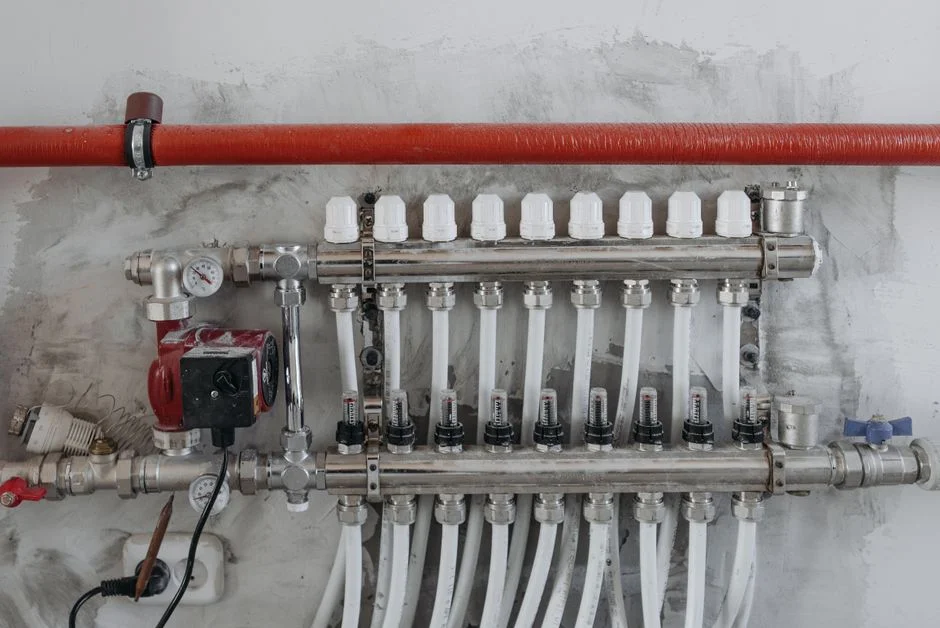
A permit-to-commissioning sequence prevents the process train from freezing on unverified assumptions. First obtain written confirmation of the discharge route, current applicable SKKY provisions, municipal or organized-industrial-zone acceptance rules and the receiving authority’s current tariff schedule. No supplier should be selected for advanced treatment before those documents define the outlet.
- Complete a representative sampling campaign covering seasonal make-up variation, blowdown chemistry, suspended solids, hardness, silica, metals and residual treatment chemicals.
- Issue the vendor package with measured design flow, required recovery, reuse-water specification, concentrate fate, site electrical limits, footprint and expansion requirements.
- Require references from comparable high-salinity or data-center reuse installations completed within the previous 24 months, with operating data available for reference.
- Require factory acceptance testing that includes the actual feed or a representative silica-spike condition rather than clean-water performance alone.
- Obtain a recovery and flux warranty tied to the project’s measured TDS, silica, hardness and cycles-of-concentration envelope.
- Make commissioning conditional on receiving-water or sewer approval, permeate quality, reject routing, metering, alarms, operator training and a documented performance test.
Reference installations should be comparable in water chemistry, recovery duty and operator capability; equipment supply alone is not proof of an operating reuse system. Ask each supplier to define the boundary between vendor performance, owner sampling, regulatory approval and operator acceptance. The Nampula commissioning guide and Bujumbura procurement guide illustrate the same need to separate technical acceptance from permit approval.
Deliverables should include the process flow diagram, P&ID, equipment datasheets, chemical-control philosophy, electrical and controls drawings, FAT procedures, site acceptance criteria, commissioning protocol, operator training plan and performance test. Require clear responsibility for membrane guarantees, chemical compatibility, reject routing and compliance support. This makes the supplier shortlist auditable and gives the project a defensible record for final investment approval.
Frequently Asked Questions
What treatment does a Malatya data center need for cooling blowdown?
The baseline for cooling-tower make-up reuse is equalization, solids removal, multi-media filtration, UF and RO, followed by blending to the verified reuse specification. If confirmed sewer or direct-discharge conditions are met, the scope can be reduced to the required pretreatment and control steps. The final route must be selected from the Malatya permit, receiving authority and measured feed chemistry.
How should blowdown treatment equipment be sized?
Size from metered makeup, blowdown and evaporation data, then add measured variability and contingency. Reconcile the balance using B = E/(CoC−1), sample the feed, and confirm peak and off-peak loads. A supplier’s general capacity range does not establish the project size; the bid must show hydraulic calculations against the stated design flow and operating envelope.
What should the buyer request for cost and budget approval?
Request an itemized quote covering equalization, DAF or clarification, multi-media filtration, UF, RO, electrical, controls, dosing and residual handling. Also request a 10-year model using the buyer’s actual Malatya water, discharge and electricity tariffs. Genesis Water Tech (2026) benchmarks can frame the review, but they are not quotations, and exclusions such as pretreatment, tanks or installation must be explicit.
How should treatment suppliers be selected and qualified?
Require comparable high-salinity or data-center reuse references from the previous 24 months, operating data, an actual-feed or representative-feed FAT, and a recovery and flux guarantee tied to the measured TDS, silica, hardness and CoC envelope. Confirm who provides permit support, reject routing, commissioning, training and warranties. A clean-water test and generic recovery percentage are insufficient selection evidence.