What changes when Volkswagen acquires a Texas plant?
Wastewater obligations generally follow the site’s authorized discharge paths rather than the automaker’s brand alone. The buyer must identify the controlling TCEQ or approved local permit, confirm whether ownership or operator changes require a transfer, amendment, new application, responsible-party update, or no permit action, and address prior violations, monitoring, pretreatment, stormwater, and treatment-capacity issues. The supplied research does not establish a blanket Texas rule for a new permit, amendment, or transfer after every acquisition; the permit file and agency must confirm the correct route.
Begin with the legal and operational permittee named in each authorization. Corporate structure matters. In a stock transaction, the named permittee and responsible corporate entity may remain unchanged, while an asset purchase is more likely to require permit-review action or a new responsible-party identification. Neither structure removes the buyer’s diligence responsibility for the site’s historical performance.
Before signing, obtain the complete permit and compliance file for every discharge path. Review open violations, monitoring obligations, sludge and waste liabilities, treatment-system operating records, sampling results, permit amendments, inspection records, and outstanding corrective actions. The plant-acquisition wastewater due-diligence workflow provides a useful cross-industry structure, but Texas agencies and site-specific permit language remain controlling.
Do not treat the acquisition date as the deadline by default. TCEQ’s wastewater permitting page states that electronic copies of individual wastewater permit applications should be submitted through its file-transfer protocol to [email protected], but the source does not provide a universal post-acquisition filing deadline. The controlling permit, local pretreatment requirements, and agency confirmation must establish the actual timing.
Map every wastewater and stormwater discharge path
Every discharge path determines which treatment system, permit, monitoring program, and regulator the buyer inherits. Build the map around industrial process wastewater, cooling-tower and boiler blowdown, parts-washer and metalworking streams, stormwater, sanitary wastewater, on-site disposal, and wastewater reuse.
For each stream, record its source, flow, contaminants, destination, current permit, permittee, monitoring frequency, and treatment unit. Do not rely on the site perimeter alone: a permitted sewer connection, an on-site land application system, and a stormwater outfall may each have different authorization and operating obligations.
| Path to document | Information required | Decision to resolve |
|---|---|---|
| Industrial process wastewater | Manufacturing source, flow, constituent profile, treatment route, sampling point | Determine whether the discharge is direct, indirect, reused, or disposed on site |
| Parts washer and metalworking streams | Emulsified oil, oil and grease, suspended solids, metals, process changes | Identify applicable categorical standards and pretreatment limits |
| Cooling-tower and boiler blowdown | Blowdown flow, chemistry, scaling constituents, destination | Determine permit coverage, local limits, and recovery or pretreatment needs |
| Stormwater | Impervious area, exposed materials, inspection records, outfalls | Identify the controlling TCEQ stormwater authorization and co-permit obligations |
| Sanitary wastewater | Flow, domestic and industrial fractions, receiving sewer | Confirm local discharge authorization and metering requirements |
| On-site disposal or reuse | Method, receiving area, application rate, end use, monitoring | Confirm whether site-specific authorization is required |
Use federal categorical standards as screening tools rather than assuming every standard applies. The supplied research identifies 40 CFR 433 for metal finishing and 40 CFR 465 for coil-coating and e-coat operations. Map the retained production lines to their actual waste streams before selecting either a permit strategy or treatment train. The metals-plant wastewater characterization and pretreatment review illustrates the necessary stream-by-stream method.
Also test whether a restart, retained line, or production change affects air-permitting or categorical wastewater obligations. The supplied Arizona article reports that restarting a paint-shop or metal-finishing line can trigger New Source Review and 40 CFR 60 Subpart MM, with wastewater implications. That is not a Texas determination; the acquired plant must be evaluated independently under its own permits and proposed operating plan.
Confirm which TCEQ and local approvals control
TCEQ and the local authority may control different parts of the same wastewater system. TCEQ authorization addresses regulated wastewater and stormwater paths, while a municipality, sewer control authority, or other approved local body may authorize an industrial discharge to a publicly owned treatment works and impose local pretreatment conditions.
TCEQ’s wastewater permitting page requests electronic copies of individual wastewater permit applications through its file-transfer protocol to [email protected]. It expressly qualifies that electronic submission does not relieve applicants from meeting the remaining application and regulatory obligations. Electronic filing is therefore a transmission method, not the entire authorization process.
| Approval or obligation | Evidence to obtain | Acquisition question |
|---|---|---|
| TCEQ wastewater authorization | Current permit, application, amendments, monitoring schedule, compliance correspondence | Does the transaction require a transfer, amendment, new application, responsible-party update, or no permit action? |
| Local pretreatment or sewer authorization | Industrial-user permit, sewer-use ordinance, local limits, surcharges, monitoring rules | Must Volkswagen or its operating subsidiary become the responsible industrial user? |
| Stormwater authorization | Permit coverage, inspection records, site characterization, corrective-action plans | Will the permit and responsible operator continue after closing? |
| On-site disposal or reuse approval | Site-specific authorization, application, operating records, monitoring | Does the proposed disposal method or reuse purpose require additional review? |
| Waste and sludge status | Manifests, waste determinations, generator status, transporter records | Which entity retains responsibility for open shipments and historical waste? |
Ask the controlling agency whether the actual transaction requires a permit transfer, amendment, new application, responsible-party update, or no permit action. Provide the full transaction structure, proposed operator, retained production lines, discharge map, and permit language. Do not import Arizona-specific concepts such as an APP or AZPDES into a Texas acquisition. The chemical-plant pretreatment compliance review is useful for structuring local-limit diligence, but the Texas permit and ordinance must be checked independently.
Test historical compliance and treatment performance
A permit file is not proof that the installed treatment system can perform at the acquired plant’s actual flow and contaminant loading. The buyer needs both the compliance history and a field-based performance test before making the capacity assumption part of the transaction model.
Request at least three years of DMRs, notices of violation, compliance notices, sampling results, permit amendments, inspection records, and corrective-action records. Confirm that the records cover the relevant permittee, monitoring points, and manufacturing configuration. Missing or inconsistent records should be treated as diligence gaps, not silently normalized.
| Review area | Required evidence | Acceptance test |
|---|---|---|
| Historical DMR compliance | DMRs, laboratory reports, noncompliance correspondence | Results comply with applicable permit and local limits, or each deviation has documented closure |
| Current effluent quality | Baseline samples collected under an approved program | Results meet the controlling authorization with appropriate operating margin |
| Hydraulic performance | Actual flow, peak demand, level records, bypass history, redundancy | Treatment capacity covers verified flow and variability without uncontrolled bypass |
| Contaminant removal | Influent and effluent data, mass loading, chemical records | Removal performance meets limits under representative operating conditions |
| Residuals and controls | Sludge records, waste shipments, chemical inventory, PLC and alarm history | Residual handling and control-system response support continuous compliance |
Commission baseline sampling for metals, oil and grease, BOD/COD, TDS, and PFAS, then compare the results with current permit limits, local limits, and applicable categorical requirements. Determine whether historical exceedances were isolated equipment failures, recurring process upsets, analytical issues, or permit deviations requiring formal agency resolution.
Evaluate hydraulic and treatment margin, not nameplate capacity alone. Confirm actual flow, contaminant mass loading, bypass conditions, standby equipment, chemical supply, sludge handling, and control-system performance. The DAF-versus-clarifier treatment review provides a useful framework for comparing performance and operating constraints. Require a gap analysis that separates legal compliance from Volkswagen’s internal environmental standards, which may be more demanding than the legal floor.
Select treatment upgrades from the process data
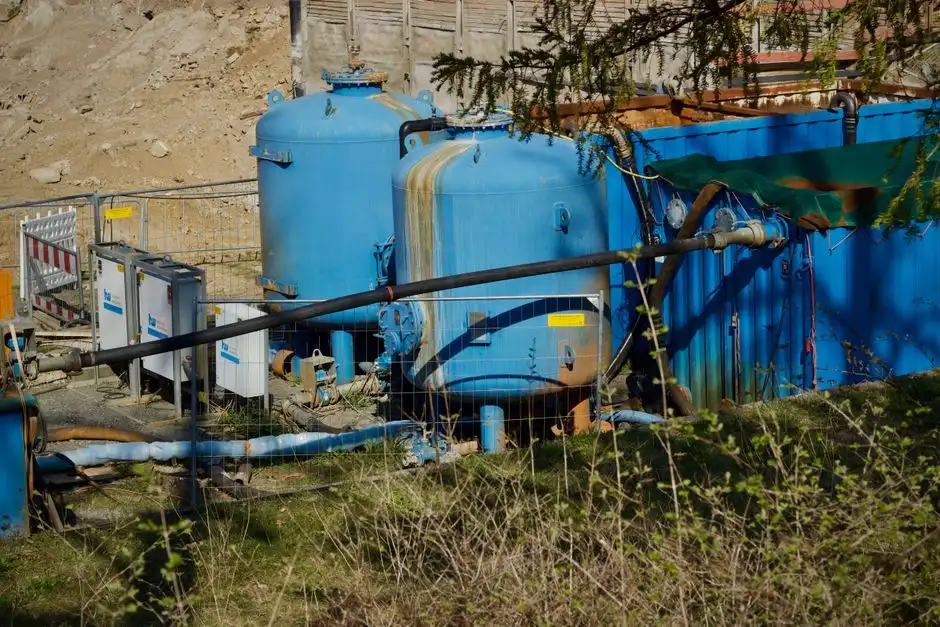
Treatment selection must follow stream characterization and the applicable permit limits. The supplied research does not contain enough Texas site data for a universal process train, so select equipment only after the buyer establishes flow, contaminant mass loading, discharge destination, reuse objectives, and required reliability.
Evaluate DAF for oily streams requiring removal of oil and grease, suspended solids, FOG, and colloidal material before downstream biological treatment. An industrial DAF system for oily automotive wastewater should be evaluated against the actual emulsion, solids, and hydraulic profile.
Evaluate chemical precipitation where analytical results show metals requiring removal, with automatic PLC-controlled dosing as an option for reproducible reagent application. Evaluate MBR where high-strength industrial wastewater and reuse-oriented treatment justify membrane bioreactor performance. An MBR wastewater treatment for high-strength industrial effluent should be screened against the required effluent quality, reuse targets, fouling risk, and operating controls.
| Screening option | Evaluate when | Selection evidence |
|---|---|---|
| DAF | Oily or emulsified streams need oil, grease, FOG, or solids removal | Representative feed analysis, flow range, required removal, downstream compatibility |
| Chemical precipitation | Metals data indicate precipitation is needed | Target metals, pH, reagent demand, residual sludge, automated controls |
| MBR | High-strength treatment or reuse objectives require the proposed membrane configuration | Influent variation, membrane area, fouling controls, effluent specification, reuse test |
| Residuals dewatering | Treatment generates material requiring disposal or further handling | Residual mass balance, moisture target, batch cycle, filter area, waste classification |
Include sludge dewatering in the capital estimate rather than treating residuals as an afterthought. HydropureWater’s DAF catalog covers 4–300 m³/h across 13 models; its MBR range covers 10–2,000 m³/day; and its plate-and-frame filter-press catalog spans filtration areas from 1 m² to 500 m². These are equipment-selection catalog data, not proof that any capacity is adequate for the acquired plant. The DAF-versus-clarifier selection for metals wastewater explains why equipment should be selected from characterization data.
Build a closing-to-operation compliance plan
The acquisition timetable should have a wastewater critical path with named owners, agency dependencies, and hold points. Do not let closing complete before the transaction documents allocate responsibility for permits, violations, monitoring, waste shipments, and required filings.
- Before signing: obtain the complete permit and compliance file, map every discharge path, conduct baseline sampling, evaluate treatment capacity, and model upgrade capital and operating costs.
- Before closing: assign permit responsibilities in the transaction documents and identify which agency confirmations must be conditions precedent.
- At closing: provide required notice, submit transfer or amendment documentation as confirmed by TCEQ or the local authority, preserve monitoring continuity, and assign responsibility for open violations and waste shipments.
- After closing: verify permit conditions, update responsible contacts and procedures, train operators, reconcile the first monitoring cycle, and document corrective actions.
| Timing | Legal and EHS actions | Engineering and procurement actions |
|---|---|---|
| Pre-signing | Permit inventory, violations review, agency questions, liability allocation | Baseline test, capacity assessment, upgrade estimate |
| Pre-closing | Confirm filing route and make required confirmations closing conditions | Freeze treatment design basis and long-lead equipment scope |
| Closing | Complete required notices and filings; preserve monitoring obligations | Confirm operator readiness, parts, chemicals, sludge routes, and controls |
| Post-closing | Update contacts and procedures; close findings; reconcile first monitoring cycle | Commission, train operators, verify performance, implement corrective actions |
Schedule a pre-application meeting when permit language is ambiguous or the discharge profile will change. Use a Texas Professional Engineer for site-specific permit and treatment review. The automotive plant-acquisition compliance sequence can be used as a transaction-stage check, but it does not establish Texas filing requirements.
Frequently Asked Questions
When must a TCEQ wastewater permit transfer or amendment be filed after Volkswagen acquires a Texas plant?
The supplied research gives a TCEQ electronic application route but does not establish a universal post-acquisition filing deadline. During due diligence, ask TCEQ or the approved local authority to review the actual permit, named permittee, transaction structure, and operating plan. Treat the agency’s written confirmation, plus any deadline stated in the controlling permit or local authorization, as the filing timetable.
What should Volkswagen budget for wastewater due diligence and treatment upgrades?
Separate lower-cost diligence from potentially material treatment capital. Due diligence may include permit-file review, agency coordination, baseline sampling, flow studies, treatment-condition assessment, and an engineering gap analysis. Treatment upgrades cannot be priced credibly without flow, contaminant loading, permit limits, local limits, condition data, and the selected treatment objectives. Request a scenario-based capital and operating-cost model with exclusions and contingency rather than a generic equipment quotation.
How should wastewater treatment equipment be sized for the acquired automotive plant?
Size from measured flow, peak demand, contaminant mass loading, operating variability, permit limits, reuse targets, and residual-handling requirements—not corporate identity or catalog nameplate. Supplier quotations should identify the design basis and assumptions. Validate proposed hydraulic capacity and treatment performance against representative sampling and operating records.
What should Volkswagen check when selecting a wastewater treatment supplier?
Require demonstrated automotive or industrial wastewater experience, documented hydraulic and contaminant performance, PLC controls, after-sales service, and verifiable compliance support. The vendor should identify which proposed unit addresses each permit or treatment gap and should support the selected capacity with calculations and performance data. Also confirm parts availability, commissioning support, operator training, controls integration, and ongoing service coverage.