Is IFAS Suitable for Coffee Processing Wastewater?
IFAS is conditionally suitable for wet coffee-processing wastewater when soluble organics require biological treatment and the plant can provide equalization, screening, solids or FOG control, media mixing, submerged retention screens, aeration, and final solids separation. It is not a substitute for upstream solids removal. Coffee waste contains biodegradable carbohydrates, proteins, pectins, fibres, and fats, while caffeine, phenols, and tannins may inhibit biological processes, so site characterization is essential. A defensible design requires hourly flow, peak production and washdown data, influent testing, permit targets, basin geometry, and a review of coffee-specific toxicity, pH, nutrients, and solids.
IFAS combines suspended activated sludge with attached biofilm on carrier media in one biological reactor. That arrangement is attractive when the objective is to increase biological inventory or retention performance in a constrained footprint, particularly where an activated-sludge basin can be modified. It is less suitable when biological inventory is not the constraint.
The Hazen and Sawyer Greensboro full-scale demonstration achieved consistent nitrification using approximately 50% of the volume required by a conventional system, according to the IFAS design guidance for food-processing wastewater. That result demonstrates the value of fixed-film capacity; it is not a universal sizing ratio for a coffee plant.
Uncontrolled fibrous debris, floatable material, unsuitable mixing, unreliable media retention, unresolved toxicity, or discharge obligations requiring additional polishing are disqualifying conditions. No single flow, BOD5, or COD value can size a coffee-processing IFAS system. The decision should therefore be made by comparing IFAS, MBBR, activated sludge, anaerobic treatment, and MBR against the same coffee-specific influent data, effluent specification, and solids-handling requirements.
How Coffee Wastewater Changes the Treatment Strategy
Coffee wastewater contains both biodegradable material and constituents that can interfere with biological treatment, so upstream solids control determines whether IFAS is technically credible. Barista Hustle, published 2020-04-25, identifies carbohydrates, proteins, pectins, fibres, and fats as organic substrates, while caffeine, free phenols, and tannins are identified as potentially toxic constituents.
The wet mill also creates variable operating conditions: pulp and mucilage carryover, seasonal harvest peaks, washdown flows, changing pH, and process-water recycling can alter both hydraulic and organic loading. Soluble BOD and COD must therefore be separated from settleable solids, fibres, oil and grease, and colloidal material. IFAS does not replace screening, solids separation, or FOG removal.
Water-use reduction should be evaluated at the process level because recirculation changes the mass and timing of wastewater loads. Barista Hustle reports 8–22 litres of water per kilogram of green coffee with recirculation, compared with 40–80 litres per kilogram without recycling, citing Wintgens from 2004. The same source says recycled water should be used for a maximum of 48 hours to avoid contamination of coffee parchment.
Before biological sizing, request representative and peak samples for pH, alkalinity, temperature, COD, BOD5, TSS, oil and grease, total nitrogen, total phosphorus, relevant toxicity indicators, and soluble fractions.
| Coffee-specific issue | Engineering consequence | Required design evidence |
|---|---|---|
| Pulp, mucilage, and fibres | Screen fouling, plugging, and excessive solids loading | Pulp carryover, TSS, particle characterization, and screening trial data |
| Fats and oil | Media coating, reduced oxygen transfer, and poor settling | Oil and grease concentration, floatability, and pretreatment removal performance |
| Variable pH | Loss of biological activity and increased chemical demand | Diurnal pH profile, alkalinity, and chemical consumption estimate |
| Caffeine, phenols, and tannins | Possible inhibition of the biological reactor | Constituent testing and site-specific biological response testing |
| Recirculated process water | Accumulation of salts, ammonia, and other constituents | Recycling duration, reuse destinations, and cumulative concentration data |
The distinction matters because the biological process receives the soluble fraction after pretreatment, not the untreated pulp load. A GX Series rotary mechanical bar screen can protect downstream equipment from fibrous debris, while a DAF versus clarifier comparison for food and beverage wastewater should follow the waste stream’s floatability and solids characteristics.
The Coffee IFAS Treatment Train
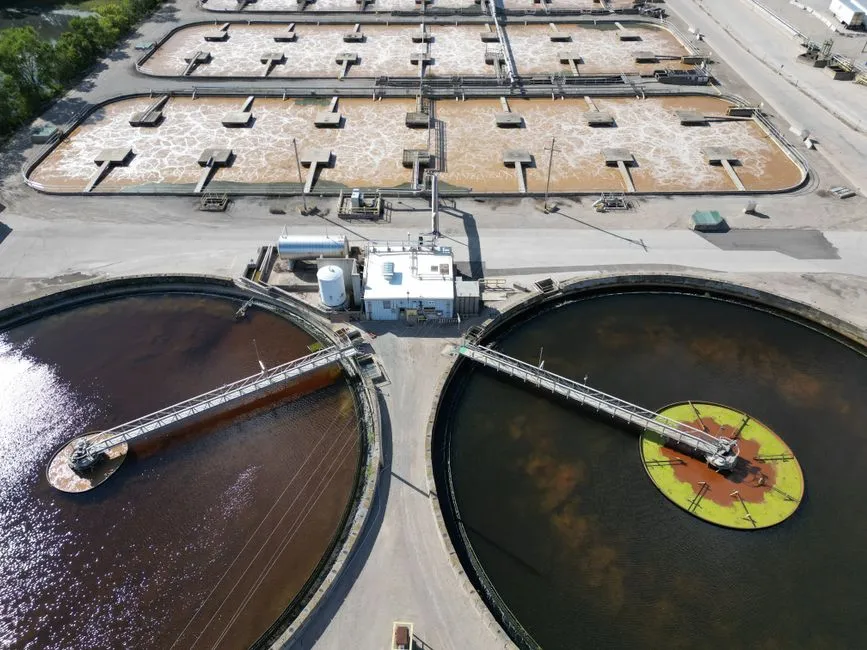
A defensible coffee treatment train separates material that can foul equipment from soluble pollutants that require biological oxidation. The sequence should be designed as one hydraulic and control system, not as a sequence of independently quoted devices.
- Receive and segregate pulp, washdown, floor-drain, and other process streams.
- Remove rags, plastics, and fibrous debris with mechanical screening.
- Equalize flow, load, and pH before biological treatment.
- Remove suspended solids, oil and grease, and colloidal material where required.
- Apply IFAS aeration with controlled mixing and media retention.
- Clarify the biological solids and route the resulting sludge for handling and dewatering.
- Add polishing or disinfection if the permit requires it.
The GX Series rotary mechanical bar screen addresses fibrous material that can foul pumps, mixers, aerators, and media-retention screens. Screening and pulp removal are not interchangeable: screening protects equipment, while solids removal reduces the load entering biological treatment.
DAF should be evaluated where floatable material, oil and grease, suspended solids, or colloidal matter require removal. An industrial DAF system for coffee wastewater pretreatment can remove these physical contaminants, but it does not supply the biological removal needed for soluble organics.
Downstream clarification remains necessary because IFAS produces both suspended biological solids and solids washed from the carriers. The proposal must also cover wasting, sludge storage or transport, and dewatering; a plate-frame filter press can be considered after sludge volume and cake-handling data are established.
| Unit operation | Primary function | Scope information to request |
|---|---|---|
| Reception and segregation | Prevents incompatible streams from creating combined peaks | Stream inventory, seasonal operating schedule, and sampling points |
| Mechanical screening | Removes fibrous debris and foreign material | Screen type, aperture, capacity, bypass arrangement, and extracted-solid handling |
| Equalization and pH control | Moderates hydraulic, organic, and pH variation | Working volume, mixing, aeration, level control, and chemical demand |
| DAF or solids/FOG removal | Removes floatable and separable contaminants | Removal targets, performance basis, sludge route, and controls |
| IFAS basin | Provides mixed-growth biological treatment | Reactor calculations, carrier specification, fill fraction, mixing, aeration, and screens |
| Clarification and sludge handling | Separates and manages biological solids | Clarifier basis, wasting, sludge storage, dewatering, cake disposal, and access |
Chemical dosing for pH, nutrients, or coagulation may require PLC-controlled integration. An automatic chemical dosing system should therefore be included in the control philosophy with interlocks, duty/standby arrangements, chemical storage, and alarm handling—not added later as an accessory.
Sizing and Operating Requirements for a Coffee IFAS Basin
An IFAS design must expose its sizing basis, hydraulic assumptions, and operating dependencies so that two suppliers can be compared on engineering grounds. Hourly flow, production schedules, washdown periods, recycling streams, representative and peak laboratory data, permit targets, basin drawings, diffuser layout, access, current wasting, and aeration capacity form the minimum information package.
Data Intel’s 2025 market report, cited in the IFAS design guidance for food-processing wastewater, reports effective mixed-liquor suspended solids of 4,000–8,000 mg/L. This is market context, not an automatic design value or a field guarantee for coffee treatment. The supplier must show how its selected concentrations, biomass distribution, loading, and oxygen-transfer assumptions produce the proposed reactor volume.
Media fill must likewise be derived from the carrier, mixing regime, loading, and basin geometry. Hazen and Sawyer used AnoxKaldnes K3 media at a 35% fill fraction in the Greensboro demonstration. That documents one installation; it is not a default to copy.
| Design area | Minimum information or evidence | Bidder response required |
|---|---|---|
| Hydraulics | Hourly flow, washdown periods, production schedule, recycling, and peak events | Equalization calculation, hydraulic profile, peak-flow response, and spare capacity |
| Organic and nutrient loads | Representative and peak COD, BOD5, TSS, nutrients, pH, alkalinity, temperature, and toxicity indicators | Loading calculations, removal assumptions, biomass inventory, and sensitivity analysis |
| Media and mixing | Carrier properties, active area, fill fraction, mixing energy, and basin geometry | Particular carrier selection, calculated fill, mixing layout, wear allowance, and replacement method |
| Media retention | Screen openings, approach velocity, support, access, and media-loss response | Screen calculation, head-loss criteria, installation method, and maintenance provisions |
| Aeration | Diffuser arrangement, blower capacity, turndown, redundancy, and control logic | Air-demand calculation, field and power assessment, and energy estimate |
| Solids handling | Clarifier duty, wasting rate, sludge characteristics, storage, and disposal route | Clarifier review, sludge balance, dewatering basis, and cake-handling plan |
Physical reliability depends on adequate mixing, submerged media-retention screens, foam and accumulation control, and coordinated screen openings, approach velocity, structural support, and maintenance access. Foam can interfere with surface equipment, clarification, and screen operation, so the proposal should identify a removal and response strategy.
Aeration should be evaluated for capital and life-cycle cost. Data Intel reports biological-treatment energy consumption of 0.4–0.8 kWh/m³ under optimal aeration management in its 2025 report. The quotation should separately price aeration, pumping, screen cleaning, chemical dosing, and media maintenance rather than hiding them in an installed total.
Because coffee constituents may inhibit biological activity, require site-specific response testing or pilot verification before relying on generic food-industry performance claims. A supplier should disclose test conditions, biological response, media-fouling observations, and any operating changes required by the result.
IFAS Versus MBBR, Activated Sludge, Anaerobic Treatment, and MBR
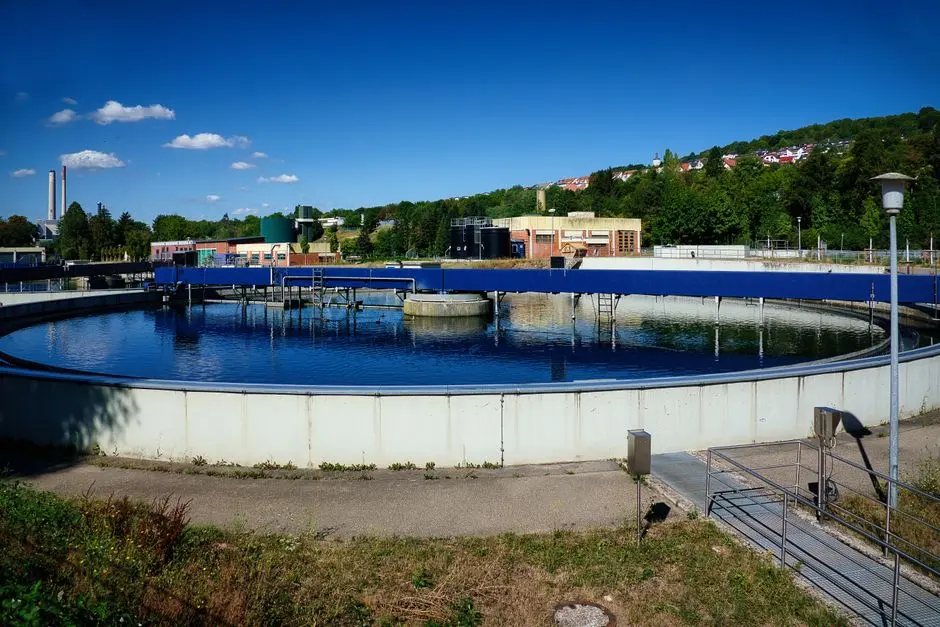
IFAS should be selected when the coffee site needs greater biological inventory or retention performance in a constrained footprint, especially where an activated-sludge basin can be modified. The comparison must use the same coffee wastewater characterization, peak-loading basis, effluent requirements, and solids-handling obligations for every alternative.
| Alternative | Strongest fit | Main constraints |
|---|---|---|
| Conventional IFAS | Activated-sludge retrofit requiring more biological inventory | Media mixing, retention, screens, foam control, and upstream solids/FOG control |
| Hybrid IFAS | Staged biological treatment with anoxic or anaerobic selectors | More equipment, controls, and process integration |
| MBBR | Smaller installations, greenfield simplicity, or municipal-sewer pretreatment priorities | Site hydraulics, pretreatment, media retention, and mixing still require design |
| Conventional activated sludge | Existing complete biological infrastructure and sufficient footprint | Footprint and biological inventory may limit shock-load or nutrient-removal performance |
| Anaerobic treatment | Organic-load reduction with potential energy recovery | Suitable stream selection, gas handling, polishing, and process integration |
| MBR | Near-reuse quality or membrane filtration requirements | Higher operating complexity, fouling control, and solids separation |
MBBR may be simpler for a smaller facility or where pretreatment to a municipal sewer is the priority, as Data Intel’s 2025 market report indicates. The MBBR wastewater treatment selection guide provides a useful basis for checking media retention and pretreatment, but generic MBBR claims are not coffee-project guarantees.
Anaerobic treatment becomes relevant when organic-load reduction and energy recovery justify a separate biological stage. It requires a suitable waste stream, integrated gas handling, and downstream polishing; IFAS may remain necessary for polishing or soluble residuals.
MBR is the appropriate alternative when membrane filtration or near-reuse quality is required. HydropureWater’s integrated MBR wastewater treatment system is specified at below-1-micrometer filtration and a footprint 60% smaller than conventional systems. Those are product specifications, not independently verified coffee-project results or site guarantees.
Data Intel’s 2025 report gives food-industry effluent BOD5 below 30 mg/L and total nitrogen below 15 mg/L as conditional benchmarks for appropriately designed IFAS and MBBR systems. Use them for initial screening only. Coffee toxicity, pH, nutrients, peaks, and pretreatment performance determine what can be contracted.
How to Compare Quotes and Select a Coffee IFAS Supplier
Comparable quotations require the same technical basis, complete installed scope, and explicit allocation of performance risk. A media-and-screens quotation is not an IFAS proposal because it omits the civil, pretreatment, aeration, control, and solids-handling work needed to deliver a compliant plant.
Require one proposal template covering wastewater characterization, hourly and peak loading, reactor-sizing calculations, carrier selection and fill fraction, mixing, media-retention screens, aeration, electrical work, controls, clarification, sludge handling, commissioning, and training. The bidder should identify drawings, assumptions, design margins, excluded work, and the party responsible for each interface.
Data Intel’s 2025 market report estimates $400,000–$3 million for retrofit IFAS at medium-sized food-processing facilities treating 1,000–5,000 m³/day. The same source reports a 40–65% capital-cost saving against equivalent greenfield biological treatment. These are screening benchmarks, not a coffee-plant budget or quotation. The inclusions must be checked for pretreatment, aeration, screens, media, electrical upgrades, controls, and solids handling.
- Require the sizing calculation and its inputs.
- Define the installed scope and battery limits.
- Verify relevant pilot or full-scale evidence.
- Review media, mixing, screen, and aeration design.
- State performance assumptions, test methods, and permit basis.
- Clarify guarantees, warranty boundaries, commissioning support, local service capability, and critical spares.
Reject proposals based only on media price, nominal screen openings, generic food-industry effluent claims, or a reactor volume copied from another installation. The strongest evidence is coffee-specific testing, or at least bench or pilot verification that addresses the identified toxicity, pulp, fibre, and FOG risks.
Commercial viability should be tested through installed cost and operating cost rather than headline savings. Ask bidders to price blower upgrades, chemical use, sludge handling, screen cleaning, media inspection, control integration, and power requirements separately. That comparison makes retrofit value visible without transferring unsupported benchmark figures into the site budget.
Frequently Asked Questions
Can IFAS meet our coffee-processing discharge limits?
Possibly, but no process name guarantees compliance. Suitability depends on the permit parameters, coffee-specific influent characteristics, pretreatment, reactor configuration, and site-specific performance evidence. The supplier should identify the design basis, applicable test methods, expected performance, and any polishing required beyond the IFAS train.
How much does an IFAS installation for coffee wastewater cost?
Request a site-specific installed quotation. Data Intel’s 2025 market benchmark for retrofit IFAS at medium-sized food-processing facilities treating 1,000–5,000 m³/day is $400,000–$3 million, but it is not a coffee-project price. The quotation should separately identify pretreatment, reactor modifications, media and screens, aeration, electrical work, controls, clarification, sludge handling, commissioning, and excluded costs.
What information is required to size IFAS for coffee wastewater?
Provide hourly flow, production and washdown schedules, recycling streams, representative and peak laboratory data, permit targets, basin geometry, diffuser arrangement, current wasting, and aeration capacity. Include soluble and total COD/BOD, TSS, oil and grease, pH, alkalinity, temperature, nutrients, and relevant toxicity indicators. No single flow or BOD5 value is sufficient.
How should a coffee IFAS supplier be selected?
Select on disclosed engineering evidence rather than equipment price. Require reactor-sizing calculations, a complete installed scope, relevant pilot or full-scale evidence, media and media-retention design, aeration assessment, guarantees, commissioning support, warranty boundaries, local service capability, and critical-spares availability.
When may MBR or MBBR be preferable to IFAS?
MBR may be preferable when membrane filtration or near-reuse quality is required. MBBR may suit a smaller installation, greenfield simplicity, or pretreatment for a municipal sewer connection. The choice should follow the same coffee wastewater characterization and permit basis, including pretreatment, media retention, solids separation, energy demand, and operator capability.