What the Harar Acquisition Teaches an Indian Buyer
HEINEKEN’s acquisition of the Harar Brewery demonstrates that wastewater treatment is acquisition value rather than a post-closing administrative matter. According to WaterActionHub’s “Cleaner Wastewater at Harar Brewery” case reference, HEINEKEN acquired the brewery in 2011, replaced the existing wastewater plant because it did not meet the company’s quality standards or projected capacity requirements, and started operating the new plant in December 2013.
That sequence makes three facts inseparable: the treatment system must deliver the required effluent quality, it must accommodate the intended production plan, and the operator must have a lawful basis for operating and discharging at that level. A plant may be environmentally nonconforming, hydraulically undersized, or unable to support the buyer’s operating case even if the underlying transaction appears straightforward.
Harar is not an Indian regulatory source, and it does not establish a consent-transfer rule for a Heineken brewery acquisition in India. It is a precedent for transaction diligence: the buyer should test current performance against both present compliance and future production before assigning value. This distinction is developed in the India brewery acquisition wastewater guide.
Determine the Applicable Approval Path
Wastewater approval status depends on legal entities, transaction structure, site, existing consents, operating changes, and receiving sewer conditions rather than the identity of the buyer alone. The supplied Texas Instruments acquisition benchmark provides a four-outcome diligence structure, but it expressly states this is not an India transfer rule.
- Establish the seller and buyer legal entities, whether the transaction is an asset or share acquisition, the plant location, the current consent holder, the receiving sewer authority, and the proposed post-closing production plan.
- Classify each authorization as continuing without regulatory change, requiring a change-of-control filing or transfer, requiring modification because production or wastewater conditions will change, or requiring new authorization before the regulated activity.
- Obtain site-specific confirmation from the competent State Pollution Control Board and, where needed, the receiving municipal sewer authority.
Do not assume that every ownership change requires the same filing across India, or that an asset sale and a share sale have identical consequences. The legal holder, site identity, transaction structure, and proposed operating change must be checked against the consent and applicable site rules.
| Approval outcome | Trigger | Required evidence before closing |
|---|---|---|
| Current authorization with no regulatory change | Same holder, site and permitted activity, with no relevant condition change | Issued consent, confirmation of reporting continuity, updated contacts and compliance calendar |
| Change-of-control filing or transfer | The applicable site rule or consent requires notice when the legal holder changes | Filed documents and agency acknowledgment or approval |
| Modification of existing consent | Production, chemicals, wastewater characteristics, treatment or discharge routes will change | Issued modification and revised operating and monitoring conditions |
| New authorization | The activity, discharge route or receiving system is not covered by the current consent | Issued authorization and associated monitoring plan |
| Industrial-user pretreatment agreement | The sewer authority treats the facility as an industrial user or changed the applicable requirements | Executed agreement or written sewer-authority confirmation |
| Off-site waste, sludge or contaminated-residue disposal | Residuals leave the site for treatment or disposal | Characterization, contracts, manifests and the approved final route |
Environmental consent, municipal pretreatment approval, and off-site waste obligations require separate evidence and owners. A purchase order, management representation, or acquisition forecast is not approval evidence. For each authorization, record the issuing authority, holder, site, conditions, transfer mechanism, reporting party, sampling responsibility, deadlines, financial assurance, and final approval document.
Build the Brewery Wastewater Stream and Discharge Map
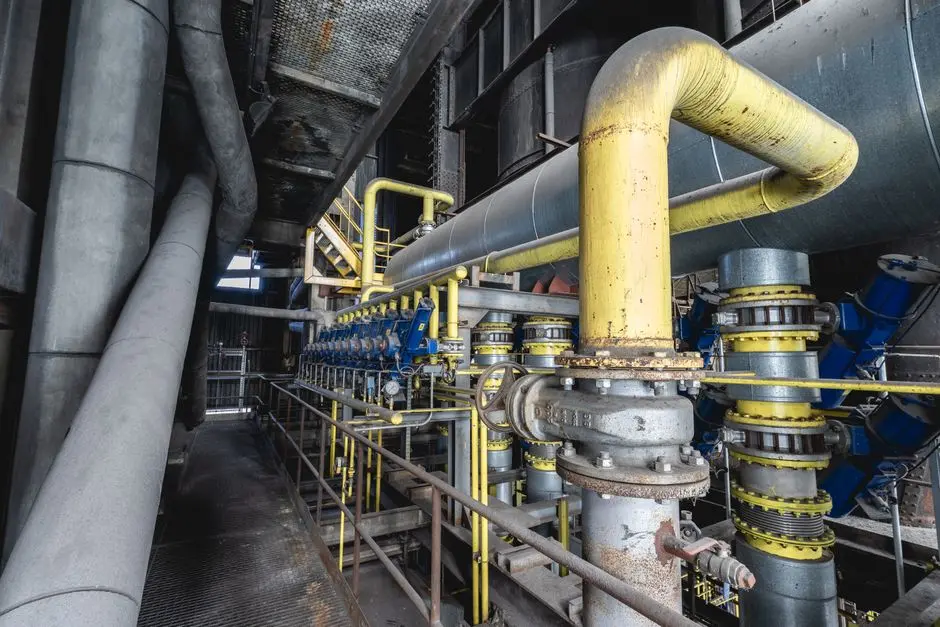
A brewery’s wastewater inventory must trace every source from generation to treatment, final discharge or reuse, and separate residuals that leave the site. Combining all flows into one plant average can conceal the stream responsible for a permit exceedance or an undersized treatment step.
Keep process wastewater, domestic sewage, and rainwater separate where required. Within process wastewater, distinguish brewing and packaging losses, product and wash water, utilities, and brewery CIP wastewater. CIP chemicals should remain traceable because a batch dump can change pH, nutrients, toxicity, and biological treatment demand even when the aggregate effluent appears compliant.
HydropureWater’s 2026 preliminary screening ranges for brewery raw effluent are BOD 1,000–3,000 mg/L, COD 2,000–5,000 mg/L and pH swings from 3 to 11 during CIP chemical discharge. These are preliminary screening values, not Indian consent limits. Representative plant testing must determine whether the streams at the acquired site actually present those conditions.
| Evidence item | What the buyer should obtain | Diligence purpose |
|---|---|---|
| Source and treatment map | Generation point, destination, treatment unit, chemical use and residual route | Identify untraced or untreated streams |
| Flow data | Continuous records, batch-dump records, peak flows and production campaigns | Assess hydraulic load and batch controls |
| Analytical data | Representative results, sampling dates, laboratory methods and operating conditions | Determine contaminant loading and treatment performance |
| Operating inputs | Chemical inventory, production mix, future plan and chemical-substitution proposals | Reconcile present performance with post-closing conditions |
| Off-site residuals | Sludge and chemical-container characterization, contracts, manifests and final disposal records | Verify legal custody and approved disposal routes |
Review maintenance implications through the food-processing wastewater plant maintenance guide. Sewer-discharge evidence must remain separate from evidence for sludge, chemical containers, and other off-site waste: permission to discharge wastewater does not authorize a particular disposal route for residuals.
Test the Existing ETP Against Future Brewery Operations
An ETP can meet current discharge limits and still be the wrong asset for the buyer’s future production plan. Capacity, effluent quality, and legal compliance require separate tests against the proposed brewing, packaging, CIP, and utility demand.
Begin with the site record: consent conditions, pretreatment limits, monitoring reports, inspection findings, exceedances, corrective actions, pending amendments, and capital projects. Compare those records with the treatment equipment’s established operating conditions. Historical exceedances can indicate equipment deterioration, control weaknesses, inadequate capacity, or a wastewater profile that has moved outside the permitted envelope.
HydropureWater’s 2026 acquisition framework calls for a proposed 30-day influent and effluent profile covering the food-to-microorganism ratio, sludge volume index, mixed-liquor suspended solids, and residual dissolved oxygen before signing. Those indicators should be assessed with flow, pollutant loading, batch discharges, operating conditions, and representative laboratory results. These data evaluate biological stability but do not substitute for permit limits or an engineering capacity assessment.
Reconcile four separate questions:
- What pollutant load is demonstrated by representative operating data?
- What peak and batch flows must the system accept?
- What effluent quality and discharge route does the consent require?
- What production and wastewater changes are planned after closing?
Assess hydraulic expansion separately from effluent quality. A plant can have adequate biological reaction capacity but insufficient equalization or peak-flow control, or adequate flow capacity but inconsistent contaminant removal.
Condition also matters. Review redundancy, controls integration, utilities, operator competence, maintenance history, tie-ins, commissioning, and performance testing. For each gap, name the trigger, responsible owner, decision date, and purchase-agreement or capital-plan treatment. The broader equipment review is available in the food-processing wastewater plant maintenance guide.
Match Treatment Equipment to the Verified Wastewater Profile
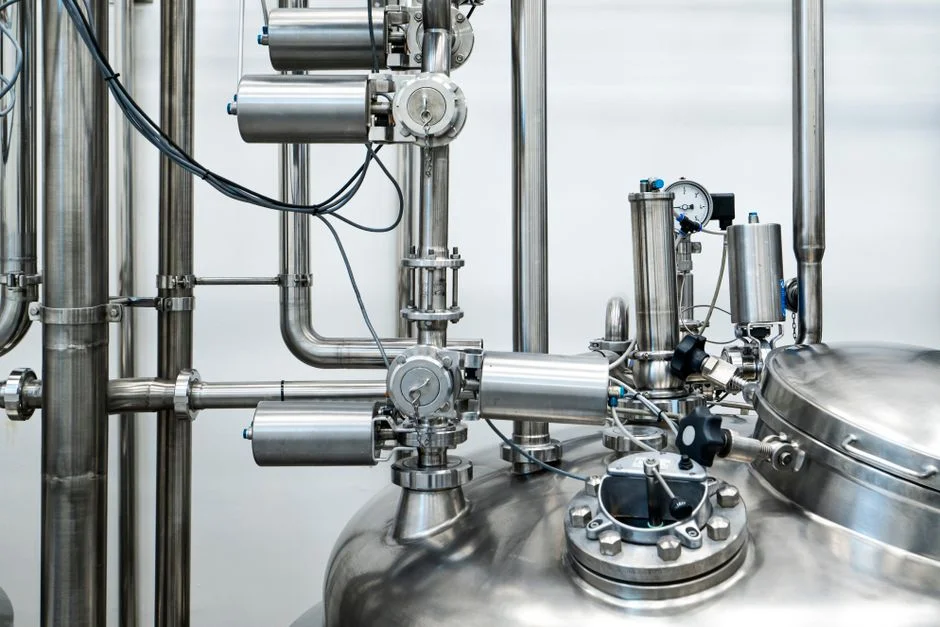
Treatment equipment should be selected based on verified contaminants and operating duty rather than a generic catalog boundary. Hydraulic throughput, removal performance, controls integration, and permit compatibility must be evaluated together.
| Equipment | Applicable objective | Published boundary | Evidence required before selection |
|---|---|---|---|
| DAF | Removal of suspended solids, FOG, oil and grease or colloidal material | HydropureWater’s 2026 DAF range is 4–300 m³/h across 13 standard models | Source flow, batch variation, settleability, emulsions, solids loading, pilot results and guaranteed site performance |
| Integrated MBR | Biological treatment with integrated solids separation and potential reuse polishing | HydropureWater’s 2026 integrated MBR range is 10–2,000 m³/day, with filtration below 1 μm | Biodegradability, toxicity, nutrients, solids, required effluent quality, reuse objective, pilot results and controls integration |
The [DAF system for brewery wastewater pretreatment](/product/4-dissolved-air-flotation-daf-machine.html) is relevant only where representative testing confirms a separation problem it can address. The [MBR wastewater treatment and reuse system](/product/2-mbr-integrated-wastewater-treatment.html) should be considered where the biological stage cannot reliably meet the required effluent and the project needs compact treatment with integrated solids separation and potential reuse polishing. Neither published range constitutes an approved design.
Require site-specific performance guarantees, permit compatibility, controls scope, utility demand, footprint, operator requirements, residual routing, and lifecycle-cost disclosure. Where the wastewater is variable or proposed duty exceeds demonstrated history, request pilot or treatability evidence.
If water recovery is planned, connect wastewater treatment, recovery, and final discharge in one mass-and-energy balance. Sewer compliance alone does not prove reuse suitability. For a biogas investment, verify wastewater load, treatment stability, gas safety, equipment condition, and existing site infrastructure before accepting the business case; the evidence requirements are summarized in the biogas digester design guide.
Convert Diligence Gaps into Transaction Protections
Every unresolved wastewater issue should leave diligence with a named owner, a dated evidence requirement, and an explicit transaction consequence. A generic compliance representation is insufficient when the buyer can identify a missing consent, disputed sampling result, treatment constraint, or defective asset.
Place unresolved exceedances, sampling disputes, pending amendments, treatment limitations, and missing authority confirmations into one exposure register. Classify each item as:
- a pre-closing condition where continued operation depends on approval;
- a post-closing covenant for a controlled implementation step;
- an indemnity for identified historical or third-party exposure;
- a holdback where liability cannot yet be bounded; or
- a priced capital risk where additional treatment expenditure is supported by verified data.
An optional 90-day cadence can organize document requests, sampling, authority meetings, and engineering studies. This is not a statutory deadline and must not be confused with an approval or reporting deadline; the underlying approval register should retain its own dates.
Before closing, require filed or issued approvals, written authority confirmation where needed, monitoring records, representative analysis, and a verified compliance calendar. Request a capped upgrade estimate tied to the measured capacity gap, consent limits, measured wastewater profile, selected process, and post-closing production plan rather than generic unit rates. This transaction-risk structure is also used in the plant-acquisition wastewater requirements guide.
Frequently Asked Questions
Does a Heineken brewery acquisition in India automatically require a change-of-control environmental consent filing?
No universal automatic-transfer rule should be inferred. The buyer must identify the seller and buyer entities, whether the transaction is an asset or share acquisition, the consent holder, plant location, and proposed operating changes. Counsel should then obtain site-specific confirmation from the competent State Pollution Control Board on whether continuation, filing, modification, or new authorization is required. The India acquisition wastewater guide provides the transaction structure for that review.
What evidence should the buyer request before assuming post-closing wastewater compliance?
Request the current consent, industrial-user pretreatment agreement, off-site waste records, monitoring reports, inspection findings, exceedances, and corrective actions. The technical file should include a stream-to-treatment map, source-specific flow data, batch-dump records, chemical inventory, representative analyses, sampling dates, laboratory methods, and operating conditions. Management forecasts and purchase orders are not substitutes
Frequently Asked Questions
Does Heineken automatically need a new wastewater consent when it acquires a brewery in India?
Yes, under the Water (Prevention and Control of Pollution) Act, 1974, a Consent to Operate (CTO) is non-transferable. Upon acquisition, Heineken must apply to the respective State Pollution Control Board (SPCB) for a transfer or fresh issuance of the CTO, ensuring the plant’s operational parameters align with the existing consent conditions.
Failure to secure this documentation prior to the change of ownership can lead to immediate operational shutdown notices. The new entity must submit an undertaking that all pollution control systems currently installed meet the discharge standards specified in the original consent order or updated CPCB guidelines.
What wastewater documents should we request before closing an Indian brewery acquisition?
You should conduct comprehensive due diligence by requesting the last 24 months of monthly wastewater discharge reports, the current valid Consent to Operate (CTO), and the latest Environmental Audit Reports. Additionally, obtain the design specifications of the existing Effluent Treatment Plant (ETP) and any historical correspondence with the SPCB regarding non-compliance notices.
Requesting the energy consumption logs for the ETP and sludge disposal manifests is also critical. These documents confirm whether the plant has historically operated within the prescribed limits for BOD (Biochemical Oxygen Demand), COD (Chemical Oxygen Demand), and TSS (Total Suspended Solids) as mandated by the Ministry of Environment, Forest and Climate Change.
How do we size an ETP for a brewery acquisition without overestimating future capacity needs?
Sizing should be based on a specific water-to-beer ratio, typically targeting a range of 3.5 to 5.0 hectoliters of wastewater per hectoliter of beer produced. Utilize the actual production volume data from the previous three years rather than theoretical nameplate capacity to establish a realistic baseline for hydraulic and organic loading rates.
Incorporate a modular design approach that accounts for seasonal production spikes, usually calculated at 1.2x the average daily flow. By isolating process water streams—such as CIP (Cleaning-in-Place) chemicals and spent yeast—from general wash-down water, you can optimize the reactor volume and avoid the capital expenditure of an oversized system.
How much should we reserve for brewery wastewater upgrades in an acquisition budget?
It is standard practice to reserve between 5% and 12% of the total acquisition value for environmental compliance and wastewater infrastructure upgrades. This contingency fund is essential for modernizing aging aeration systems, upgrading sensors for real-time online monitoring (OCEMS), and ensuring compliance with updated ZLD (Zero Liquid Discharge) mandates if applicable in water-stressed regions.
This budget should also account for the potential replacement of membranes or media in existing treatment units, which often reach end-of-life cycles within 3 to 5 years. Factor in an additional 15% buffer for civil structural reinforcements if the facility requires an expansion of the equalization tanks to meet current local discharge norms.
Which questions should we ask a wastewater treatment equipment supplier before selecting a DAF or MBR system?
Ask the supplier to provide the specific flux rates for the MBR membranes and the expected chemical consumption rates for the DAF system under varying organic loads. It is critical to request a performance guarantee that stipulates the effluent quality (BOD < 10mg/l, COD < 50mg/l) and the expected sludge volume index (SVI) for the specific brewery influent profile.
Furthermore, demand a detailed lifecycle cost analysis covering energy consumption per cubic meter of treated water and the frequency of membrane cleaning cycles. You should also inquire about the system’s tolerance for pH fluctuations and high-temperature CIP discharges, as these factors significantly impact the long-term operational expenditure and maintenance requirements of the treatment technology.