Why Bukhara Needs Site-Specific Domestic Sewage Treatment
Domestic sewage treatment in Bukhara should be selected from verified site data, not from generic capacity claims. The Journal of Advances in Natural Sciences reports that domestic wastewater can account for up to 30% of all wastewater discharged into reservoirs in Uzbekistan, while the EPS Library’s Bukhara page reports inadequate treatment facilities and discharge of domestic and industrial wastewater into the Shavakat aria canal. These findings establish the local risk, but they do not provide a design flow, treatment standard or site-specific technology selection. A defensible specification must therefore combine measured flow and wastewater characteristics with an identified effluent destination, available land, installation conditions and confirmation of the applicable discharge authorization.
The documented condition is serious enough to justify decentralized treatment as one part of a broader response. It is not sufficient, however, to claim that any packaged plant will resolve the problem. A treatment train may have to protect a municipal sewer, prepare an irrigation discharge, support a defined domestic wastewater reuse application, or reduce impacts at a remote receiving point. Each destination changes the required process performance, documentation and operating controls.
Start by separating environmental evidence from engineering inputs. The 30% reservoir-discharge figure comes from the Journal of Advances in Natural Sciences article on domestic drainage pollution in Uzbekistan. The reported canal discharges and lack of adequate treatment facilities come from the EPS Library Bukhara page. Neither source establishes the flow or wastewater quality at a particular Bukhara site, and neither proves that a selected package will achieve a specific discharge outcome.
For a hotel, residential development or industrial facility, that distinction is commercially important. An accepted equipment quotation should identify its design basis, process stages, civil interface and operating requirements. If reuse is part of the project, the intended application must also be stated because treatment and disinfection requirements cannot be inferred from the word “reuse.” The regional domestic sewage treatment equipment guide provides a useful format for comparing treatment packages, but its conclusions should not be transferred to Bukhara without local data.
How a Modern Domestic Sewage Treatment Process Works
A complete sewage treatment train normally progresses from collection and preliminary protection to biological treatment, solids separation, disinfection and effluent handling. The sequence matters because each stage performs a defined function and the next stage should not be asked to compensate for an omitted process.
- Influent collection and screening: Sewage is collected from the building or site network, with screening used to remove solids, rags, plastics and fibrous debris that could damage or clog downstream equipment.
- Biological treatment: Organic matter is treated biologically. The WSZ configuration combines anoxic/aerobic (A/O) biological contact oxidation with sedimentation and disinfection in one buried package unit, according to the HydropureWater verified product catalog.
- Solids separation: Clarification or membrane filtration separates solids from the treated liquid. In the WSZ arrangement, sedimentation performs this function within the package; the MBR arrangement combines activated sludge with submerged PVDF membrane filtration.
- Disinfection: The treatment process inactivates relevant microorganisms before discharge or reuse. Equipment proposals must identify the disinfection method, control duty and maintenance requirements rather than treating disinfection as an automatic outcome of the package description.
- Effluent handling: Treated water is conveyed to the confirmed receiving point. The same treatment objective cannot be assumed for a municipal sewer, irrigation channel, infiltration route or defined reuse application.
Pretreatment is not a substitute for biological treatment, solids separation or disinfection. It protects downstream biological processes and the equipment itself. For locations where rags, plastics and fibrous material may be present, the rotary mechanical bar screen addresses screening; a chlorine dioxide generator addresses the disinfection function. Whether either item is required must be determined from the influent, collection layout, treatment process and applicable operating standard.
MBR is an alternative treatment architecture, not an additional stage that must be added to every WSZ package. It combines activated sludge with submerged PVDF membrane filtration. The academic IntechOpen study Application of Vermifiltration for Domestic Sewage Treatment also provides relevant decentralized-treatment context: it describes vermifiltration as efficient and viable, requiring less expertise and capable of being decentralised. That is an academic alternative context, not a packaged-system performance claim, and project-specific engineering and validation would still be required.
WSZ A/O Package Plant or MBR for Bukhara?
The WSZ and MBR packages differ materially in process architecture and catalog scope, so the preferred system depends on verified flow, separation requirements, reuse objectives, footprint and installation conditions. Neither catalog establishes a Bukhara-specific effluent guarantee or confirms the legal discharge limit applicable to a particular site.
| Decision item | WSZ A/O package plant | MBR membrane bioreactor |
|---|---|---|
| Treatment approach | Anoxic/aerobic (A/O) biological contact oxidation, sedimentation and disinfection in a single buried package unit | Activated sludge combined with submerged PVDF membrane filtration |
| Stated capacity | 1–80 m³/h | 10–2,000 m³/day |
| Physical configuration | Buried below grade with landscaping above, or mounted on a trailer for mobile deployment | Catalog description does not establish a fixed installation arrangement in the supplied evidence |
| Separation mechanism | Sedimentation | Submerged PVDF membrane filtration below 1 μm |
| Footprint statement | No comparative footprint percentage is stated in the supplied catalog evidence | Catalog states a footprint 60% smaller than conventional systems |
| Automation | Fully automated; catalog states no operator is required | Automation scope must be confirmed in the quotation |
| Site profile to investigate | Smaller flows where excavation, groundwater and buried access constraints are acceptable | Sites where membrane separation, compactness or reuse potential justifies closer technical evaluation |
| Information still required | Verified flow and load, burial depth, groundwater, lifting and maintenance access, discharge basis and civil scope | Verified flow and load, membrane system basis, footprint, pretreatment, controls, maintenance and reuse validation |
The WSZ option has the simpler packaged architecture for smaller flows and sites compatible with burial. Its catalog combines biological contact oxidation, clarification and disinfection in one unit, which can simplify the treatment train while still requiring careful civil design and maintenance access. The underground WSZ A/O package sewage treatment plant is fully automated and cataloged at 1–80 m³/h, but that range is an equipment boundary rather than a project sizing calculation.
The integrated MBR membrane bioreactor becomes the stronger candidate for investigation when membrane separation or a compact installation is central. Its catalog scope is activated sludge plus submerged PVDF filtration below 1 μm, with a stated footprint 60% smaller than conventional systems and a capacity range of 10–2,000 m³/day. The percentage is a relative catalog claim, not a guaranteed Bukhara site area. If domestic wastewater reuse is the objective, the supplier must define the intended reuse and support the proposed treatment path with process data.
Size the System from Verified Site Data
A defensible sizing request starts with measured and documented flow data, because neither population estimates nor a building category establishes the treatment duty for a Bukhara site. Collect the current and peak domestic wastewater flow, preferably supported by water-bill analysis, meter records, occupancy records or a measured flow study. Record the commercial flow basis used by the supplier so average, peak and design flow are not confused.
| Project input | Evidence to request | Why it affects selection |
|---|---|---|
| Flow | Current flow, peak flow and the period or occupancy condition associated with each | Determines which equipment range is relevant and whether buffering or flow equalization is needed |
| Wastewater characteristics | Suspended solids, organic load, grease and relevant locally important industrial inputs | Defines biological loading, pretreatment needs and operating controls |
| Effluent destination and use | Named receiving point or reuse application, confirmed with the relevant authority | Connects treatment objectives to the receiving environment and intended use |
| Site and installation | Available footprint, access, inlet and outlet levels, power and proposed civil works | Tests whether a package configuration can be installed and maintained |
| Authorization | Permit route and applicable site-specific conditions from the responsible authority | Prevents a technical selection from being mistaken for regulatory approval |
Use the WSZ catalog range of 1–80 m³/h only as an equipment-selection boundary. The unit must still be matched to verified flow, wastewater duty, peak conditions, treatment objectives and installation constraints. The same rule applies to the MBR range of 10–2,000 m³/day: ask whether the stated capacity is based on average flow, peak flow or another design basis.
Wastewater analysis should identify more than organic load. Suspended solids affect clarification and filtration; grease and fibrous material influence pretreatment; and any industrial discharge connected to the same system may alter both the biological process and the pretreatment specification. If the site has no verified data, commission a flow and characterization study before ordering. A supplier’s catalog capacity does not establish what the site will generate.
The receiving point must be named and mapped. A municipal sewer, irrigation channel, infiltration route and reuse demand are different design cases with different downstream consequences. Ask the responsible Bukhara or Uzbekistan authority to identify the authorization route and applicable conditions. The domestic sewage treatment equipment guide for Hanoi illustrates the site-data method, but it does not provide Bukhara flows, legal limits or site conditions.
No project-specific capacity recommendation is supportable without verified flow, duty and discharge-use data. That is a legitimate engineering conclusion, not a reason to substitute a generic design flow.
Plan Installation for Ground, Access and Maintenance Constraints
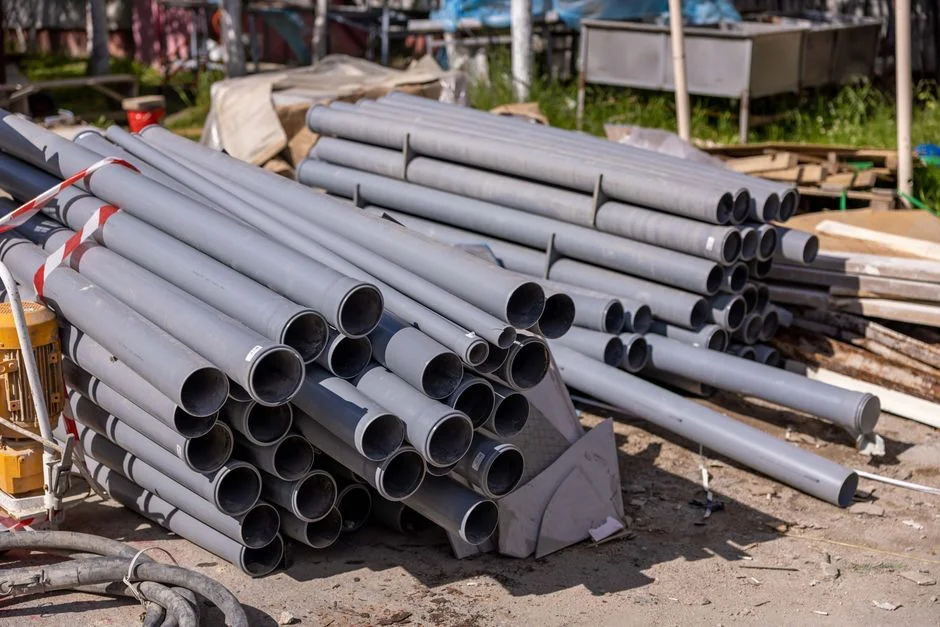
Buried installation can reduce the visible plant footprint, but excavation, groundwater, access and lifting conditions must be established before selecting it. The WSZ option may be installed below grade with landscaping above or mounted on a trailer for mobile deployment, according to the HydropureWater verified product catalog. For a permanent buried installation, the drawings should identify excavation requirements, structural and waterproofing assumptions, inlet and outlet invert levels, access openings, lifting provisions and the means of removing accumulated solids.
Groundwater level, soil conditions and climate belong in the site investigation. The supplied research contains no Bukhara-specific values for these conditions, so quotations should not be compared using assumed depths or bearing assumptions. Local construction practice should also be considered when defining who performs excavation, backfilling, landscaping, connections and commissioning.
The trailer-mounted WSZ configuration may suit temporary or mobile deployment, but the buyer must confirm transportability, temporary connection, power, effluent handling and the final operating arrangement. A mobile configuration does not remove the need for a defined receiving point or maintenance access.
For MBR, the catalog’s statement that the footprint is 60% smaller than conventional systems is useful for screening, not layout approval. The supplier must provide actual equipment dimensions, clearances, control access and membrane maintenance space. The proposed arrangement should also show pretreatment, odor control, electrical supply, controls and sludge removal.
Sludge handling belongs in the site plan. A bar screen addresses solids, rags, plastics and fibrous debris that may enter the system. For dewatering, the plate-and-frame filter press offers filtration areas from 1 m² to 500 m² in the supplied product evidence. The selected area must follow actual sludge characteristics, batch frequency and disposal arrangements; it should not be selected from the published range alone.
Before issuing a purchase order, obtain a scaled layout showing the package, pipe routes, electrical supply, controls, odor-control provisions, access routes and sludge-removal method. Require the supplier to identify which items are supplied and which remain the client’s civil or mechanical scope.
Build a Supplier Comparison Checklist Before Ordering
A comparable quotation must state the same technical and commercial boundaries. Otherwise, a package price may exclude the civil works, controls, connections, commissioning or consumables needed to make the plant operational. Ask each supplier to complete the following schedule and identify every exclusion.
| Supplier response required | Minimum information to obtain |
|---|---|
| Design basis | Verified flow basis, wastewater duty, treatment objective and stated capacity range |
| Process scope | Influent screening, biological treatment, solids separation, disinfection, controls and sludge handling |
| Equipment and layout | Dimensions, installation depth, inlet and outlet invert levels, access, power supply and required clearances |
| Performance evidence | Proposed influent and effluent basis, process data, commissioning method and acceptance-test proposal |
| Operations | Operating-control narrative, routine maintenance, inspections, operator training and spare-parts list |
| Commercial boundaries | Civil works, installation, commissioning, imported logistics, operator training and long-term spare parts |
| Compliance responsibility | Permit assumptions, supporting calculations and items requiring confirmation with the responsible authority |
Use the verified catalog scopes as checkpoints. WSZ should be described as an underground integrated unit combining A/O biological contact oxidation, sedimentation and disinfection, fully automated, with no operator required according to the catalog. MBR should be described as activated sludge with submerged PVDF membrane filtration below 1 μm and a catalog capacity range of 10–2,000 m³/day. These statements do not prove that another supplier’s equipment is technically equivalent.
The “no operator required” statement needs practical clarification. Automation can reduce routine attendance, but somebody must still inspect the plant, maintain the equipment, remove sludge, respond to alarms and verify operating conditions. Define responsibility for operator involvement, inspection frequency, local service access and spare-parts supply.
On guarantees, do not accept an undefined promise that the unit will meet “applicable standards.” Require the supplier to identify the test method, sampling point, test conditions, acceptance criteria and remedy. Applicable Bukhara or Uzbekistan permit conditions must be confirmed separately by the project and responsible authority. The WSZ and MBR package-plant comparison provides a useful structure for this review, while its site assumptions remain specific to another market.
Frequently Asked Questions
Is WSZ or MBR better for a Bukhara site?
Neither is universally preferable. WSZ is worth investigating for smaller flows where its packaged A/O contact-oxidation, sedimentation and disinfection configuration is compatible with buried installation. MBR deserves closer investigation where membrane separation, compactness or domestic wastewater reuse is central. The final choice should follow verified flow and load, effluent destination, reuse requirements, footprint, groundwater, maintenance access and permit conditions.
What information is needed before requesting a price for a domestic sewage treatment package?
Request pricing only after obtaining current and peak wastewater flow, wastewater characteristics, the receiving point or reuse application, site dimensions, electrical supply, installation conditions and the civil-work boundary. Ask for the price basis, delivery scope, installation, commissioning, training, imported logistics, warranties and exclusions. The supplied evidence contains no defensible Bukhara price range, so a quotation cannot be responsibly estimated from flow alone.
How can a buyer assess a supplier’s technical credibility?
Ask for process calculations, general arrangement and installation drawings, the capacity basis, proposed influent and effluent conditions, commissioning and acceptance-test methods, maintenance requirements, operator-training scope and supporting operating data. Check whether the supplier will define acceptance testing in measurable terms rather than relying on a general compliance statement. The regional domestic sewage treatment equipment guide offers a comparison format, but local site data and regulatory confirmation remain mandatory.
Does selecting a treatment system establish legal compliance?
No. Equipment selection is an engineering decision; discharge authorization is a regulatory decision. The project must confirm the applicable Bukhara or Uzbekistan permit route, receiving-water conditions, effluent limits and any reuse requirements with the responsible local authority. Request those written conditions before finalizing process guarantees, commissioning acceptance criteria or reuse claims.
Are decentralized alternatives appropriate for Bukhara?
They may be relevant after site-specific evaluation. The IntechOpen study Application of Vermifiltration for Domestic Sewage Treatment describes vermifiltration as efficient, viable, less expertise-intensive and suitable for decentralized operation. That finding supports considering decentralized alternatives, but it does not establish performance for a particular Bukhara site. The receiving point, climate, groundwater, wastewater characteristics, maintenance requirements and applicable authorization must still be verified through project-specific engineering.