

What Austin Water Requires Before a Fab Can Discharge
Austin-area semiconductor plants meet sewer pretreatment limits by segregating incompatible wastewater streams, treating each for its dominant pollutants, monitoring at multiple points and diverting water for additional treatment or recycling when it is outside target. At Samsung Austin Semiconductor, the documented system separates pH neutralization, fluoride treatment and copper treatment. Fluoride is removed by chemical precipitation and dewatering, while the facility converted copper co-precipitation to ion exchange. This treatment must protect Austin Water’s collection system and treatment plant; Austin Water also reviews designs, issues permits, inspects facilities, collects samples and reviews self-monitoring reports. Because local limits and waste chemistry vary, operators should base the final train on permit conditions and site-specific testing.
Austin Water requires local businesses to install, operate and maintain pretreatment systems that remove pollutants capable of damaging the collection system or interfering with wastewater treatment. Its published examples include heavy metals, fluoride, cyanides, toxic organics and acidic or basic wastes (Austin Water, Industrial Waste Control/Pretreatment, accessed 2026). These pollutant categories confirm why a chemical-mechanical polishing stream, a fluoride-bearing rinse stream and an acidic drain should not be assumed to share one treatment train.
The compliance boundary extends beyond selecting a unit process. Austin Water identifies pretreatment design review, permitting, inspections, sample collection, self-monitoring report review and enforcement as program elements. A fab therefore needs both an Austin industrial discharge permit and an auditable operating system that demonstrates the permitted discharge is being maintained.
No numerical limit in this article substitutes for the site’s current permit. The engineer should obtain the applicable concentration and mass limits, prohibited discharges, monitoring frequency, sampling location, reporting protocol and approved discharge points directly from the permit and City requirements. For a metal-processing comparison of the regulatory workflow, see pretreatment compliance for metal wastewater plants.
Samsung Austin Semiconductor received City of Austin pretreatment recognition every year from 2012, according to UltraFacility Portal’s January 2020 article, and received the Excellence in Pretreatment recognition for the tenth consecutive year in the Samsung announcement supplied with the research. That record is evidence of sustained performance at one plant, not evidence that its current permit or three-stream configuration applies to another Austin-area fab.
Map Semiconductor Wastewater Before Selecting Equipment
Semiconductor wastewater must first be classified by process chemistry and pollutant load because treatment selection depends on whether a stream is dominated by pH, fluoride, copper, solids, organics or incompatible chemical combinations. IDE Technologies’ industry description identifies fluorides, CMP slurry particles, metals, solvents, photoresists, ammonia compounds, acids and alkaline chemicals as common constituents, but those categories are general industry guidance rather than an Austin permit or Samsung operating record.
IDE reports that CMP alone can represent 30–40% of a fab’s total wastewater volume and that a modern semiconductor fab can use up to 10 million gallons of water per day, depending on production capacity and manufactured technology. These are commercial industry estimates published by IDE Technologies in 2026, not measured flows for an Austin facility.
| Characterization input | Decision supported | Equipment or control implication |
|---|---|---|
| Drain-level flow and operating condition | Whether flows can be batched, equalized or treated continuously | Equalization, flow metering and downstream hydraulic capacity |
| pH and chemical inventory | Which streams are incompatible and where controlled neutralization is required | automatic chemical dosing for pH control and precipitation |
| Fluoride and copper concentrations | Dominant metal-removal mechanism for each stream | Precipitation and solids handling, or validated ion exchange |
| Suspended solids and particle size | Need for solids removal before polishing or recovery | ultrafiltration systems for semiconductor wastewater pretreatment |
| Organics, conductivity and recovery quality | Whether discharge treatment or production-water reuse controls the design | industrial RO systems for wastewater recovery |
Request chemical-by-chemical data for each drain: flow, pH, fluoride, copper and other permit-relevant metals, suspended solids, organics and compatibility with candidate treatment chemicals. Then define batching, equalization and chemical-control requirements before comparing UF, RO, precipitation, ion exchange or biological equipment.
Samsung’s documented sequence is a useful reference model: collect the three wastewater streams and distribute them to their appropriate treatment systems (UltraFacility Portal, January 2020). It is an observed Austin operating model, not a universal template for every semiconductor plant.
Treat Each Stream With a Purpose-Built Process
The dominant contaminant should determine the unit process, with segregation protecting both treatment performance and downstream compliance. Samsung Austin’s three-system model provides the clearest local example: pH neutralization, fluoride treatment and copper treatment are collected and directed to separate systems before final discharge (UltraFacility Portal, January 2020).
For the pH stream, the functional design basis is automatic pH adjustment with controlled chemical addition to meet Samsung’s internal quality requirements before discharge. The source does not provide a setpoint, so a design must not import one from the article or treat internal quality requirements as the municipal permit limit.
For fluoride, Samsung uses chemical precipitation followed by dewatering. That process produces calcium fluoride filter cake, which Samsung sends to a local end-user for use in wastewater treatment. Here, solids separation is part of the treatment train rather than an afterthought. A comparable implementation would evaluate plate and frame filter presses for precipitation sludge after the reaction and clarification steps.
For copper, the January 2020 UltraFacility Portal article states that Samsung was converting its chemical co-precipitation system to ion exchange. It reported that the conversion was expected to reduce chemical treatment by 2 million pounds, eliminate 1.5 million pounds of solids and reduce the overall system footprint by 65%. Samsung’s later award announcement specifically identifies its copper ion exchange process as removing and recovering copper before discharge (Samsung Semiconductor, World Water Day announcement supplied in the research).
| Stream or objective | Documented or technically appropriate process | Critical design evidence |
|---|---|---|
| pH-controlled stream | Automatic chemical addition and neutralization | Site-specific pH objective and permit limit |
| Fluoride stream | Chemical precipitation, dewatering and calcium fluoride sludge management | Representative chemistry, solids yield and disposal route |
| Copper stream | Ion exchange, validated against the former co-precipitation approach | Metal loading, competing ions, resin behavior and breakthrough monitoring |
| Solids- or colloid-dominated flow | UF for suspended solids, colloids and bacteria | Particle loading, membrane compatibility and pretreatment needs |
| High-purity reuse | RO followed by site-specific polishing | Recovery target, conductivity, organics, fouling and reuse specification |
UF is most relevant when the governing contaminant is suspended solids, colloids or bacteria; it removes these without adding treatment chemicals, but membrane compatibility must be established with representative waste. RO can remove dissolved contaminants and support recovery, yet variable semiconductor chemistry requires a designed pretreatment and recovery scheme rather than a generic membrane selection.
Source reduction should precede process substitution where feasible. Samsung’s preferred approach is collaboration with production teams, followed by bench testing and piloting of practical treatment options (UltraFacility Portal, January 2020).
Monitor, Divert and Document Compliance
Wastewater compliance requires a closed operating loop in which a credible out-of-spec signal produces isolation or diversion rather than unrestricted discharge. Samsung monitors its three waste streams at several points before final discharge to the local municipal wastewater plant; the January 2020 UltraFacility Portal article states that affected waste can be diverted and recycled for additional treatment.
During commissioning, the site should define sample points, instruments, alarm thresholds, diversion destinations, chain-of-custody procedures and response responsibility. The operating sequence should answer four questions without delay: what is measured, what result triggers action, where does the water go, and who authorizes return to service?
Those records must connect to the permit reporting system. Austin Water reviews pretreatment designs, issues permits, performs inspections, collects samples, reviews self-monitoring reports and enforces regulations (Austin Water, Industrial Waste Control/Pretreatment, accessed 2026). A defensible file therefore preserves calibration records, analytical results, deviation investigations, diversion logs and corrective actions.
Process-control instruments do not automatically satisfy the permit’s monitoring requirements. The permit controls the official sampling method, location, frequency and reporting protocol; a continuously monitored process line may provide earlier protection without serving as the legal compliance sample.
Instrumentation and diversion hardware should be specified as operating components, including compatible water treatment valves and filter media. Source reduction remains the first control because Samsung reports that reducing chemicals at the source lowers water consumption and chemical use while simplifying treatment requirements (UltraFacility Portal, January 2020).
Recover Water Without Turning It Into a Compliance Risk
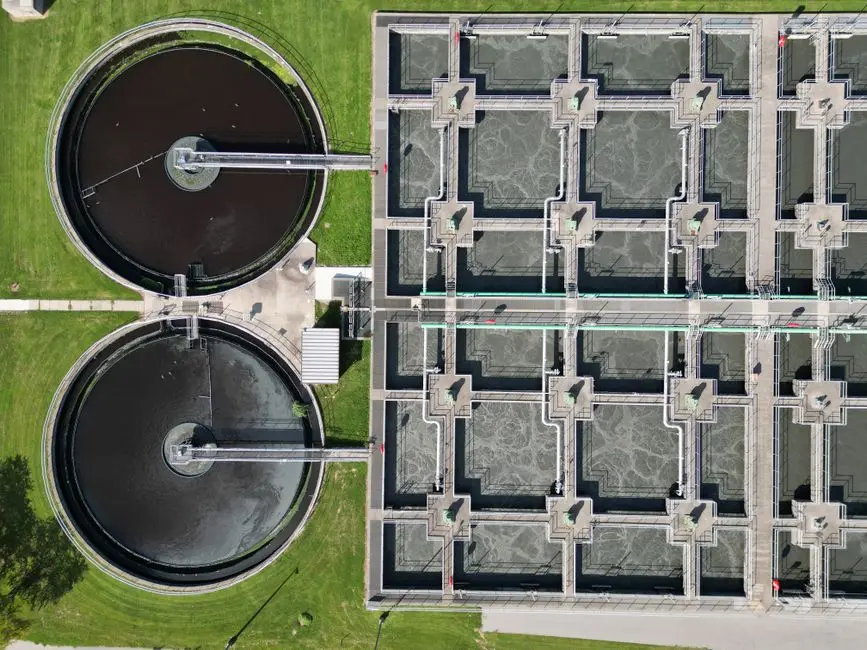
Water recovery is appropriate when the recovered stream can meet its production specification without threatening product quality or creating a new discharge obligation. Samsung Austin’s principal example is not wastewater discharge treatment: it collects and monitors ultrapure-water rinse streams, then uses activated carbon and ion exchange to remove organic and ionic contamination before the water returns as UPW makeup (UltraFacility Portal, January 2020).
That reclaimed source represented about 60% of Samsung Austin Semiconductor’s UPW makeup volume, according to the January 2020 UltraFacility Portal article. The recovered water is closely monitored and diverted to waste treatment when quality-control parameters could jeopardize production quality.
Samsung also captures second-pass RO reject and final ultrafilter reject for reuse in scrubbed-exhaust systems. Treated process water is recaptured for waste-system carbon-bed backwash. A Brine Recovery RO system commissioned in late 2019 treated first-pass reject and recovered 75% of that reject while reducing city-water makeup to the UPW system by 90 million gallons per year. These figures describe Samsung’s installed system; they do not establish a design guarantee for another fab.
For a new project, the buyer should obtain representative samples spanning operating conditions and complete bench or pilot testing before selecting membranes, resins, storage materials or a high-recovery configuration. IDE Technologies’ 2026 industry page describes a general 85–90% wastewater-recovery range for high-recovery RO and polishing configurations, but that estimate should not be applied to a specific Austin stream without validation.
Recovery also changes the design basis. A discharge permit addresses the authorized sewer outlet; a UPW reuse specification governs contaminant levels at the point of use. The two may require different monitoring, redundancy and diversion provisions. For ultrapure-water polishing and regeneration options, see EDI systems for ultrapure-water treatment and RO and UF membrane elements for recovery systems.
Build a Pretreatment Equipment and Compliance Checklist
A defensible procurement sequence starts with the permit and ends with site-specific acceptance evidence. Generic equipment performance does not establish that a wastewater train can meet an Austin discharge limit or protect production quality.
- Obtain the current industrial discharge permit, City requirements, prohibited discharges, monitoring obligations and approved discharge points.
- Complete drain-by-drain characterization and create a chemical compatibility matrix before deciding which flows can be mixed.
- Define treatment goals by stream and distinguish sewer-discharge requirements from production-water reuse specifications.
- Sample multiple operating conditions, then perform bench tests and pilots before full-scale design.
- Size around the governing variable—flow, fluoride, copper, solids or conductivity—while providing for anticipated chemistry changes and diversion.
- Require metering, alarms, automatic controls, sampling provisions, chemical or cartridge handling plans and operator training.
- Define acceptance testing against the site’s permit, treatment objectives and validated recovery performance.
| Procurement question | Required supplier evidence | Equipment fit |
|---|---|---|
| Can the system control pH and precipitation reactions? | Representative-feed results, chemical demand data, control sequence and alarm response | automatic chemical dosing for pH control and precipitation |
| Can it remove solids, colloids or bacteria without chemical addition? | Particle challenge, membrane compatibility, cleaning method and validated permeate quality | ultrafiltration systems for semiconductor wastewater pretreatment |
| Can it recover water for the required reuse point? | Feed and permeate analyses, recovery performance, fouling assessment and pilot duration | industrial RO systems for wastewater recovery |
| Can it dewater the selected precipitation sludge? | Representative cake characteristics, solids capture, cycle performance and disposal route | plate and frame filter presses for precipitation sludge |
None of these units replaces the process design. UF is relevant to suspended solids, colloids and bacteria; RO to dissolved contaminants and recovery; chemical dosing to controlled pH or precipitation reactions; and a filter press to dewater precipitated solids. The supplier should also document scale-up from the actual site waste, operating envelopes, maintenance access, chemical handling, failure modes and acceptance criteria.
For broader process-design and cost inputs during scoping, use the wafer fab wastewater process design and cost guide. Any project estimate should follow characterization and pilot evidence rather than precede them.
Frequently Asked Questions
What wastewater limits apply to a semiconductor plant near Austin?
The controlling criteria are the plant’s current industrial discharge permit and Austin Water’s pretreatment requirements. Austin Water identifies heavy metals, fluoride, cyanides, toxic organics and acidic or basic wastes as relevant pollutant classes. The permit must supply the applicable numerical limits, sampling points, frequencies and reporting protocol; no defensible numerical limit can be inferred from this article.
Which treatment equipment is most suitable for semiconductor wastewater near Austin?
Match equipment to the stream and the governing pollutant. Use controlled chemical dosing for pH adjustment and precipitation reactions, precipitation and dewatering for fluoride solids, validated ion exchange for copper where appropriate, UF for suspended solids and colloids, and RO for dissolved contaminants or water recovery. The decisive check is performance on representative waste under variable operating conditions.
How much does a semiconductor wastewater pretreatment system cost?
The supplied research does not support a defensible project price because the flow, waste chemistry, permit limits, recovery goals and solids-disposal route are undefined. Request an itemized quotation only after drain characterization and pilot testing. Require separate pricing for treatment equipment, chemical storage, membranes or resins, solids handling, monitoring, diversion, installation, controls, commissioning and operator training.
Should an Austin fab treat all wastewater in one plant?
No universal requirement establishes that all wastewater must be combined. Samsung Austin’s documented example segregates pH, fluoride and copper into three systems. A combined train would need evidence that the combined chemistry, treatment controls, hydraulic peaks, permit basis and diversion strategy can meet the site’s requirements without impairing process reliability.
When is water reuse preferable to sewer discharge?
Reuse is preferable when the recovered stream meets the intended production specification and continuous monitoring can prevent contamination from affecting manufacturing. Samsung’s recovered rinse-water stream supplied about 60% of its UPW makeup volume, according to UltraFacility Portal in January 2020. Before applying that approach elsewhere, characterize the source, validate the treatment train and establish automatic diversion for failed quality parameters.