Start with the discharge route and approval pathway
No packaged sewage treatment plant can be selected reliably until the development’s sewer connection, lawful discharge route and approval pathway are confirmed. If municipal sewerage is unavailable or unsuitable, identify where treated effluent can lawfully be discharged and which authority will impose the conditions. Treatment adequacy and regulatory compliance are separate tests: a process may remove the required pollutants but still fail the receiving environment’s specification. The supplied research does not establish current Cape Town-specific effluent limits or a permit checklist, so obtain those requirements in writing before comparing commercial proposals.
Residential wastewater varies materially through the day. Biocell Water’s residential development guidance identifies morning, late-afternoon and evening peak periods and notes that ammonia and COD concentrations can be high because of cleaning products and the absence of grease traps in some homes. These conditions influence both hydraulic and process loading.
Do not treat the City’s infrastructure programme as site-specific permission to discharge. A Cape Town infrastructure source dated 2026 describes the Potsdam wastewater treatment works upgrade and its intended reduction of sewage spills and blockages, but it does not establish a particular development’s connection right or effluent condition. For early planning, apply the resilience principle identified in the University of Lagos study, Leadership Framework for Sustainable Housing Production in South Africa: housing depends on reliable and sustainable infrastructure. Use the approach set out in packaged sewage treatment plant selection for housing developments, but replace generic jurisdiction assumptions with confirmed Cape Town requirements.
- Confirm whether connection to municipal sewerage is technically available, legally permitted and acceptable for the development.
- If connection is unavailable or unsuitable, document the proposed receiving environment and discharge point.
- Ask the relevant authority which discharge licence, environmental authorisation, approval or consent applies.
- Obtain the applicable effluent specification, monitoring conditions and operating requirements in writing.
- Carry those conditions into the design brief and supplier quotation request.
Turn the development profile into a design brief
A credible plant selection starts with measured and documented wastewater characteristics, not a generic population estimate. For a housing development, collect average flow, design peak flow and the pattern across morning, late-afternoon and evening periods; the supplied residential-development guidance specifically identifies these periods as significant peak-flow periods. It also directs designers to account for high ammonia and COD concentrations, including effects associated with disinfectants, cleaning products and missing household grease traps. No Cape Town design-flow figure is supplied, so the project team must derive the design basis from the development’s water demand, occupancy and verified flow profile.
The site survey must establish available footprint, excavation access, burial depth, vehicle access, maintenance clearances, utility connections and whether landscaping can be carried above a below-ground installation. A phased build-out also changes the procurement basis: modular systems can be installed as development stages progress, while the first installation still needs enough capacity and expandability for the eventual network.
| Design input | Information required | Why it affects selection |
|---|---|---|
| Hydraulic profile | Average flow, peak periods, stage-by-stage development flow and any inflow/infiltration allowance | Sets hydraulic capacity and process loading |
| Wastewater quality | COD, ammonia, solids and other parameters identified for the discharge objective | Determines biological loading and treatment stages |
| Site constraints | Footprint, burial depth, excavation access, landscaping and maintenance access | Determines feasible plant arrangement and installation method |
| Discharge requirements | Confirmed authority, route, specification, monitoring and licence conditions | Prevents treatment selection that cannot achieve approval |
| Development programme | Occupancy stages, commissioning dates and future expansion sequence | Supports phased modular deployment |
| Operations | Electricity, standby power, noise, odour, sludge route, alarms and monitoring responsibilities | Defines the total operating and maintenance burden |
Do not assign unsupported values to these operational inputs. Ask the supplier what each proposal assumes and obtain the information needed for a containerized MBR sewage treatment plant sizing guide-style comparison or an equivalent WSZ design check. The domestic sewage treatment equipment guide also illustrates why installation method and operating access belong in the early brief.
Compare WSZ, MBR and conventional biological packages
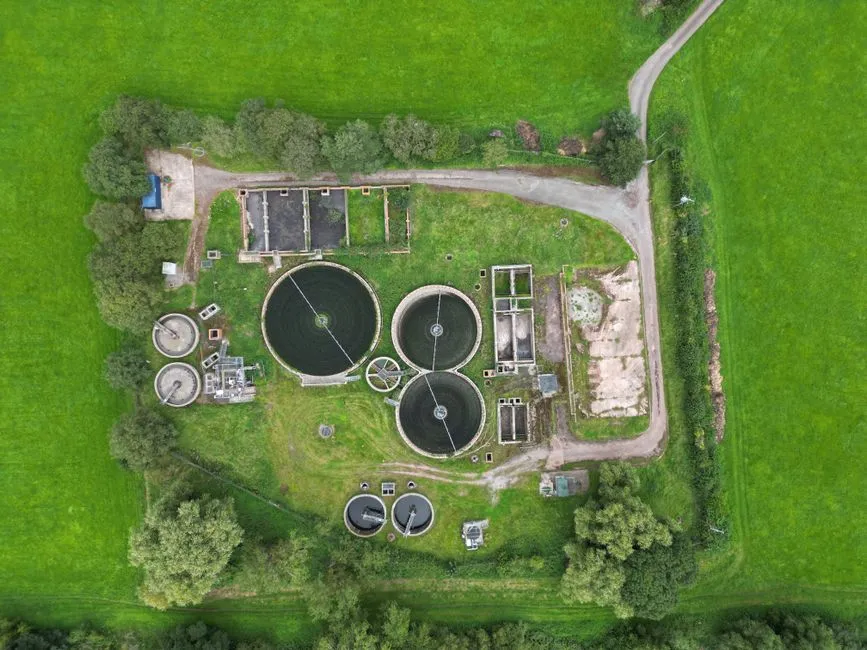
The WSZ is the more compact integrated option for a site where its below-ground arrangement, loading basis and confirmed discharge objective are suitable. The MBR is the stronger candidate when the project needs membrane separation, a smaller stated footprint or a quality objective that the selected biological process cannot otherwise meet. Neither technology should be selected from peak capacity alone.
| Comparison point | WSZ package | MBR system |
|---|---|---|
| Process architecture | Integrated anoxic/aerobic A/O biological contact oxidation, sedimentation and disinfection | Activated sludge treatment combined with submerged PVDF membrane filtration |
| Stated capacity | 1–80 m³/h | 10–2,000 m³/day |
| Separation | Sedimentation within the integrated package | Submerged membranes specified below 1 μm |
| Footprint statement | Below-grade installation can support landscaping above the unit | Catalog states a footprint 60% smaller than conventional systems |
| Deployment | Below grade or trailer-mounted for mobile deployment | Containerised/system arrangement requiring defined equipment footprint |
| Selection dependency | Loading, excavation, access, discharge specification and operating support | Discharge objective, membrane configuration, footprint basis, replacement strategy and operator competence |
The capacities and configurations above come from the supplied WSZ and MBR product catalogues. The catalogue describes the WSZ underground package sewage treatment plant as a single below-grade unit combining anoxic and aerobic biological contact oxidation, sedimentation and disinfection, with installation either below grade or on a trailer for mobile deployment. The MBR membrane bioreactor system is specified as activated sludge with submerged PVDF membrane filtration, filtration below 1 μm and a footprint stated as 60% smaller than conventional systems.
Commercial residential guidance from Biocell Water identifies MBBR or SBR for below-ground installations and fixed-bed biological, MBBR or MBR options for containerised systems. It states that process selection depends on site-specific requirements, the required effluent standard and budget. This framework supports a WSZ-versus-MBR shortlist, but it does not establish that either product is compliant at a Cape Town site. The final decision must follow the confirmed discharge specification and site constraints.
Match the treatment train to the discharge objective
The treatment train should be assembled around the confirmed receiving environment and reuse objective, with preliminary screening, biological treatment, solids separation and disinfection defined as connected design elements. A package inlet may need protection from solids, rags, plastics and fibrous debris before the biological process. The GX rotary mechanical bar screen is designed for continuous-duty fine screening of those materials, but whether it is required depends on the incoming wastewater and treatment-plant hydraulics.
The biological stage must follow a verified wastewater profile. An A/O process can form part of the WSZ treatment train, while the MBR uses membrane separation after activated sludge treatment. In either case, establish the organic and ammonia loading before selecting equipment. High residential COD and ammonia concentrations, as identified by Biocell Water, must be included in that calculation rather than inferred only from occupancy.
Solids handling is a primary requirement. Specify how sludge is collected, stored, dewatered, removed and disposed of, including the route where the proposed package does not include the final disposal step. The plate and frame filter press may form a solids-dewatering solution, but the supplier must state its capacity basis, operating requirements and inclusion in the overall treatment scope.
Disinfection should follow the discharge specification and receiving-environment assessment. The WSZ catalogue already includes disinfection within its integrated sequence; an MBR proposal must state how disinfection is provided where required. If water reuse is a project objective, obtain the required reuse-quality parameters and define the membrane and polishing train against them. The product catalogue’s generic “near-reuse quality” wording is not an approval basis, and the supplied research contains no current Cape Town-specific reuse specification.
Test WSZ and MBR against the project constraints
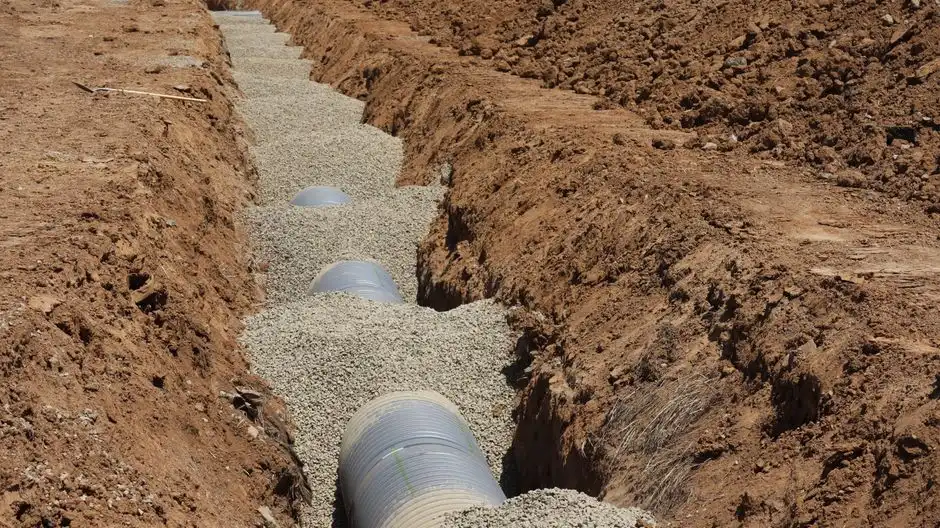
A shortlist becomes useful only when every proposal is tested against the same site and approval constraints. The comparison must use the design peak flow and stage-by-stage loading, not simply each supplier’s maximum nameplate capacity. Ask each bidder to demonstrate how its process configuration, discharge performance, installation method and operating plan fit the confirmed development brief.
| Procurement test | Evidence required from the supplier | Decision consequence |
|---|---|---|
| Hydraulic and process basis | Design flow, contributing population, wastewater parameters, staged loading and process calculations | Rejects capacity claims based on an unexplained flow basis |
| Installation | Below-grade or above-grade arrangement, excavation and structural works, inlet/outlet works and access routes | Confirms physical fit and exposes civil exclusions |
| Discharge performance | Proposed duty against the authority’s written specification and conditions | Separates treatment adequacy from regulatory acceptance |
| Development phasing | Commissioning sequence, future module strategy and retained footprint | Checks that expansion matches occupancy growth |
| Maintenance | Access, routine tasks, spare parts, module replacement and operator competence | Tests long-term operability rather than initial capital cost alone |
| Monitoring and resilience | Alarm functions, notification options, SCADA scope, standby-power approach and fault response | Identifies operational risks and service obligations |
For a below-grade WSZ, verify structural installation, excavation, inlet/outlet construction and the practical consequences of landscaping above the unit. For an MBR, confirm membrane configuration, capacity basis, module replacement strategy and the operator skill required. The supplied Biocell Water guidance treats alarms, optional GSM dial-out and SCADA monitoring as features worth evaluating, while also stressing simple maintenance and avoidance of submerged moving parts. Treat maintenance access and service response as contractual scope. Further technical context is available in the 2025 submerged MBR troubleshooting guide and the 2026 domestic sewage treatment equipment guide.
Build an approval-ready supplier brief
Send every supplier the same evidence pack so that differences in technology, scope and assumptions are visible rather than buried in incomparable commercial proposals. The pack should contain the measured wastewater profile, development-phasing plan, site survey, confirmed discharge route, authority correspondence, applicable permit information and required effluent specification. Do not ask for a price against an undefined municipal connection assumption or an unconfirmed receiving environment.
Require each proposal to state:
- the design flow basis and contributing population;
- the process train, performance basis and discharge specification addressed;
- equipment capacity, footprint and installation method;
- the civil-work, electrical, controls and commissioning boundary;
- the installation programme linked to development stages;
- utility demand, standby-power assumptions and operating conditions;
- maintenance schedule, spare-parts list, alarm provisions and response obligations;
- sludge-handling route and operator-training scope; and
- all assumptions, exclusions, interfaces and future capacity constraints.
Use the 2026 housing-development packaged plant selection guide to interrogate proposal completeness, but evaluate every response against the Cape Town authority’s written requirements. The 2025 package wastewater treatment cost and specification guide is also relevant to identifying omissions; however, the supplied research provides no Cape Town cost range and no current Cape Town effluent-limit data. A price or performance promise without its corresponding approved condition and design basis is not a comparable offer.
Frequently Asked Questions
What flow should be used to size a packaged sewage treatment plant for a Cape Town housing development?
Use average flow together with the morning, late-afternoon and evening peak
Frequently Asked Questions
How do I size a packaged sewage treatment plant for a housing development in Cape Town?
Sizing is determined by calculating the Average Daily Flow (ADF) based on the number of residential units and the estimated occupancy per unit. In Cape Town, a standard design figure for a residential household is 150 to 200 liters per person per day. You must also account for a peaking factor, typically 2.5 to 3.0, to ensure the plant can handle hydraulic surges during morning and evening peak hours.
Is a WSZ package plant or an MBR system better for a Cape Town residential estate?
A Waste Stabilization Zone (WSZ) or conventional activated sludge system is generally more cost-effective for larger, low-density developments where land availability is not a constraint. However, a Membrane Bioreactor (MBR) system is superior for high-density estates in Cape Town where space is limited or where the treated effluent needs to be reused for irrigation, as MBR technology produces high-quality, pathogen-free water that meets stringent Department of Water and Sanitation (DWS) standards.
What should I ask a wastewater treatment supplier before requesting a quotation?
Request the specific hydraulic and organic loading capacity (measured in kg BOD/day) the plant is designed to handle. Ask for verifiable references of similar installations in the Western Cape, the expected power consumption in kWh per cubic meter of treated water, and a breakdown of maintenance requirements, including the frequency of sludge removal and membrane cleaning cycles.
Can a packaged sewage plant be installed in phases as a housing development grows?
Yes, modular packaged sewage treatment plants are specifically designed for phased implementation. You can install a base module to handle the initial occupancy and add parallel treatment trains as subsequent phases of the development are completed. This approach optimizes capital expenditure by aligning infrastructure investment with the actual growth of the estate.
What permits and effluent specifications must be confirmed before installing an on-site sewage plant in Cape Town?
You must obtain a Water Use License (WUL) from the Department of Water and Sanitation (DWS) and ensure compliance with the General Authorization limits for discharge into a water resource or the City of Cape Town’s wastewater bylaws for discharge into a sewer network. Effluent must meet specific parameters, typically including a Chemical Oxygen Demand (COD) of less than 75 mg/l, Ammonia (NH4-N) levels below 6 mg/l, and E. coli counts strictly regulated based on the intended use of the treated water.