Choose the treatment route before choosing equipment
The best packaged sewage treatment plant for a Bucharest housing development depends on the discharge route, site constraints and expected growth. An underground A/O package plant is a practical candidate where public sewer access is unavailable and the required effluent is compatible with the treatment train. An MBR system is preferable when the project needs membrane-level separation, reuse potential or a tighter footprint, subject to higher technical and operating requirements. Containerized modular treatment can suit phased developments or constrained sites. The developer must confirm the applicable discharge requirements and sewer-connection rules with the relevant Romanian authorities before selecting equipment.
The first decision is legal and infrastructural, not technical. Establish whether the estate can connect to public sewerage, must treat sewage on site, or needs pretreatment before a permitted discharge. Biocell Water states that residential developments may require on-site treatment where public sewerage is unavailable and that local regulations may require pretreatment before discharge. Its domestic sewage treatment and compliance guidance provides the same route-first logic for a different municipal context.
Do not ask a supplier to select a process from the number of housing units alone. The receiving authority, legal discharge route, receiving-water category, discharge point and project phasing determine the treatment objective. The supplied research contains no Bucharest-specific sewer-connection rule or environmental discharge limit. Neither should be inferred from another city’s guidance. Obtain written confirmation from the competent local and environmental authorities, then issue the confirmed requirements to bidders.
For a Romanian conceptual design brief, record three outcomes: public-sewer connection, on-site treatment or pretreatment followed by the legally available discharge route. This prevents a technically capable package from being selected for a route the development cannot use. It also keeps packaged sewage treatment options for housing developments tied to the actual Bucharest site.
Compare A/O, MBR and containerized treatment packages
The three main package architectures solve different site and discharge problems. A/O combines biological contact oxidation with sedimentation and disinfection; MBR adds membrane filtration; containerized systems make deployment and expansion more flexible. The required discharge quality and available operating resources—not the process label—decide which route is appropriate.
| Architecture | Relevant configuration | Supplier-stated capacity boundary | Main buyer question |
|---|---|---|---|
| Underground A/O | Anoxic/aerobic biological contact oxidation, sedimentation and disinfection in one buried package; landscaping can occupy the surface above it | HydropureWater WSZ: 1–80 m³/h | Does the confirmed treatment train and verified peak flow fit this boundary? |
| MBR | Activated sludge with submerged PVDF membrane filtration below 1 μm | HydropureWater MBR: 10–2,000 m³/day | Are membrane-level performance, reuse objectives and operating requirements justified? |
| Containerized modular | Above-ground modules; market configurations include fixed-bed biological reactor, MBBR and MBR | No comparable numeric boundary in the supplied research | Do surface constraints and phased occupancy favor modular deployment? |
The underground A/O packaged sewage treatment plant can be installed below grade with landscaping above or mounted on a trailer for mobile deployment. HydropureWater describes the WSZ as fully automated and states that it requires no operator. The MBR membrane bioreactor for Bucharest housing sewage combines activated sludge with submerged PVDF filtration. Its catalog states filtration below 1 μm and capacity from 10–2,000 m³/day.
The WSZ is therefore a candidate where no public sewer is available and the required treatment train is compatible with A/O contact oxidation, sedimentation and disinfection. The MBR is a candidate where filtration below 1 μm, potential reuse or a compact footprint matters. HydropureWater’s catalog claims a 60% smaller footprint than conventional systems; that is a manufacturer claim, not an independently verified Bucharest benchmark.
Biocell Water confirms that fixed-bed biological reactor, MBBR, SBR and MBR configurations can serve residential systems, with fixed-bed, MBBR and MBR named for containerized packages. Its site-specific selection depends on the required effluent standard and available budget. MBR is not automatically superior: membrane fouling, cleaning, replacement, controls, energy and specialist maintenance must be included in the comparison.
Size the plant around peak residential demand
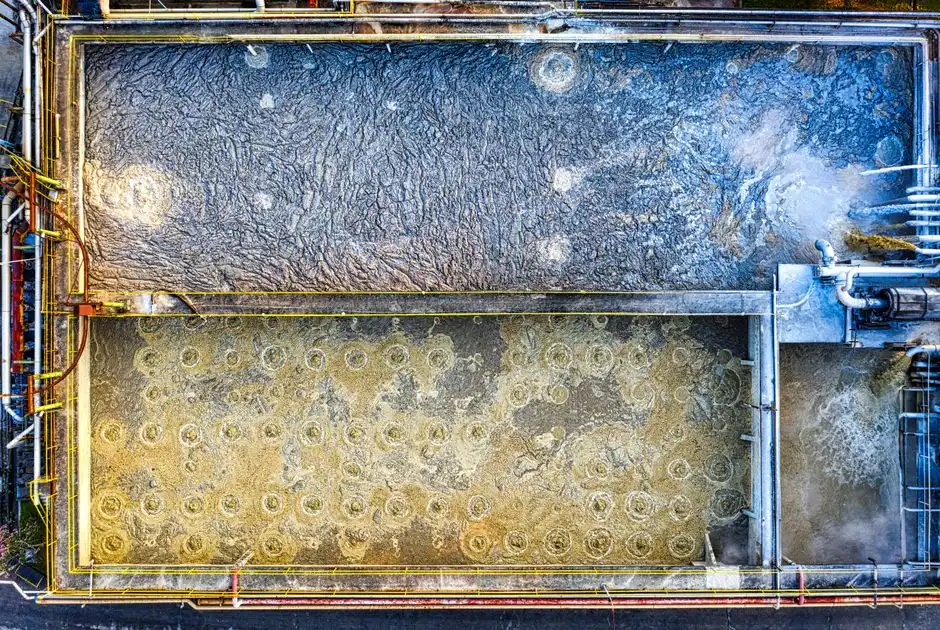
Residential treatment capacity must be verified against demand variation and pollutant load, not inferred from occupancy alone. Biocell Water reports applications from projects of up to 50 people to larger projects of up to 5,000 people, while stating that each solution depends on the project’s unique requirements.
Ask the design engineer to issue a sizing brief containing average daily flow, peak-hour flow, minimum night flow, projected occupancy and the occupancy trajectory for each development phase. Biocell Water notes that residential flow varies through the day and that peak flow typically occurs in the mornings, late afternoon and evenings, when residents leave for or return from work or school. A package must therefore accommodate peak flow alongside prolonged low-flow periods.
| Design input | Evidence required from the developer or designer | Why it affects equipment selection |
|---|---|---|
| Hydraulic demand | Average daily flow, peak-hour flow, minimum night flow and occupancy by phase | Determines hydraulic treatment demand and equalization requirements |
| Organic and nutrient load | COD, ammonia and suspended-solids characterization | Determines biological capacity and whether additional treatment stages are required |
| Grease and local inputs | Fats, oils and grease information, grease-trap coverage and effects of household cleaning products | Identifies pretreatment, grease removal and maintenance requirements |
| Growth | Construction phases and future occupancy | Determines initial modules, expansion route and collection-system extensions |
| Equipment boundary | WSZ: 1–80 m³/h; MBR: 10–2,000 m³/day | Used only after hydraulic and load calculations; not a substitute for design |
Biocell Water warns that residential ammonia and COD can be high, partly because of disinfectants and cleaning products, and that grease-trap coverage may be incomplete at some houses. The designer must determine whether inlet pretreatment or grease removal belongs in the package scope.
Use the wastewater treatment plant sizing guide to organize the calculation, but require verified project inputs. The WSZ and MBR capacity figures are equipment-selection boundaries, not consent to size from unit count. A quotation should identify the design flow, peak basis and pollutant-loading basis behind its proposal.
Match the installation method to the Bucharest site
Installation method determines the civil-work and maintenance burden. The decision should follow verified site constraints rather than an assumption that an underground package is automatically less expensive or that an above-ground system is automatically easier to permit.
| Installation option | Documented construction basis | Procurement implications |
|---|---|---|
| Below-grade package | HydropureWater WSZ can be installed below grade with landscaping above | Preserve surface area, but include excavation, structural installation, access, landscaping reinstatement and groundwater contingencies |
| Below-grade concrete tank with installed equipment | Biocell Water typically uses MBBR or SBR in a concrete tank that must be constructed underground | Obtain a separate civil-work design and price the tank, excavation, waterproofing, pipework and commissioning interfaces |
| Above-ground containerized modules | Biocell Water identifies containerized plug-and-play modules as its typical above-ground option | Evaluate surface-area restrictions, foundations, module access, odor control and appearance |
| Phased modular deployment | Aqua Tech Systems states that modular design permits development in phases instead of purchasing the whole system initially | Require the expansion sequence, collection extensions, controls integration and treatment continuity during installation |
Request a scaled site plan showing access, excavation, groundwater conditions, vehicle loading, landscaping, odor control, power, sludge removal, maintenance access and future module positions. Also require the boundary between supplier work and the developer’s civil contractor. A buried package may preserve usable land, but its total cost includes excavation and associated works that the supplied research does not quantify for Bucharest.
Biocell Water states that site restrictions can make above-ground treatment more suitable. Aqua Tech Systems describes modular development as allowing a neighborhood to be built in phases. Those two conditions—surface constraint and phased occupancy—can justify containerized equipment even where a below-grade process could technically meet the discharge requirement.
For the civil comparison, request separate prices for process equipment, tanks or modules, excavation, foundations, installation, piping, electrical works, controls, commissioning and landscaping. The A/O versus MBR packaged treatment comparison is useful as a process-selection reference, but it does not replace a Bucharest site plan or local construction pricing.
Verify discharge quality and permitability before ordering
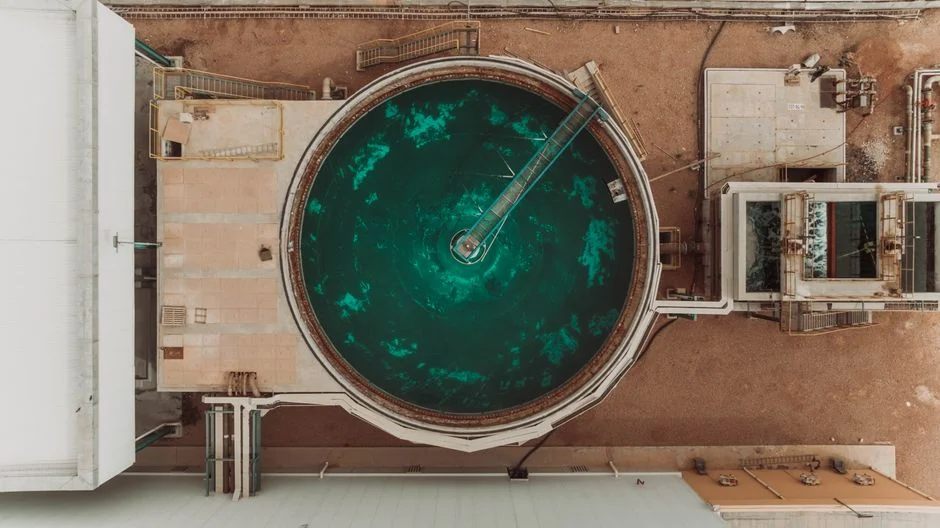
Effluent compliance must be demonstrated against the requirements confirmed for the actual discharge point. Biocell Water states that discharge standards vary by locality and that treatment technology should be selected according to site-specific discharge requirements. A supplier’s generic “domestic sewage treatment” description is not evidence of permitability.
Ask the Romanian environmental and water authorities to confirm the applicable receiving-water category, discharge point and permit or authorization route. The supplied research provides no Bucharest-specific numerical effluent limits, so the developer must obtain the applicable requirements rather than reproduce an unverified standard. Once confirmed, each bidder should map its proposed treatment train to every relevant parameter and identify which values it can demonstrate.
Request applicable product certifications and test evidence. These may support equipment acceptance, but they do not replace project-specific hydraulic, load and site verification. Where an add-on is required, price it explicitly: Biocell Water identifies phosphorus removal, disinfection, ammonia removal and grease treatment as modules for systems with those duties. The chlorine dioxide disinfection option and automatic chemical dosing option should therefore be treated as conditional additions, not default inclusions.
Unattended operation also needs a defined control requirement. Biocell Water describes component alarms, optional GSM alarm dialout and SCADA monitoring. Specify what alarms must trigger, how notifications are routed, which events require human intervention and what happens when communications or power fail. Do not treat an “automatic” package as fully unattended without a defined operating and response regime.
OpenEdition’s The Sustainable City in Romania, published in 2016, provides a sustainability context rather than plant-specific compliance evidence. Its relevance is as a design principle: the wastewater system should support the development’s wider sustainability objectives without obscuring the need for confirmed discharge requirements.
Build a fair bid and supplier-selection checklist
A fair tender compares complete project outcomes, not package prices alone. Aqua Tech Systems documents a supplier workflow that begins with gathering requirements, proceeds through regulatory research and engineering, then covers build and shipment, installation supervision, startup and follow-up assessment. That sequence provides a useful procurement model for separating verified data from manufacturer claims.
Aqua Tech Systems states that its residential package plants are built from AISI 304 stainless steel. Buyers may use that as the reference point for equivalent material specifications, but should not assume every bidder offers the same construction standard. Each tender should state the design flow, peak factor, process train, tank or module arrangement, civil-work boundary, electrical load, utilities, maintenance tasks, sludge handling, alarms, commissioning tests and warranty scope.
Require evidence that maps to those terms: process drawings, equipment schedules, material declarations, relevant certifications, test methods, controls narratives, O&M documentation and subcontractor responsibilities. The lamella sedimentation equipment option can be included where the confirmed treatment train calls for clarification, but should not be treated as a mandatory process component.
The supplied research contains no Bucharest package-plant prices, installation lead times or guaranteed energy consumption. Request itemized quotations, schedule commitments and energy guarantees instead of inventing comparison values. For a phased housing development, ask how capacity expands, which modules can be reused and how controls and collection infrastructure extend.
Shortlist suppliers by verified project fit, compliance evidence, total lifecycle obligations and local service capability. A low package price is not comparable if it excludes the tank, excavation, electrical service, sludge removal, membrane maintenance or commissioning. Use the regulatory and equipment-selection workflow as a checklist, while obtaining all Romanian requirements from the competent authorities.
Make the final selection with a decision framework
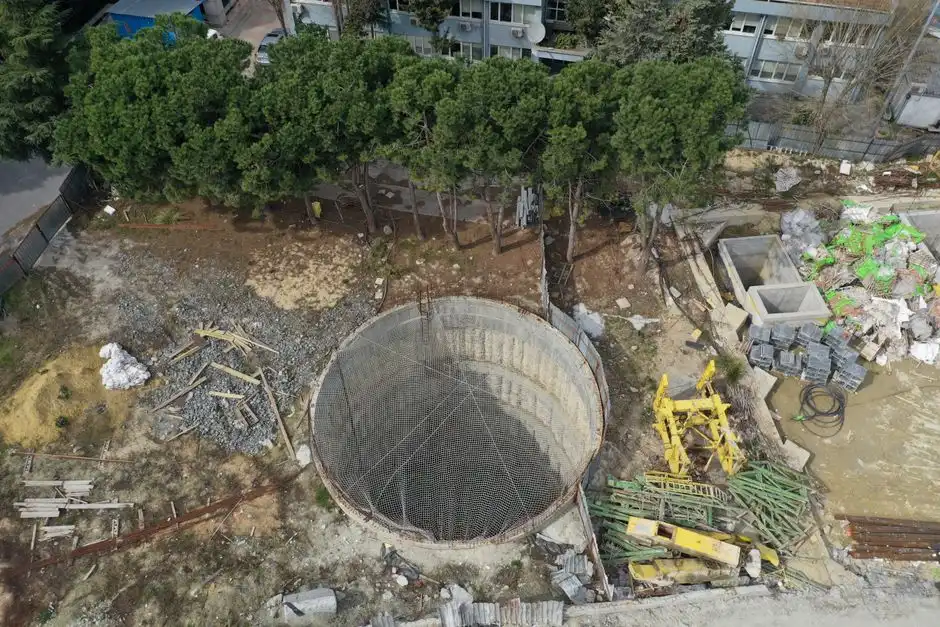
The final choice should follow from confirmed project constraints, then from process fit. No single architecture can be declared the Bucharest answer before sewer access, discharge requirements, verified flows, loads, site conditions and growth plans are known.
Use the underground WSZ A/O configuration as the starting candidate when public sewer access is unavailable, the required treatment train is compatible with A/O contact oxidation, sedimentation and disinfection, and the verified design falls within its stated capacity boundary of 1–80 m³/h. The package can sit below grade with landscaping above, or be trailer-mounted for mobile deployment, according to HydropureWater.
Use the MBR configuration as the starting candidate when filtration below 1 μm, reuse potential or the catalog’s compact footprint is important, the design falls within the stated 10–2,000 m³/day range, and the owner can support membrane operation and maintenance. Treat the claimed 60% footprint reduction as a manufacturer catalog claim until verified for the project.
Use containerized or plug-and-play treatment when surface restrictions, construction constraints or phased occupancy make above-ground modular deployment more suitable. Include MBBR and SBR in underground concrete tanks as market alternatives when preparing the tender, even though they are not part of the HydropureWater catalog described here.
The recommendation remains conditional because the supplied evidence does not establish Bucharest sewer-connection rules, local discharge limits, site costs or development-specific flows. A defensible selection records those confirmed inputs, compares A/O, MBR and modular alternatives against them, and only then authorizes a performance-based supplier proposal.
Frequently Asked Questions
How much should a packaged sewage treatment plant cost for a Bucharest housing development?
The supplied sources provide no Bucharest price data. Request an itemized quotation based on verified average and peak flows, pollutant loads, treatment architecture, civil works, installation, utilities, controls, sludge handling and commissioning. Compare bidders on the same scope rather than accepting an unallocated package price.
Should a Bucharest housing project choose A/O or MBR?
Choose the architecture that meets the confirmed discharge requirement and the project’s reuse or footprint objectives. A/O is a candidate where contact oxidation, sedimentation and disinfection are sufficient; MBR is a candidate where membrane filtration below 1 μm is required or advantageous, provided the owner accepts membrane cleaning, maintenance and replacement obligations.
Can packaged sewage treatment be installed in phases?
Yes. Aqua Tech Systems and Biocell Water both identify modular phased deployment as a development advantage. Require the supplier to document expansion modules, collection extensions, control integration and treatment continuity during each construction phase.
What information should a developer send to request an accurate plant size?
Send average and peak residential flows, minimum night flow, occupancy phases, wastewater characterization, site constraints, discharge route, required effluent standard, reuse objectives and future expansion plans. Use the development wastewater treatment guidance as supporting context, but not as project-specific sizing evidence.
What maintenance does an unattended residential treatment package require?
Biocell Water describes accessible maintenance without entering or emptying tanks, component alarms, optional GSM notification and SCADA monitoring. Require the bidder to state routine tasks, consumables, sludge handling, local service capability, alarm response and contractual response targets before accepting unattended operation.