Wastewater Treatment Plant Size Calculator: Core Inputs
A wastewater treatment plant size calculator starts from Population Equivalent (PE) or metered flow, then checks peak factor, influent strength, and local discharge limits. For domestic sewage, British Water Flows and Loads uses 150 L/PE/day. Industrial plants instead size on measured m³/day and BOD/COD load. Modular package units commonly span about 1–80 m³/h; MBR footprints often fall near 1–2 m² per m³/day of design capacity.
Plant capacity equals design daily flow times a peaking factor, checked against organic load and permit limits. British Water Flows and Loads 4 sizes houses at minimum 5 P for up to three bedrooms, plus 1 P per extra bedroom, at 150 L/P/day. Industrial plants use metered flow with composite BOD, COD, TSS, and FOG data.
Why Wastewater Treatment Plant Sizing Goes Wrong
Undersized plants breach permits when peak wash-down or storm flows wash solids from clarifiers. Oversized plants waste CAPEX and run blowers and pumps off their efficiency curves. A food plant in Shandong sized for 100 m³/day average flow, then saw wash-down peaks near 300 m³/day. Clarifier washout followed, with permit violations and more than $200,000 in fines (HydropureWater field data, 2025).
A 500 m³/day train held at only 200 m³/day often raises CAPEX about 40% and OPEX about 25%. Under-loaded aeration and unstable F/M ratios drive that penalty. Most plants we size for food and textile sites run peak factors at the upper end of the 2.5–4.0 band on wash days. Common mistakes include:
- Ignoring peak flow factors: skipping a 2.5×–3× (industrial often to 4×) factor for shifts or storms.
- Underestimating influent strength: assuming domestic BOD near 250 mg/L when industrial streams exceed 2,000 mg/L.
- Neglecting future expansion: pouring fixed concrete instead of modular trains that track occupancy.
- Misapplying residential PE: using house formulas for kitchens or laundry with much higher organic load.
How Do I Calculate PE for Plant Sizing?

Population Equivalent is the usual metric for decentralized domestic systems, with 1 PE typically taken as 150 L/day of wastewater. Earlier informal guides sometimes used PE = (bedrooms × 2) + 1, giving 7 PE for a three-bedroom house. British Water Flows and Loads 4, which GOV.UK cites for England discharges, sets a minimum of 5 P for a house with up to three bedrooms, then adds 1 P for each extra bedroom. A three-bedroom house is therefore 5 P × 150 L/P/day = 750 L/day, not 1,050 L/day. For larger residential clusters, a compact A/O system for residential and small commercial applications keeps hydraulic load matched to occupancy.
Industrial projects drop PE and use metered flow or sector benchmarks. Pulp and paper often generates about 3–5 m³ wastewater per ton of product; textile dyeing lines may reach on the order of 100 m³/day per shift pattern. British Water also loads domestic sewage at about 60 g BOD per person per day alongside the 150 L flow figure. For mixed-use sites convert as Flow (m³/day) = PE × 0.15 m³/PE/day.
| Application Type | Sizing Metric | Daily Flow Benchmark | Peak Factor (PF) |
|---|---|---|---|
| Single Residential Home | PE (min 5 P ≤3 bedrooms; +1 P/bedroom) | 150 L/PE/day | 3.0 |
| Hotel / Resort | 2 PE per Room | 200–250 L/PE/day | 2.5 |
| Food Processing | m³/ton of product | 50–500 m³/day (varies) | 4.0 |
| Textile / Dyeing | m³/day per shift | 100–1,000 m³/day | 2.0 |
| Small Community | PE (Total Population) | 150–180 L/PE/day | 2.5 |
What Peak Factor and Influent Strength Should I Use?
Influent BOD/COD ratio decides whether biology alone is enough or physical-chemical pre-treatment is required first. Biological treatment works well when BOD/COD exceeds about 0.5. Many industrial streams sit below 0.3 and need oxidation or DAF pre-treatment for FOG-heavy industrial wastewater before the bioreactor.
Use 24-hour composite samples, not grab samples. A dairy line may show TSS near 500 mg/L in production and spike to 2,000 mg/L during CIP. Record BOD, COD, TSS, and FOG together. That profile drives whether you pick a comprehensive guide to package treatment plants built around A/O, SBR, or MBR.
| Industry | BOD (mg/L) | COD (mg/L) | TSS (mg/L) | Recommended Technology |
|---|---|---|---|---|
| Domestic Sewage | 200–300 | 400–600 | 200–350 | A/O or MBR |
| Food Processing | 1,000–5,000 | 2,000–10,000 | 500–2,000 | DAF + MBR |
| Textile / Dyeing | 500–1,500 | 800–3,000 | 200–600 | Chemical Coagulation + SBR |
| Slaughterhouse | 1,500–3,000 | 3,000–6,000 | 1,000–2,500 | DAF + A/O |
| Pharmaceutical | 300–1,000 | 1,000–5,000 | 100–400 | MBR + Fenton Oxidation |
Step 3: Select Treatment Technology for Capacity and Contaminants
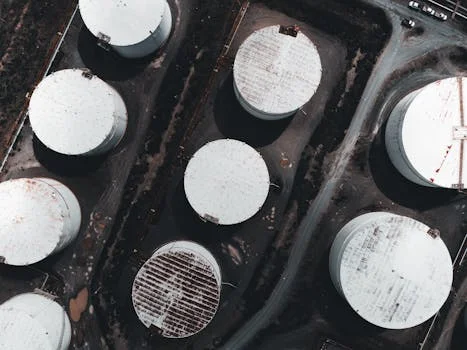
Treatment selection balances hydraulic capacity against required removal and available land. For 50–500 m³/day with open land, A/O often wins on cost, delivering about 90–95% BOD removal at roughly 0.3–0.5 kWh/m³. Residential communities that want simple O&M usually land here.
Tight plots or reuse targets push toward a high-efficiency MBR system for municipal and industrial projects. MBR couples biology with membranes, often reaching about 95–99% BOD removal and reuse-grade turbidity. Energy rises to about 0.8–1.2 kWh/m³, while footprint is often about 50% smaller than conventional activated sludge. Engineering detail sits in the detailed engineering specs for MBR systems.
| Technology | Capacity (m³/day) | Footprint (m²/m³/d) | BOD Removal (%) | CAPEX ($/m³) | Best For |
|---|---|---|---|---|---|
| A/O (Integrated) | 1–500 | 3.0–5.0 | 90–95% | $400–$800 | Residential, Low BOD |
| MBR | 10–2,000+ | 1.0–2.0 | 95–99% | $1,200–$2,500 | Industrial, Reuse |
| SBR | 50–1,000 | 4.0–6.0 | 85–92% | $600–$1,000 | Variable Flows |
| DAF (Pre-treat) | 4–300 (m³/h) | 0.5–1.0 | N/A (FOG 98%) | $300–$600 | Food, High Grease |
Step 4: Size the System with Modular Capacity Tables
Modular trains scale from about 5 PE to over 5,000 PE, so CAPEX can track phased occupancy. Industrial parks and multi-block housing use this pattern often. Two 500 m³/day modules beat one idle 1,000 m³/day basin when only half the site is live. Keeping actual flow near design capacity stabilizes MLSS and F/M.
Cold climates need extra volume or air. Biological rates fall in winter, so many designs add 10–20% tank volume or aeration capacity for the same BOD removal at lower water temperature. Insulated package tanks and fine-bubble diffusers cut that penalty. Use the table below as a first-pass envelope, then verify with local permits.
| PE Range | Flow (m³/day) | Recommended Tech | Footprint (m²) | Est. CAPEX |
|---|---|---|---|---|
| 5–10 PE | 0.75–1.5 | A/O (Integrated) | 8–12 | $10K–$18K |
| 50–100 PE | 7.5–15 | A/O or MBR | 25–40 | $45K–$75K |
| 500–1,000 PE | 75–150 | MBR Module | 120–180 | $250K–$450K |
| 2,500 PE | 375 | Multi-Stage MBR | 400–550 | $800K–$1.2M |
| 5,000 PE | 750 | Modular SBR/MBR | 800–1,100 | $1.5M–$2.2M |
Step 5: Validate Against Local Discharge Limits

Discharge codes set the minimum BOD, COD, and TSS performance the plant must deliver. China GB 8978-1996 and EU Directive 91/271/EEC remain common reference points for COD, BOD, and TSS before release. According to EUR-Lex, Directive 91/271/EEC will be repealed and replaced by Directive (EU) 2024/3019 from 1 August 2027; secondary treatment rules under the current directive continue to apply until that date. Meeting China Class 1A (COD < 50 mg/L) usually needs MBR or tertiary filtration. Irrigation reuse also needs tertiary disinfection for strict discharge limits.
Selection checklist before you freeze capacity:
- Identify the receiving water category (sensitive watercourse vs. municipal sewer).
- Compare technology effluent specs (for example MBR BOD < 5 mg/L) with local limits.
- Confirm whether N and P removal is required; anoxic volume often rises 20–30%.
- Check sector metals or color limits that may need chemical dosing.
- Apply the correct peaking factor to average daily flow before naming nameplate capacity.
- Leave headroom in the lift station and MCC for the ultimate modular build-out.
- For England package plants, confirm sizing against British Water Flows and Loads as GOV.UK requires for new systems after 1 February 2006.
Cost Breakdown: CAPEX and OPEX by Size and Technology
Total cost of ownership often splits near 60% equipment CAPEX and 40% lifecycle OPEX for energy, chemicals, and sludge. Material choice (epoxy-coated carbon steel vs. stainless) and automation level move CAPEX hard. On a 100 m³/day industrial duty, MBR may cost more up front yet lower lifecycle cost when reuse offsets purchased water. Regional envelopes appear in the regional cost data for wastewater treatment projects.
| Capacity (m³/day) | Tech | CAPEX ($) | OPEX ($/m³) | Annual Maint. ($) |
|---|---|---|---|---|
| 10 | A/O | $45,000 | $0.55 | $2,500 |
| 50 | MBR | $180,000 | $0.95 | $8,000 |
| 100 | MBR | $320,000 | $0.88 | $12,000 |
| 500 | SBR | $750,000 | $0.65 | $25,000 |
| 1,000 | MBR | $1,450,000 | $0.80 | $45,000 |
Who This Is For / Next Step
This guide suits plant engineers, EPC process leads, and procurement teams sizing package or modular plants from about 5 PE to several thousand PE. Look elsewhere if you need a full municipal interceptor model or only stormwater runoff tools. When flow, BOD/COD, and permit limits are ready, request a sized proposal via HydropureWater engineering inquiry with peak and average daily flow stated.
Frequently Asked Questions
What is the smallest wastewater treatment plant I can build for a single house?
The smallest practical domestic package plant is typically 5 PE, or about 750 L/day at 150 L/PE/day under British Water Flows and Loads. That matches the minimum for a house with up to three bedrooms. Compact A/O units often fit near a 10 m² footprint with low connected load. Always confirm local building and discharge rules before ordering.
How do I size a wastewater treatment plant for a hotel with 100 rooms?
Hotels are commonly sized at about 2 PE per room, so 100 rooms start near 200 PE. Add roughly 20% for staff and shared areas to reach about 240 PE, or 36 m³/day at 0.15 m³/PE/day. Apply a peak factor near 2.5 for check-in and laundry peaks. MBR is often preferred where landscaping reuse and odor control matter.
Can I expand my wastewater treatment plant later if my business grows?
Yes, modular package trains are built for phased expansion. Many sites start at 50 m³/day and add identical modules as production rises. Design the first lift station, equalization, and control panel for the ultimate flow, not only the day-one duty. That avoids ripping civil works when the second module arrives.
What happens if my wastewater treatment plant is undersized?
Undersized plants suffer hydraulic washout: high flows push solids out before treatment finishes. Effluent BOD, COD, and TSS then exceed the permit within hours of a peak event. Fines, forced shutdowns, and emergency tanker haulage follow. Size on peak day flow, not weekly average production.
How much space do I need for a 500 m³/day wastewater treatment plant?
Footprint depends on technology. An A/O layout often needs about 400–500 m² at 500 m³/day, while MBR can land nearer 200–250 m² for the same hydraulic duty. Add about 20% area for access aisles, chemical storage, and sludge handling. Confirm setbacks required by the local authority.